

Many women assume a soft food diet is only for illness or dental recovery. But often, it is simply a way to give a tired, irritated, or overwhelmed body a little more ease. When chewing feels like work, appetite feels fragile, or digestion needs a gentler rhythm, soft meals can offer comfort, steady energy, and nourishment without adding stress.
When Eating Needs to Feel Softer, Not Smaller
There is a quiet kind of exhaustion that shows up around food. She may be sitting at the kitchen counter after a long day, not exactly craving anything, yet not wanting to skip dinner either. In moments like this, a soft food diet can feel less like a restriction and more like support.
The common mistake is thinking softer food means nutritionally weak food. It does not. A bowl of warm oats stirred with mashed banana and almond butter, a silky lentil soup with olive oil, or a baked sweet potato topped with soft black beans can still be deeply balanced. The goal is not to eat less. The goal is to make eating feel more manageable.
Body signals are not a character flaw. They are often the softest voice in the room, asking to be heard.
This is where a gentle framework can help: the Ease Plate. Instead of asking whether a meal is perfect, the Ease Plate asks three kinder questions:
- Can it be soft? Think blended, mashed, stewed, or tender enough that the jaw does not have to work hard.
- Can it be steady? Include some fiber, fat, or protein so energy does not rise and crash too quickly.
- Can it be comforting? Warm temperature, familiar flavors, and easy textures often help the body relax into eating.
The Most Nourishing Foods Often Arrive Quietly
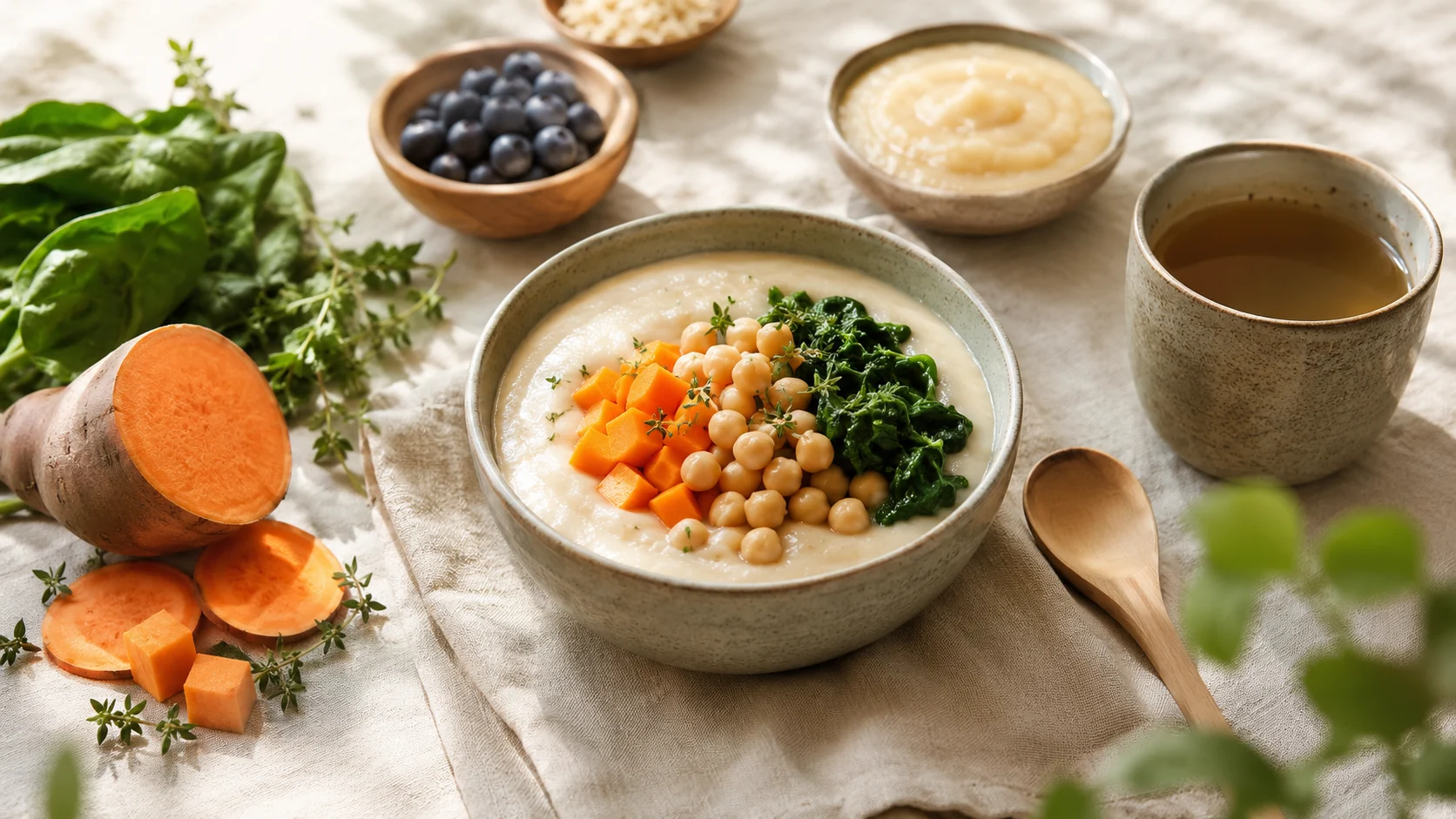
A soft food diet can include far more variety than many people expect. It might look like creamy oatmeal in the morning, a blended vegetable soup at lunch, and a rice bowl with scrambled eggs, tofu, or flaky fish at dinner. It can also overlap naturally with a whole food plant based diet when meals lean on beans, oats, soft grains, cooked vegetables, applesauce, smoothies, and pureed soups.
That does not mean every woman needs to follow a fully plant-based approach. It simply means soft eating can still be rich in plants, color, and satisfaction. A pot of red lentils cooked until they almost melt, a spoonful of tahini whisked into warm broth, or ripe avocado folded into mashed potatoes can bring both nourishment and comfort.
Research has long shown that fiber-rich plant foods support digestive and metabolic health, and many adults in the U.S. still fall short of fiber needs. When texture is adjusted gently, it becomes easier to include these foods without making meals feel demanding.
What a Soft Day of Eating Can Look Like in Real Life
For the woman who wants practical support, not rigid rules, here is what a gentle day might resemble:
- Morning: Warm oatmeal with mashed berries and ground flax, softened until spoonable and soothing.
- Midday: Butternut squash soup with blended white beans and a side of yogurt or soft tofu for extra staying power.
- Afternoon: A smoothie with banana, oats, nut butter, and milk, easy to sip when chewing sounds unappealing.
- Evening: Soft rice with tender salmon or tofu, cooked zucchini, and a drizzle of olive oil for comfort and balance.
This is also why the conversation around the best diet to lose weight can feel so disconnected from real life. The best way of eating is rarely the harshest or most impressive on paper. For many women, the more sustainable path begins with meals they can actually tolerate, enjoy, and return to without anxiety. A soft food diet is not designed as a weight-loss trick. It is a practical way to stay nourished when life or the body asks for gentleness.
The body is not a project to dominate. It is a place to come back to with care.
How to Keep a Soft Food Diet Balanced Without Turning It Into Another Rulebook
Soft eating works best when it does not become another source of pressure. A simple way to think about balance is to pair something soothing, something steady, and something satisfying. That might be soup, beans, and olive oil. Or yogurt, banana, and oats. Or congee with shredded chicken and soft greens cooked until tender.
If appetite is low, smaller portions more often can help. If sweet foods are the only foods that sound manageable, adding a gentle anchor such as nut butter, yogurt, or milk can make energy feel steadier. And if meals are repetitive for a few days, that is okay. Supportive eating does not need to be exciting to be useful.
Please note: Every body has its own rhythm. This gentle guide is for educational purposes and does not replace personalized advice from a healthcare professional, especially if chewing, swallowing, digestion, or appetite changes are persistent or concerning.
You Might Also Wonder
Is a soft food diet the same as eating processed food?
Not at all. Soft simply describes texture. A soft food diet can include oatmeal, beans, cooked vegetables, yogurt, tofu, eggs, soups, and smoothies. Texture and nutrition are two different things.
Can a whole food plant based diet work if I need softer meals?
Yes. A whole food plant based diet can adapt beautifully to softer textures through porridges, lentil soups, pureed beans, stewed fruit, mashed sweet potatoes, and blended vegetable soups.
What if I want the best diet to lose weight but also need soft foods right now?
It may help to pause the search for the best diet to lose weight and focus first on regular nourishment. When the body feels supported, eating patterns often become steadier and less chaotic.
How do I get enough protein on a soft food diet?
Soft protein can come from Greek yogurt, cottage cheese, tofu, eggs, flaky fish, blended beans, lentils, or smoothies made with milk and nut butter. The key is choosing textures that feel easy to eat.
What if soft foods make me feel hungry again too quickly?
That usually means the meal may need a little more staying power. Adding fat, protein, or fiber such as avocado, yogurt, olive oil, beans, or oats can help the meal linger more kindly.
Leave a Reply