

When Dinner Needs to Feel Like a Soft Place to Land
Healthy dinner recipes for busy nights do not need to be elaborate, perfectly planned, or made entirely from scratch. When she arrives home with little energy and a loud appetite, the most supportive dinner is often the one she can assemble without turning food into another test. Convenience is not a nutritional failure; it can be part of caring for a tired body.
The common advice to simply “make better choices” misses what evenings actually feel like. Hunger may have been building since a rushed lunch. Stress may be keeping her mind alert while her body asks for comfort. A sparse dinner chosen in the name of being healthy can leave her searching the kitchen an hour later, wondering why she still wants something.
Her body is not a project waiting to be perfected. It is a home asking to be fed.
A balanced evening meal usually feels steadier when it brings together comforting carbohydrates, satisfying protein, nourishing fat, and color or fiber. No calculation is required. These elements simply give dinner enough substance to meet both physical hunger and the very human desire for pleasure.
The Soft Landing Plate
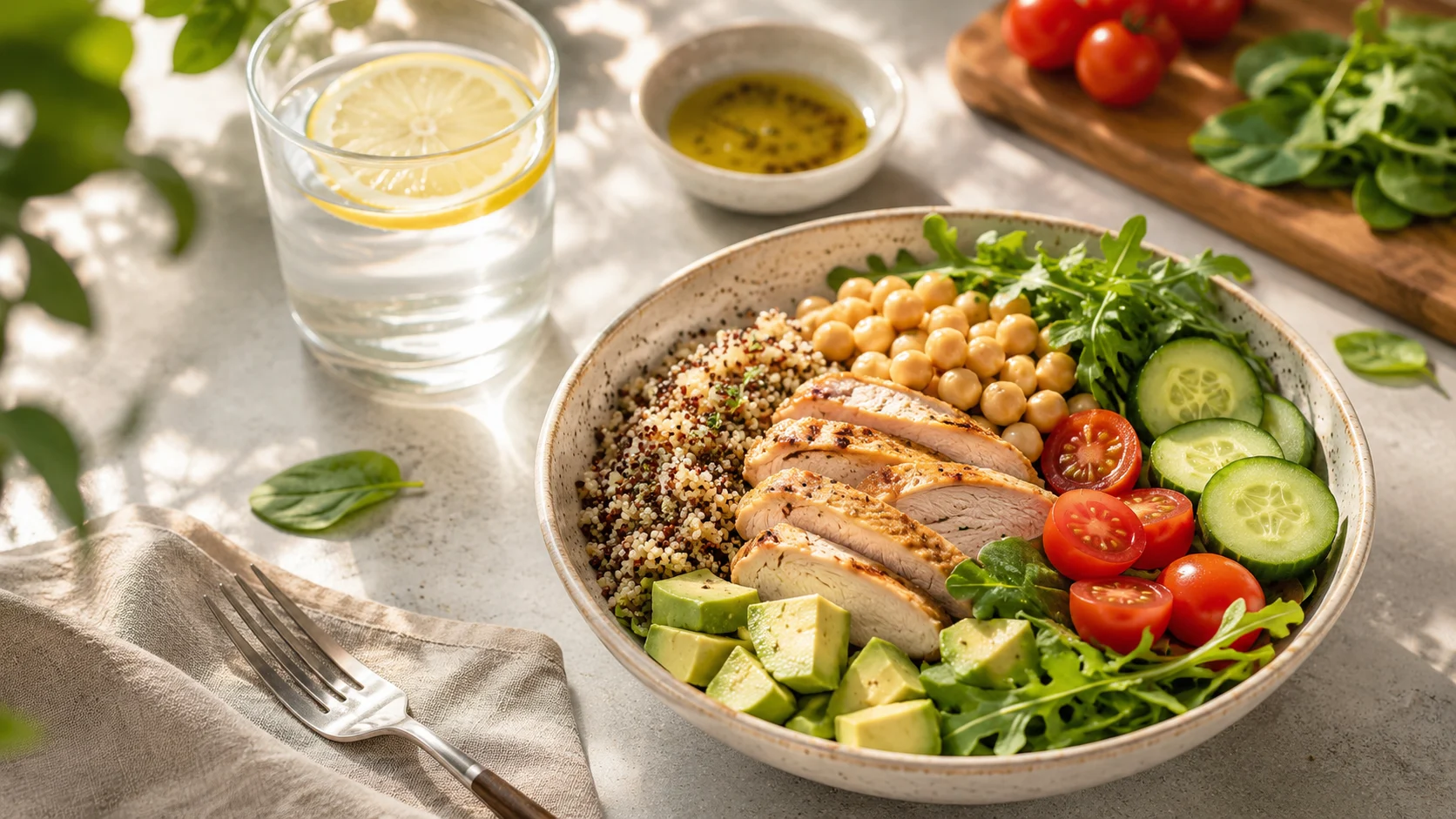
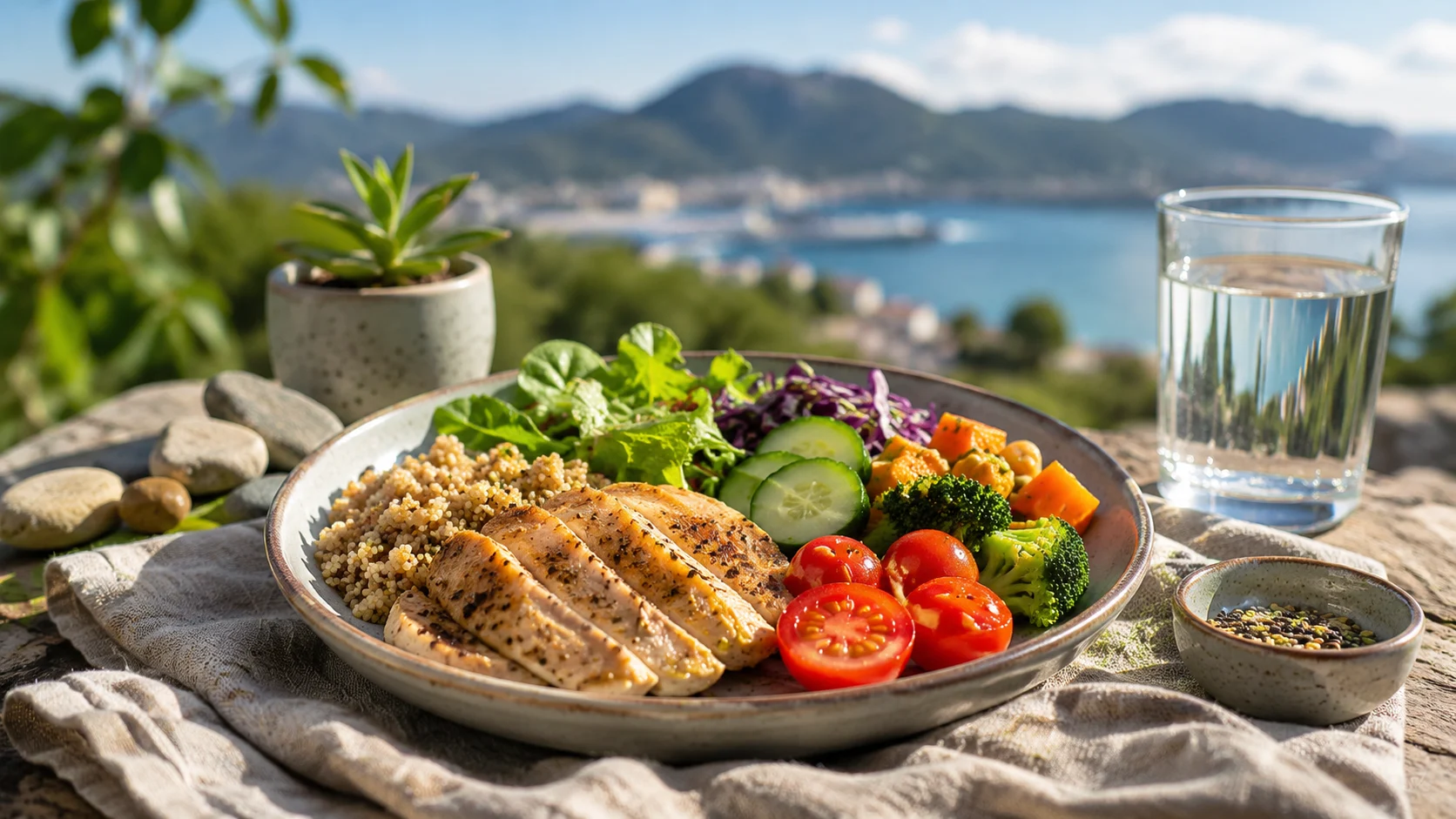
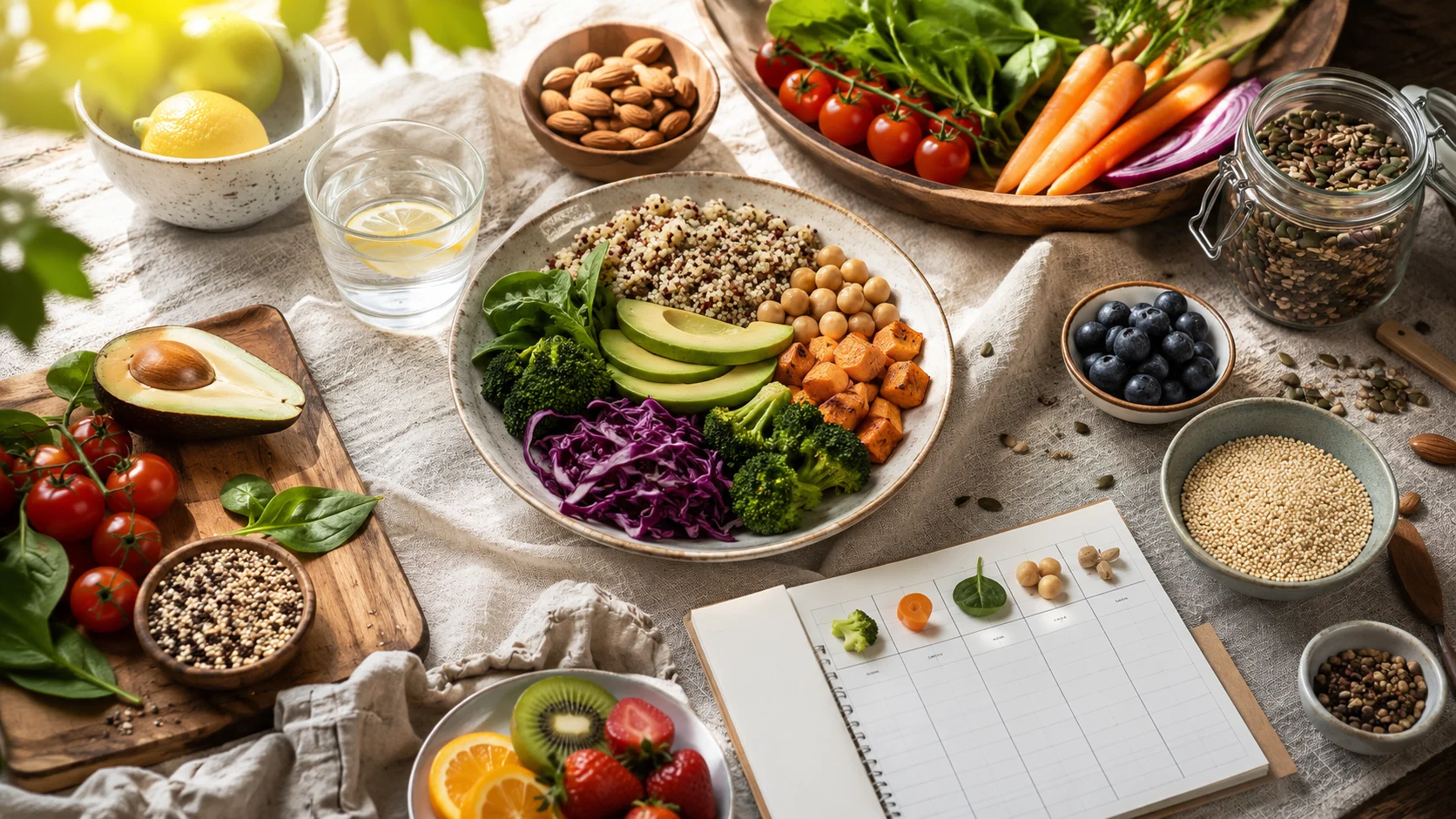
Think of this gentle framework as the Soft Landing Plate: one warm foundation, one satisfying anchor, one easy source of color, and one finishing touch that makes the meal inviting. It is less a rule than a way to notice what might help dinner feel complete.
- Begin with a warm foundation. Spoon microwave rice into a bowl, warm a folded tortilla, toast a thick slice of bread, or let pasta curl through a favorite sauce. Carbohydrates offer accessible energy, especially after a long day of thinking, moving, caregiving, or commuting.
- Add a satisfying anchor. Slide a fried egg over rice, stir white beans into tomato sauce, tuck rotisserie chicken into a tortilla, or crumble tofu into a skillet. Protein gives the meal staying power without requiring dinner to become a nutrition assignment.
- Bring in color with ease. Frozen peas can tumble directly into hot pasta. Bagged greens can soften beneath roasted potatoes. Cherry tomatoes can be halved beside hummus and warm pita. Fresh, frozen, and canned produce all belong in real-life nutrition.
- Finish for pleasure. A spoonful of pesto, grated cheese, toasted seeds, avocado, or a bright squeeze of lemon can turn separate ingredients into a dinner she genuinely wants to eat.
This approach also explains why many healthy dinner recipes for low-energy evenings work better as flexible combinations than rigid instructions. A 2017 study involving more than 40,000 French adults found that meal planning was associated with greater food variety and better diet quality. Planning, however, does not have to mean preparing seven matching containers on Sunday. It may simply mean keeping three dependable foundations and a few satisfying anchors within reach.
Three Evenings, Three Kinds of Hunger
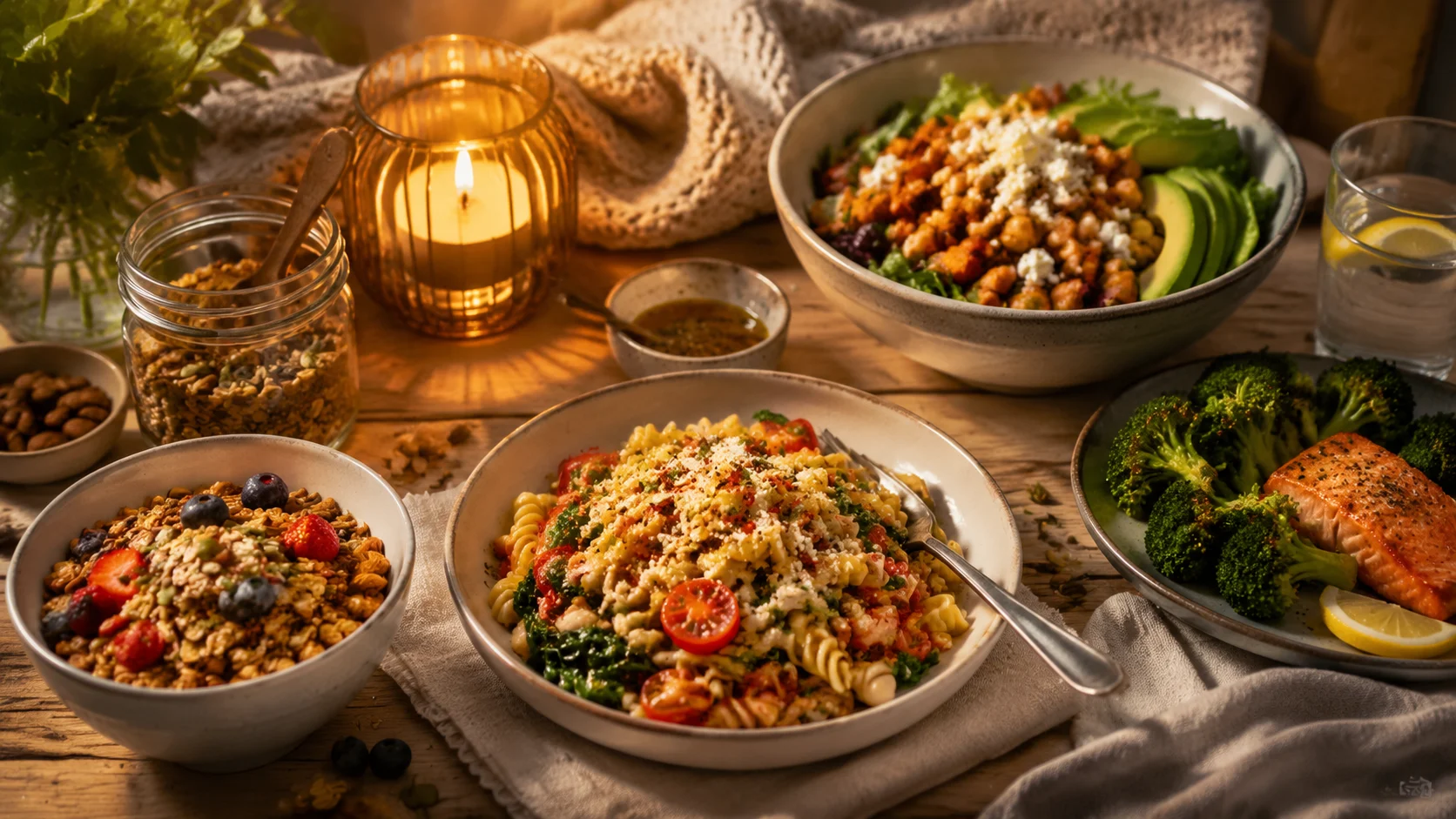
On Monday, she wants something creamy and familiar. She boils pasta, adds frozen spinach during the final minute, then folds in white beans, marinara, and a spoonful of ricotta. Among healthy pasta meal recipes, this one succeeds because it offers warmth and satisfaction while quietly bringing protein and fiber to the bowl.
By Wednesday, even boiling water feels ambitious. She warms a pouch of brown rice, adds edamame and leftover vegetables, then finishes the bowl with sesame oil and soy sauce. Dinner takes minutes, but it still has contrast: soft rice, bright vegetables, and savory richness.
Friday calls for snack-style comfort. She places warm pita, hummus, sliced cucumber, olives, cheese, and fruit on a plate. Nothing matches the traditional picture of cooking, yet the meal is varied, grounding, and easy to adjust as hunger changes. A meal can be assembled and still be deeply nourishing.
The same rhythm can carry into breakfast. A healthy granola recipe made with oats, nuts, cinnamon, and a little maple syrup can become more than a morning food. Scattered over yogurt with berries, it offers a simple evening option when appetite is quiet but the body still needs care. The goal is not to make every meal look like dinner; it is to respond honestly to what is manageable.
Nourishment becomes sustainable when it makes room for the life a woman is actually living.
Questions That Often Come Up
What if she is ravenous before dinner is ready?
She can eat something while cooking: crackers with cheese, fruit with peanut butter, or a few spoonfuls of yogurt. Taking the sharp edge off hunger often makes the rest of the evening feel calmer.
Do healthy dinner recipes for busy women need to include vegetables every time?
No single plate carries the burden of an entire eating pattern. Vegetables can add flavor, fiber, and color, but missing them at one meal does not make that meal a failure. She can notice what is available and continue without judgment.
What if pasta is the only food that sounds comforting?
Then pasta is a meaningful place to begin. She might add lentils to the sauce, serve it with breaded chicken, or let peas warm in the pot. She can also eat it exactly as it is and trust that another meal will offer different nourishment.
Is takeout compatible with a balanced evening?
Yes. She might choose the dish that sounds satisfying and add something only if it would improve the experience, such as fruit, a side salad, or extra rice. Takeout does not need to be corrected or earned.
Please note: Every body has its own rhythm, appetite, health history, and nutritional needs. This gentle guide is for educational purposes and does not replace personalized guidance from a registered dietitian or healthcare professional.
Leave a Reply