Compassionate guidance for understanding stress eating, night eating, food guilt, and emotional cravings — without shame, judgment, or extreme restriction.
Stress cravings are often a body signal rather than a failure of discipline. This article explains why they happen, how stress, under-eating, and fatigue can intensify them, and offers a gentle framework for responding with more support and less shame.
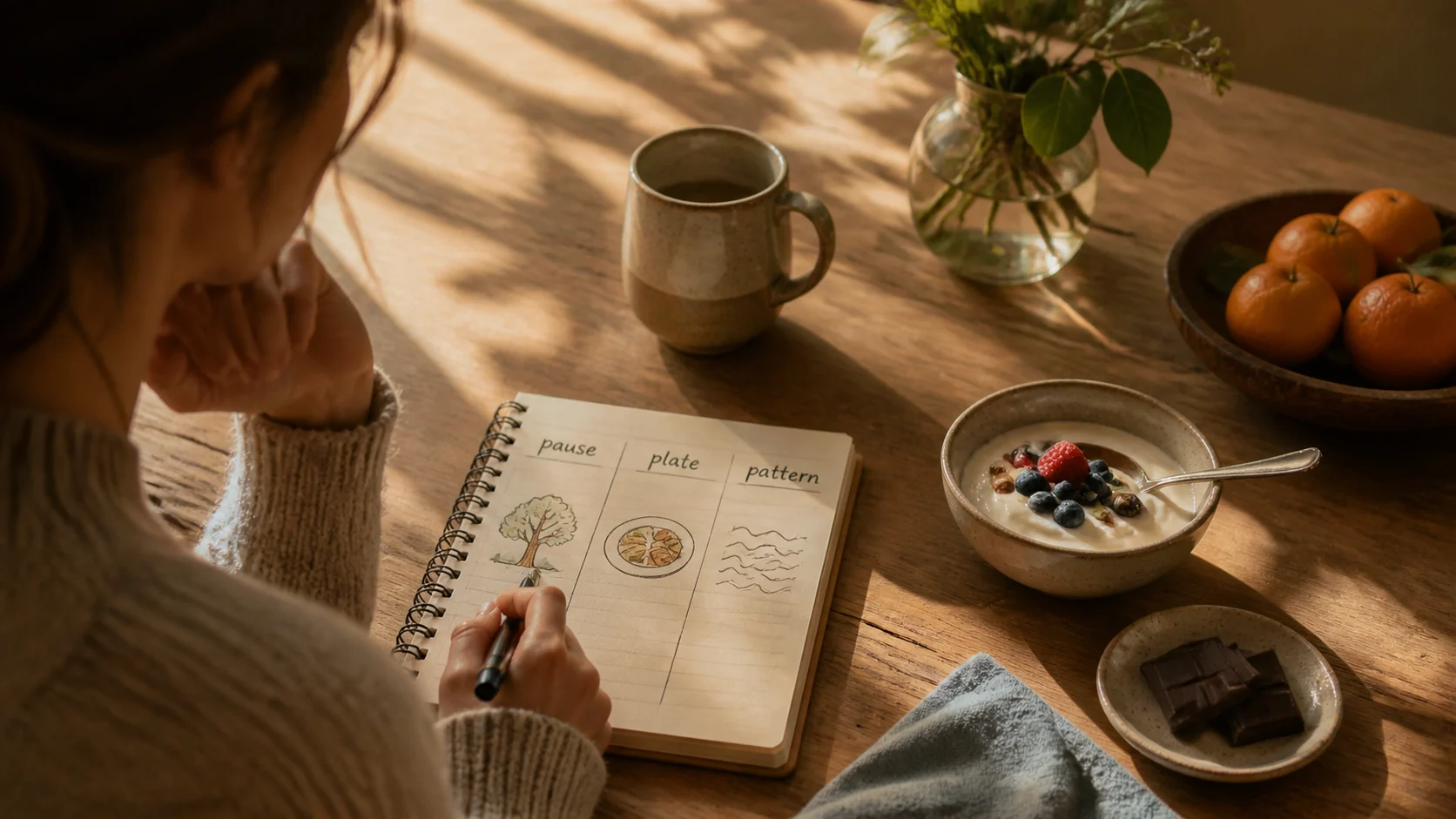
This article explains how to respond to stress eating with curiosity instead of shame. It introduces a gentle framework—Pause, Plate, Pattern—to help women understand whether stress eating is driven by low energy, emotional overload, restriction, or the need for comfort, and offers practical ways to support steadier eating habits.
This article explains that anxiety eating is often a stress response rather than a willpower problem. It explores how overwhelm, undereating, restriction, and nervous system strain can shape cravings, while offering a gentle framework for responding with more steadiness, comfort, and self-understanding.
Many women eat when they’re not physically hungry because food is responding to something else: stress, restriction, fatigue, habit, or the need for comfort. This article offers a gentle explanation and a practical framework for responding without shame.
This article explains that emotional eating triggers often come from stress, restriction, low energy, and unmet comfort needs rather than lack of discipline. It offers a gentle framework for understanding evening cravings and responding with more balanced nourishment, less shame, and greater body trust.
Comfort eating is often a body signal rather than a personal failure. This article helps readers understand why comfort eating happens, what needs may be hiding underneath it, and how to respond with more gentleness, steady nourishment, and less shame.
This article explores mindful eating for emotional eating in a warm, non-shaming way. It explains why emotional eating often reflects stress, undernourishment, or unmet needs rather than lack of discipline, and offers a simple Pause-Plate-Comfort framework to help readers respond with more awareness and care.
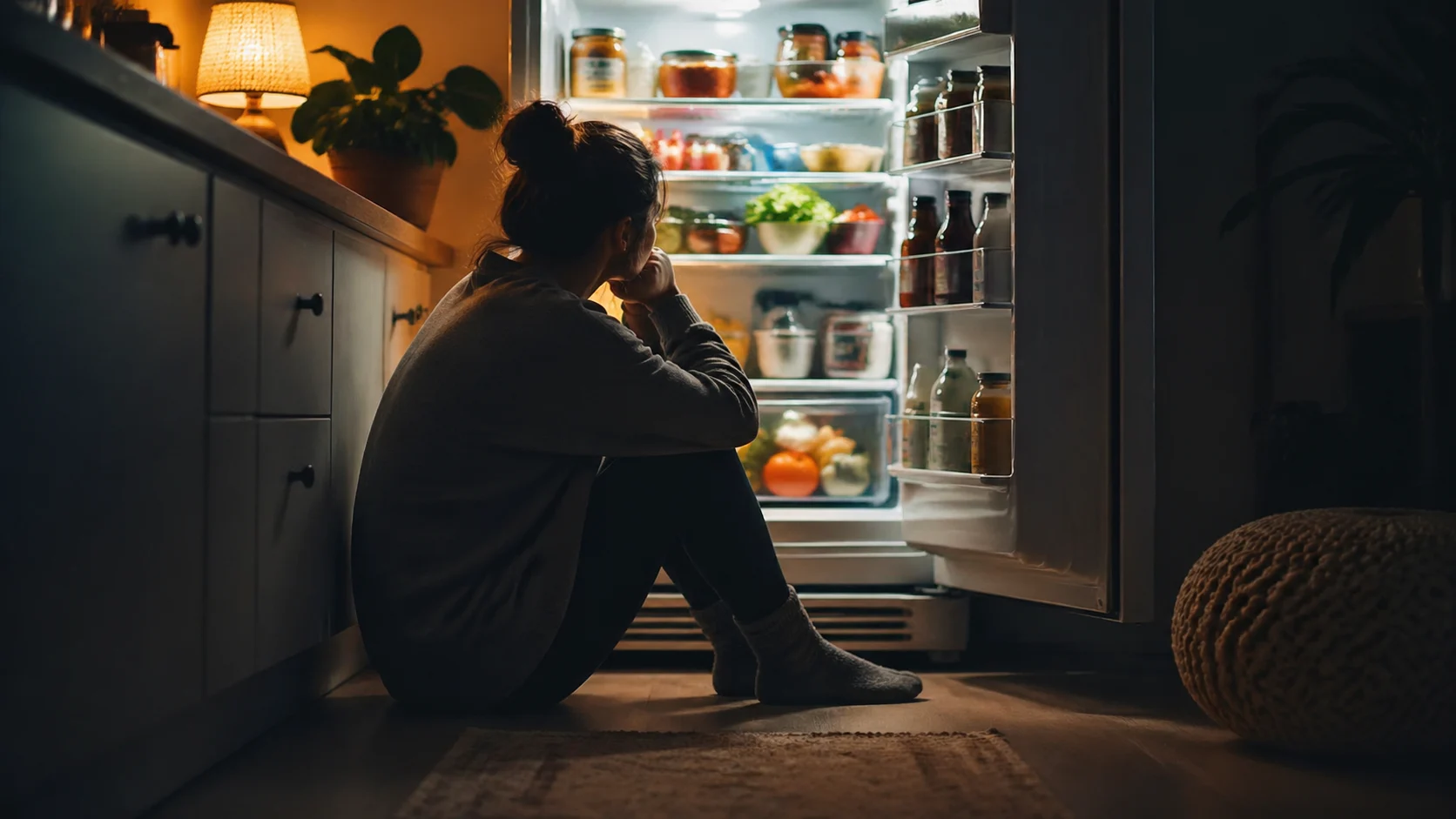
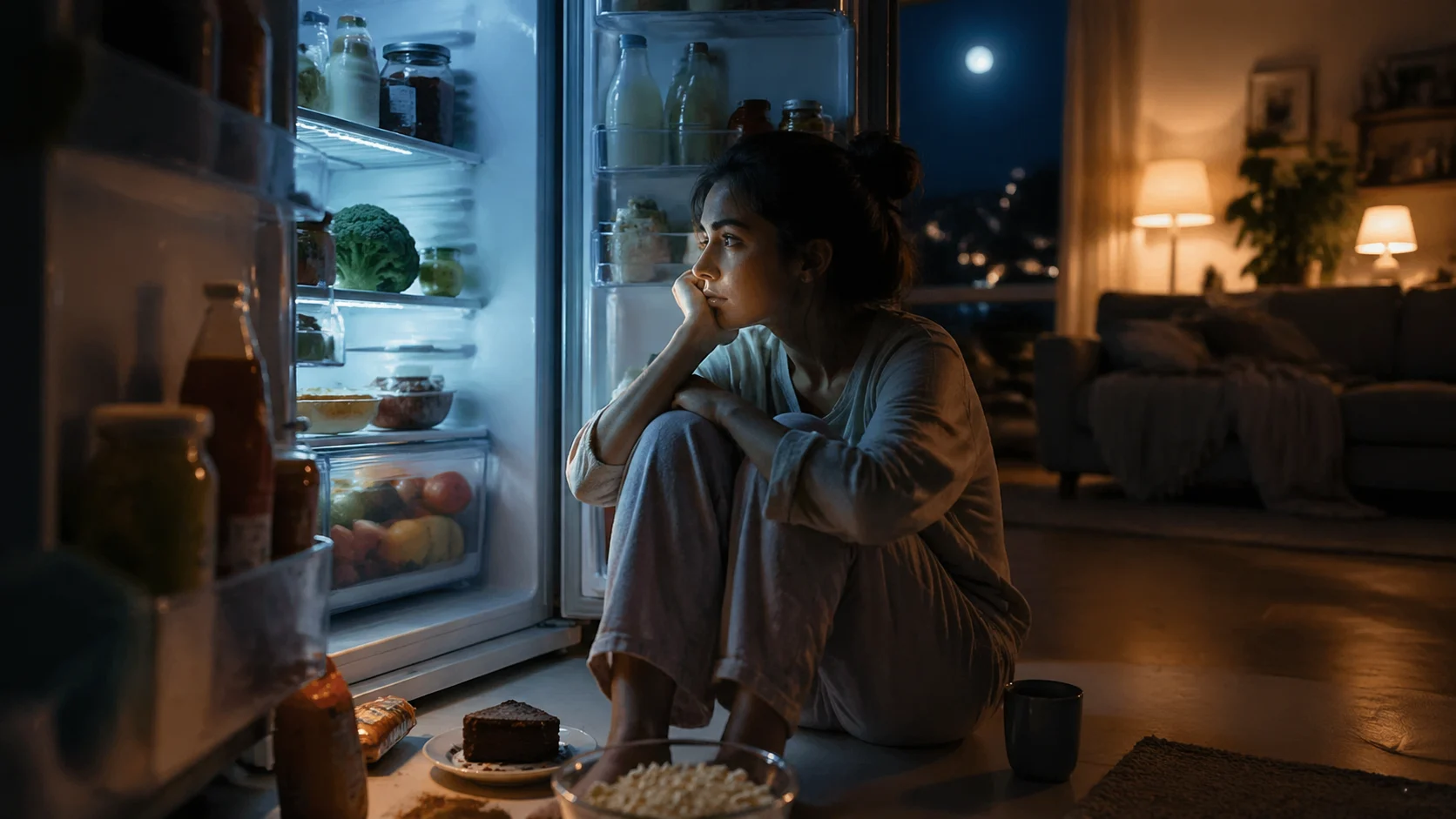
Stress eating at night is often less about willpower and more about unmet needs built up across the day. This article explains why nighttime eating happens, how stress and under-eating can intensify cravings, and how to respond with more balance, comfort, and self-understanding.
Learning how to stop using food for comfort starts with understanding that comfort eating is often a response to stress, undernourishment, loneliness, or exhaustion—not a character flaw. This article offers a gentle framework for checking in with body and emotions, building a comfort menu beyond food, and creating more balanced daily nourishment without shame or rigid rules.
This article gently explains emotional hunger vs physical hunger, helping readers notice the difference between body-based hunger and stress- or mood-driven cravings. It offers a compassionate framework for responding without shame, restriction, or food guilt.