
When the Kitchen Feels Like a Landing Place
Stress eating at night is often not a discipline problem. For many women, it is the body’s soft but persistent way of asking for comfort, energy, or relief after a long day of holding everything together. What looks like “random snacking” at 9 p.m. may actually be a mix of under-eating, emotional fatigue, habit, and the very human need to exhale.
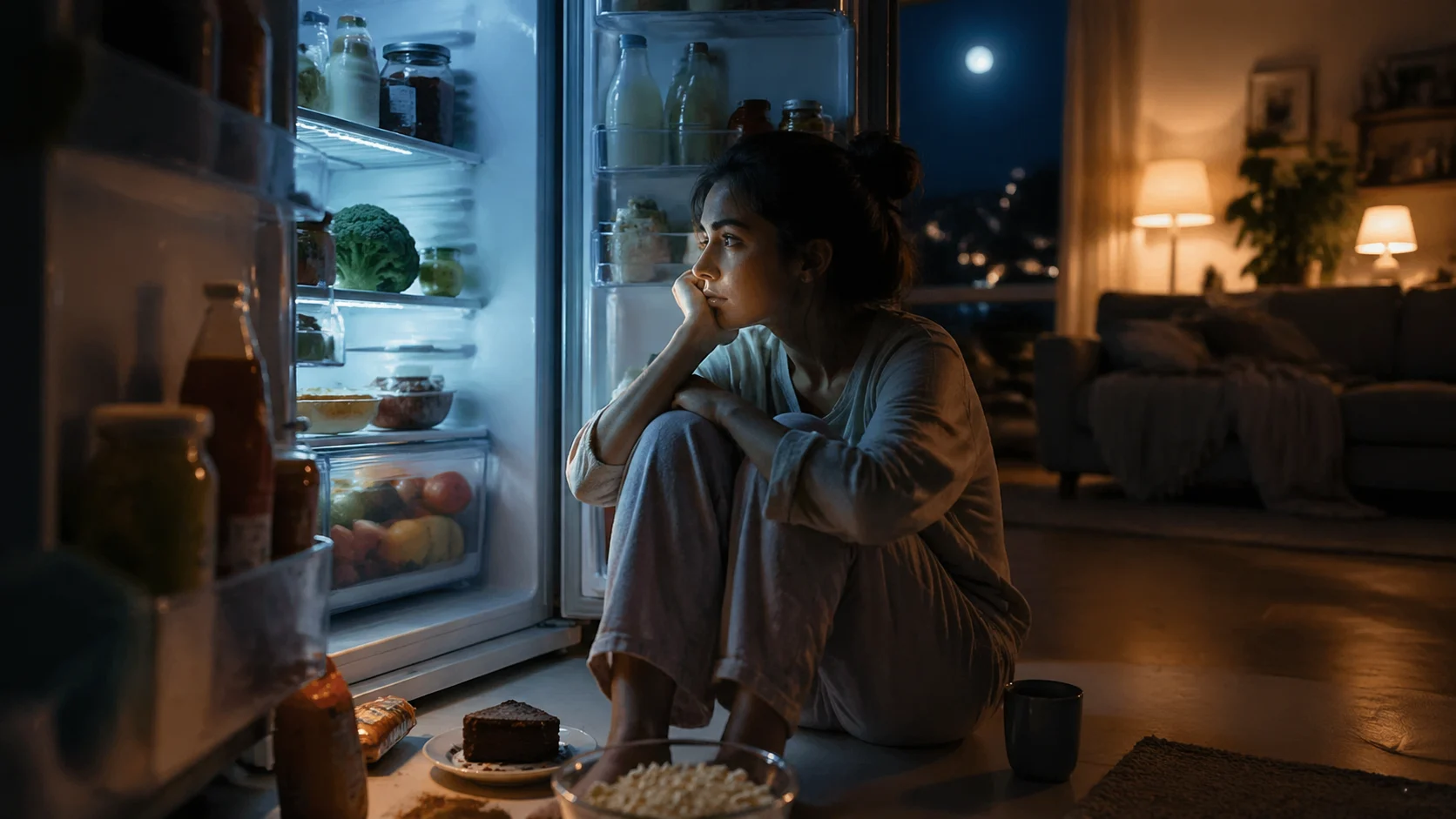
She gets through the meetings, the commute, the school pickup, the unanswered texts, the low hum of pressure that never fully leaves. Then the house quiets, and suddenly the pull toward chips, cookies, cereal, or toast feels louder than logic. This is why stress eating at night can feel so confusing: her body may not be asking only for food. It may be asking for softness.
Food is not always a lack of control. Sometimes it is the language a tired body uses when it has run out of louder words.
Research has observed that stress can shift appetite and increase preference for highly palatable foods, especially those rich in sugar or fat, partly through the effects of cortisol and reward pathways in the brain. In real life, that often means nighttime cravings appear strongest when the day has asked too much.
The Hidden Reasons Night Eating Feels So Powerful
Night eating often gathers strength quietly, hour by hour. A woman may think the craving began after dinner, but the story usually started much earlier.
- Too little food during the day. A rushed yogurt at noon and coffee through the afternoon can leave the body playing catch-up by evening. When dinner ends, the nervous system is still searching for enough.
- Emotional decompression. Some people do not feel their feelings fully until the day slows down. The pantry becomes a place to land.
- Habit loops. If every night has ended with something crunchy, sweet, or soothing, the brain starts expecting that rhythm.
- Low dopamine, low comfort, low energy. After a demanding day, pleasure can feel medicinal. Food is quick, warm, available, and familiar.
This is where Joyini’s gentle framework can help: the Night Signal Check. Instead of asking, “Why am I doing this again?” she can ask three softer questions:
- Did the body get enough? Think meals with staying power, not perfection.
- Did the heart get any room? Stress often asks for comfort before it asks for logic.
- Did the evening get any softness? Sometimes the craving is for transition, not only taste.
A More Supportive Way to Meet Stress Eating at Night
When stress eating at night shows up, the most helpful response is rarely tighter control. Restriction tends to make the urge louder tomorrow.
The body is not a project to overpower. It is a place to return to with more understanding.
A gentler response might look like this:
- Pause without performing perfection. A pause is not a punishment. It can be as simple as standing in the kitchen and noticing, “This has been a hard day.”
- Add before taking away. If she wants cookies, pairing them with something more grounding—a glass of milk, a spoonful of peanut butter, a bowl of warm oatmeal with crushed walnuts—can bring more steadiness than trying to “be good.”
- Make dinner a little more anchoring. An evening meal that includes protein, fiber, fat, and comfort often softens the intensity of later cravings.
- Create a landing ritual. A shower, dim lights, peppermint tea, a ten-minute stretch on the living room rug—small cues can help the nervous system realize the day is over.
None of this means nighttime eating must disappear to count as progress. Sometimes progress looks like eating with less urgency, less secrecy, and far less shame.
What a Balanced Evening Can Sound Like in Real Life
For the woman who keeps finding herself in the pantry at 10 p.m., support may begin long before bedtime. Breakfast that actually satisfies. A lunch that is more than something picked at between emails. An afternoon snack that steadies energy instead of leaving her stranded. A dinner that feels comforting, not merely “healthy.”
It may be a bowl of rice still steaming under salmon and avocado, or pasta twirled with olive oil, white beans, and wilted spinach, eaten from the couch on a very ordinary Tuesday. Balanced eating is not about removing comfort; it is about making comfort more supportive.
And if stress eating at night still happens? That does not erase the care. It simply offers information. The body is speaking again. The work is to listen with curiosity.
Questions That Often Come Up
What if I only crave food at night, even when I ate dinner?
That can happen when dinner filled the stomach but did not fully satisfy the body or the senses. Sometimes the missing piece is enough carbohydrate, enough comfort, or enough emotional decompression after a tense day.
Is stress eating at night always emotional eating?
No. Sometimes it is emotional, sometimes physical, and very often it is both. A woman may be underfed and overstimulated at the same time, which makes nighttime eating feel especially intense.
Should I avoid keeping snack foods in the house?
For some people, temporary structure helps. But for many chronic dieters, making foods feel forbidden can increase their emotional charge. A calmer approach is to keep satisfying foods visible and pair them with more grounding options.
What helps if nighttime eating comes with guilt?
It helps to separate behavior from identity. Eating at night does not mean she is failing. It often means she needs more support, more steadiness, or more compassion than the day allowed.
Please note: Every body has its own rhythm. This gentle guide is for educational purposes only and does not replace personalized advice from a healthcare professional or registered dietitian, especially if night eating feels distressing, compulsive, or tied to a medical concern.