
When the Urge to Eat Isn’t Really About Hunger
Many emotional eating triggers are not signs that someone is “out of control.” More often, they are body signals shaped by stress, long gaps between meals, poor sleep, old food rules, or the need for comfort. When a woman reaches for something crunchy after a draining meeting or finds herself standing in the kitchen at 9 p.m., her body may be asking for relief, steadier energy, or emotional exhale—not punishment.
That is the quiet misunderstanding at the center of so much food guilt. She may think the problem is discipline, when in reality the pattern often begins much earlier: a rushed breakfast, an overfull calendar, an afternoon powered by coffee, a nervous system that has been “on” all day. Emotional eating triggers often make sense once the whole day is visible.
Body cues are not a character flaw. They are often the soft alarms of a life that has asked too much for too long.
Researchers have long observed that stress can shift eating patterns, especially toward highly palatable foods. One often-cited line of research notes that chronic stress may increase preference for sugary and high-fat comfort foods, partly through hormonal and reward-system changes. That does not mean a person is broken. It means the body is trying, in its own imperfect language, to self-soothe.
The Hidden Spark Behind So Many Evening Cravings
Some of the most common emotional eating triggers do not look emotional at first glance. They look like being “too busy to eat.” They look like skipping lunch because the inbox was on fire. They look like trying to be “good” all day, only to feel magnetically pulled toward snacks at night.
One gentle way to understand this is through Joyini’s “Missing Middle” framework: when the middle of the day lacks enough nourishment, the evening often grows louder. A light yogurt at 8 a.m., a granola bar at 1 p.m., and nothing substantial until dinner can leave the body searching for quick comfort by sunset. What feels like emotional chaos may partly be biological catch-up.
- Stress overload: After hours of emotional restraint, food can become the first place the nervous system looks for softness.
- Restriction backlash: If certain foods have been labeled “off limits,” the mind often gives them more power than they deserve.
- Low or unstable energy: A body that has not been adequately fed may crave fast relief, especially in the evening.
- Loneliness or overstimulation: Sometimes the urge arrives in the quiet after everyone else is asleep, when food becomes company, comfort, or pause.
The body is not a project to conquer. It is a home to listen to.

A Softer Way to Meet Emotional Eating Triggers
Instead of asking, “How do I stop this immediately?” it may help to ask, “What is this moment trying to support?” That small shift changes everything. It moves the conversation away from blame and toward understanding.
A gentle response might look like this:
- Name the moment: “This feels like stress, not just hunger.” Naming reduces the fog and creates a little room to choose.
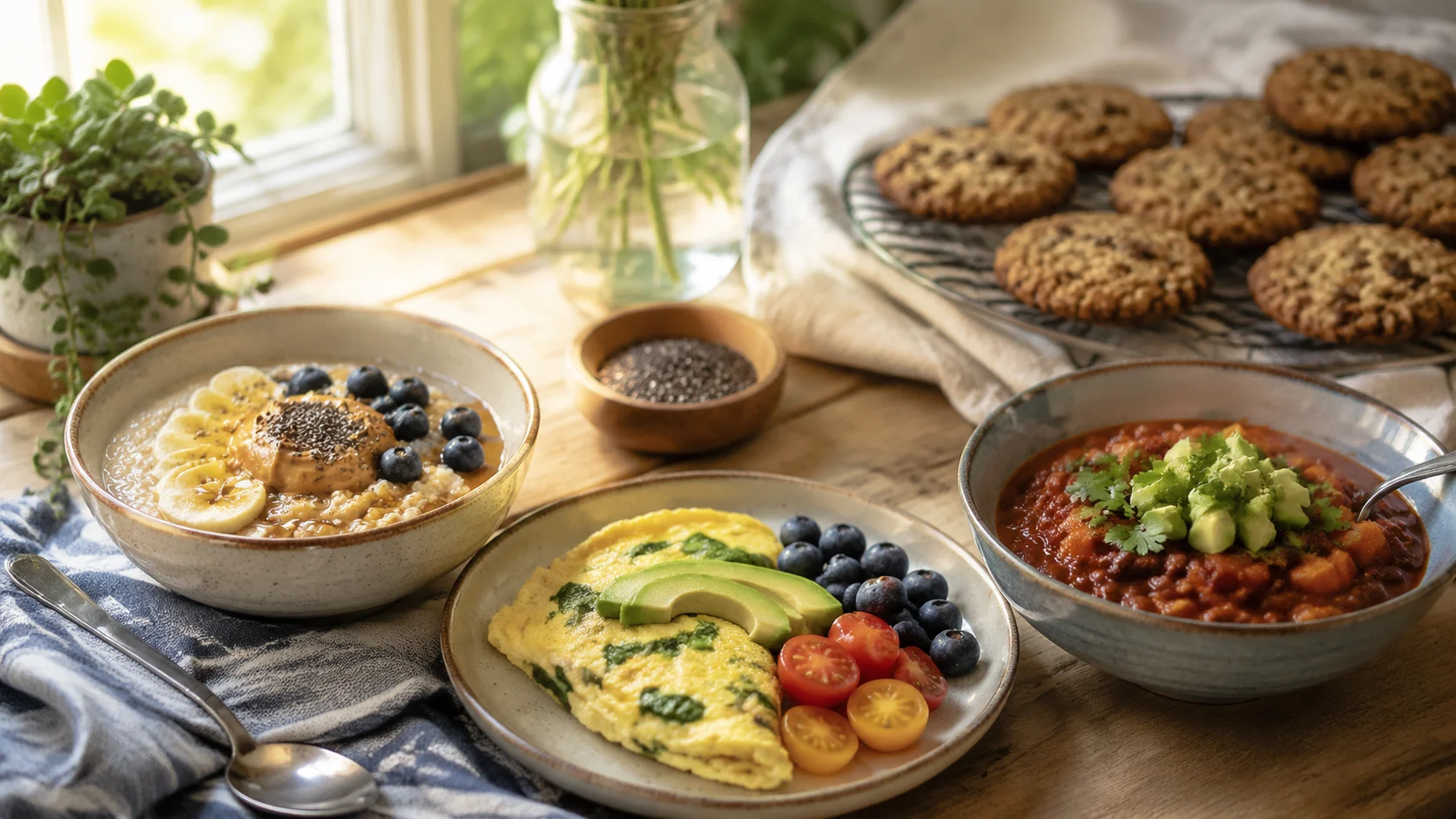
- Add before subtracting: Before trying to remove a craving, consider what could make the moment more supportive—a sliced apple with peanut butter, warm toast with eggs, or a bowl of oatmeal with crushed walnuts and cinnamon.
- Check the day behind the craving: Did she eat enough earlier? Was there protein, fiber, and comfort somewhere in the day, or only urgency?
- Build a pause that isn’t punishment: A glass of water, a step onto the porch, a hand on the chest, a few slow breaths. Not to erase the craving, but to hear it more clearly.
This is where many women begin to notice that emotional eating triggers lose some of their intensity when meals become more balanced and less rule-driven. Not because every craving disappears, but because the body no longer has to shout quite so loudly.
When Comfort Food Is Carrying More Than Flavor
There are evenings when comfort food is doing emotional labor. It is helping her land after a hard day. It is filling the silence after caregiving, commuting, producing, pleasing, holding everything together. Seen this way, the goal is not to shame the comfort, but to expand the ways comfort can arrive.
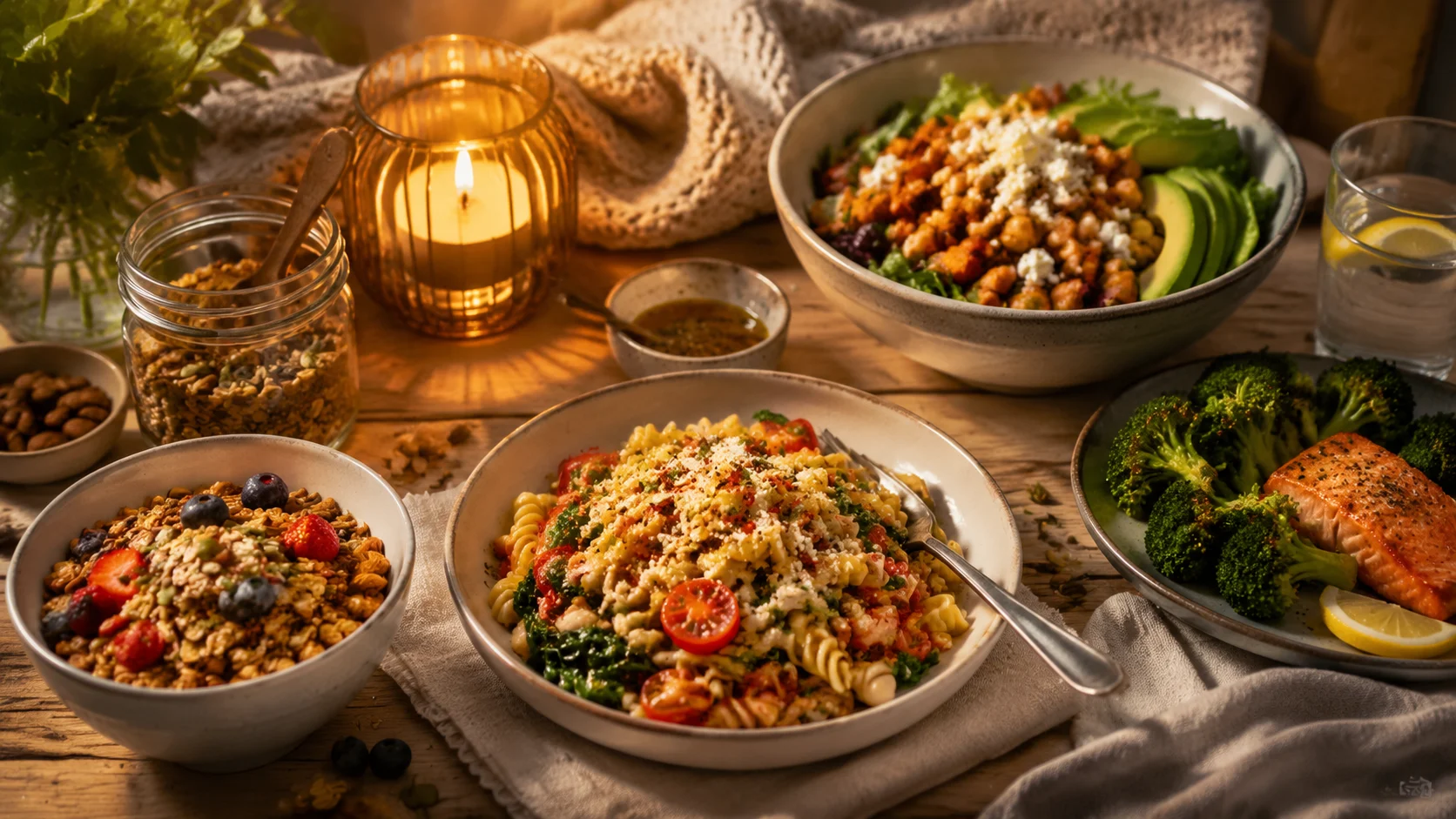
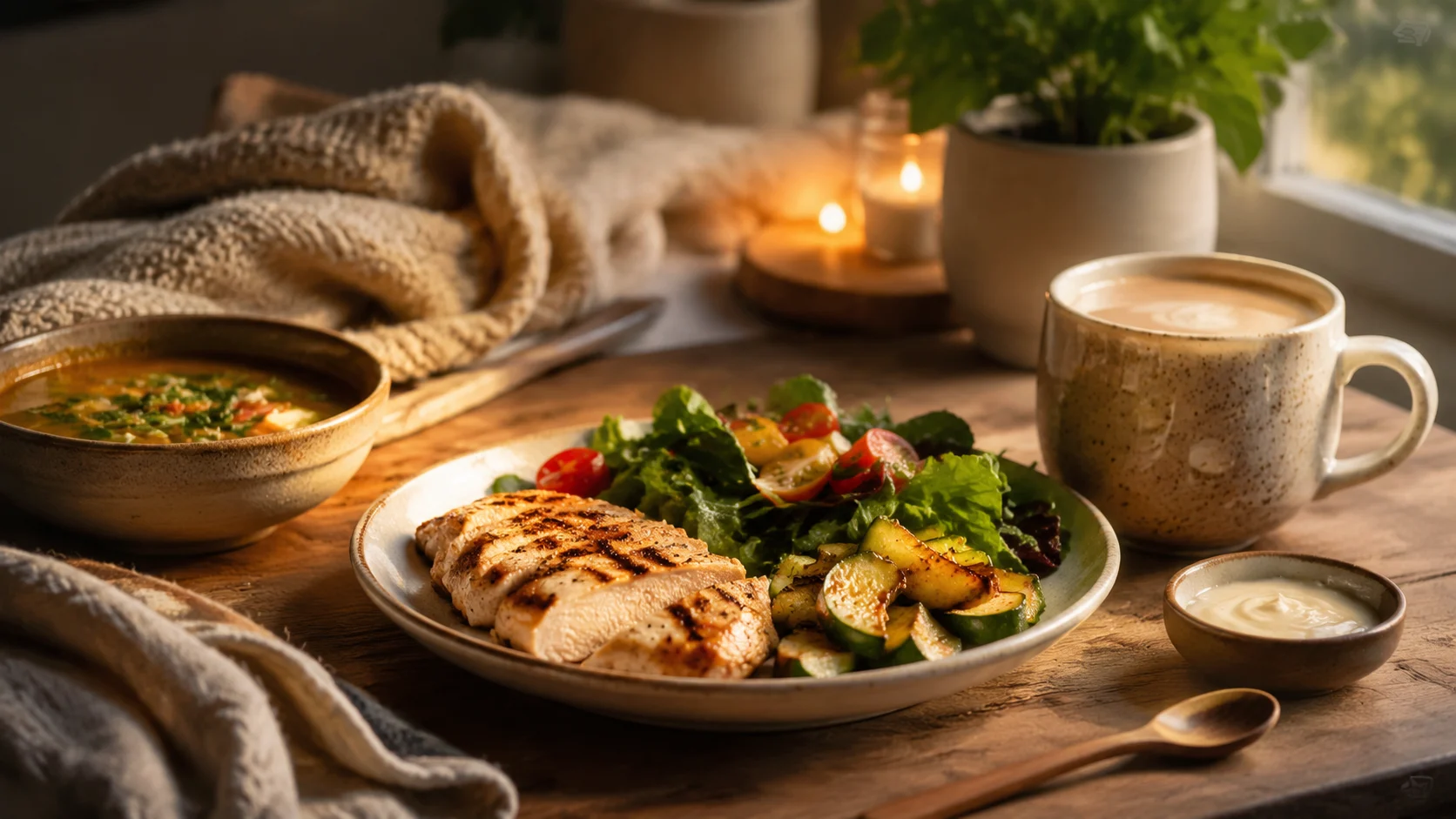
Maybe that means dinner with more staying power: rice still warm from the pot, salmon or tofu glazed and soft, a handful of greens folded in with olive oil and salt. Maybe it means dessert without a moral debate. Maybe it means recognizing that some emotional eating triggers soften when a person is better fed, better rested, and less at war with food.
And if the pattern repeats, that does not mean she has failed. It may simply mean the signal has not been fully answered yet.
Please note: Every body has its own rhythm, history, and needs. This gentle guide is for educational purposes and is not a substitute for personalized advice from a doctor, registered dietitian, or mental health professional—especially if eating feels distressing, compulsive, or connected to a deeper struggle.
You Might Also Wonder
Why do emotional eating triggers feel strongest at night?
Night often holds the leftovers of the whole day. If she has been underfed, overstimulated, or emotionally braced for hours, the evening may be the first time her body feels the full weight of it.
Does emotional eating always mean someone isn’t really hungry?
No. Physical hunger and emotional need often overlap. A craving can carry both biology and feeling at the same time, which is why gentle curiosity usually helps more than strict rules.
What if stress makes me want sugar right away?
That can be a very human response. Try pairing the sweet food with something grounding—perhaps chocolate with a handful of nuts, or toast with jam and yogurt—so the body receives both comfort and steadier energy.
Can skipping meals make emotional eating triggers worse?
Very often, yes. Long gaps without enough nourishment can make evening cravings feel more urgent, more chaotic, and harder to interpret clearly.
How do I respond without feeling ashamed afterward?
It helps to replace judgment with reflection: What was happening before the urge? What might have made the day feel more supported? Shame tends to shut the door; understanding opens it.