
When Comfort Eating Isn’t About a Lack of Discipline
How to stop using food for comfort often begins with a surprising truth: the problem usually is not that she loves food too much. It is that she has been asked to carry too much. When a woman reaches for chips after a hard meeting or stands in the kitchen at 9 p.m. looking for something sweet, her body is not staging a moral failure. It may be asking for rest, steadier energy, emotional relief, or simple softness at the end of a long day.
Many women try to solve this by tightening control. They promise to “be good tomorrow,” skip meals, or remove comforting foods from the house. Yet that often makes the pull stronger. A body that feels underfed, stressed, or emotionally alone will keep searching for ease wherever it can find it.
Body trust rarely grows through punishment. It grows when a person feels fed, heard, and safe enough to stop fighting herself.
So if she wants to learn how to stop using food for comfort, the gentler question is not “How do I force this to stop?” but “What is food helping me survive right now?”
The Soft Check-In Method
A simple micro-framework can help here: the Soft Check-In. Before eating for comfort, she pauses for less than a minute and looks at four quiet clues:
- Body: Has she eaten enough today? A skipped lunch can wear the mask of an evening craving.
- Brain: Is she mentally fried? Decision fatigue often sends people looking for something fast, crunchy, or sweet.
- Heart: Is she lonely, tense, disappointed, or overstimulated? Food can feel like company when the day has been emotionally sharp.
- Environment: Is she eating because the house finally got quiet, the show is on, or the snack is in arm’s reach?
This is not a test she must pass. It is simply a way to understand the moment before judging it. Sometimes the answer really is hunger. Sometimes it is comfort. Often, it is both.
Research has observed that stress can increase preference for highly palatable foods rich in sugar and fat, partly because the nervous system is looking for fast relief. Knowing that can soften self-blame. The urge is not random; it has context.

What to Reach For Besides Food—Without Pretending Food Never Helps
One reason comfort eating can feel hard to change is that food actually does comfort, at least for a little while. Pretending otherwise usually backfires. A more realistic path is to build a comfort menu so food is no longer the only option.
Her comfort menu might include:
- A steadier snack first: something like apple slices with peanut butter, or warm toast with eggs, when the craving may be intensified by low energy.
- A sensory reset: stepping outside for cool air, wrapping up in a blanket, or making tea in a favorite mug.
- A feeling outlet: a voice note to a friend, a page of messy journaling, or even sitting still for three breaths with one hand on the chest.
- Permission to still eat the food: after the pause, she may still want the cookie or bowl of popcorn. The difference is that she is choosing it with more awareness, not only urgency.
Food is not the enemy. The deeper ache is often the feeling that food has become the only tenderness available.
The Hidden Fuel Problem Behind Many Comfort Cravings
Sometimes what looks emotional is also biological. A woman who drinks coffee through the morning, eats a light salad at lunch, powers through the afternoon, and finally crashes at night is not “bad at moderation.” She may simply be undernourished.
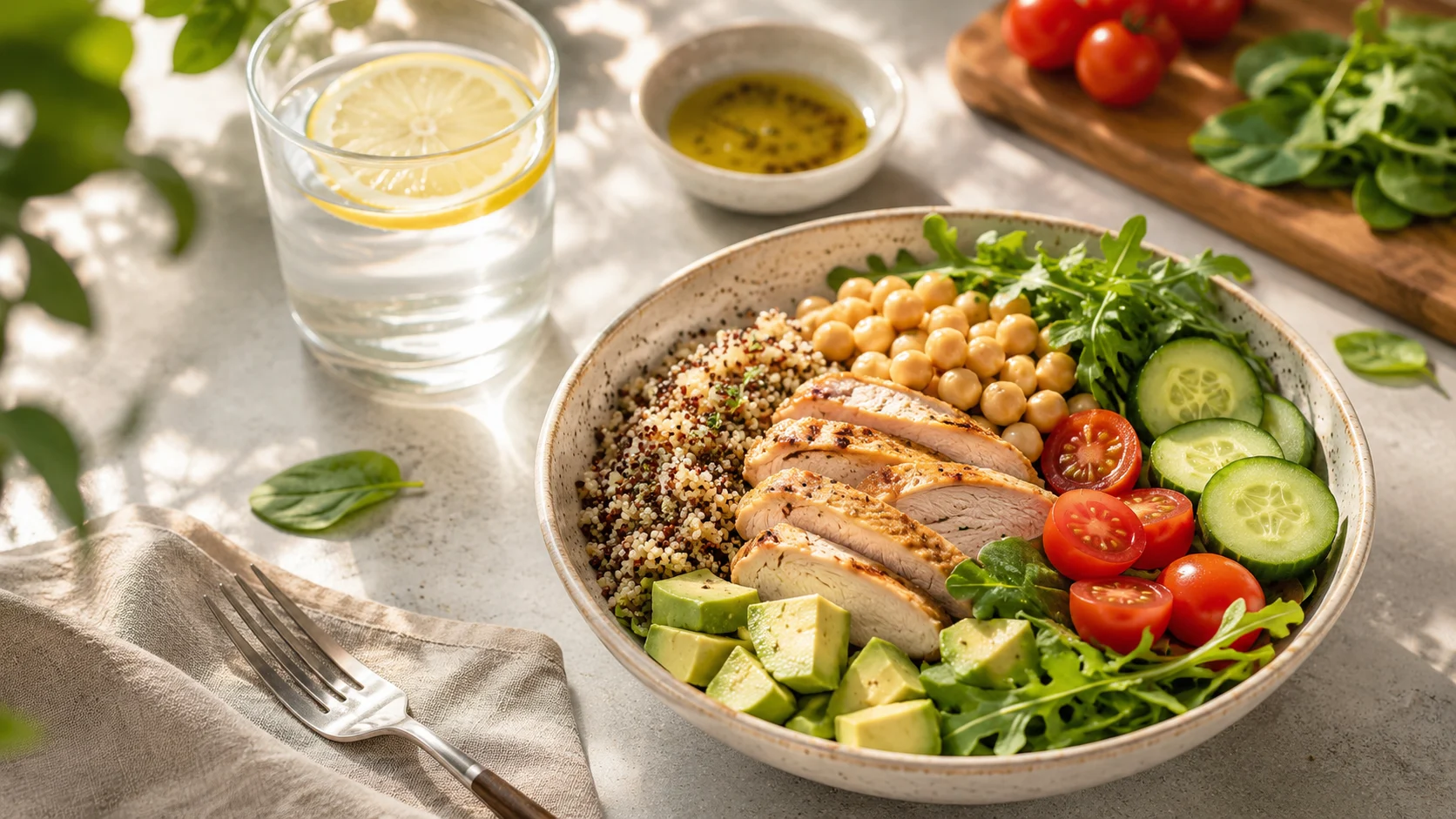
If she is exploring how to stop using food for comfort, it helps to look at the rhythm of the whole day. Balanced meals with protein, fiber, fat, and satisfying carbs can make evening cravings feel less intense. Picture a lunch bowl with warm rice, salmon, avocado, and roasted vegetables, or a quick afternoon snack like Greek yogurt with berries and walnuts. These are not diet foods. They are support.
This is especially true for women moving through stressful seasons, poor sleep, or premenstrual days, when appetite and cravings can naturally rise. The body often asks louder when it has been ignored too long.
What Real Change Looks Like in Daily Life
Real change rarely arrives as perfect control. It often looks quieter than that. She notices the urge before acting on it. She eats dinner before she gets ravenous. She keeps comforting foods in the house without turning them into forbidden objects. She learns that some nights call for a nourishing meal, and some nights call for both dinner and dessert without turning that into a personal crisis.
If she wants to know how to stop using food for comfort in a lasting way, the work is less about becoming stricter and more about becoming more responsive. More meals. More rest. More emotional honesty. Less shame.
Please note: Every body has its own rhythm, history, and needs. This gentle guide is for educational purposes and does not replace personalized support from a healthcare professional or licensed mental health provider, especially if eating feels distressing, compulsive, or hard to manage alone.
A Few Practical Questions
If she only wants comfort food at night, does that automatically mean emotional eating?
Not always. Night eating can be shaped by under-eating earlier, habit, exhaustion, or finally having a quiet moment to feel her feelings. The pattern matters more than the clock.
What if pausing makes the craving feel even stronger?
That can happen. A pause is not meant to erase desire. It simply creates a little space to notice what else may be needed. She can still eat while practicing awareness.
Should she remove trigger foods from the house?
For some people, short-term structure can feel supportive. But long-term, making foods feel forbidden often gives them more emotional charge. Gentle exposure with enough regular meals is often steadier.
What if comfort eating is the only thing that helps after a hard day?
Then it makes sense that she keeps returning to it. The goal is not to rip away a coping tool before other support exists. It is to slowly build more ways to feel soothed, fed, and held.