

The Misunderstanding That Makes Eating Feel Harder
Many women are told that a low fat diet is automatically the healthiest path. But when meals become too stripped down, the body often answers with louder cravings, shakier energy, and a strange sense that something is missing. For some, the question is not whether a low fat diet can work, but whether it can feel nourishing enough for real life. And when curiosity about a veg low carb diet enters the picture, the confusion can deepen: less fat, fewer carbs, and somehow still expected to feel calm and satisfied.
The gentler truth is this: food is not a test of discipline. It is a conversation with the body. A thoughtful low fat diet can support health for some people, but it usually works best when it still includes enough protein, fiber, and comforting structure to protect steady energy.
Body signals are not a character flaw. They are often the quiet language of unmet needs.
Why “Lighter” Meals Sometimes Leave Her Hungrier
Picture the woman at her desk around 3 p.m., answering one more email while already thinking about crackers, chocolate, or anything quick. She may assume she “ate healthy” at lunch because it was light. Yet a lunch of plain salad, low-fat dressing, and a piece of fruit can pass through the afternoon like a whisper.
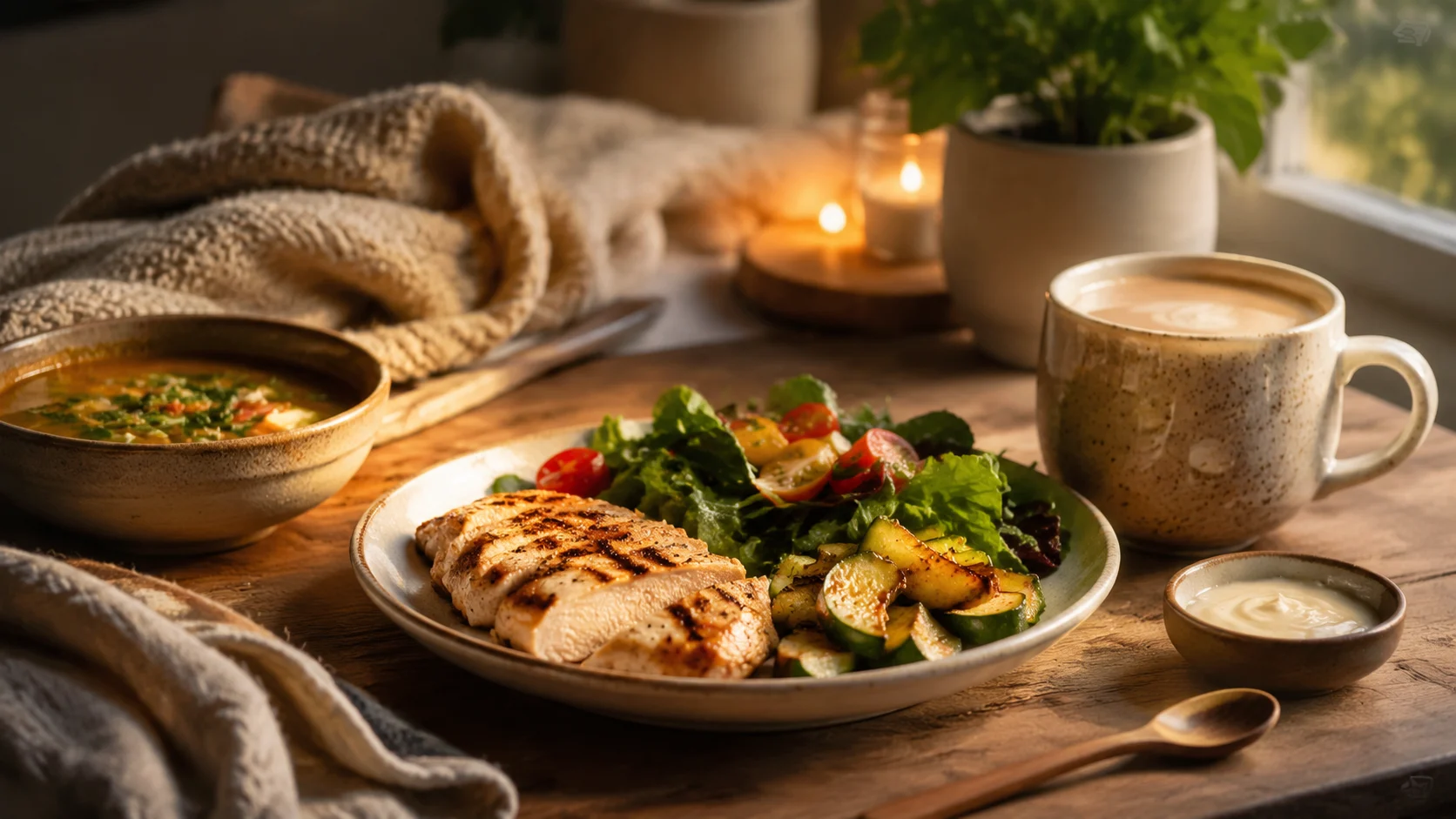
This is where Joyini’s gentle micro-framework helps: the Soft Plate Balance. Instead of chasing the lightest possible meal, she builds a plate that feels anchored. That might look like lentils folded into warm tomato soup, roasted vegetables tucked beside tofu, or Greek yogurt with berries and chia on a rushed morning. The point is not heaviness. The point is staying power.
- Protein brings steadiness — like eggs at breakfast or baked tofu in a grain bowl, it helps a meal linger kindly instead of disappearing fast.
- Fiber softens the energy rise and fall — beans, vegetables, berries, and oats often help the afternoon feel less jagged.
- A little fat can add comfort — even within a low fat diet, small amounts from seeds, yogurt, or avocado can make meals feel more complete.
Research has long observed that protein and fiber are linked with greater fullness, and dietary guidelines continue to note that most adults benefit from more fiber-rich foods in everyday meals. That matters, especially for women trying to eat in a way that supports focus and ease rather than constant compensation later.
Where a Veg Low Carb Diet Can Feel Supportive — and Where It Can Feel Tight
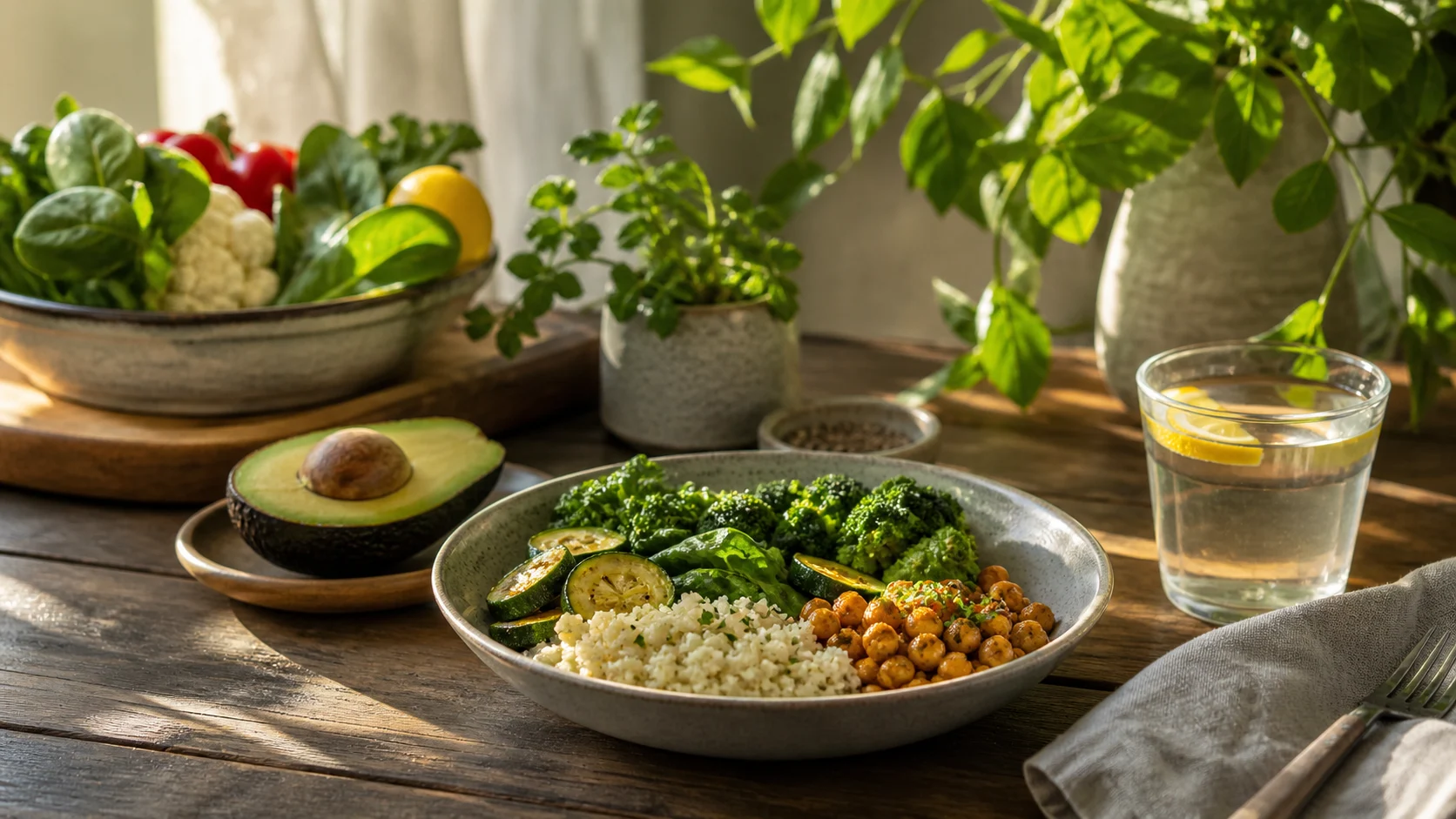
A veg low carb diet may appeal to someone who wants fewer blood sugar swings or simply prefers meals built around vegetables, tofu, eggs, yogurt, and legumes. In some cases, it can feel grounding. But if it becomes another rulebook — no bread, fear of fruit, anxiety about every starch — it may quietly recreate the same old food stress in a more polished outfit.
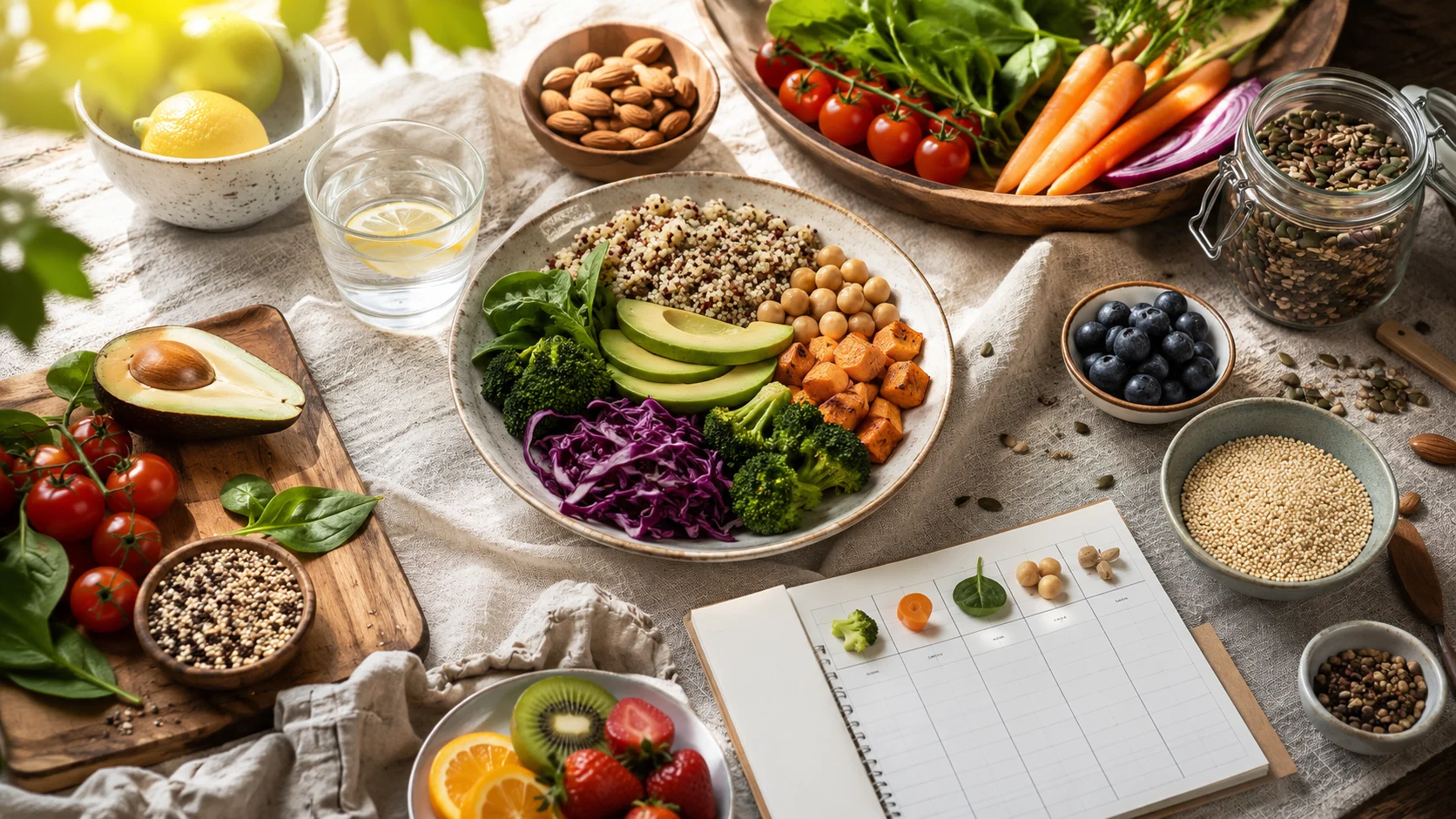
That is why a veg low carb diet needs nuance. For one woman, a dinner of cauliflower rice, sesame tofu, and sautéed greens may feel lovely. For another, that same meal may need a side of beans or a small baked potato to feel emotionally and physically satisfying. The body does not award medals for deprivation.
The healthiest meal is not always the one with the fewest grams. Often, it is the one that lets her feel fed, clear, and at ease.
A Softer Way to Build a Low Fat Diet That Still Feels Like Care
If a low fat diet is medically recommended or personally preferred, it helps to think in layers rather than limits. The goal is not to make food smaller and smaller. The goal is to make it balanced enough to hold her through the day.
- Begin with something grounding — a bowl of oatmeal swirled with cinnamon and topped with crushed walnuts, or cottage cheese beside fruit and toast.
- Let vegetables be generous, not punitive — a roasted sheet pan of carrots, zucchini, and peppers adds warmth and abundance, not just nutrition on paper.
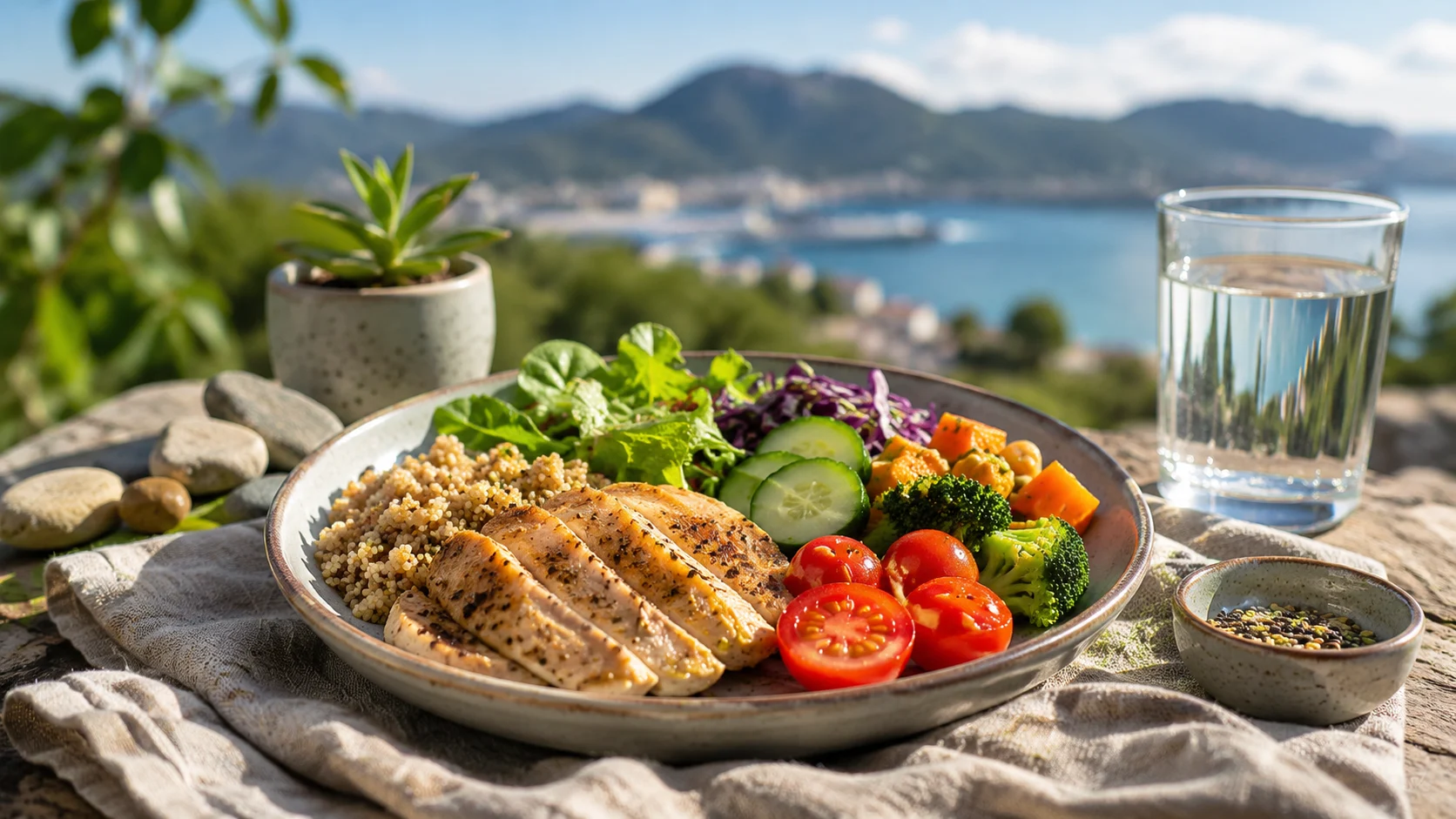
- Choose satisfying lean proteins — think edamame, tofu, beans, fish, or yogurt that fits her needs and preferences.
- Keep carbohydrates thoughtful, not feared — even if she leans toward a veg low carb diet, small portions of beans, fruit, or whole grains may support steadier moods and fewer rebound cravings.
There is room here for flexibility. A meal does not need to be perfect to be supportive. It only needs enough substance to say, softly, “You are cared for.”
When the Goal Is Peace, Not Perfection
For women with a long history of dieting, any structured plan can stir old fears. A low fat diet can feel innocent on the surface, yet become exhausting if it turns every meal into a negotiation. The same is true of a veg low carb diet when it becomes more about control than nourishment.
What often helps most is not stricter eating, but more honest observation: Which meals create steady energy? Which ones leave her prowling the kitchen at night? Which ones feel kind enough to repeat on busy weekdays?
*Please note: Every body has its own rhythm, preferences, and health context. This gentle guide is for educational purposes only and does not replace personalized advice from a registered dietitian, physician, or other qualified healthcare professional.*
You Might Also Wonder
If a low fat diet leaves me hungry, am I doing it wrong?
Not necessarily. It may simply mean the meal needs more protein, fiber, or overall volume. Hunger is information, not failure.
Can a veg low carb diet work without feeling restrictive?
Yes, if it stays flexible. Meals built around vegetables, tofu, eggs, yogurt, legumes, and a few strategic carbs can feel steady without becoming harsh.
Do I need to avoid all fats on a low fat diet?
Usually no. Many people do better with modest amounts of fat that add satisfaction and help meals feel complete.
What if I crave carbs in the evening after eating light all day?
That often points to undernourishment earlier. A more balanced breakfast and lunch can make evenings feel less intense.
Leave a Reply