

When less fiber is not “less healthy,” but simply more supportive
A low residue diet is a short-term eating approach that lowers fiber and other harder-to-digest foods so the gut has less bulk to move through. For someone facing digestive irritation, bowel prep, or recovery after certain medical situations, it can feel less like a restrictive plan and more like giving the digestive system a quieter room to rest in.
Many women have been taught that more fiber is always better. But the body is not a machine that thrives on one rule forever. Sometimes, gentle nutrition means adjusting to what the body can handle right now, not forcing a “perfect” plate when digestion feels tender.
Body wisdom is not about eating perfectly. It is about noticing when the usual rules no longer feel like support.
A low residue diet usually limits foods that leave more undigested material in the intestines. That often means stepping back from raw vegetables, whole grains, nuts, seeds, beans, and many high-fiber fruits for a while. Instead, meals tend to lean toward softer, simpler foods like white rice, refined pasta, eggs, yogurt, tender chicken, smooth nut butter, and cooked or canned fruit without skins.
The quiet logic behind a low residue diet
Think of digestion like a busy hallway. Fiber is often helpful because it keeps things moving, but when the gut is inflamed or preparing for a procedure, that same traffic can feel overwhelming. A low residue diet reduces the amount of material left behind in the digestive tract, which may help lower stool volume and digestive friction.
This is different from a low sodium diet, which focuses on reducing salt to support concerns like blood pressure or fluid balance. The two plans are not the same, though a person could sometimes need both depending on their medical guidance. One is about digestive residue; the other is about sodium intake.
Research and clinical guidance commonly place low-fiber or low-residue diets at roughly 10 to 15 grams of fiber per day, far below the amount usually recommended for general health. That lower target is one reason this style of eating is usually meant for a limited period rather than everyday long-term use.
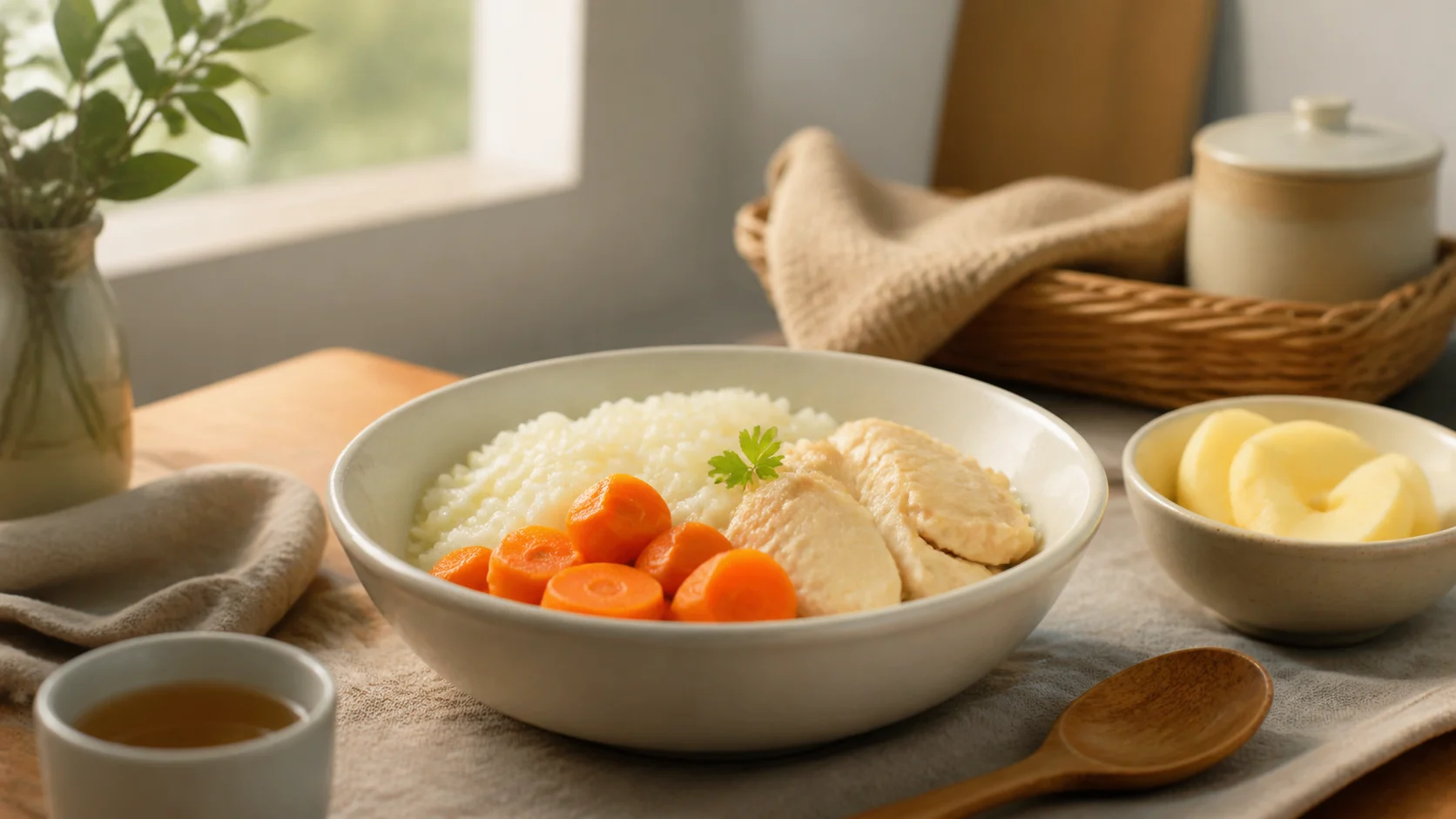
The Soft Plate Method: building meals that feel calm, not confusing
When someone is tired, anxious, or healing, food advice can start to sound like noise. A simple micro-framework can help: the Soft Plate Method. It means building meals from three quiet corners of the kitchen:
- Soft starch — white toast, plain crackers, white rice, or a bowl of creamy oatmeal if tolerated. These foods can feel steady and familiar.
- Gentle protein — scrambled eggs, baked fish, sliced turkey, tofu, or shredded chicken. Protein helps meals feel more grounding without adding much residue.
- Easy produce — applesauce, ripe banana, canned peaches, or well-cooked carrots without skins. This keeps meals from feeling stark while staying easier on digestion.
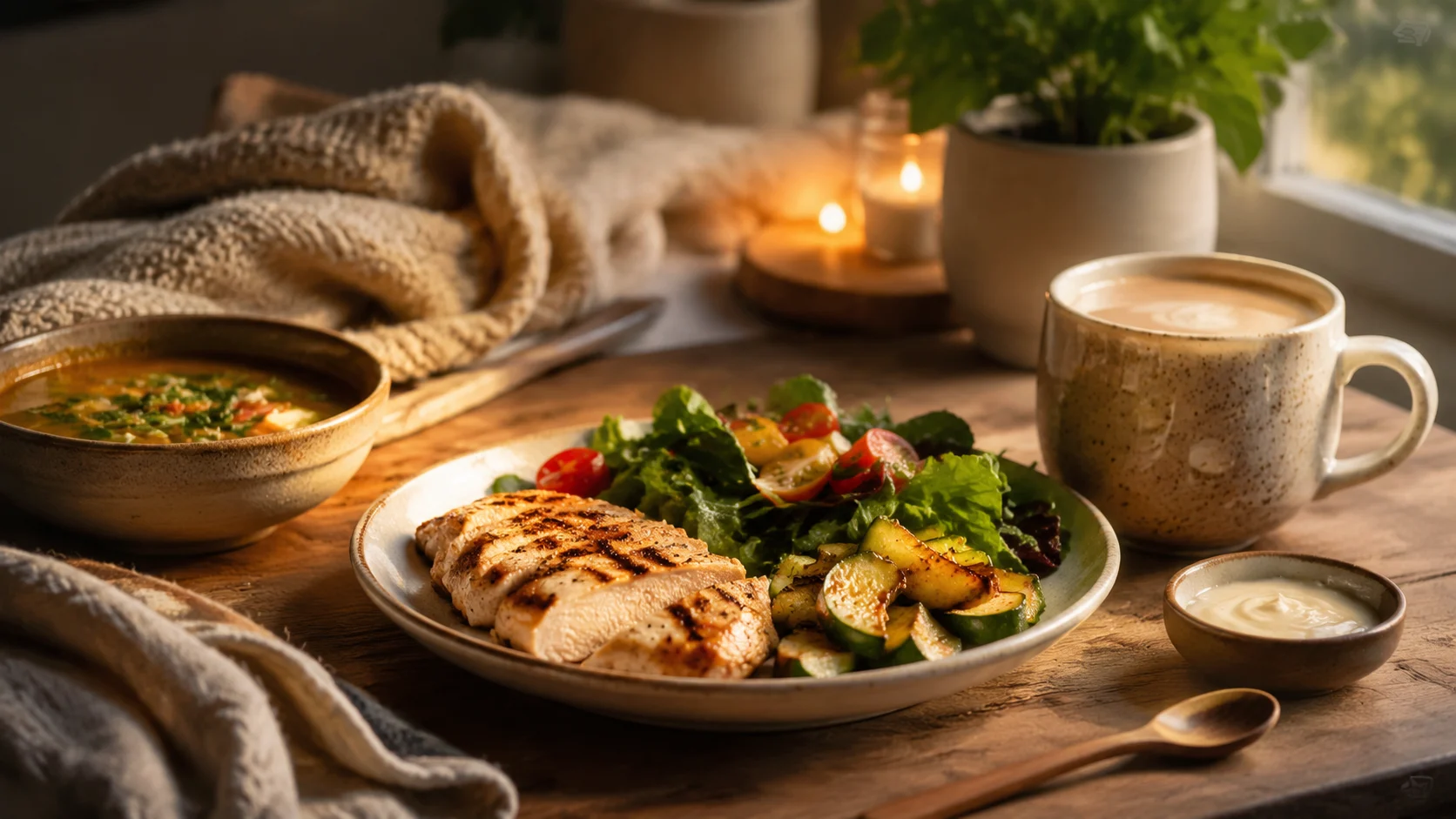
A lunch might look like warm white rice with tender chicken and cooked zucchini, eaten slowly at a desk between meetings. Breakfast might be toast with smooth peanut butter and banana slices. Dinner could be a small bowl of pasta with soft-cooked eggs and a little olive oil, simple enough for a low-energy night.
The most nourishing meal is not always the most impressive one. Sometimes it is simply the one the body can meet with ease.
Foods that often work better, and foods that may need a pause
Often easier on a low residue diet:
- Refined grains like white bread, plain bagels, or rice noodles
- Tender proteins such as eggs, fish, yogurt, cottage cheese, and poultry
- Cooked vegetables without skins or seeds, like peeled carrots or squash
- Fruits in softer forms, such as applesauce or canned pears
Often limited for a while:
- Raw salads that ask the gut to do more work than it wants to do
- Beans, lentils, bran cereals, and whole grains
- Nuts, seeds, popcorn, and chunky nut butters
- Fruit skins, dried fruit, and many fibrous vegetables
If someone is also following a low sodium diet, the details matter even more. Canned soups, deli meats, crackers, and packaged white breads may fit the low residue side of things but still bring in quite a bit of sodium. In that case, it helps to look for lower-sodium broths, plain rice, home-cooked chicken, and unsalted crackers when possible.
What can feel unexpectedly hard about this way of eating
Sometimes the hardest part is not the food list. It is the emotion under it. A woman who usually reaches for grain bowls, roasted vegetables, and berries may feel oddly unsettled eating white toast and applesauce. She may wonder if she is “doing nutrition wrong.” But a low residue diet is not a step backward. It is a temporary form of care for a body that needs less friction right now.
That is also why comparison can be so unhelpful. Another person may be working on a low sodium diet. Someone else may need more fiber, not less. Nutrition becomes gentler when it stops being moral and starts being contextual.
Please note: Every body has its own rhythm and medical history. This gentle guide is for educational purposes only and does not replace personalized advice from a healthcare professional, especially if a low residue diet or low sodium diet has been recommended for a specific condition or procedure.
You Might Also Wonder
Can a low residue diet still feel balanced?
Yes, especially in the short term. Balance here may look less colorful than usual, but it can still include carbs, protein, fluids, and gentle forms of fruit or vegetables that the body tolerates more easily.
How long do people usually stay on a low residue diet?
Often it is temporary, such as before a procedure or during a recovery period. The timeline depends on the reason it was suggested, so it is best guided by a clinician who knows the full picture.
What if I feel hungry again soon after eating?
That can happen because low-fiber meals may feel less filling. Pairing soft starches with protein and a little fat, like toast with egg or rice with chicken, can make meals feel steadier.
Can I combine a low residue diet with a low sodium diet?
Sometimes yes, but it takes a bit more planning. The main thing is to choose softer, lower-fiber foods that are also less processed, since packaged convenience foods often carry more sodium.
Is this something I should follow for weight loss?
No. A low residue diet is generally used for digestive support in specific situations, not as a lifestyle plan for changing body size. It is about comfort and function, not control.
Leave a Reply