

When “Healthy” Starts Feeling Heavy
For many women, a healthy diet is not the problem. The pressure around it is. One evening, after a long workday, she stands in the kitchen tired, hungry, and already disappointed in herself for not being “better” at eating. The truth is simpler and kinder: a healthy diet works best when it helps her feel steady energy, not when it becomes another rulebook.
That is why so many people feel relief when they stop chasing perfection and start asking a softer question: What would nourish me enough to keep going?
The Three-Anchor Plate: A Softer Kind of Stability
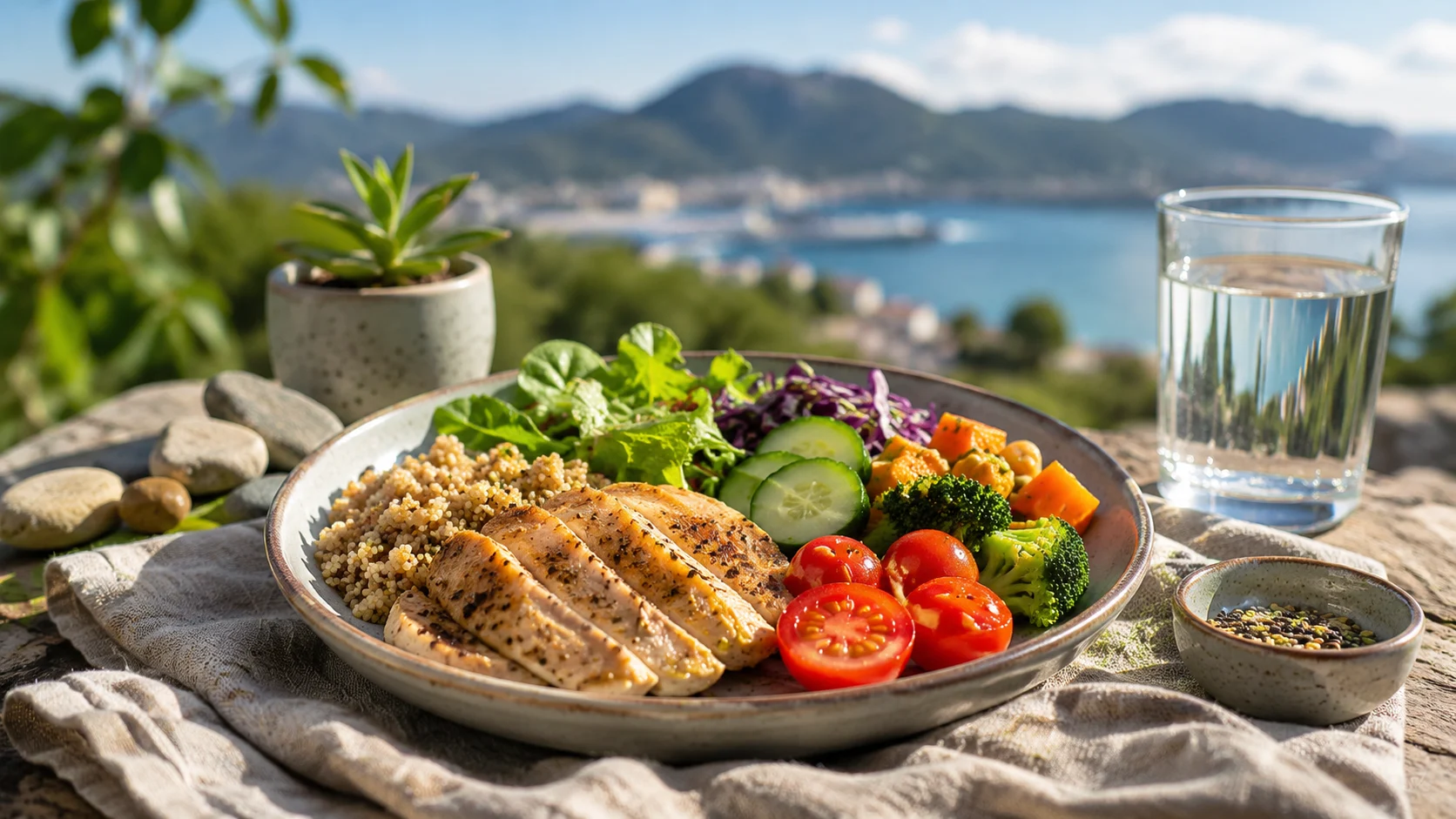
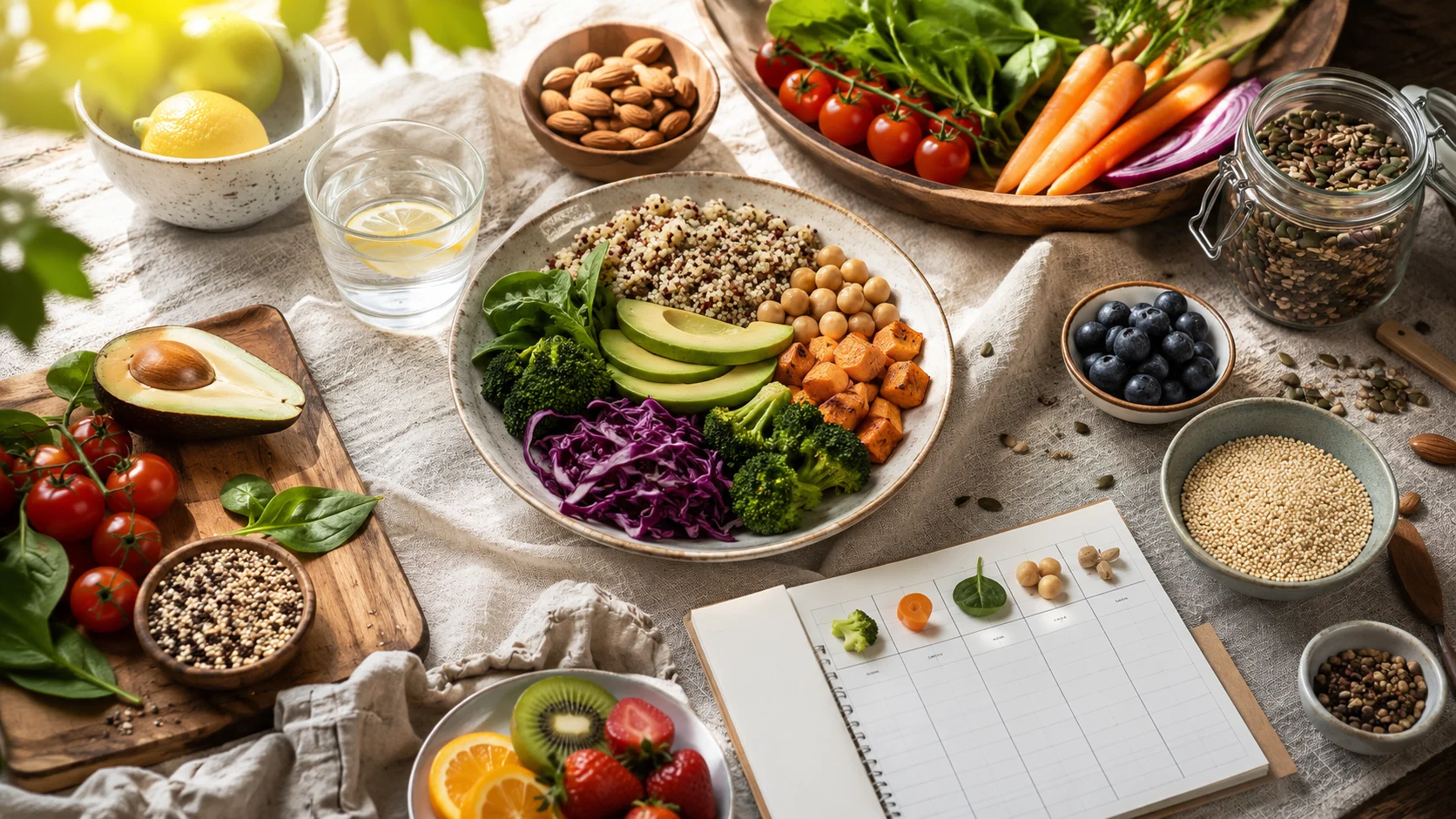
Think of real-life eating as a table with three legs. When one is missing, the whole thing wobbles. The Three-Anchor Plate keeps meals grounded without counting calories:
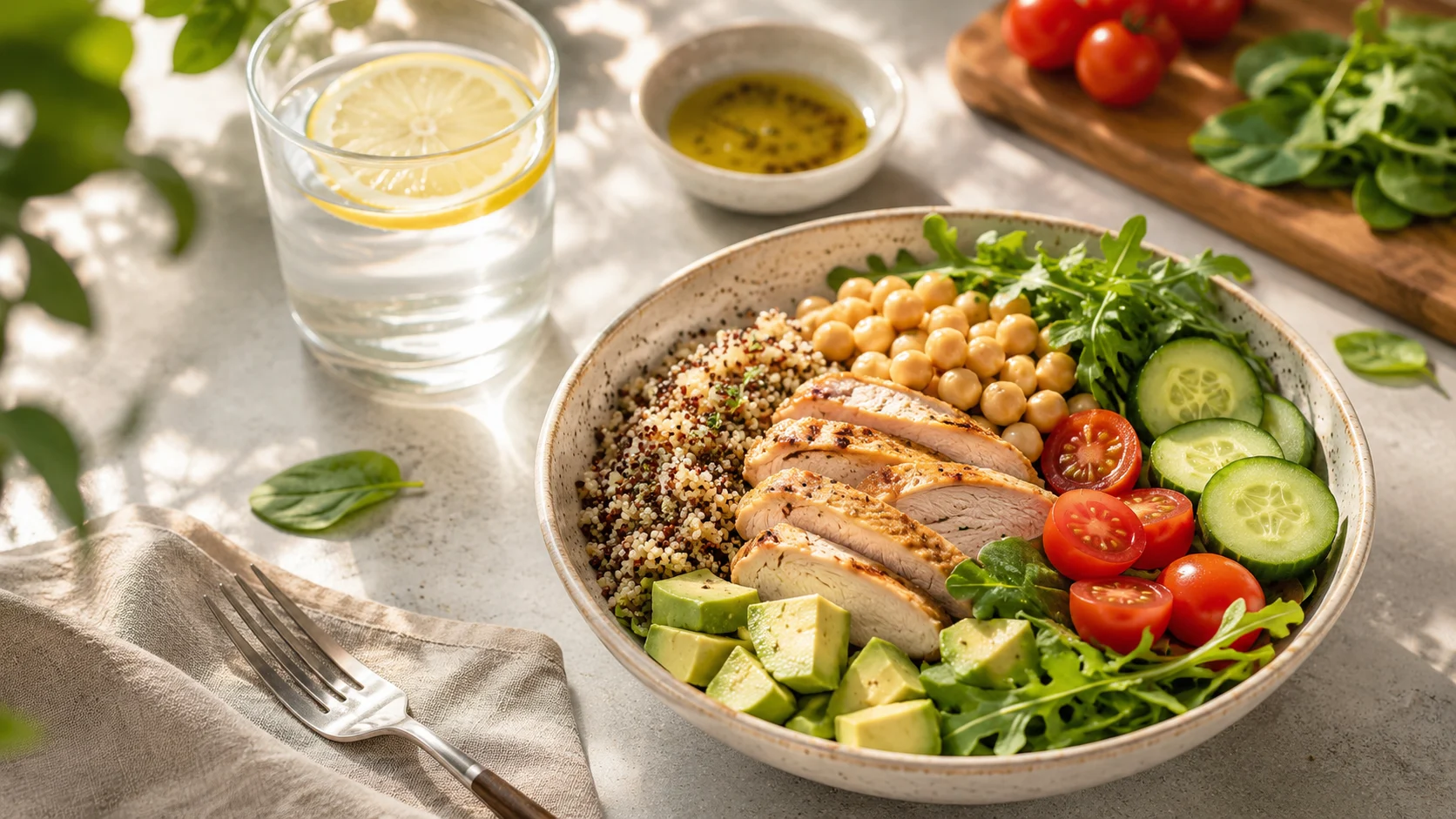
- Protein to help a meal feel lasting, like eggs folded into toast or Greek yogurt beside fruit.
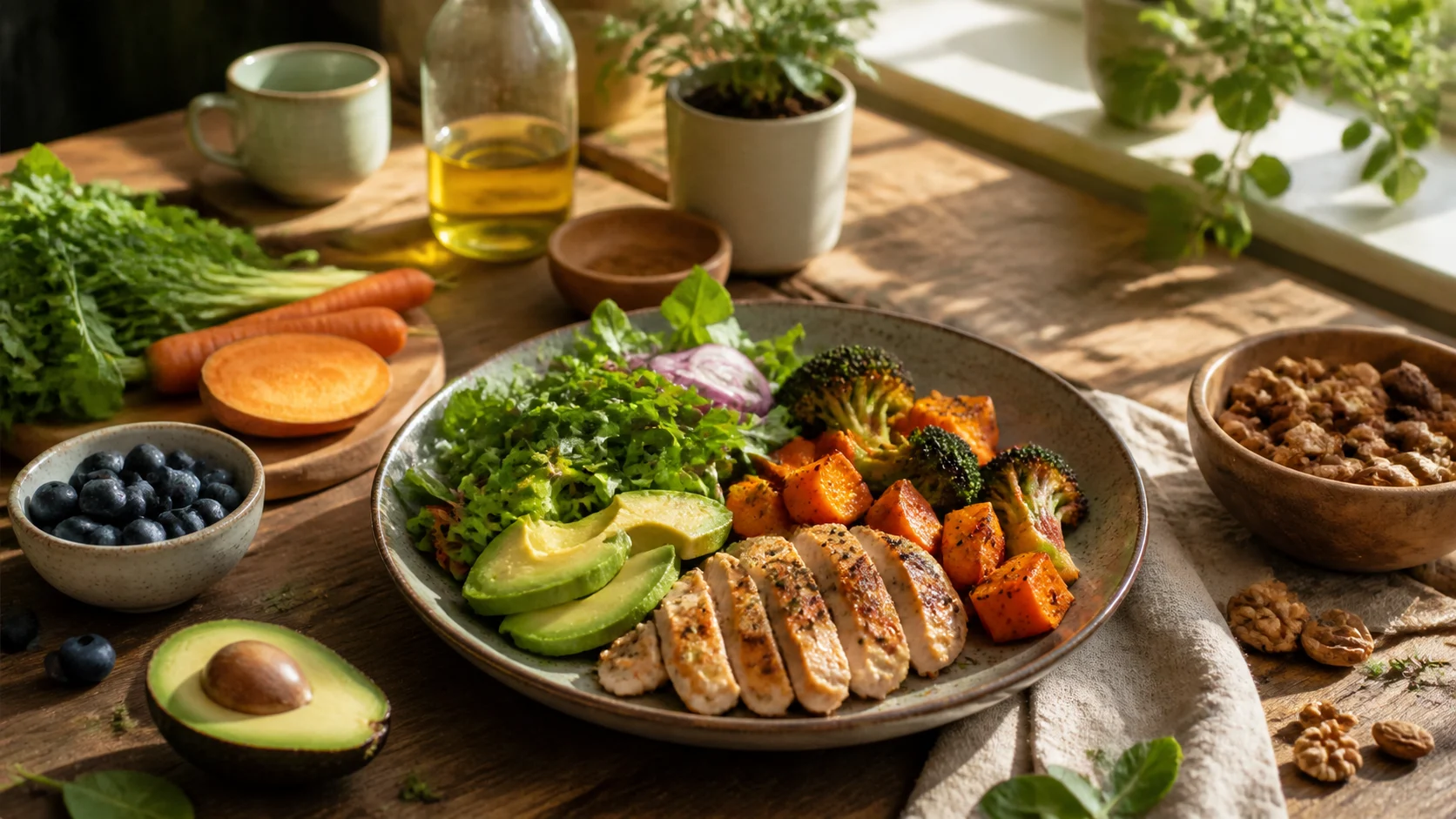
- Fiber-rich plants to bring color and fullness, such as leafy greens, berries, beans, or roasted vegetables.
- Comforting carbs or fats to make the meal satisfying, like rice, potatoes, olive oil, avocado, or warm bread.
This kind of healthy diet is less about control and more about balance. A meal that includes all three often feels calmer in the body and easier to repeat on busy days.
There is also a practical reason to care about balance: one study in The American Journal of Clinical Nutrition found that higher-protein meals can improve fullness and help reduce later overeating, which matters when the afternoon slump starts whispering for snacks.
Why Cravings Grow Louder When the Day Runs Too Fast
A craving is often a message wearing a dramatic coat. Sometimes it means stress. Sometimes it means under-eating. Sometimes it means the day asked too much and the body is trying to catch up. This is where aip diet conversations can get confusing for readers, because strict food rules may sound comforting at first, yet they can also make eating feel narrower and more fragile.
In real life, the body usually responds better to support than to restriction. If lunch was too light, dinner often becomes louder. If breakfast was skipped, sweet cravings may arrive by late afternoon like a train finally pulling into the station.
“The body is not being difficult when it asks for more food. It is often asking to be heard.”
“A nourishing meal is not a performance; it is a quiet way of telling the body, you can rest now.”
Gentle Nutrition in the Middle of a Busy Week
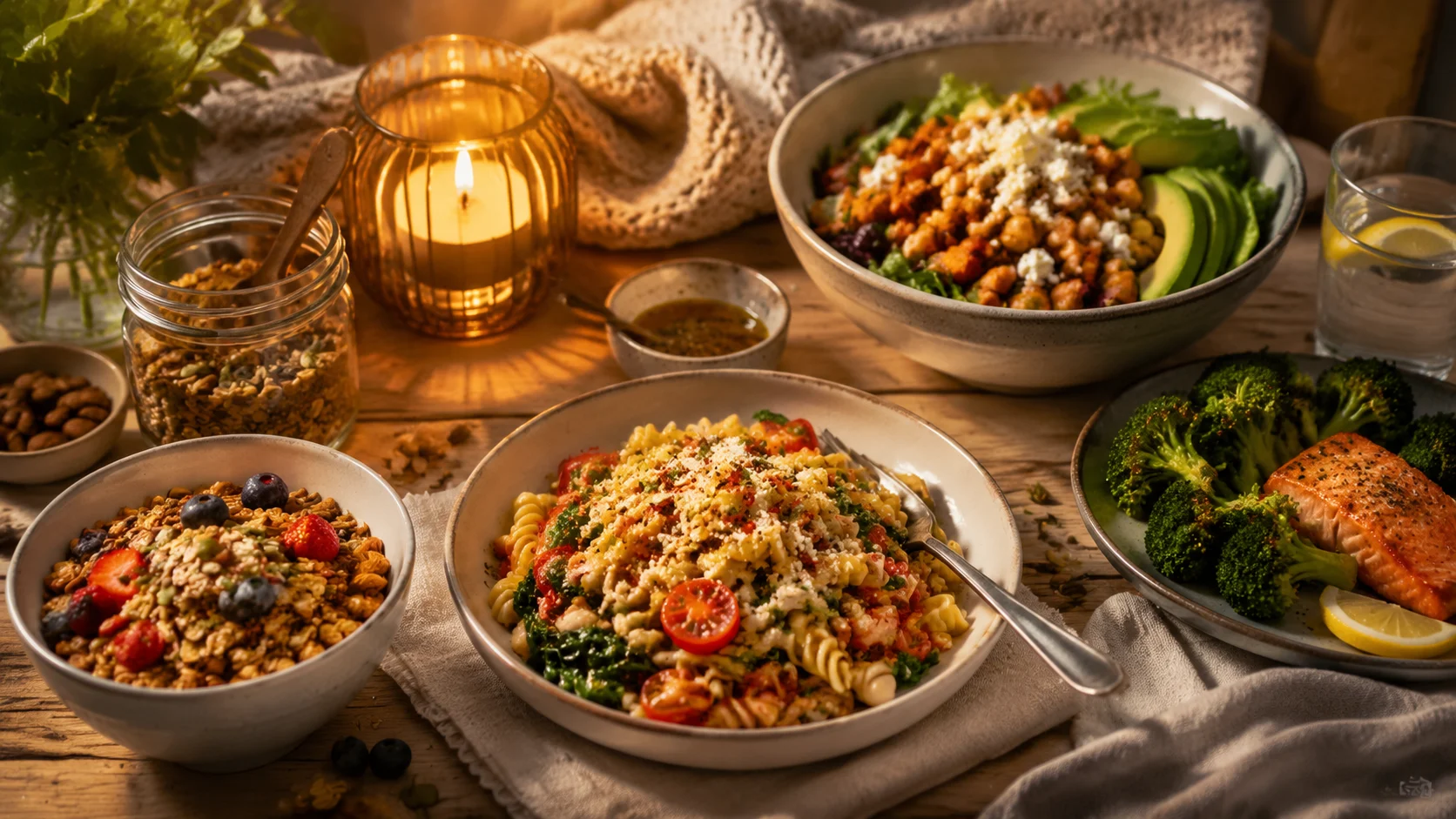
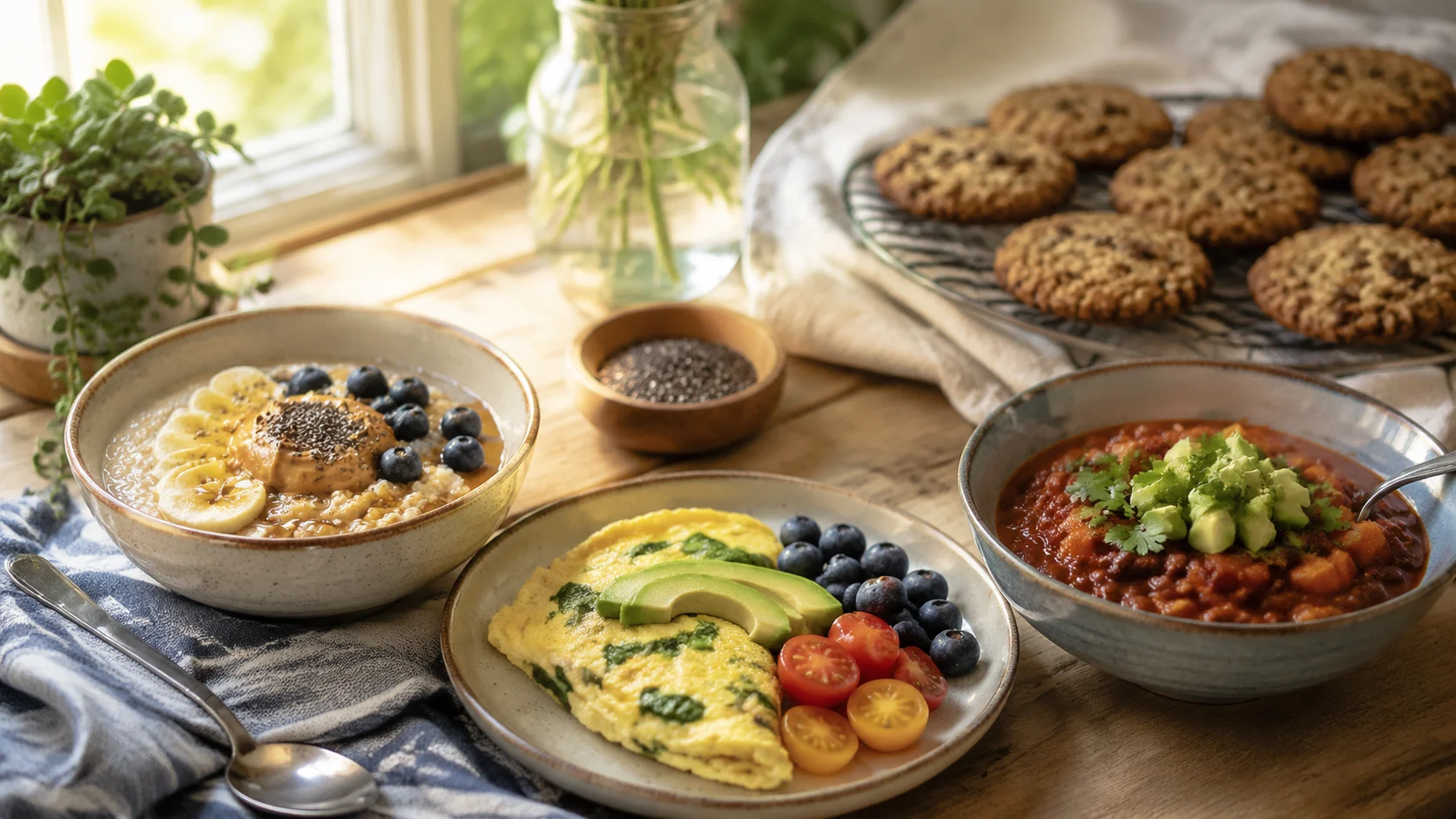
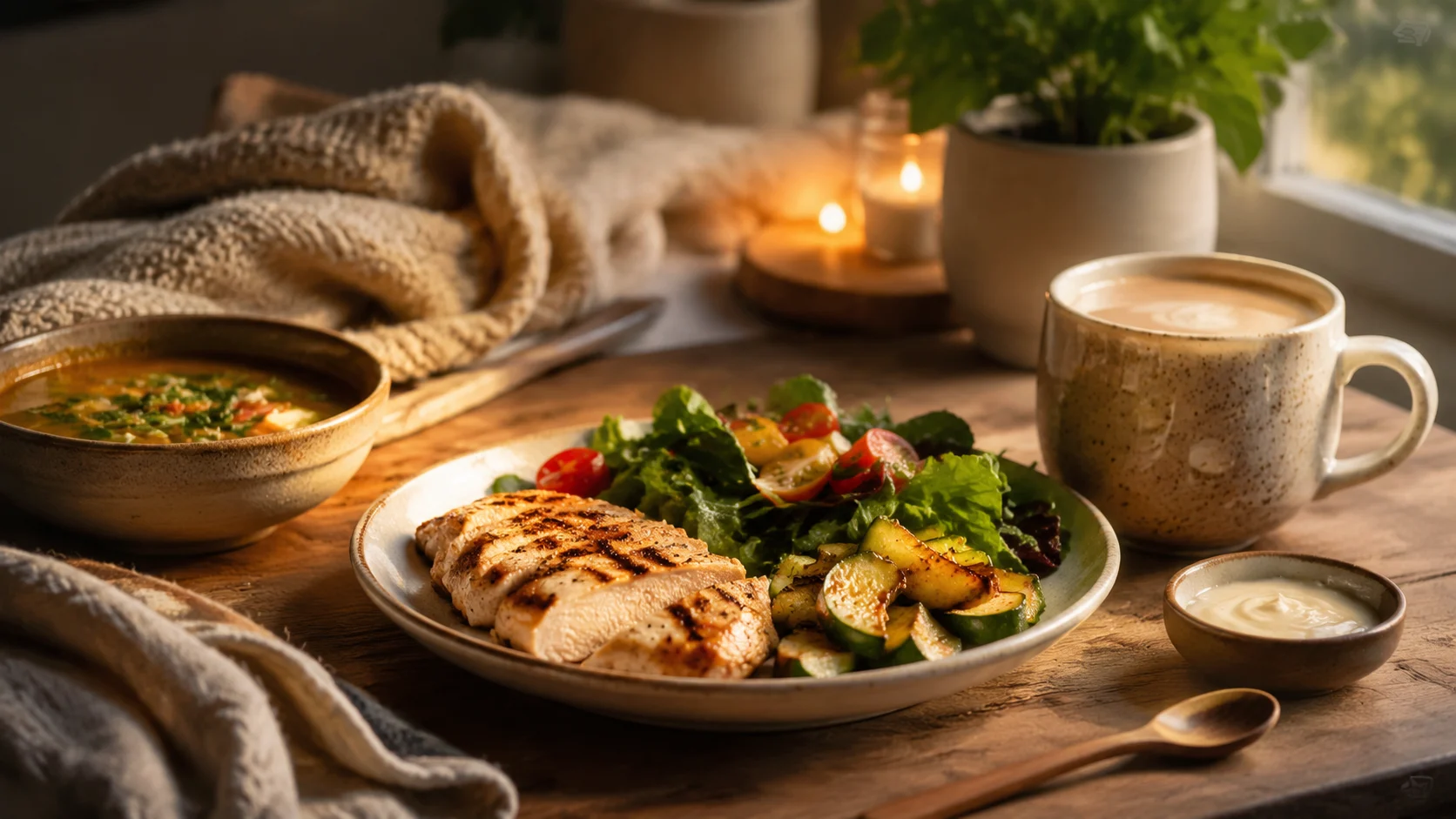
A healthy diet does not require a perfect schedule. It often looks like ordinary decisions made with more kindness. She might keep a few easy anchors nearby: soup with bread, rice with salmon and cucumbers, oatmeal with nut butter and berries, or a takeout bowl that feels warm and complete instead of random and rushed.
For women who are exploring an aip diet or simply trying to eat in a more supportive way, the goal is not perfection. It is noticing which meals leave the body calm and which ones leave it searching again an hour later. That awareness builds trust.
And trust matters. Many people do better when they stop labeling foods as “good” or “bad” and start asking whether a meal feels balanced, satisfying, and realistic for the day they are actually living.
The Quiet Shift That Changes Everything
Healthy eating becomes more sustainable when it stops sounding like punishment. The women who tend to feel most at ease are not the ones who follow the strictest plan; they are the ones who learn how to read their own body signals. They notice when they need more protein, when they need a slower lunch, when a craving is really fatigue in disguise.
That shift is small, but it changes the tone of the whole day. Meals become support. Snacks become bridges. Hunger becomes information, not failure.
And in that softer rhythm, a healthy diet starts to look less like discipline and more like care.
Please note: Every body has its own rhythm. This gentle guide is for educational purposes and does not replace personalized advice from a qualified healthcare professional.
Questions That Often Come Up
Do I need to eat perfectly to have a healthy diet?
Not at all. Consistency matters far more than perfection. A meal that is good enough and repeatable is often more supportive than an ideal meal that never happens.
What if I keep craving sweets in the afternoon?
That often points to a meal gap earlier in the day. A snack with protein, fiber, and something comforting can smooth that edge without making food feel like a battle.
Can an aip diet still feel flexible?
It can, if it is approached as a temporary structure or a personal framework rather than a hard identity. The key is whether it helps the person feel calmer, not more restricted.
How do I know if I am actually hungry or just stressed?
Sometimes both are present. A pause, a glass of water, and a quick body check can help, but either way, responding with nourishment is often kinder than waiting until the hunger becomes loud.
Leave a Reply