

When a “light” soda feels like the easy answer
For someone reaching for a fizzy drink between meetings or after a heavy meal, coke zero vs diet coke often comes down to taste, not rules. If your stomach is sensitive, the more useful question may be: Which one feels gentler for my body today? For some people, both can sit fine; for others, the caffeine, carbonation, or acidity can be part of the story—especially if they’re following a gerd diet and trying to notice what brings comfort versus what brings reflux.
That’s the quiet truth many people miss: the “better” soda is usually the one that fits your body’s moment, not a label on the can.
Food choices don’t become wise because they are strict; they become wise when they are noticed.
The taste split that makes people pick sides
Coke Zero was designed to taste closer to classic Coke, while Diet Coke has a lighter, sharper profile that many people recognize instantly. Some drinkers love the cleaner snap of Diet Coke; others prefer the fuller sweetness of Coke Zero. Neither choice is a moral win. It’s more like choosing between two songs that share a rhythm but land differently on your ears.
If you’re trying to make peace with soda instead of turning it into a battle, that distinction matters. The can that feels satisfying is often the one you’re less likely to overthink.
What your stomach may be telling you
Carbonation can be bubbly and fun, but it can also feel like pressure in the chest or belly for some people. Caffeine may matter too. In one observational study, a meaningful number of people with reflux symptoms reported that carbonated drinks and caffeinated beverages seemed to worsen discomfort, though responses were very individual. That’s why a gerd diet is often less about universal bans and more about pattern-spotting.
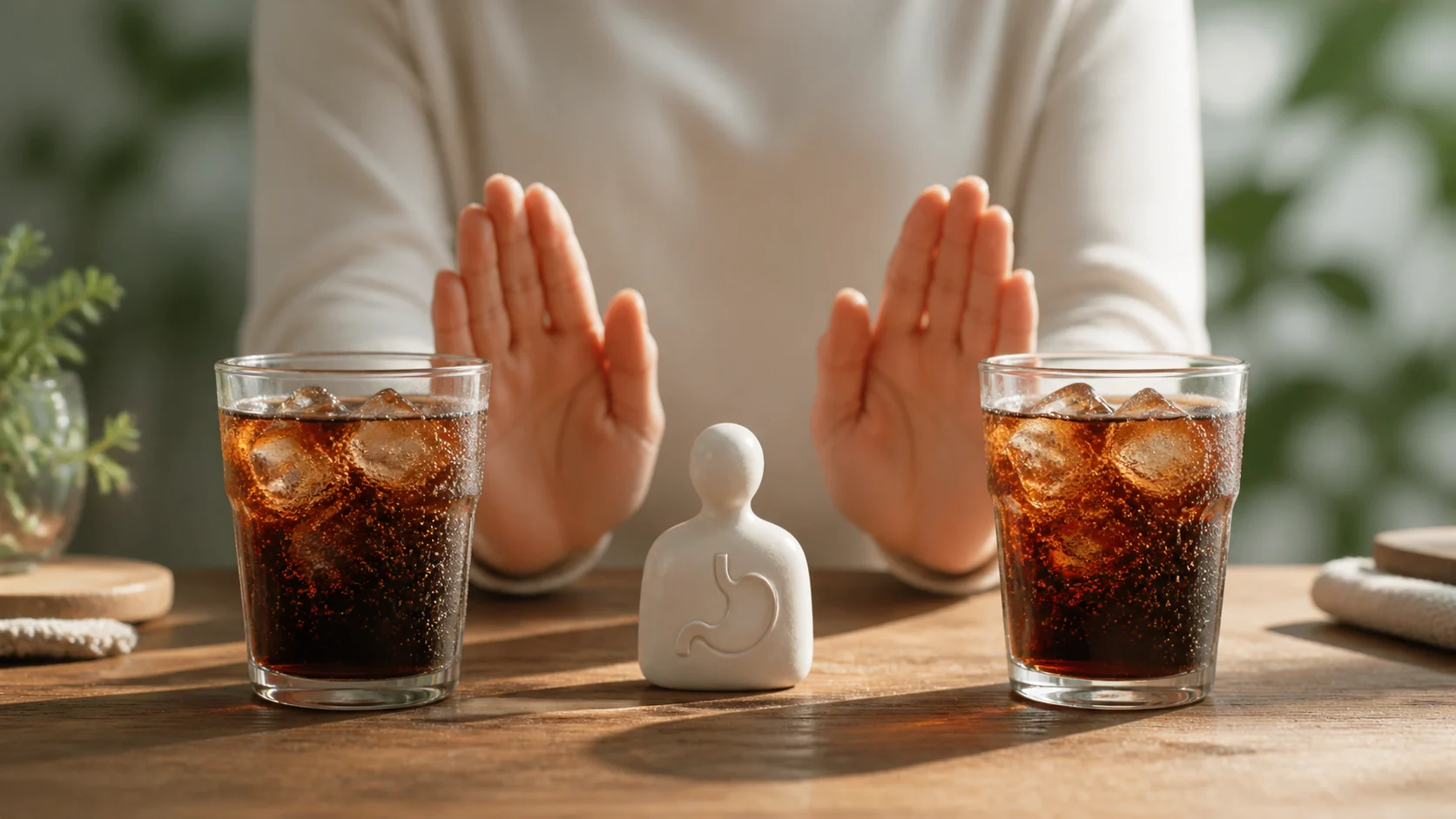
- Carbonation may feel irritating if you’re already bloated or reflux-prone.
- Caffeine can be a trigger for some, especially later in the day.
- Acidic drinks may feel fine one day and sharp the next, depending on stress, meal timing, and sleep.
So if one soda leaves a warm, restless after-feel and the other doesn’t, that information is useful. It is not drama; it is data.
A gentle way to choose without turning it into a rule
Think of this as the Three-Sip Check: take a few sips, pause, and notice three things—taste, stomach comfort, and energy. That small pause can be more reliable than a long list of food rules.
- Taste: Did it actually satisfy the craving, or do you want something else afterward?
- Stomach: Do you feel settled, gassy, tight, or fine?
- Energy: Does the caffeine feel steady, or does it make you edgy?
For many women, this kind of noticing is part of food freedom. It keeps the decision human. It also leaves room for real life, where a cold soda at 3 p.m. can simply be a small pleasure, not a test of discipline.
Your body does not need perfect food choices. It needs choices you can live with calmly.
What readers usually ask next
Does Coke Zero or Diet Coke matter more for reflux?
Sometimes the bigger factor is not the brand but the combo of carbonation, caffeine, and timing. If you notice symptoms, try having it with food instead of on an empty stomach.
Can I still enjoy soda on a gerd diet?
For many people, yes in moderation, especially if they pay attention to portion size and symptoms. The goal is not panic; it’s pattern awareness.
What if I crave soda every afternoon?
That can be a sign you want refreshment, stimulation, or a break. Sometimes pairing the soda with a snack and water makes it feel more satisfying.
Is one option healthier?
“Healthier” depends on what you mean. If your stomach tolerates one better, that one may be the better fit for you.
Please note: Every body has its own unique rhythm. This gentle guide is for educational purposes and doesn’t replace personalized advice from a healthcare professional, especially if reflux symptoms are frequent or severe.

Leave a Reply