

The snack mistake many women were never meant to blame themselves for
Healthy snacks for weight loss can help, but not because they “control” hunger through force. More often, they work because they support steady energy, soften rebound cravings, and make later meals feel less chaotic. For the woman staring at her screen at 3 p.m., already tired and quietly reaching for something sweet, the issue is rarely a lack of discipline. It is often a body asking for more reliable nourishment.
That is where a gentler lens helps. An anti inflammatory diet nutritionist might look not only at the snack itself, but at the full rhythm around it: stress, sleep, missed lunch, blood sugar swings, and whether the food offers enough protein, fiber, and satisfaction to actually stay with her.
“The body is not a project to overpower. It is a home asking to be cared for.”
Instead of choosing snacks by calories alone, Joyini’s softer framework is to think in terms of the Stay-Soft Snack Formula: protein + fiber + pleasure. A snack that steadies, rather than scolds, tends to be the one that lasts.
When a snack supports weight goals without turning into another food rule
There is a quiet difference between eating reactively and eating supportively. The first often happens after hours of running on coffee, meetings, and low patience. The second is more like placing a small cushion under the day before energy fully crashes.
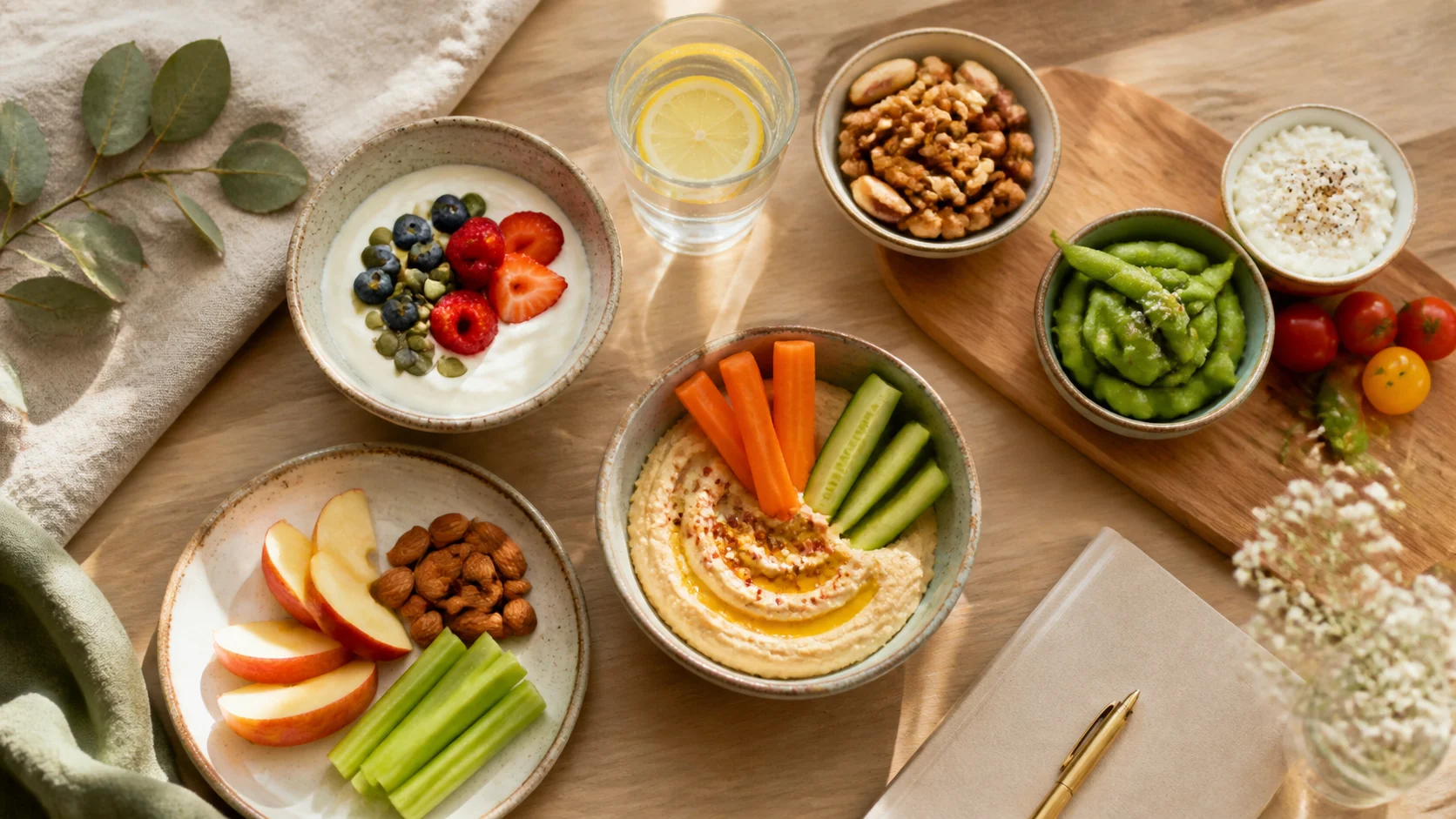
- Pair something grounding with something comforting. A sliced apple with almond butter brings crunch, sweetness, and staying power. It feels less like “diet food” and more like a real pause.
- Let protein do some of the heavy lifting. Greek yogurt with berries and a spoonful of chia can help a snack feel substantial. Research has often observed that protein supports satiety more effectively than lower-protein snack choices.
- Keep fiber close. A handful of roasted chickpeas beside a clementine gives the kind of texture and fullness that can carry someone through the late afternoon without feeling deprived.
- Make room for ease. Cottage cheese on whole-grain crackers, or hummus with baby carrots and warm pita, can be practical healthy snacks for weight loss because they fit real life, not an imaginary perfect day.
One review published in Nutrients noted that higher-protein snacks may improve fullness and appetite control compared with snack choices lower in protein. Not as a magic trick—just as one more way the body signals, “Thank you, I can breathe now.”
Seven gentle snack ideas for afternoons, commutes, and tired evenings
- A small bowl of Greek yogurt, blueberries, and crushed walnuts. Creamy, cool, and balanced. It offers protein, fiber, and a little richness that helps the snack feel complete.
- Apple slices with peanut or almond butter. Familiar and steadying, especially on days when lunch felt rushed or forgettable.
- Hummus with carrots, cucumbers, and a few whole-grain crackers. Crisp vegetables bring freshness, while the crackers add comfort and staying power.
- Cottage cheese with pineapple or cherry tomatoes. Sweet or savory, depending on the mood. Both versions are simple healthy snacks for weight loss that do not ask much of a tired brain.
- A boiled egg with a mandarin and a few pretzels. This is the kind of snack that understands cravings often need both nourishment and softness.
- Roasted edamame or chickpeas with a square of dark chocolate. A satisfying blend for the woman who wants something sturdy but still a little comforting.
- Oatmeal made small, not performative. A modest bowl with cinnamon and pumpkin seeds can be a snack, not just a breakfast. Warm foods often calm more than they are given credit for.
How to choose healthy snacks for weight loss in a way that feels calm
Many women have been taught to ask, “How little can I eat?” A more supportive question is, “What would help me feel steady for the next two or three hours?”
- If cravings hit hard and fast, check for under-eating earlier. A snack is not “too much” if it prevents the evening from turning into a cycle of grabbing and regretting.
- If stress is high, choose texture and comfort. Crunchy, creamy, or warm foods often meet emotional and physical needs at once.
- If inflammation-friendly eating matters, keep it simple. An anti inflammatory diet nutritionist would often lean toward whole-food combinations like berries, nuts, yogurt, oats, olive-based spreads, and legumes—without turning them into moral categories.
- If fullness never lasts, add instead of subtract. A rice cake alone may disappear quickly; a rice cake with cottage cheese and sliced strawberries has a better chance of supporting real satiety.
“A balanced snack does not earn worth. It offers support.”
Questions That Often Come Up
What if she wants healthy snacks for weight loss but keeps craving chips or chocolate?
That craving does not cancel the goal. Often it means the body wants satisfaction, not just nutrition on paper. Pairing chocolate with nuts, or chips with hummus and sliced vegetables, can create more steadiness than trying to ignore the craving completely.
Is snacking bad for weight loss?
No. Snacking can be helpful when it prevents extreme hunger and supports more balanced eating later. The pattern matters more than the label.
What is the best afternoon snack when lunch was too small?
A snack with both protein and carbohydrate usually helps most: yogurt and fruit, toast with nut butter, or crackers with cheese and grapes. Think repair, not restriction.
Can an anti inflammatory diet nutritionist still recommend convenient snacks?
Yes. Convenience and nourishment can live together. A simple yogurt cup, a banana with peanut butter, or roasted chickpeas from the pantry can still fit a gentle, supportive approach.
What if snacking feels emotional, not physical?
That deserves tenderness, not judgment. Sometimes the snack is about hunger; sometimes it is about comfort, overstimulation, or loneliness. A pause to notice the feeling can help, but eating for comfort does not make someone a failure.
Please note: Every body has its own rhythm, history, and needs. This article is for educational purposes only and does not replace personalized advice from a healthcare professional or registered dietitian, especially if someone is managing a medical condition, digestive symptoms, or a complicated relationship with food.
Leave a Reply