

When a Bland Plate Feels Safer Than a Full Meal
Many women reach for the brat diet when their stomach feels unsettled because it seems simple, soft, and easy to tolerate. That instinct makes sense. But the surprising part is this: the brat diet can be a short pause, not a complete recovery plan. For a day or so, bland foods may offer comfort. Staying there too long, though, can leave the body undernourished just when it needs gentle support the most.
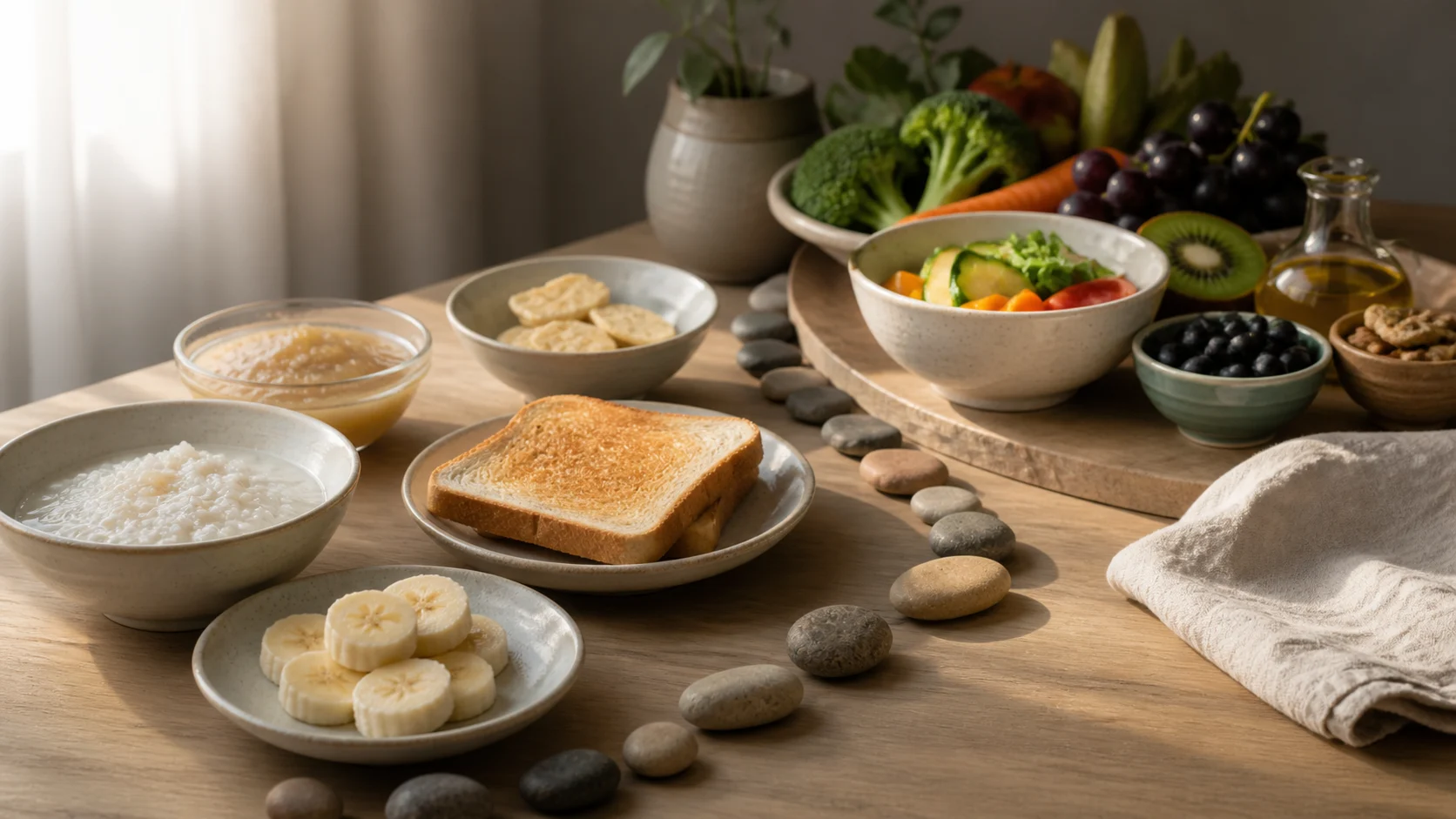
When she is curled up on the couch with a queasy stomach, dry toast can feel less intimidating than a full dinner. Banana, rice, applesauce, toast—the familiar rhythm of the brat diet has long been offered as a soft landing for nausea, diarrhea, or a brief stomach bug. It is comforting partly because it asks so little of digestion. It is also limited for the same reason.
“The body is not asking to be punished with less food. It is asking to be supported with gentler food.”
Think of this approach as the Soft Landing, Slow Return method: begin with foods that feel calm, then gradually rebuild variety, protein, fluids, and steady energy. That shift matters, especially for women who already tend to undereat when stressed or busy.
The Quiet Comfort of the BRAT Diet—and Its Limits
The classic brat diet centers on low-fiber, bland foods that may be easier to keep down for a short time. Bananas offer softness and some potassium. Rice and toast can feel plain in a reassuring way. Applesauce often sits lightly when raw fruit does not. For a tender stomach, that simplicity can be useful.
But usefulness is not the same as completeness. The brat diet is low in protein, fat, and overall nutritional range. If someone stays on it for too long, she may feel weaker, shakier, or more drained. That matters even more after vomiting or diarrhea, when hydration and electrolyte balance deserve attention too.
Research and clinical guidance have gradually moved away from recommending a prolonged BRAT-only plan. Many pediatric and adult digestive care sources now favor returning to a more balanced eating pattern as tolerated, rather than restricting intake for days. In plain language: a bland start may help, but the body usually does better when nourishment widens again.
A Gentler Way to Eat While the Stomach Settles
For someone in the middle of a rough stomach day, eating does not need to become a performance. The goal is not perfect nutrition in one sitting. The goal is small, tolerable steps.
- Begin with soft familiarity. A few spoonfuls of applesauce, a warm bowl of plain rice, or half a banana may feel less overwhelming than a full plate.
- Let fluids come first when needed. Small sips of water, broth, or an oral rehydration drink can support recovery, especially after diarrhea. If plain water feels harsh, a slightly salted broth may feel kinder.
- Add substance as soon as it feels manageable. Scrambled eggs, oatmeal, noodles in broth, plain yogurt if tolerated, or a little peanut butter on toast can help the body move beyond the narrowness of the brat diet.
- Watch the body, not food rules. If the stomach relaxes after bland foods, that is useful information. If hunger returns, it is often a sign that the system is ready for more support.
“Healing meals do not have to be impressive. They only have to meet the body where it is.”
Where the FODMAP Diet Fits—and Where It Doesn’t
Some readers wonder whether a fodmap diet belongs in the same conversation. Not quite. The brat diet is usually a short-term strategy for an acute upset stomach. A fodmap diet, by contrast, is a more structured approach sometimes used under professional guidance for ongoing digestive symptoms like bloating, gas, or IBS-related discomfort.
They may overlap in one emotional way: both can sound like “safe eating” plans when digestion feels unpredictable. But they are not interchangeable. A fodmap diet is not the default answer for a sudden stomach bug, and the brat diet is not a long-term solution for chronic digestive issues.
For a woman who has a history of dieting, food anxiety, or feeling afraid of eating the “wrong” thing, this distinction matters. Restrictive plans can quietly become stressful. If digestive symptoms are recurring, persistent, or confusing, it may help to seek personalized support rather than layering more and more rules onto an already tired body.
The Slow Return to Real-Life Nourishment
There is often a small but meaningful moment after a stomach bug: she realizes she is hungry again, but feels nervous about eating normally. This is where gentle nutrition matters most. Instead of swinging from the brat diet to a heavy meal, it can help to build a bridge back.
Picture a bowl of oatmeal with sliced banana and a spoonful of nut butter. Or toast with scrambled eggs and a side of warm tea. Or rice with soft cooked carrots and shredded chicken in broth. These are not dramatic “recovery foods.” They are simply balanced, comforting, real-life meals that support steady energy.
If symptoms ease within a day or two, the body often benefits from gradually returning to normal eating. If there is severe dehydration, blood in stool, high fever, or symptoms that persist, that is a moment for medical care, not more self-experimenting.
Please note: Every body has its own rhythm. This gentle guide is for educational purposes and does not replace personalized advice from a healthcare professional. If digestive symptoms are intense, keep returning, or make eating feel frightening, it is wise to seek individual support.
You Might Also Wonder
Is the brat diet still recommended for diarrhea?
It can be a short-term option if bland foods feel easiest to tolerate, but many experts no longer recommend using the brat diet alone for long. Rehydration and a gradual return to more balanced foods usually support recovery better.
How long should someone stay on the brat diet?
Usually only briefly—often less than a day or two—depending on symptoms and tolerance. Once the stomach begins to settle, adding foods with more protein and nourishment can help energy come back more steadily.
Can the fodmap diet help during a stomach bug?
A fodmap diet is generally meant for ongoing digestive patterns, not a sudden virus or food-related stomach upset. For an acute issue, simpler bland foods and hydration are usually more relevant at first.
What if bland foods make her feel weak or unsatisfied?
That can be a sign the body is ready for more support. Gentle additions like eggs, broth with noodles, oatmeal, yogurt if tolerated, or toast with nut butter may feel more grounding than staying with the basic brat diet too long.
When should someone stop home care and get help?
If there are signs like dehydration, faintness, severe pain, blood in stool, a high fever, or symptoms that do not improve, it is important to contact a healthcare professional promptly.
Leave a Reply