
When Eating “Healthy” Still Feels Hard
Gentle nutrition for women is not about trying harder. It is about eating in a way that helps the body feel steadier, calmer, and more supported in real life. Many women assume their afternoon crash, late-night cravings, or scattered meals mean they lack discipline. Often, the deeper story is much kinder: the body is asking for enough food, enough balance, and a little more consistency.
When she sits at her desk at 3 p.m., staring at emails with a half-finished coffee beside her, the problem is rarely that she “made bad choices.” More often, breakfast was rushed, lunch was light, and stress quietly pulled energy out of the room. Gentle nutrition for women begins there—with understanding, not judgment.
Body signals are not a character flaw. They are messages written in the language of hunger, energy, comfort, and need.
The Quiet Power of the Steady Plate Method
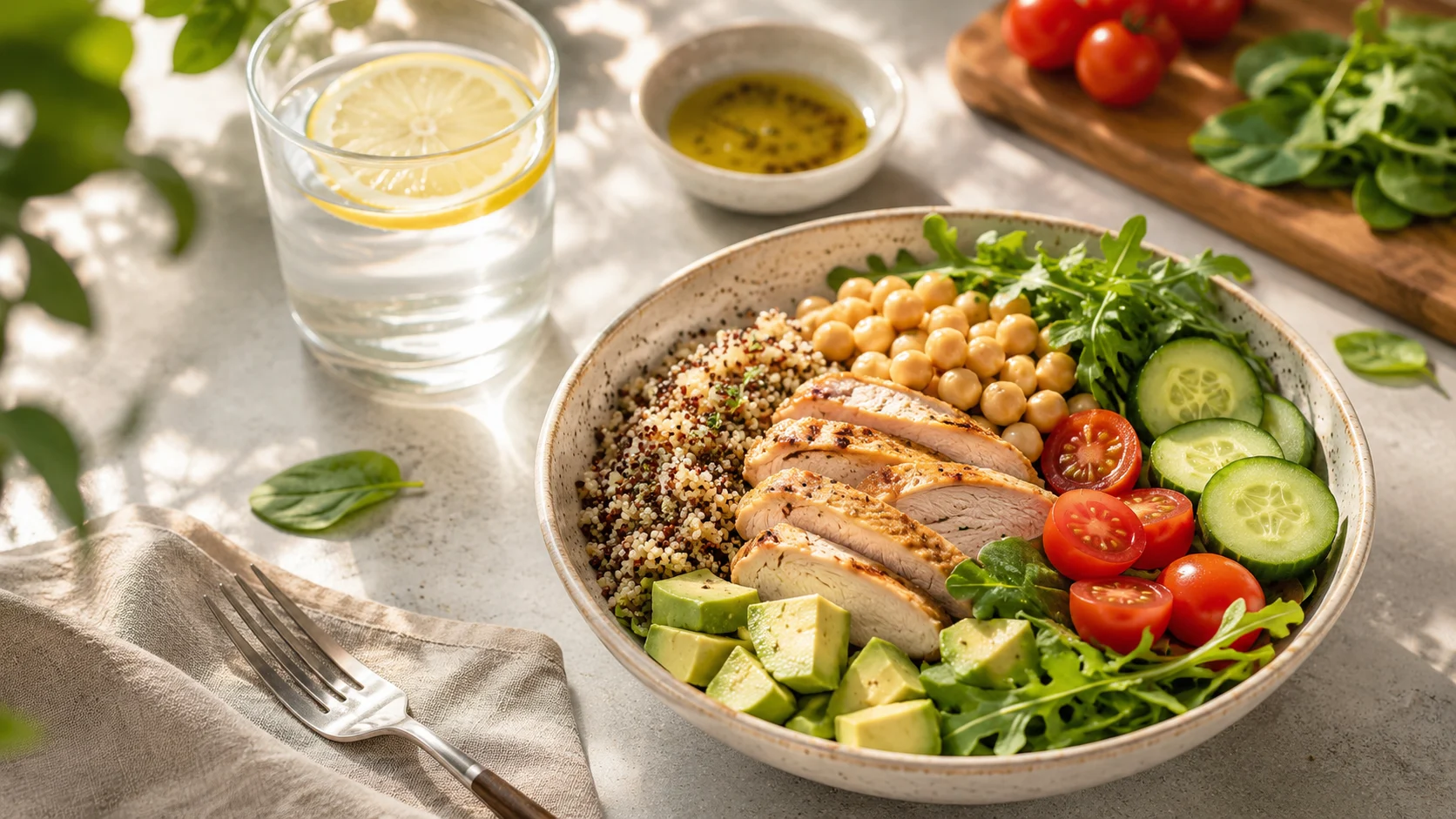
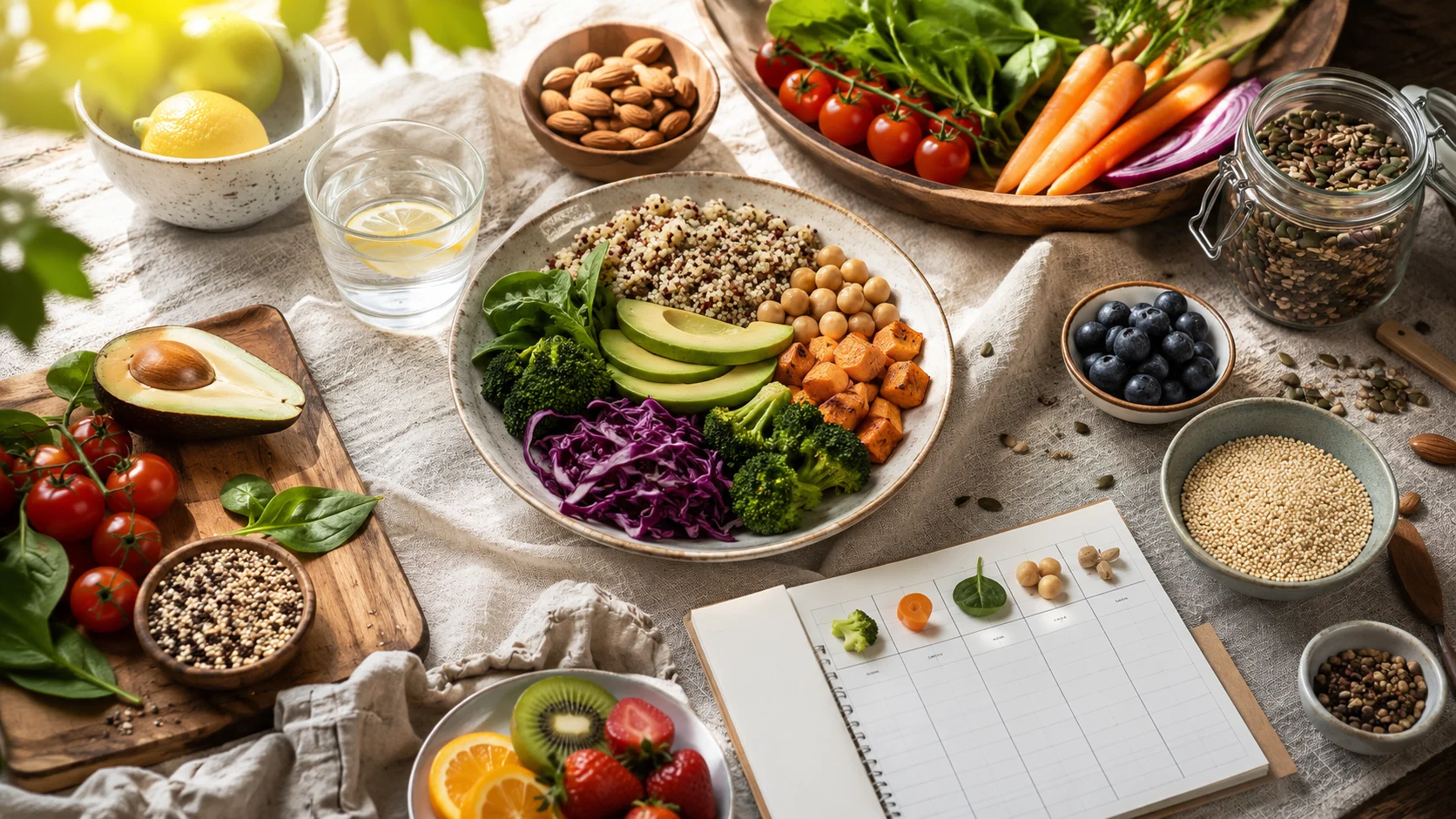
Instead of strict rules, Joyini’s approach can be pictured as the Steady Plate Method: a simple way to build meals that feel grounding rather than controlling. Think of it like giving the body a soft place to land.
- A steady carbohydrate — something warm or familiar, like toast, rice, oats, or roasted potatoes, to help energy feel more even instead of spiking and crashing.
- A satisfying protein — perhaps Greek yogurt swirled into berries, eggs folded into a quick scramble, or salmon tucked into a grain bowl, to support fullness that lasts.
- A comforting fat — avocado, olive oil, peanut butter, or a scattering of seeds, which can make a meal feel both nourishing and emotionally satisfying.
- A bit of color or fiber — not as a rule to obey, but as support: sliced cucumber with lunch, softened spinach in pasta, or an apple eaten on the way to school pickup.
This is one reason gentle nutrition for women feels different from dieting. It does not ask a busy woman to eat perfectly. It helps her ask, “What would help me feel more held up for the next few hours?”
Why Restriction Often Sounds Like “I’m Being Good”
There is a quiet myth many women carry: that eating less means eating better. Yet the body often answers restriction with louder cravings, shakier focus, and a stronger pull toward comfort foods later in the day. Research published in Appetite has observed that restrained eating patterns are associated with a higher likelihood of overeating episodes in some people. That does not mean anyone is broken. It means the body tends to protect itself when it senses scarcity.
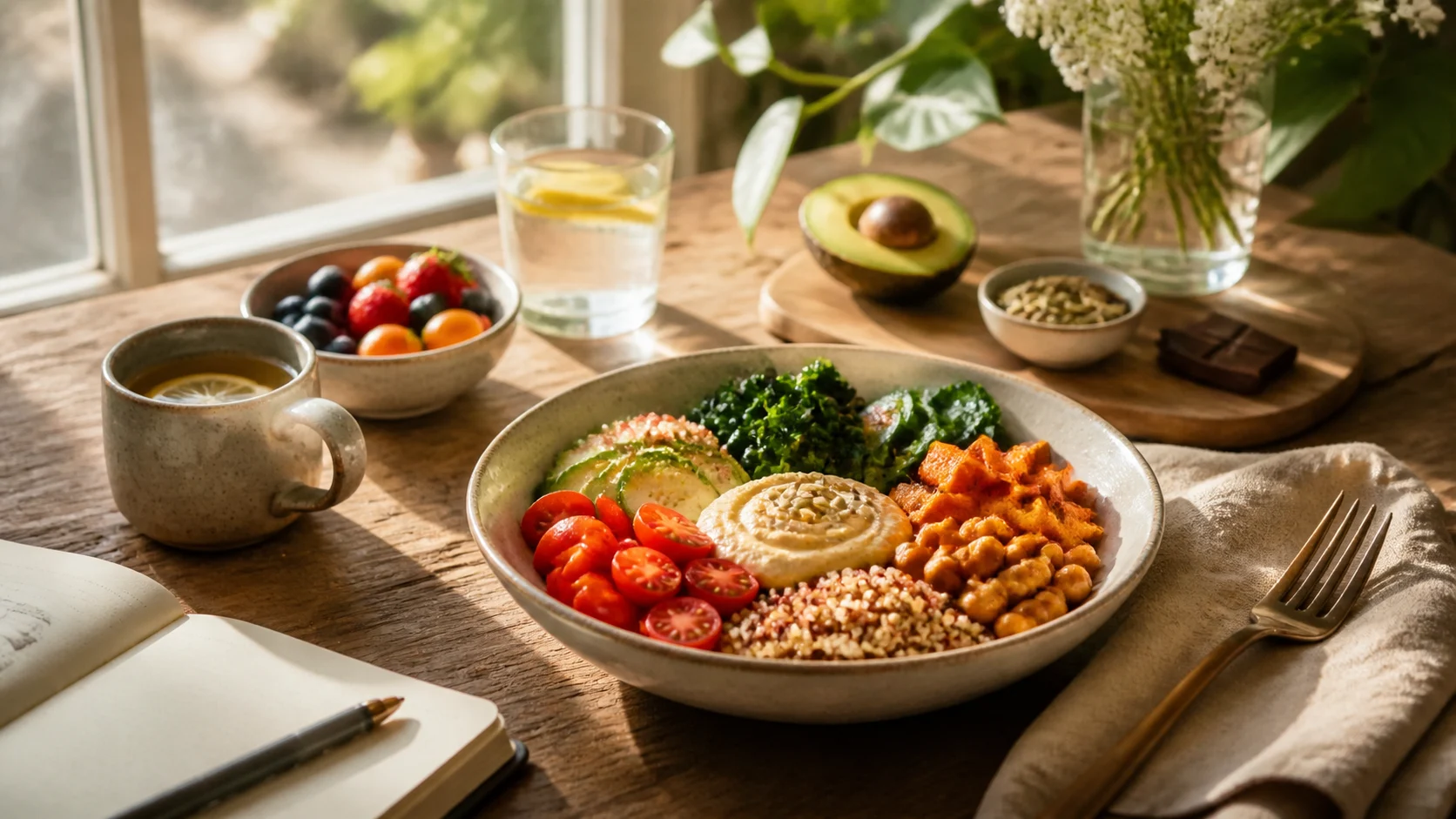
Gentle nutrition for women makes room for this truth. A lunch that is too small may show up later as a strong desire for sweets. Skipping snacks may reappear as grazing through the pantry at night. What looks like “lack of control” is often biology meeting exhaustion.
The body is not a project to conquer. It is a home that responds to how it has been fed, rushed, ignored, or cared for.
What This Can Look Like on an Ordinary Tuesday
A woman does not need a perfect meal plan to practice gentle nutrition for women. She may begin with ordinary pairings that make daily life feel easier:
- On a rushed morning — a piece of toast with peanut butter and banana, eaten in a few calm bites before the commute, can feel far steadier than coffee alone.
- At a tired lunch break — a turkey sandwich with fruit and something crunchy on the side may carry her through the afternoon better than a light salad that leaves her searching for snacks an hour later.
- On a low-energy evening — pasta tossed with olive oil, chicken sausage, and frozen vegetables can be enough. Dinner does not need to be impressive to be supportive.
- During the afternoon slump — yogurt with granola, or apple slices with cheese, can act like a small bridge between lunch and dinner rather than a sign that she has “already eaten too much.”
These are small acts, but they change the texture of a day. Real-life nutrition is often less about optimization and more about reducing unnecessary struggle.
Learning to Eat With More Ease
At its heart, gentle nutrition for women is a practice of noticing patterns with compassion. Which meals leave energy more stable? When does stress make eating feel chaotic? What foods feel both comforting and supportive? This kind of attention rebuilds trust slowly, especially for women who have spent years bouncing between rules and rebellion.
There is no prize for making food complicated. Sometimes the kindest shift is simply adding—adding substance to breakfast, adding a snack before the crash, adding permission to eat without earning it first. In that softer rhythm, food becomes less of a test and more of a relationship.
Please note: Every body has its own rhythm, history, and needs. This article is for educational purposes only and does not replace personalized guidance from a registered dietitian, physician, or other qualified healthcare professional.
You Might Also Wonder
What if I’m not hungry in the morning but crash later?
That pattern is common. Sometimes appetite is muted early because of stress, a busy routine, or late-night eating. A small, easy breakfast—like yogurt, toast, or a smoothie—may help create steadier energy later without feeling too heavy.
Does gentle nutrition mean I can never eat for comfort?
Not at all. Comfort matters. Gentle nutrition simply invites more support around comfort, so a woman can enjoy soothing foods while also noticing whether she needs more fullness, rest, or emotional care.
How do I start if I’m tired of nutrition rules?
Start by asking one simple question before a meal: “What would help me feel steady for the next few hours?” That question is often more useful than any rigid rule.
Why do I want sweets so strongly in the afternoon?
Often, it is the body’s quick way of asking for energy. A too-light lunch, long gaps between meals, poor sleep, or stress can all make sweet foods feel especially magnetic.