
When the Evening Craving Isn’t Really About Willpower
How to deal with stress eating after work often starts with a surprising truth: the problem is usually not a lack of discipline. More often, it is a tired body trying to find comfort, steady energy, or a softer landing after a hard day. For many women, the walk from laptop to kitchen is not about weakness. It is about depletion.
She gets home carrying more than a bag or a set of keys. There is decision fatigue, unfinished emails, maybe the emotional static of caring for everyone else first. Food can become the fastest form of relief because it is immediate, familiar, and comforting. That does not make her broken. It makes her human.
Body signals are not character flaws. They are messages asking to be understood.
If she wants to understand how to deal with stress eating after work, it helps to pause before trying to control it. A craving that arrives at 6 p.m. may be carrying several voices at once: hunger, stress, loneliness, low blood sugar, overstimulation, or the quiet ache of never fully resting.
The Soft Landing Method
A gentle way forward is what Joyini might call the Soft Landing Method: Pause, Nourish, Settle. It is not a rule system. It is a way to meet the after-work spiral with more support and less shame.
- Pause. Before reaching for food on autopilot, she takes one small breath and asks, “What kind of hunger is here?” Physical hunger often feels grounding and specific. Stress hunger can feel urgent, buzzy, and emotionally loud.
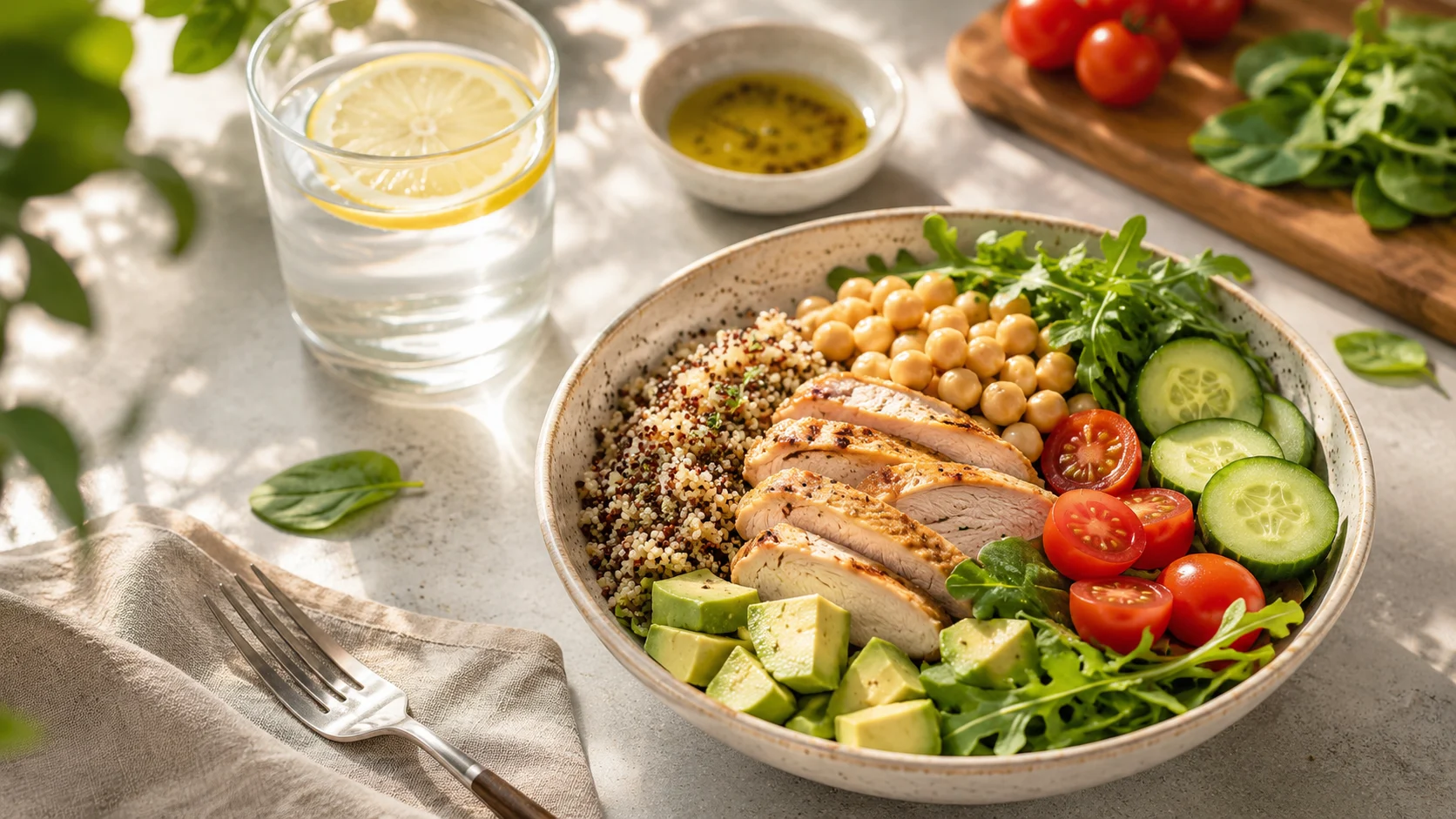
- Nourish. If she has not eaten enough during the day, her body may simply need real food. A bowl of warm rice with salmon and cucumber, toast with eggs and avocado, or yogurt with berries and granola can bring comfort and steadier energy much better than trying to “be good.”
- Settle. Sometimes food is only part of the need. The nervous system may also want a transition ritual: changing clothes, washing her face, sitting in silence for five minutes, or stepping outside while the evening air cools her thoughts.
This is often the missing piece in conversations about how to deal with stress eating after work. Many people try to remove the food without adding comfort. But when stress is high, the body usually needs addition, not punishment.

Why After-Work Eating Can Feel So Intense
The hours after work are a perfect storm. Cortisol, the body’s main stress hormone, can shape appetite and cravings, especially when the day has been long and under-fueled. Research has also observed that sleep loss can shift hunger hormones in a way that increases appetite, with one widely cited study finding that short sleep was linked to changes in ghrelin and leptin, two hormones involved in hunger and fullness. In plain language: a tired body tends to ask for quick comfort more loudly.
That is why someone searching for how to deal with stress eating after work may need to look beyond the snack itself. Did she skip lunch? Live on coffee? Power through meetings without a real break? Hold tension in her body all day as if rest had to be earned?
The evening binge is often the echo of a day that asked for too much and gave back too little.
There is also the emotional side. For women with a history of dieting, evening eating can feel extra charged. Restriction during the day often turns nighttime cravings up even louder. The body does not forget scarcity just because the plan looked “healthy” on paper.
Small Rituals That Make the Kitchen Feel Less Urgent
When she wants a real-life answer to how to deal with stress eating after work, tiny rituals can help soften the rush toward food without denying comfort.
- Create a bridge snack. If dinner is far away, a practical snack at 4 or 5 p.m. can change the whole evening. Think of an apple with peanut butter or crackers with cheese eaten at her desk before she leaves work.
- Make dinner easier to begin. Keep a few low-effort anchors around: frozen rice, prewashed greens, rotisserie chicken, soup, or a bagged salad that becomes a meal with beans and warm bread.
- Change the scene first. Before opening the pantry, she might light a lamp, put on music, or take a shower. The body often needs a signal that the workday is over.
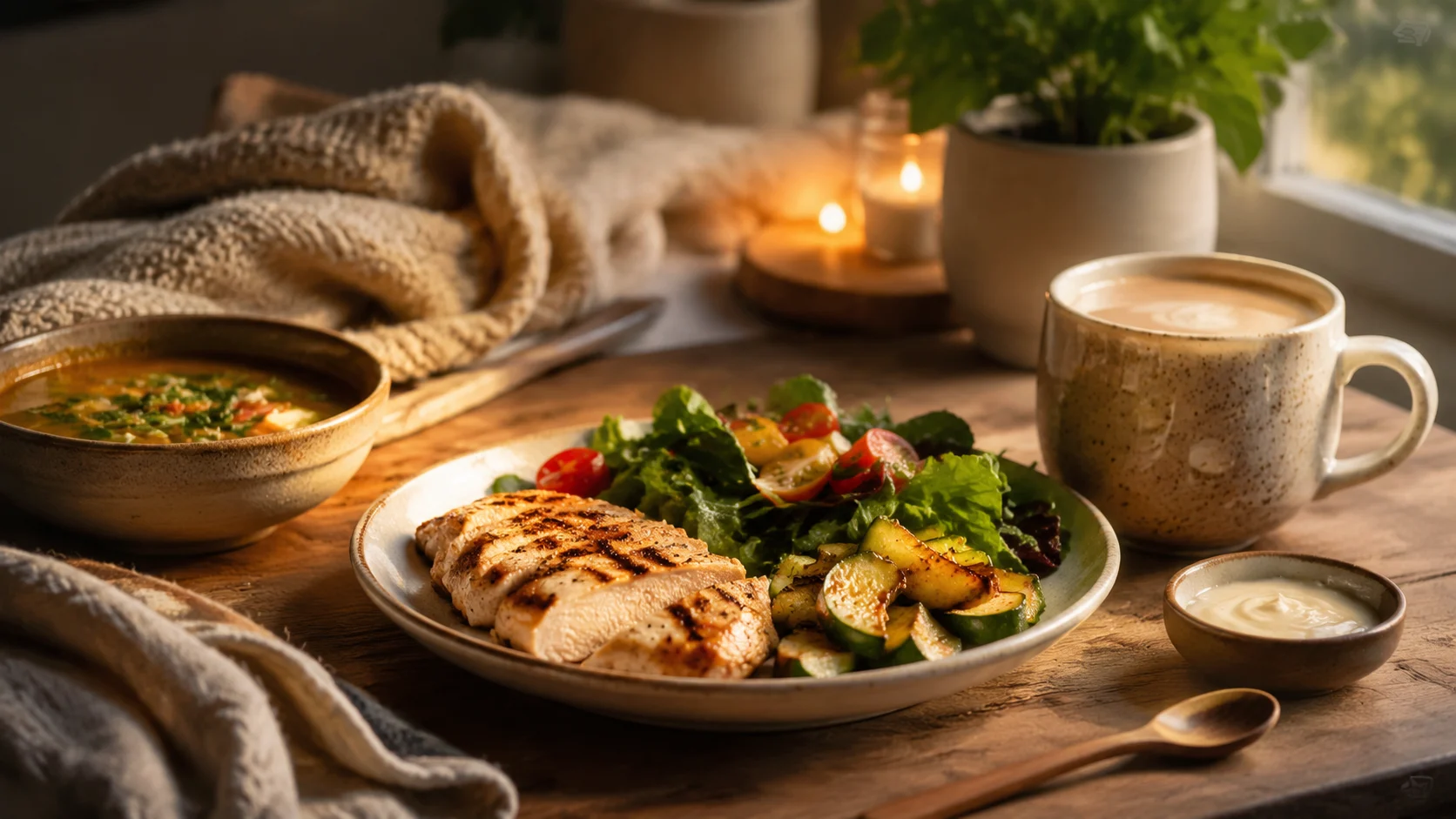
- Let comfort stay in the meal. A satisfying dinner is not a nutritional failure. Pasta with chicken and spinach, or a grilled cheese beside tomato soup, may support her more than a sparse salad followed by a raid through the cupboards.
What Reader Questions Usually Sound Like
What if I am not physically hungry, but I still want to eat the second I get home?
That may mean your nervous system is asking for relief, routine, or reward. Food can still be part of that, but it helps to pair it with another kind of comfort, like changing clothes, dimming the lights, or sitting down before making any decision.
Should I try to distract myself from stress eating after work?
Gentle distraction can help, but only if it does not become denial. If you are genuinely hungry, eating is the caring response. If you are emotionally flooded, a short pause can help you choose comfort more consciously.
Why does this happen more after “healthy” days?
Sometimes “healthy” has secretly meant too little food, too many rules, or not enough satisfaction. The body often responds later by asking for more energy and more pleasure.
What should I eat if I want something comforting and balanced?
Think warm, simple, and steadying: a baked potato with cottage cheese and butter, noodles with tofu and edamame, or oatmeal with banana and crushed walnuts. Comfort and nourishment can belong in the same bowl.
Please note: Every body has its own rhythm. This gentle guide is for educational purposes and does not replace personalized advice from a healthcare professional or registered dietitian, especially if stress eating feels overwhelming or is tied to a long history of restriction, binge eating, anxiety, or depression.