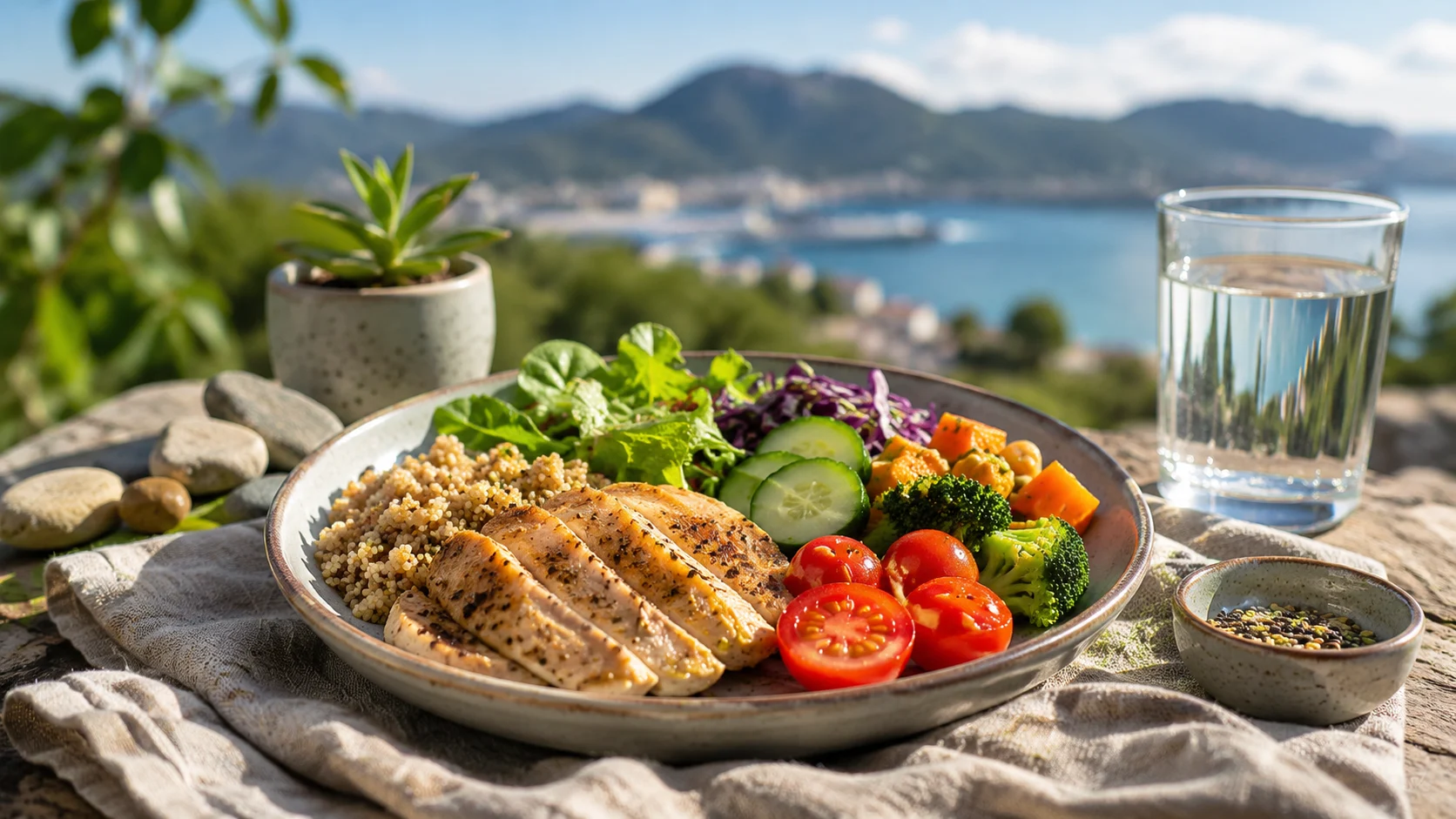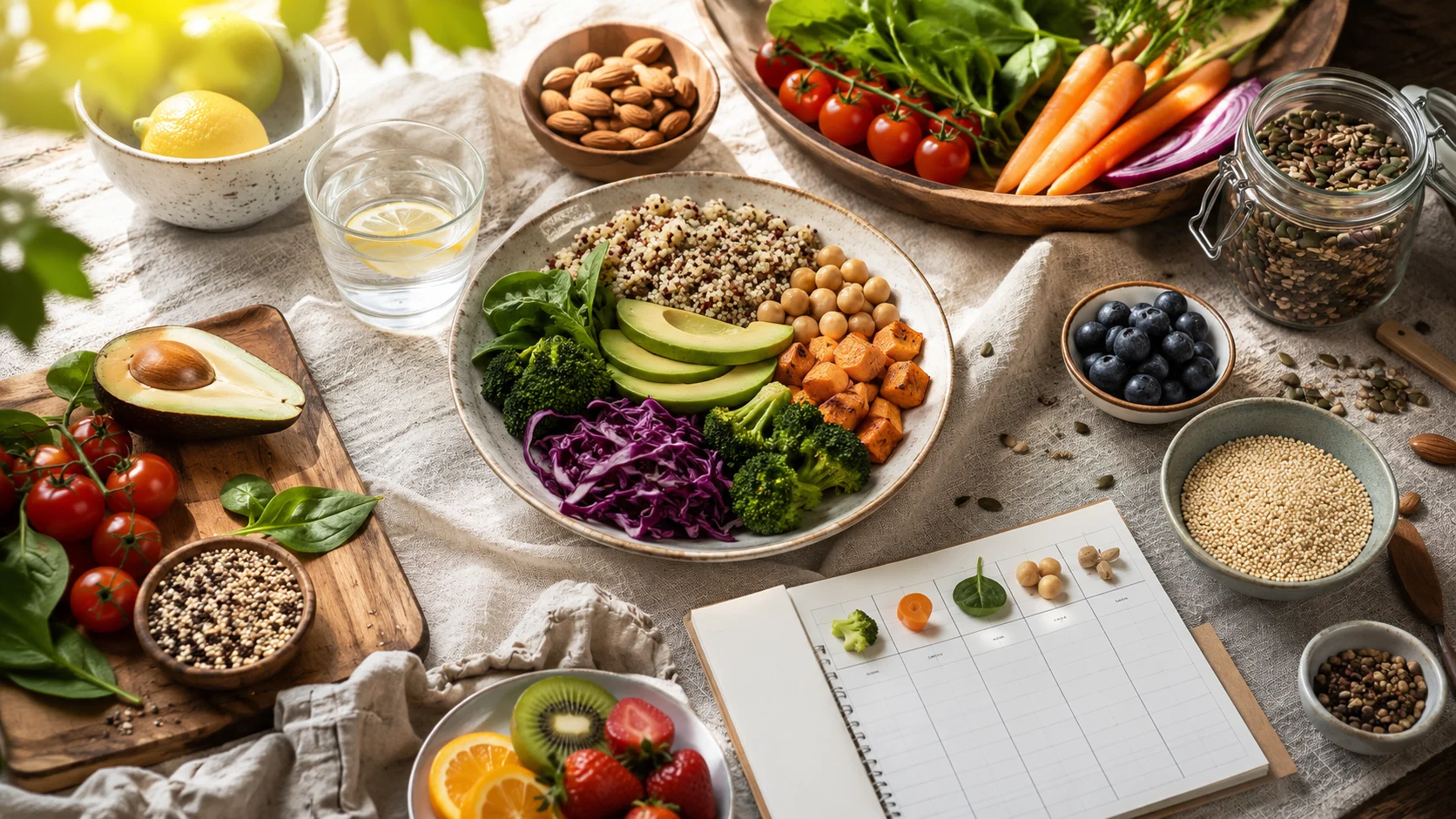

A balanced meal is not a test of discipline
Many women are told that eating well should feel like control. But meal balance for beginners is usually not about being stricter — it is about being more supported. In real life, a balanced meal simply means giving the body enough of what helps it feel steady: protein, fiber-rich carbohydrates, fat, and something comforting enough to make the meal feel complete.
When she is standing in the kitchen at 6:40 p.m., tired and slightly irritable, what often looks like a “lack of willpower” is really a meal that never had the chance to hold her. If lunch was only coffee and a granola bar, dinner cravings are not dramatic. They are understandable.
Body signals are not character flaws. They are messages asking for care.
One helpful way to think about meal balance for beginners is through a simple micro-framework: the Steady Plate Trio. Picture a plate or bowl built from three anchors:
- An energy base — something like warm rice, roasted potatoes, buttered toast, or oats. This gives the body quick reassurance that fuel is coming.
- A staying-power layer — such as eggs, Greek yogurt, salmon, beans, chicken, tofu, or cottage cheese. This helps meals feel more grounding and satisfying.
- A soft finish — avocado, olive oil, nuts, cheese, or a creamy dressing, plus fruit or vegetables if available. This brings flavor, ease, and a little more steadiness.
It does not need to be perfect. It only needs to be supportive enough.
The quiet power of building meals that actually last
So much nutrition advice forgets the rhythm of ordinary days. A woman may be answering emails at her desk, picking up a child from school, or trying to make something edible between meetings. In those moments, meal balance for beginners works best when it feels practical, not performative.
Research has often observed that meals with protein and fiber can support fullness and steadier energy more effectively than meals built mostly around refined carbohydrates alone. That does not mean bread or pasta are the problem. It means they usually feel better when they arrive with company.
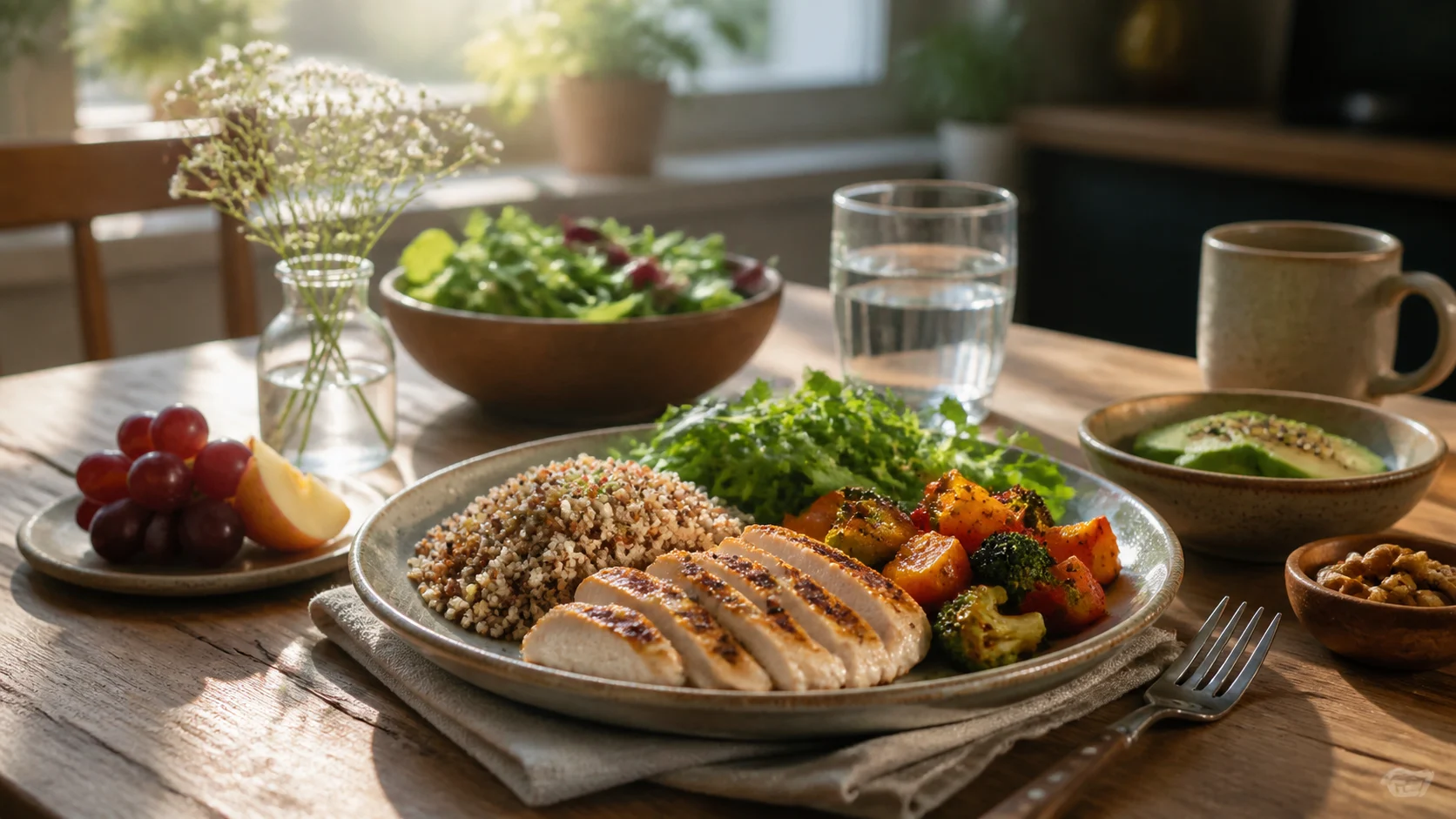
A meal becomes balanced not when it looks perfect, but when it helps life feel less jagged an hour later.
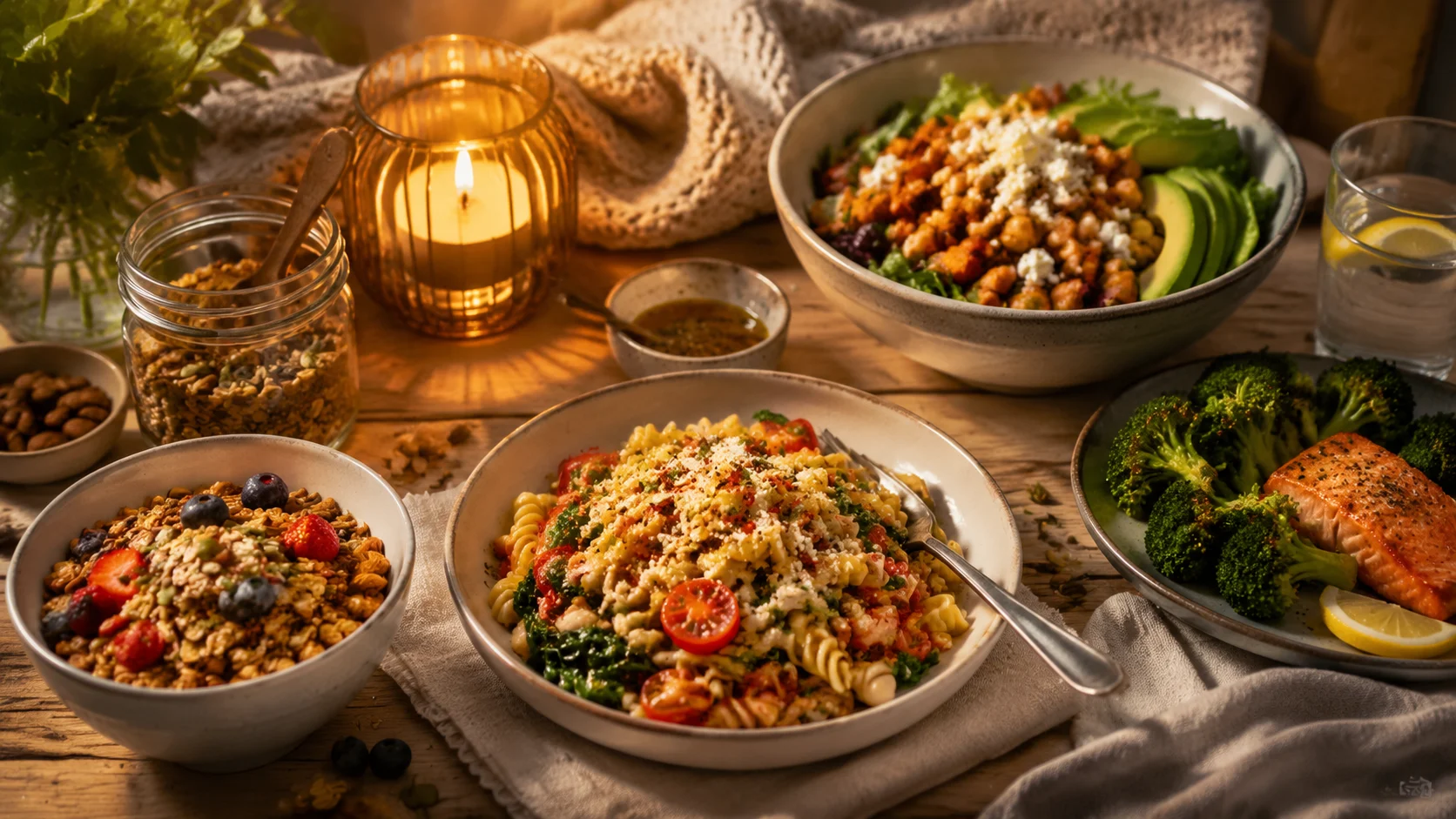
That is why a bowl of pasta can absolutely belong in a balanced meal. Tossed with white beans, spinach, olive oil, and parmesan, it tells a different energy story than pasta eaten quickly and alone. The same is true for toast: two slices with peanut butter and banana land differently than dry toast grabbed on the way out the door.
What this can look like on an ordinary Tuesday
For anyone learning meal balance for beginners, examples help more than rules. Not because meals need formulas, but because tired brains like gentle shortcuts.
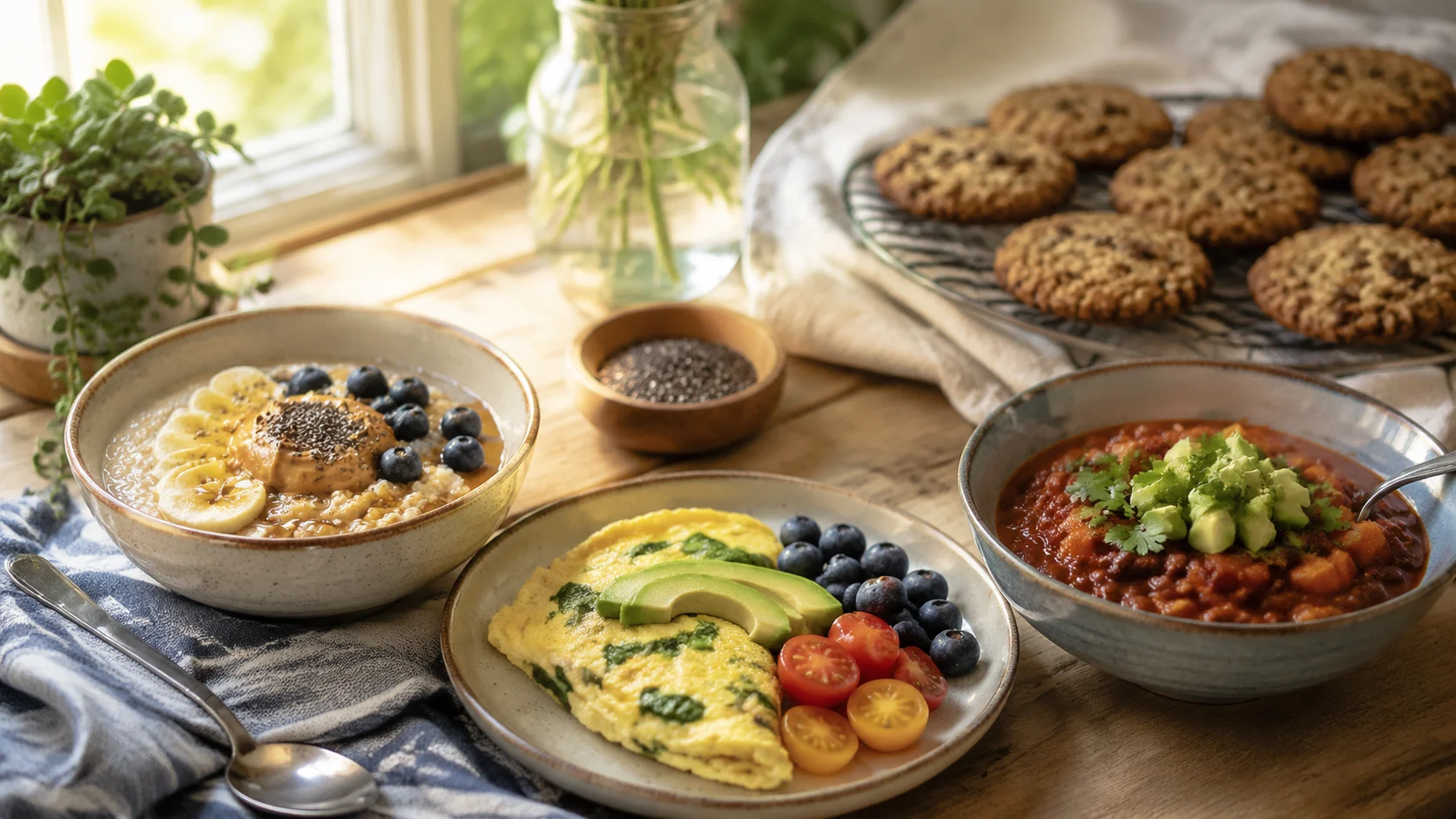
- Breakfast: A bowl of oatmeal with crushed walnuts, berries, and a spoonful of Greek yogurt. Soft, warm, and more steady than oatmeal on its own.
- Lunch: A turkey and avocado sandwich with a side of baby carrots and a few crackers. Familiar, easy, and less likely to end in a 3 p.m. energy dip.
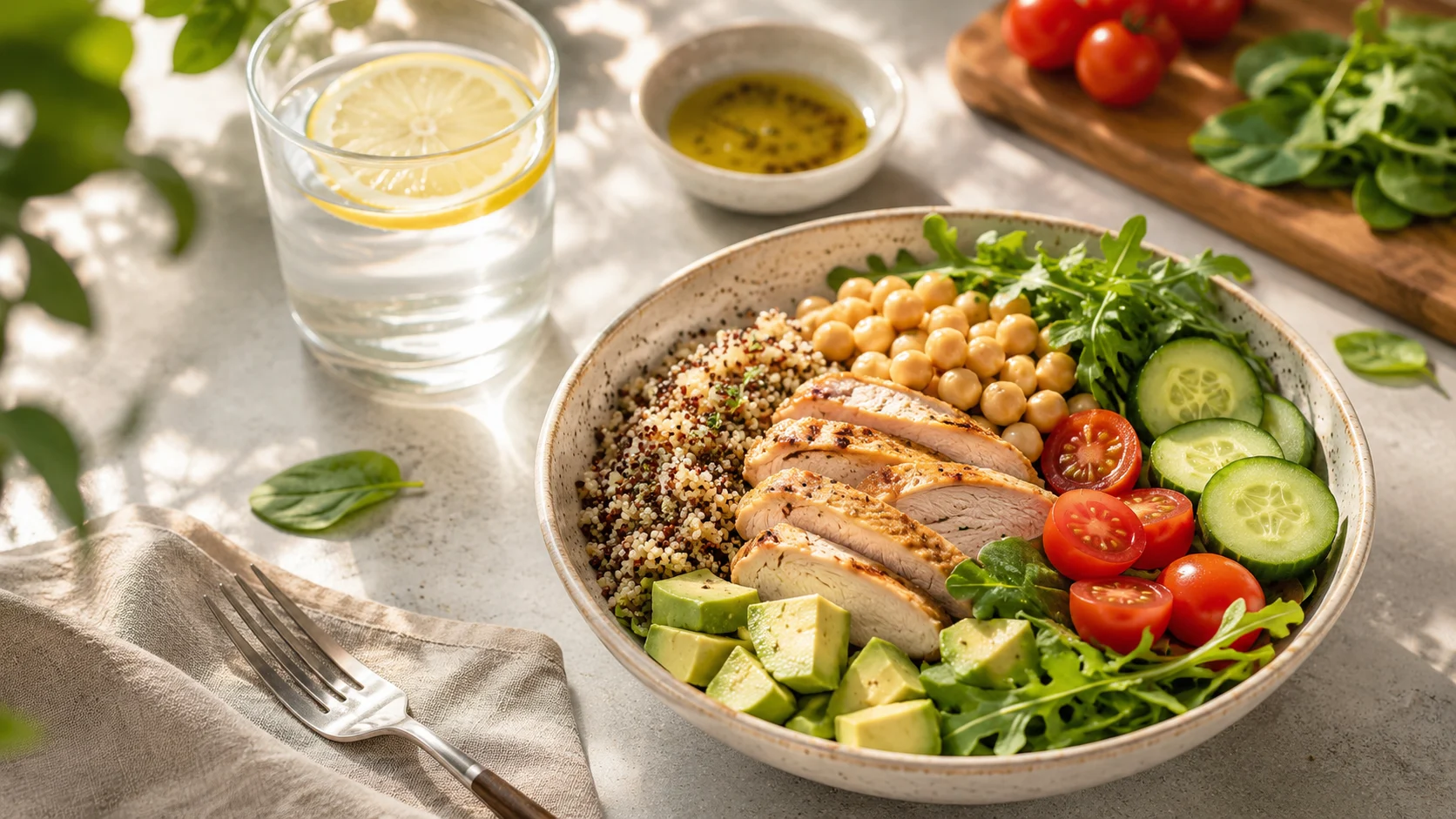
- Dinner: Rice in a deep bowl, topped with rotisserie chicken, cucumber, edamame, and a drizzle of sesame dressing. Minimal cooking, real support.
- Snack: Apple slices with peanut butter, or cheese with grapes and pretzels. A snack can be balanced too, especially when the afternoon feels long.
If vegetables are missing one day, the meal is not ruined. If takeout is the only realistic option, balance can still happen there too — perhaps by adding grilled protein, choosing a side that offers fiber, or simply noticing whether the meal needs one more anchor to feel satisfying.
Why beginners often struggle — and why that makes sense
Sometimes the hardest part of meal balance for beginners is not information. It is trust. Many women have spent years bouncing between food rules, calorie math, and the vague feeling that they are always doing it wrong. So when they try to build a balanced meal, they may overcomplicate it.
But balance is not a math equation. It is more like arranging a room so the body can exhale.
It may help to ask three soft questions before eating:
- What will give this meal staying power? If it is mostly carbs, perhaps it wants eggs, beans, yogurt, or chicken nearby.
- What will make it feel comforting? Meals that feel emotionally thin often lead to continued grazing.
- What would make the next two hours feel steadier? This keeps the focus on support, not control.
Please note: Every body has its own rhythm, preferences, and needs. This gentle guide is for educational purposes only and does not replace personalized advice from a registered dietitian or healthcare professional, especially if someone is managing a medical condition, a history of disordered eating, or significant digestive concerns.
You Might Also Wonder
What if I only have five minutes to make something?
A balanced meal can still be simple: toast with eggs and fruit, a yogurt bowl with granola and nuts, or a microwave rice bowl with beans and cheese. Speed does not cancel nourishment.
Do I need to include all food groups every single time?
No. The goal is not perfection. The gentler aim is to include enough support that the meal feels satisfying and helps energy stay more even.
Can comfort food still fit into meal balance for beginners?
Absolutely. Comfort matters. Mac and cheese may feel more steady with peas and tuna stirred in, or with a side of fruit and something protein-rich. Support and comfort can sit at the same table.
Why do I still want snacks after meals sometimes?
Sometimes the meal was too small, too rushed, or missing satisfaction. Sometimes stress is present too. Curiosity helps more than self-blame.
What if balanced eating feels overwhelming after years of dieting?
Then smaller steps are enough. Start by adding, not restricting. One anchor at a time is still progress.