
When Control Stops Working, Listening Begins
Many women think their struggle with food means they need more discipline. Often, the opposite is closer to the truth: when eating feels chaotic, the body may be asking for more trust, more steadiness, and more care. Body trust and food are deeply connected. When a woman has spent years overriding hunger, fearing cravings, or judging herself after eating, her body can start to feel less like home and more like a problem to solve.
There is another way to begin. Not with stricter rules, but with a softer kind of attention. Body trust and food repair each other slowly: the more safely she eats, the easier it becomes to hear real hunger, fullness, satisfaction, and comfort without panic.
Body trust is not earned by perfect eating. It is built when the body learns it no longer has to beg, brace, or bargain for nourishment.
Picture the woman at her desk at 3 p.m., staring at a snack drawer she promised herself she would avoid. She may call it lack of control. But sometimes it is simply a body that has gone too long without enough lunch, enough rest, or enough emotional exhale. In that moment, food is not the enemy. It is information.
The Quiet Damage of Distrust
Food distrust rarely appears out of nowhere. It often grows after years of dieting, meal skipping, food rules, or the constant background hum of body criticism. Over time, hunger stops feeling clear. Fullness becomes confusing. Cravings start to feel suspicious.
This is why body trust and food can feel so tangled. When someone has been taught to fear bread, dessert, or second portions, eating may become loaded with negotiation. She is not just choosing lunch; she is managing anxiety, identity, and the hope of finally “getting it right.”

Research has long observed that restriction can increase preoccupation with food. In classic studies of semi-starvation, people became more fixated on eating, recipes, and cravings when intake was limited. The lesson still matters today: the mind often gets louder around food when the body does not feel securely fed.
The body is not a project to conquer. It is a place to come back to.
The “Signal, Safety, Satisfaction” Framework
One gentle way back is a small Joyini-style lens: Signal, Safety, Satisfaction. It helps make body trust and food feel less abstract and more livable.
- Signal: Notice what the body is saying before judging it. A shaky afternoon, irritability, or an intense pull toward sweets may be a signal for energy, not proof of failure.
- Safety: Let meals become more reliable. A bowl of warm rice with salmon and cucumber, or toast with eggs and fruit on a rushed morning, can teach the body that nourishment is not being withheld again.
- Satisfaction: Include comfort, texture, and pleasure. A meal that looks balanced on paper but leaves her emotionally unsatisfied may still send her searching through the pantry an hour later.
Satisfaction is often the missing piece. Many women try to rebuild trust with food while still eating in a way that feels tense, sparse, or joyless. The body notices that too.
What Rebuilding Trust Can Look Like on an Ordinary Tuesday
It may look less dramatic than expected. Body trust and food often come back together in plain, unglamorous moments.
- Eating before she is ravenous: not because a clock says so, but because waiting until desperation tends to blur choice and comfort.
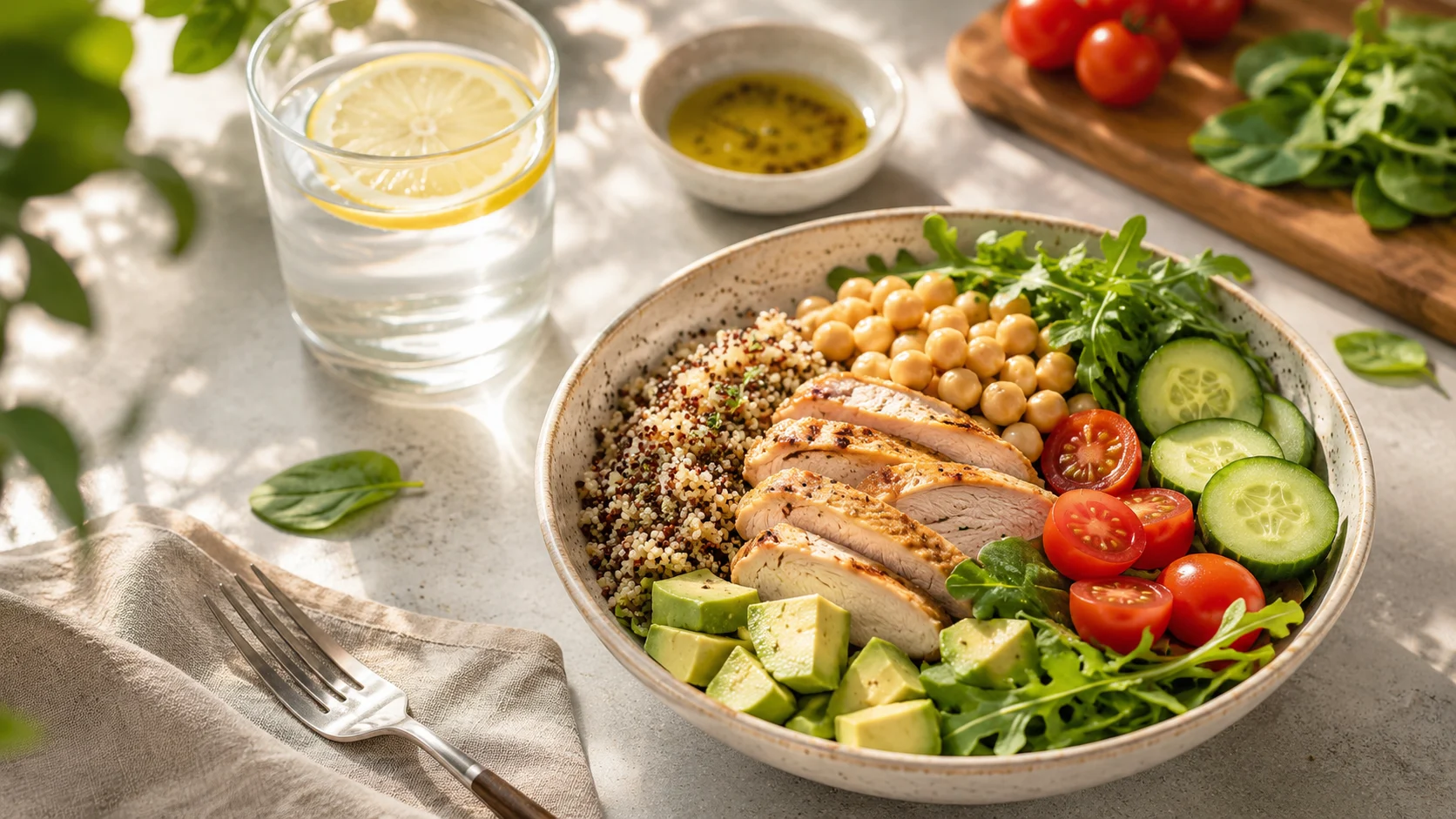
- Adding instead of only removing: perhaps pairing the cookie with yogurt, or adding avocado and beans to a hurried lunch, so energy lands more steadily.
- Pausing after eating to notice the feeling: not to grade the meal, but to ask, “Do I feel more grounded now?”
- Letting one food be just one food: pasta is not a moral event. Chocolate is not a character flaw. A craving is not a confession.
For some women, this process also includes grief. Grief for the years spent fighting appetite. Grief for how often body signals were dismissed. That grief deserves tenderness too.
Questions That Often Come Up
What if I do not trust myself around certain foods yet?
That fear makes sense. Trust usually returns in layers. Start with more regular meals and enough overall nourishment. For many people, foods feel less overwhelming when the body is no longer bracing for scarcity.
Does body trust mean eating every craving immediately?
Not quite. It means becoming curious instead of reactive. Sometimes a craving wants quick energy. Sometimes it wants comfort. Sometimes it wants both. Trust grows when she responds with honesty rather than punishment.
What if I cannot tell whether I am hungry or emotional?
That is common, especially after long periods of dieting or stress. A gentle snack, a glass of water, and a short pause can help. Hunger and emotion often overlap; it does not have to be one or the other to deserve care.
Can body trust and food improve if I have been dieting for years?
Yes, though it may feel slow at first. The body often needs repeated experiences of consistency before it softens its defenses. Small reliable meals and less food judgment can make a real difference over time.
Please note: Every body has its own rhythm. This article is for educational purposes and offers gentle support, not personalized medical care. If eating feels especially distressing or tangled with a health condition, a registered dietitian or qualified healthcare professional can offer more individual guidance.