
When Dinner Needs to Happen Before Motivation Arrives
People often assume hard evenings call for more discipline. Usually, they call for less friction. When someone is drained after work, caregiving, commuting, or simply carrying too much in her mind, quick meals with grocery store ingredients can be one of the gentlest ways to support steady energy without turning dinner into another task to fail at.
The simplest answer is this: build meals from a few easy pieces already waiting in the fridge, freezer, or pantry—something filling, something comforting, and something that helps the body stay more even for the rest of the night. A bagged salad, rotisserie chicken, microwave rice, canned beans, soup, eggs, frozen vegetables—these are not shortcuts to judge. They are real-life nutrition.
Body care does not always look like chopping vegetables for 45 minutes. Sometimes it looks like opening, warming, assembling, and eating before exhaustion turns into overwhelm.
The “Three-Part Comfort Plate” That Makes Fast Meals Feel More Grounding
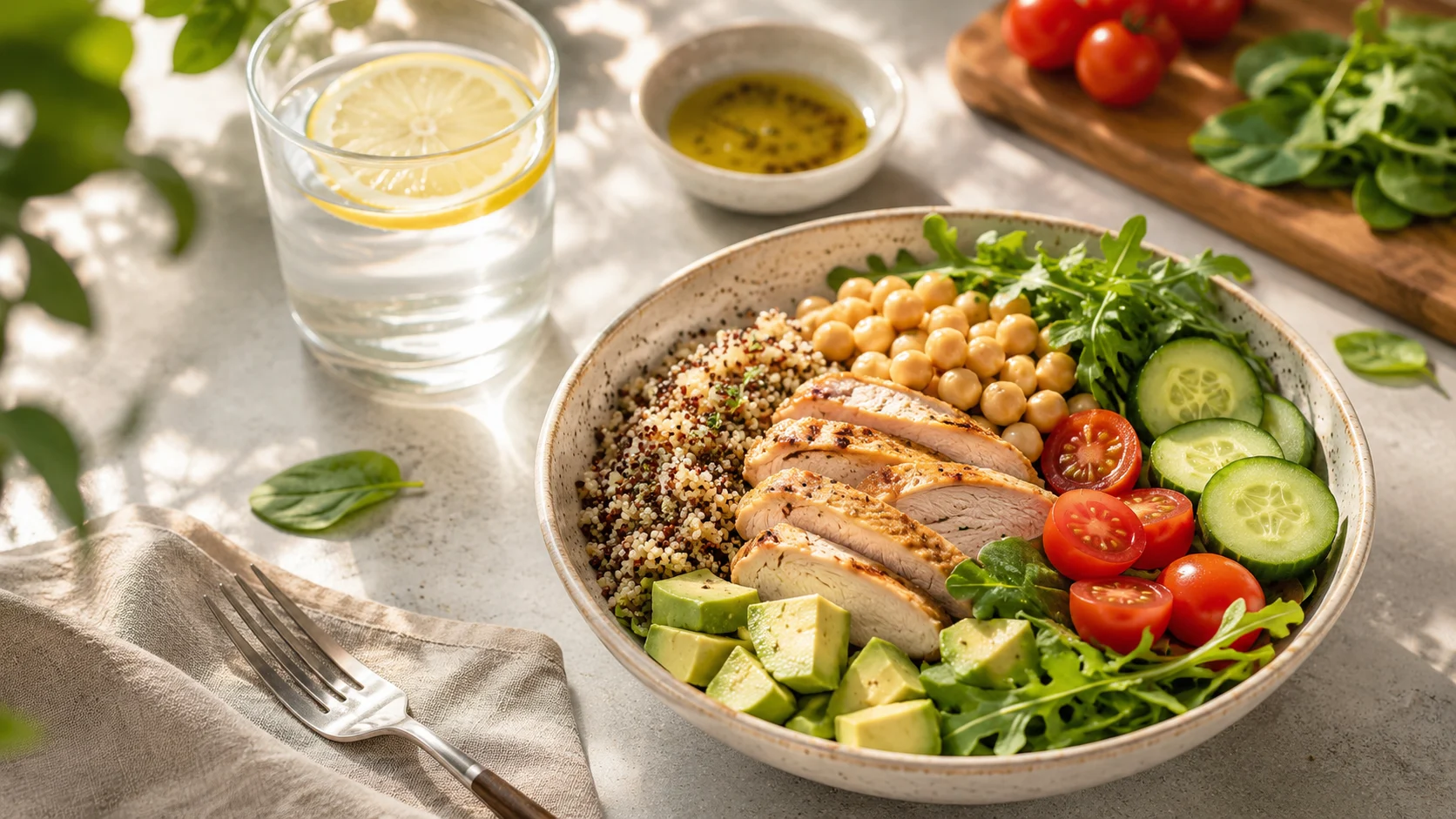
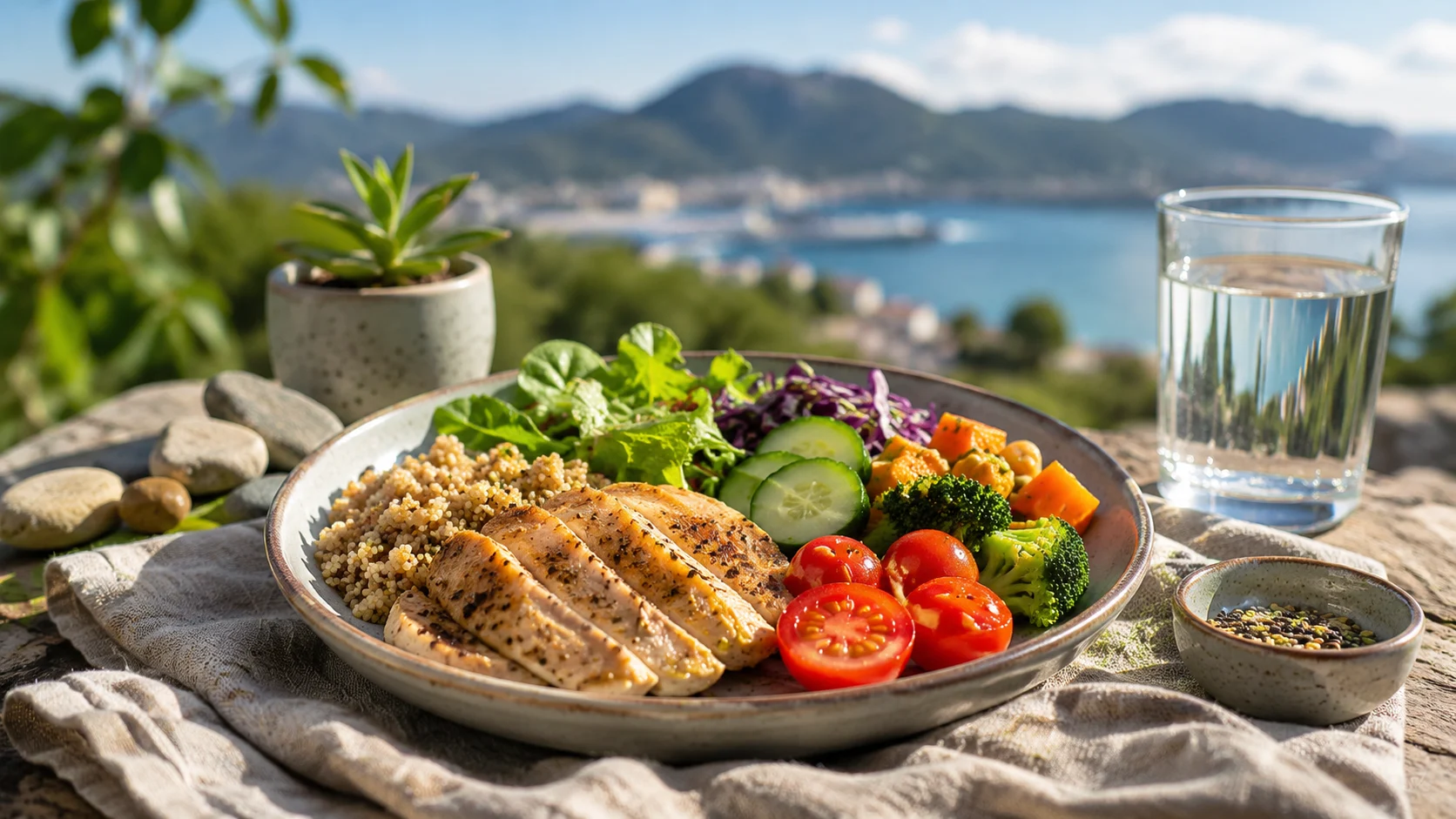
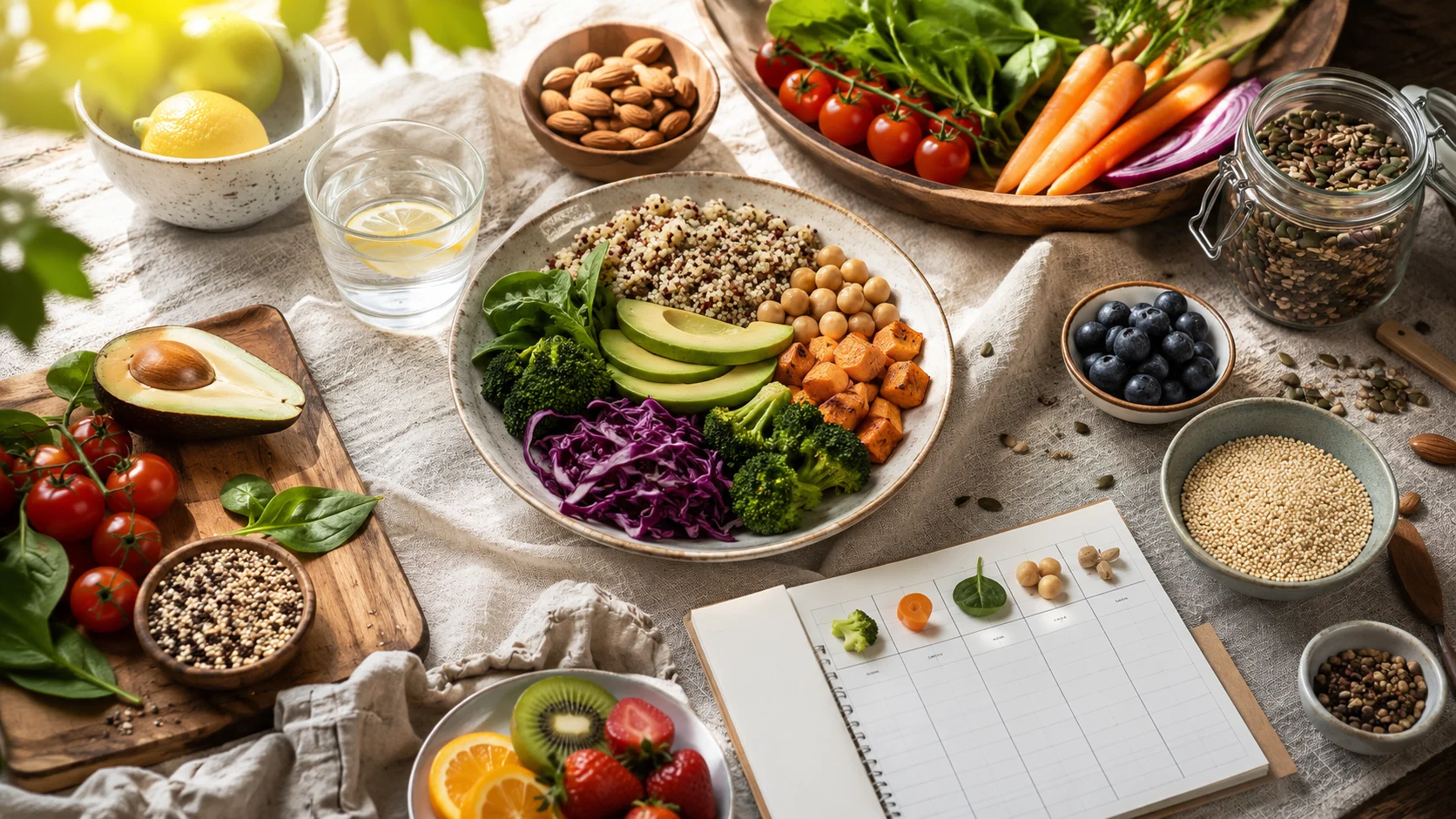
A useful little framework here is the Three-Part Comfort Plate: anchor, ease, and color.
- Anchor: This is the part that helps a meal feel satisfying—warm rice, pasta, bread, potatoes, or tortillas. It gives the body accessible energy, especially on nights when someone has skipped lunch or pushed through the afternoon on coffee.
- Ease: This is the protein or hearty add-on that keeps the meal from feeling thin—rotisserie chicken, hard-boiled eggs, Greek yogurt, canned tuna, tofu, lentils, or black beans.
- Color: This brings fiber, texture, and a sense of freshness without demanding perfection—bagged greens, frozen broccoli, cherry tomatoes, baby carrots, jarred roasted peppers, or a spoonful of salsa.
Research has observed that meals with a balance of protein, fiber, and carbohydrate can support better satiety and steadier blood sugar response than meals built around quick carbs alone. That does not mean every plate has to be ideal. It simply means a little balance can help someone feel more supported a few hours later.
Seven Quick Meals With Grocery Store Ingredients That Feel Like Relief
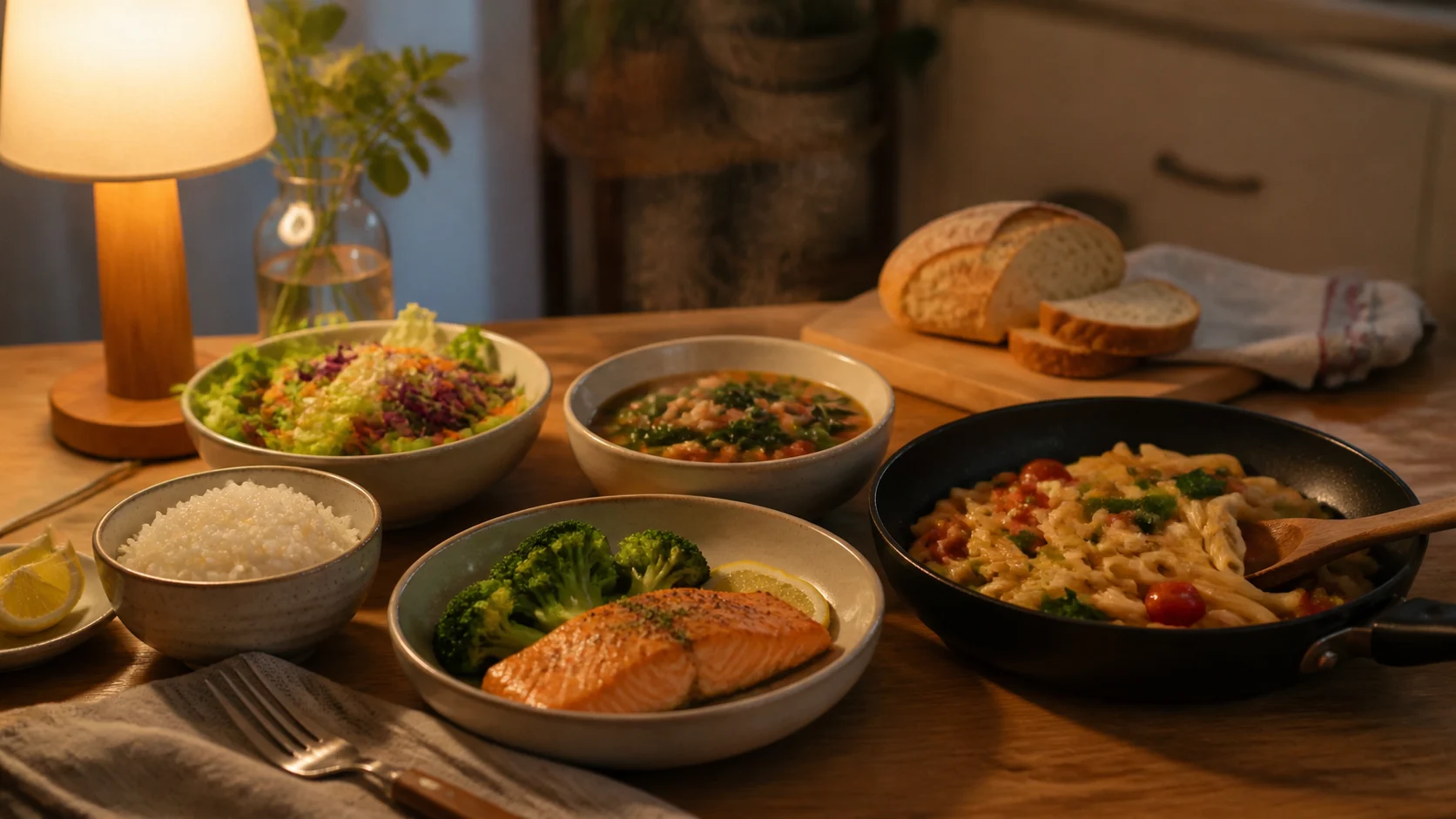
- Rotisserie chicken rice bowl: Spoon warm microwave rice into a bowl, add shredded chicken, a handful of bagged slaw, and drizzle with bottled sesame dressing. It is soft, savory, and ready in under ten minutes.
- Tomato soup and grilled cheese with a side of greens: Heat a boxed soup while bread crisps in the pan around melting cheese. Add a simple salad beside it, not to make it “healthier,” but to make it feel more complete.
- Beans on toast with eggs: Spread warm seasoned beans over toast and top with a fried or scrambled egg. A few slices of avocado or tomato can make it feel unexpectedly generous.
- Frozen pasta, upgraded: Heat frozen ravioli or tortellini, then toss it with olive oil, baby spinach, and grated parmesan. The spinach wilts into the bowl like it was always meant to be there.
- Snack plate dinner: Arrange crackers, sliced turkey, cheese, apple wedges, baby carrots, and hummus on a plate. This is still dinner, even if it looks more like a picnic than a recipe.
- Tuna melt quesadilla: Fold canned tuna and shredded cheese into a tortilla and toast it until crisp. Serve with salsa and cucumber slices for something deeply practical and surprisingly satisfying.
- Loaded baked potato shortcut: Microwave a potato, split it open, and fill it with Greek yogurt, black beans, shredded cheese, and green onions. Warm, inexpensive, and steadying.
The body is not a project to manage perfectly. It is a home asking, in ordinary ways, to be fed with a little more ease.
What to Keep Around So Fast Eating Feels Easier, Not More Chaotic
The quiet secret behind quick meals with grocery store ingredients is not culinary talent. It is gentle stocking. A few flexible staples can turn a low-energy evening into something softer.
- In the fridge: rotisserie chicken, eggs, Greek yogurt, pre-cut fruit, shredded cheese, bagged salad, tortillas. These help dinner come together when attention is low.
- In the freezer: microwave rice, frozen vegetables, edamame, bread, dumplings, or simple frozen meals. Frozen food can be a form of support, not a backup for “bad” days.
- In the pantry: canned beans, tuna, soup, pasta, crackers, peanut butter, oats, jarred sauce. These are the quiet building blocks of real-life meals.
If grocery shopping feels tiring in itself, choosing just three anchors, three easy proteins, and three fruits or vegetables each week can be enough. That small rhythm often creates more stability than chasing an ambitious meal plan that disappears by Tuesday.
A Gentler Way to Think About Convenience Food
Many women carry an old belief that if a meal is easy, it somehow counts less. Yet for someone trying to eat more regularly, reduce late-night spiraling, or support more steady energy, convenience can be deeply nourishing. Quick meals with grocery store ingredients are not a compromise of character. They are often a practical expression of self-respect.
When she stands in the kitchen at 7:14 p.m., too tired to sauté anything and too hungry to wait, the most supportive meal is often the one that exists. Not the one she thinks she should have made.
Please note: Every body has its own rhythm, appetite, and nutrition needs. This article is for educational purposes and gentle support, and it does not replace personalized guidance from a healthcare professional or registered dietitian—especially if someone is managing a medical condition, digestive symptoms, or ongoing fatigue.
You Might Also Wonder
What if quick meals never feel “healthy enough” to me?
That feeling often comes from years of all-or-nothing food messaging. A meal does not need to be elaborate to be balanced. If it offers comfort, some staying power, and enough food to truly satisfy, it is doing meaningful work.
Can frozen or packaged foods still fit into gentle nutrition?
Yes. Frozen vegetables, canned beans, soup, pre-cooked grains, and bagged salads can make nourishment more reachable. Supportive eating is not about earning points for difficulty.
What if I’m too tired even to assemble a meal?
Then a very simple plate can still help: yogurt with granola, toast with peanut butter and banana, or crackers with cheese and fruit. The goal is to reduce strain, not create a performance.
How do I make grocery store meals more filling?
Think in pairs or trios: carbs plus protein, then something fresh or flavorful. Rice with chicken and slaw. Soup with toast and cheese. Pasta with beans and spinach. Small additions often change how long a meal supports you.