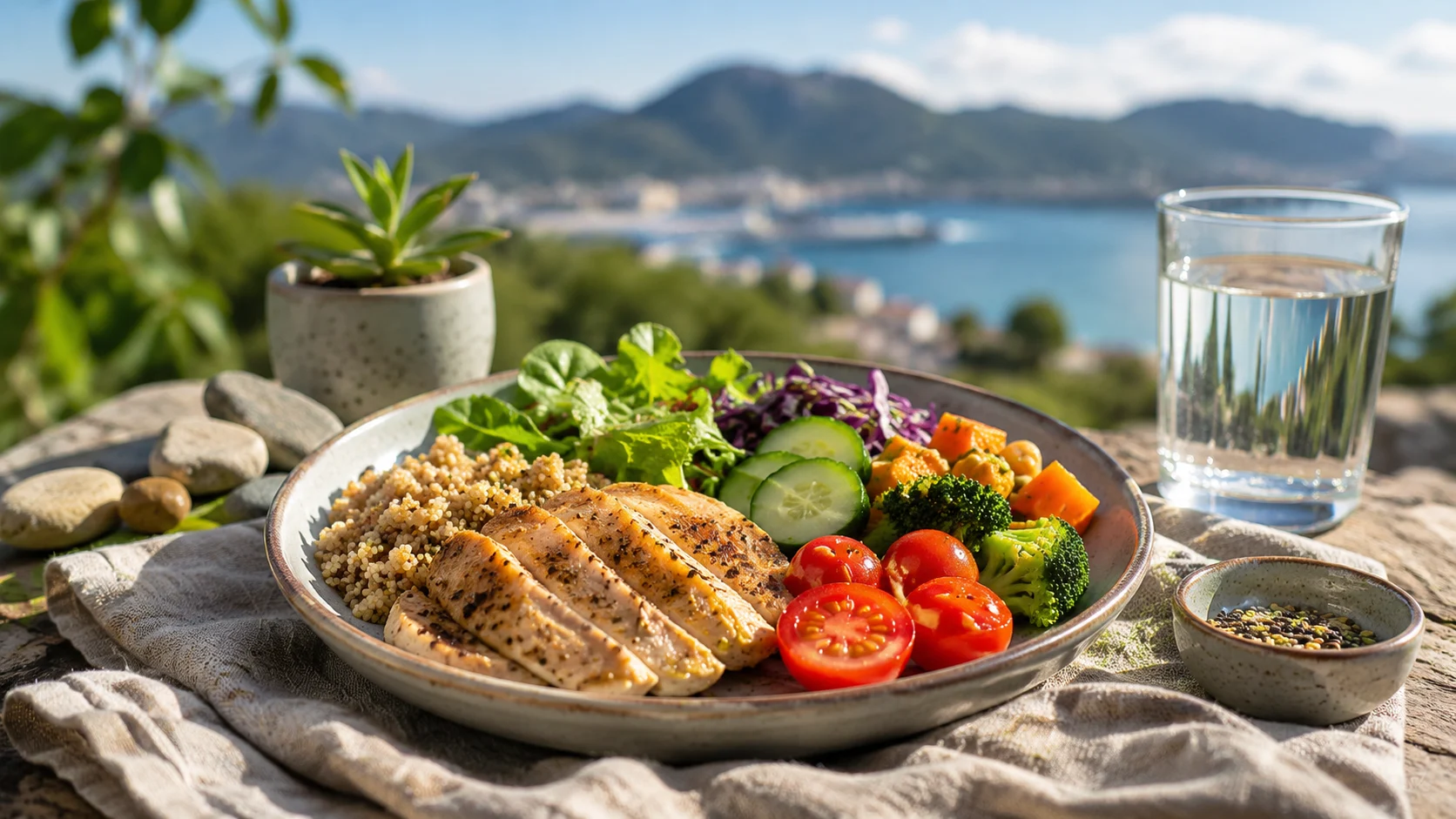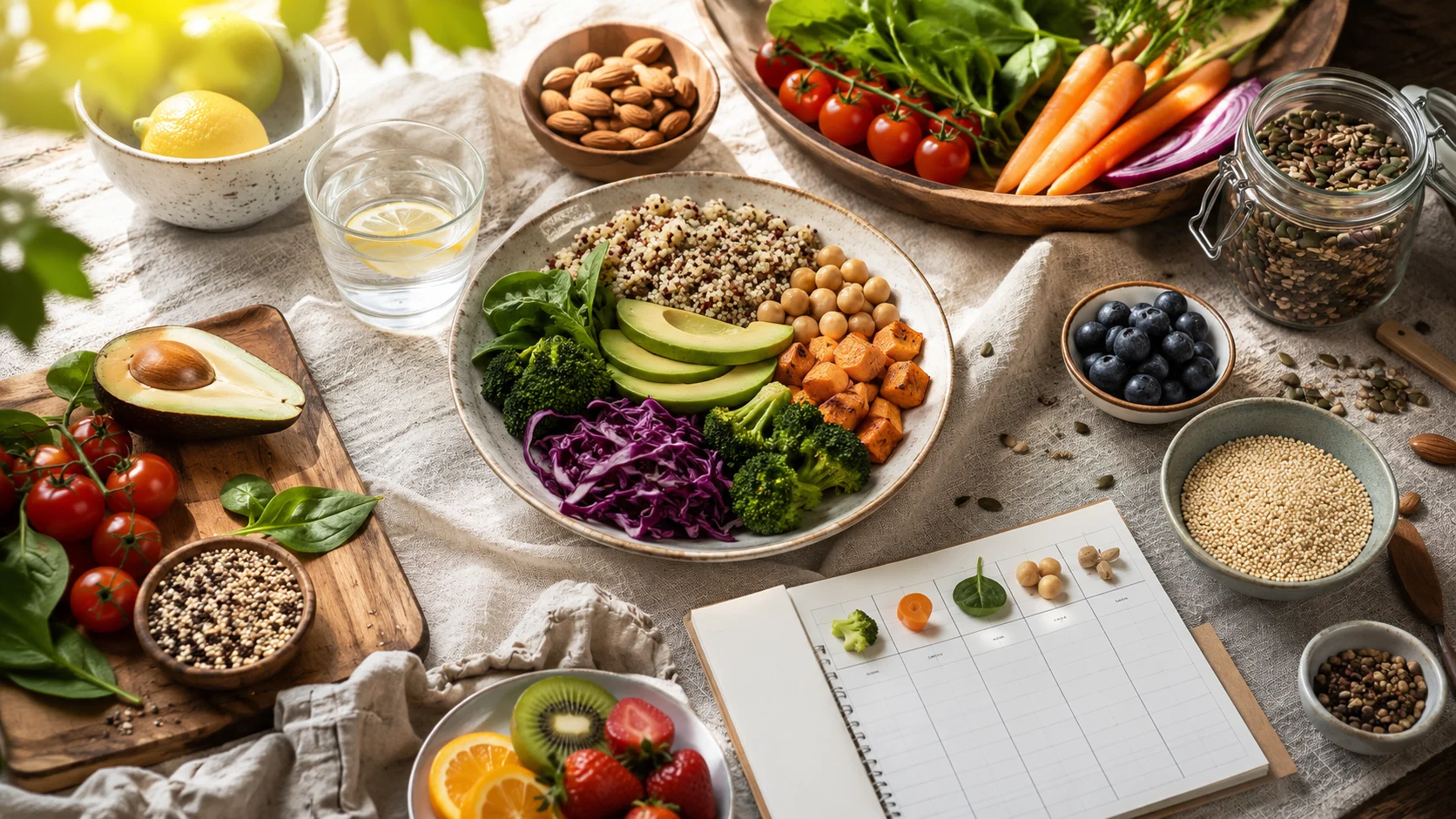

When fullness feels wiser than math
Many women are taught that eating well must begin with numbers. But satisfying meals without calorie counting often work better in real life, especially for someone who is tired, busy, or already carrying too much food stress. What helps most is not tighter control, but a steadier plate: enough protein, enough fiber, enough comfort, and enough permission to actually feel fed.
When she stands in the kitchen at 6:40 p.m., half-listening to a work message and half-wondering what will stop the late-night pantry drift, the answer is rarely another tracking app. More often, the body is asking for a meal that lands softly and stays with her.
Body trust rarely grows through harder rules. It grows when the body learns that it will be fed well, consistently, and without fear.
The “Anchor Plate” that makes a meal stay with her
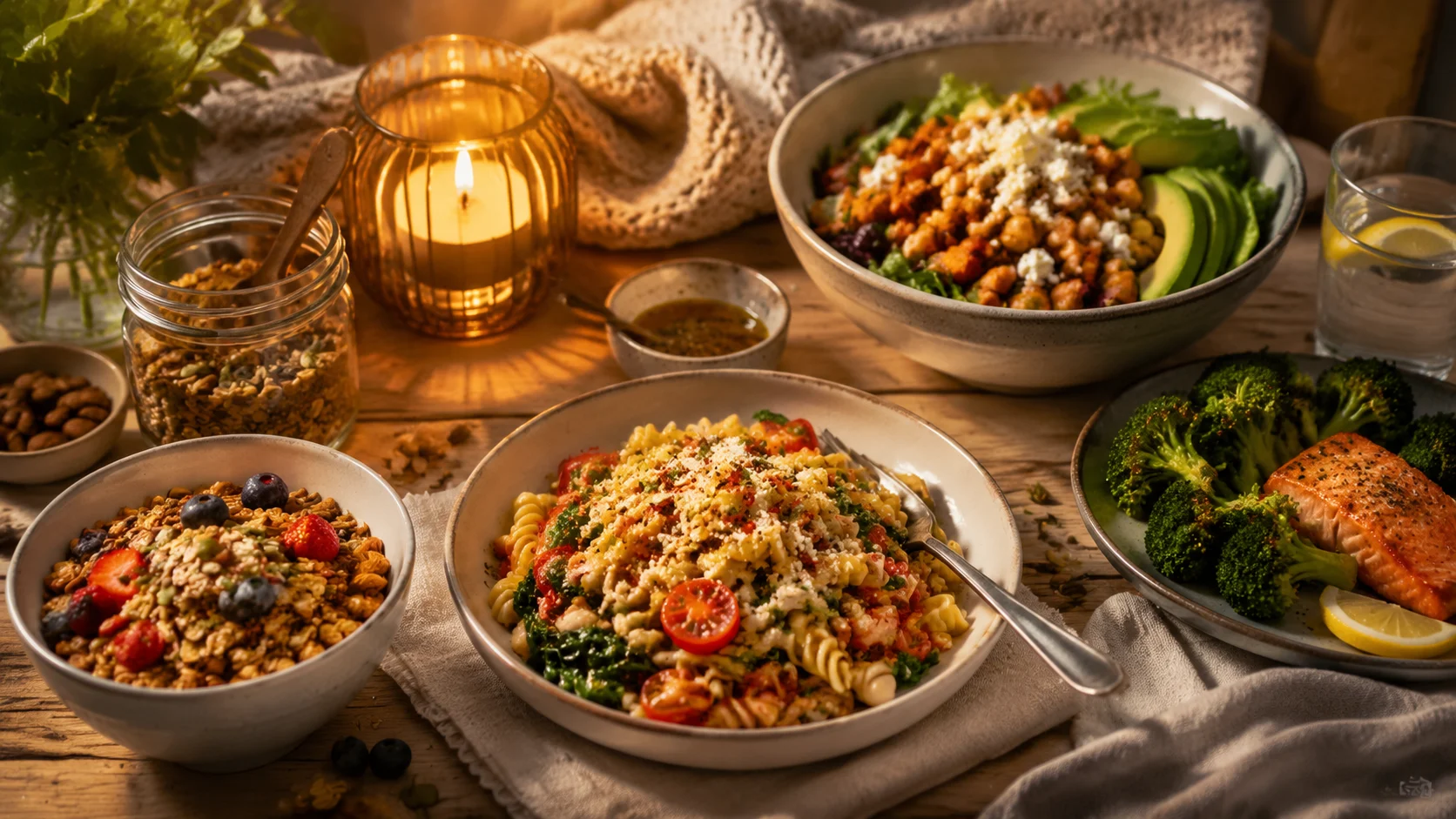
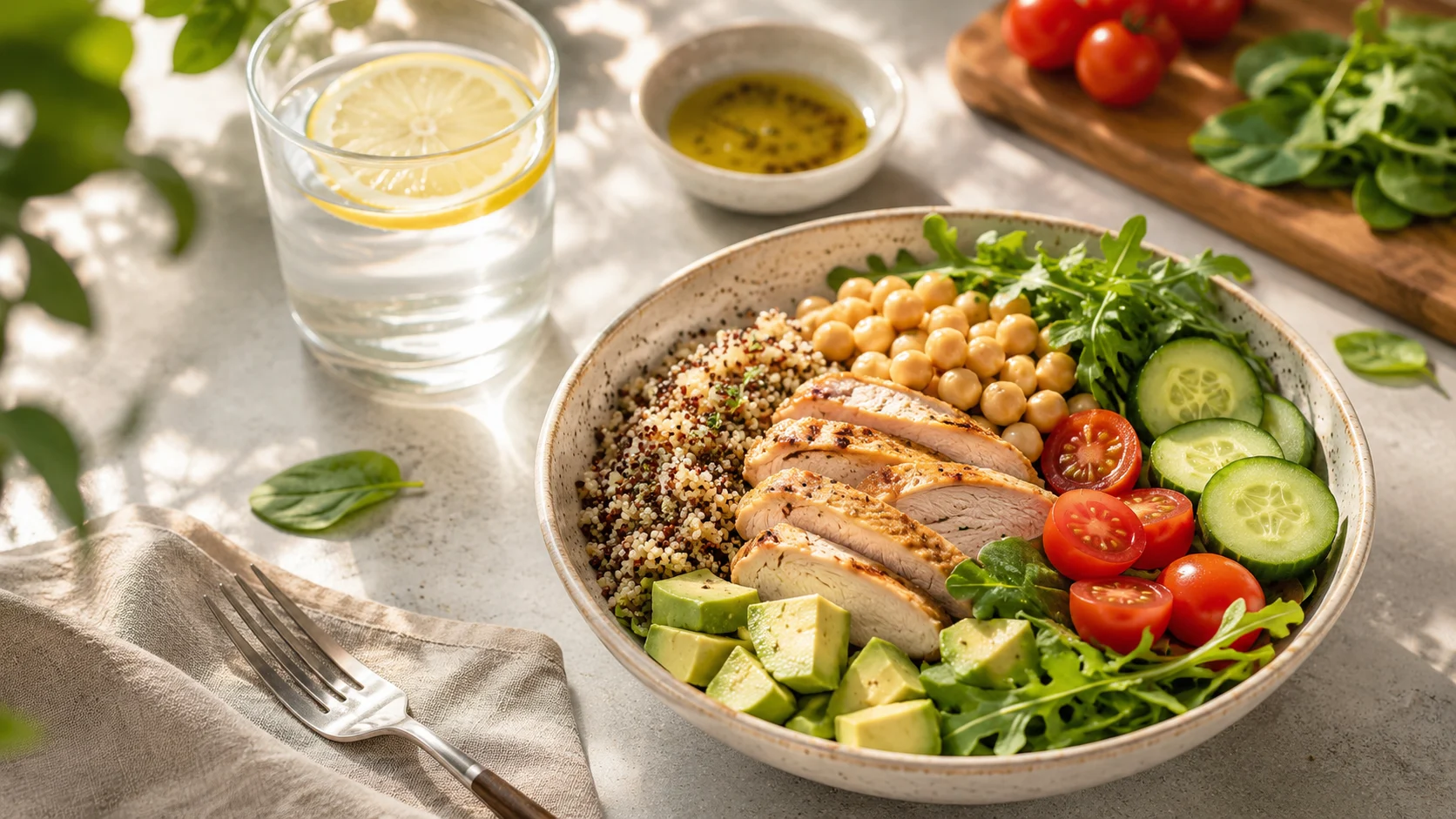
A simple way to build satisfying meals without calorie counting is to use what Joyini might call the Anchor Plate. Think of it as a meal with four quiet supports, each doing its part so hunger does not come rushing back an hour later.
- Something grounding: warm rice, crusty toast, roasted potatoes, or pasta. Carbohydrates are not a mistake here; they are often the part that helps the nervous system exhale.
- Something steady: salmon flaked into a grain bowl, Greek yogurt beside fruit, eggs folded into soft scrambled rice, or chicken tucked into a wrap. Protein helps meals feel more lasting.
- Something gentle with texture: a handful of greens, roasted carrots, berries, or cucumber with olive oil and salt. Fiber adds staying power, but it does not need to look perfect.
- Something satisfying: avocado, pesto, butter, tahini, shredded cheese, or a creamy dressing. Fat is often what turns a “healthy” meal into one that actually feels complete.
Research has long observed that protein tends to increase satiety more than refined carbohydrate alone, which helps explain why a plain granola bar may disappear quickly while toast with eggs and fruit lingers more kindly. The point is not to optimize every bite. It is to understand why some meals feel more supportive than others.
Why light meals can quietly lead to later overeating
Sometimes the meal that looks most disciplined is the one that backfires. A small salad with little substance may seem virtuous at noon, but by four o’clock she is at her desk thinking about chocolate, chips, and anything crisp or sweet. That is not failure. That is often biology doing what biology does.
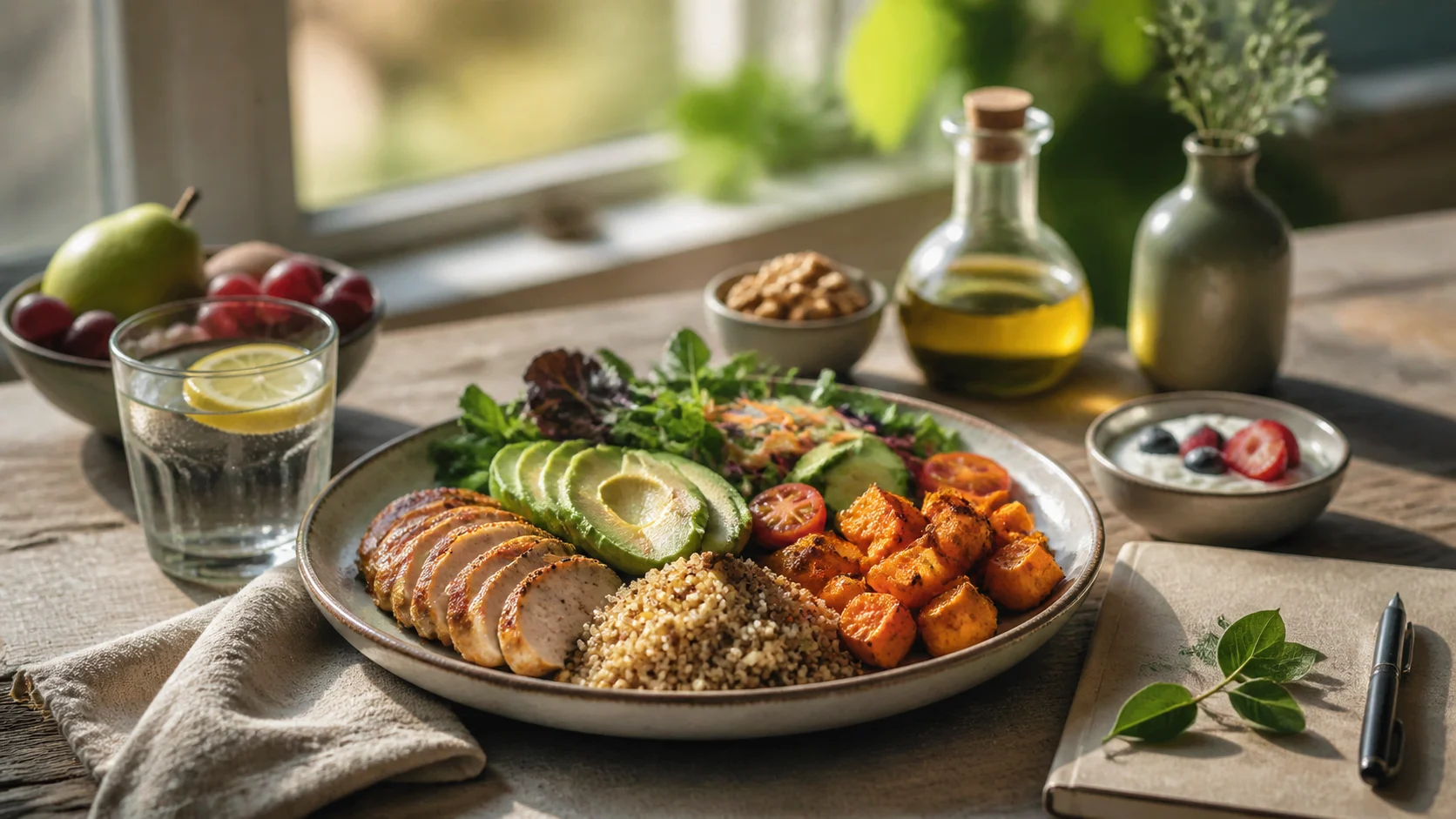
Satisfying meals without calorie counting matter because underfed afternoons can echo into the evening. When lunch is too light, the body often responds with louder cravings, shakier energy, and less patience. What feels like “lack of control” later can begin with not being fully nourished earlier.
The body is not dramatic when it asks for more food. It is honest.
What this can look like on an ordinary Tuesday
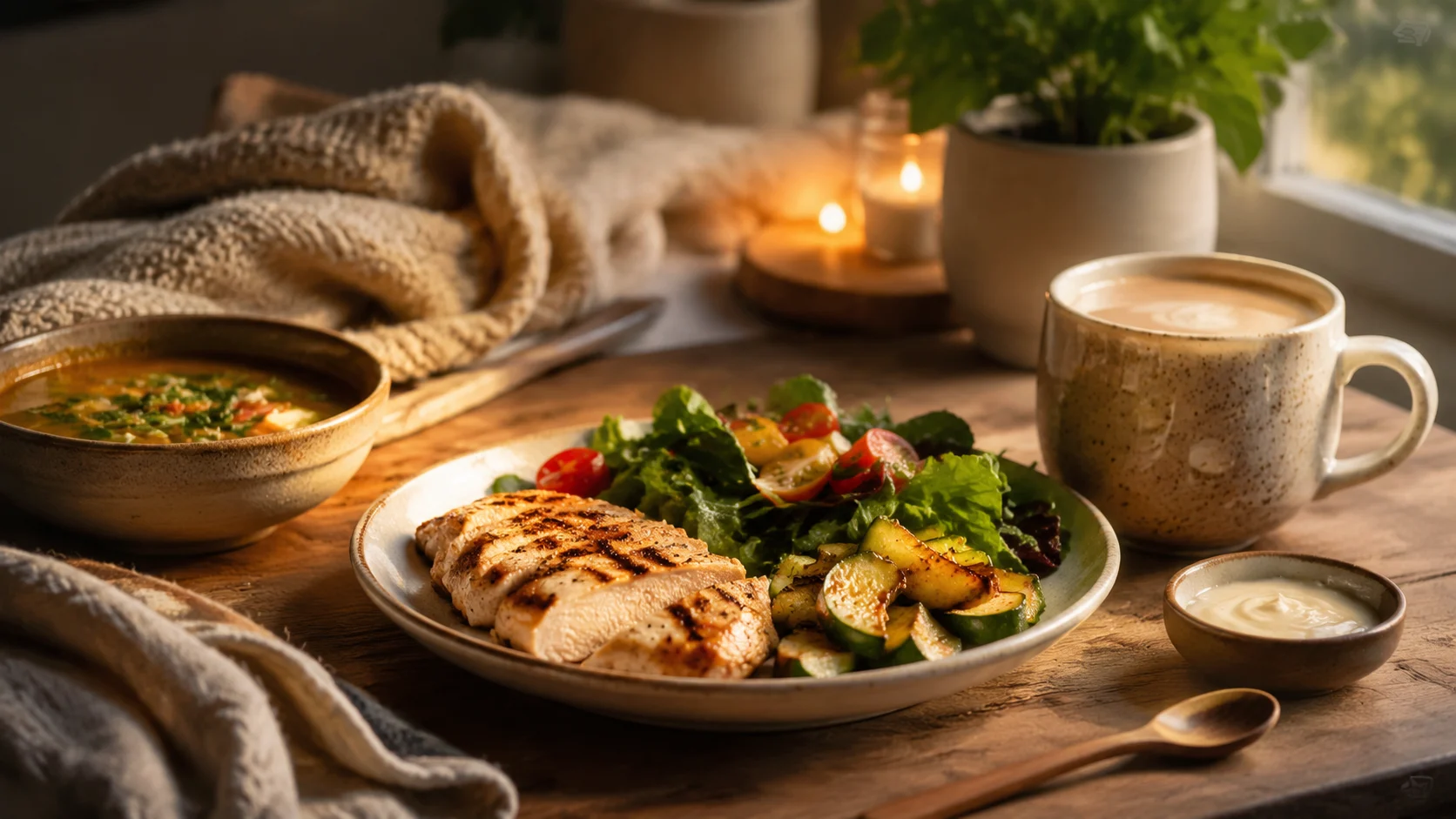
This way of eating does not need to be photogenic. It only needs to be supportive.
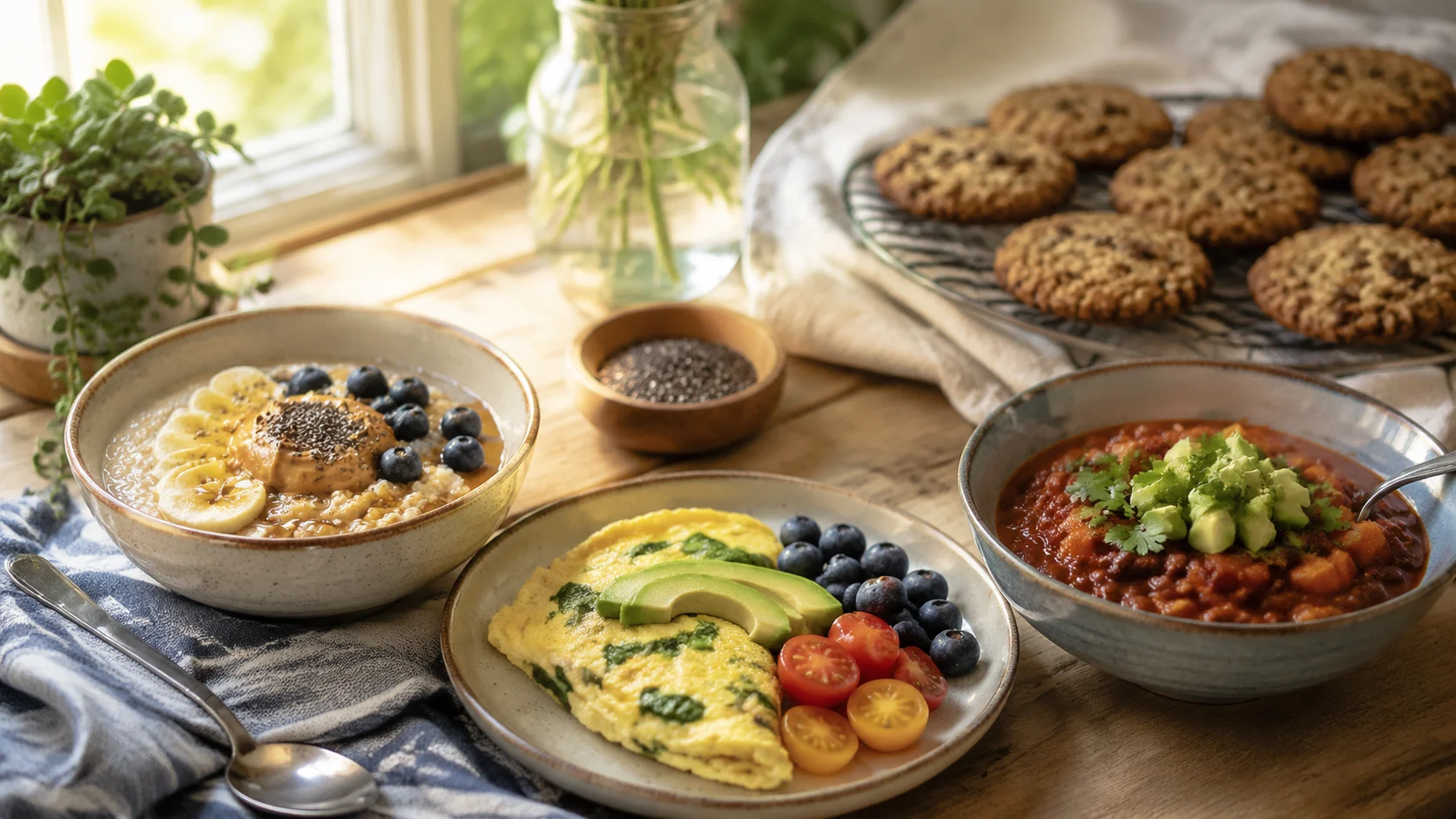
- Breakfast: a bowl of oatmeal, still steaming, with crushed walnuts, banana slices, and a spoonful of yogurt stirred through. It is soft, warm, and quietly filling.
- Lunch: a turkey and avocado sandwich with fruit and something crunchy on the side. Not minimalist, not extreme, just enough to carry the afternoon.
- Dinner: pasta with chicken sausage, wilted spinach, olive oil, and parmesan, eaten from a deep bowl while the house finally slows down.
- Snack, if needed: apple slices with peanut butter, or crackers with cheese when the gap between meetings stretches too long.
These are satisfying meals without calorie counting because they respect appetite instead of arguing with it. They offer structure without obsession.
A softer way to notice if a meal is enough
Rather than asking, “How many calories was that?” it may help to ask gentler questions:
- Did the meal give steady energy? If she was hungry again in 45 minutes, it may have needed more substance.
- Did it include comfort as well as nutrition? Meals that feel emotionally barren often send people searching for more later.
- Did it feel satisfying in the mouth, not just sensible on paper? Crunch, warmth, creaminess, and flavor all matter.
- Did she leave the table feeling cared for? This is not sentimental. It is practical. A cared-for body tends to ask less urgently later.
Please note: Every body has its own rhythm, appetite, and health needs. This gentle guide is for educational purposes and does not replace personalized advice from a registered dietitian or healthcare professional, especially if someone is managing a medical condition, digestive symptoms, or a history of disordered eating.
You Might Also Wonder
What if she still feels hungry soon after eating?
That usually means the meal may have needed more staying power. Adding protein, fat, or a more grounding carbohydrate can make a noticeable difference.
Do satisfying meals without calorie counting work if someone wants more stable energy?
Yes, often they do. Balanced meals can support steadier energy because they are less likely to cause the swing of feeling full briefly and then suddenly depleted.
What if counting calories makes her feel safe?
That feeling is understandable. For many women, numbers once felt like certainty. A gentler transition can begin by noticing meal balance first, without forcing a sudden all-or-nothing change.
Can comfort food be part of a balanced meal?
Absolutely. A meal can be comforting and supportive at the same time. Pasta with chicken and greens, or toast with eggs and buttered fruit on the side, can hold both nourishment and ease.