
When Exhaustion Isn’t a Motivation Problem
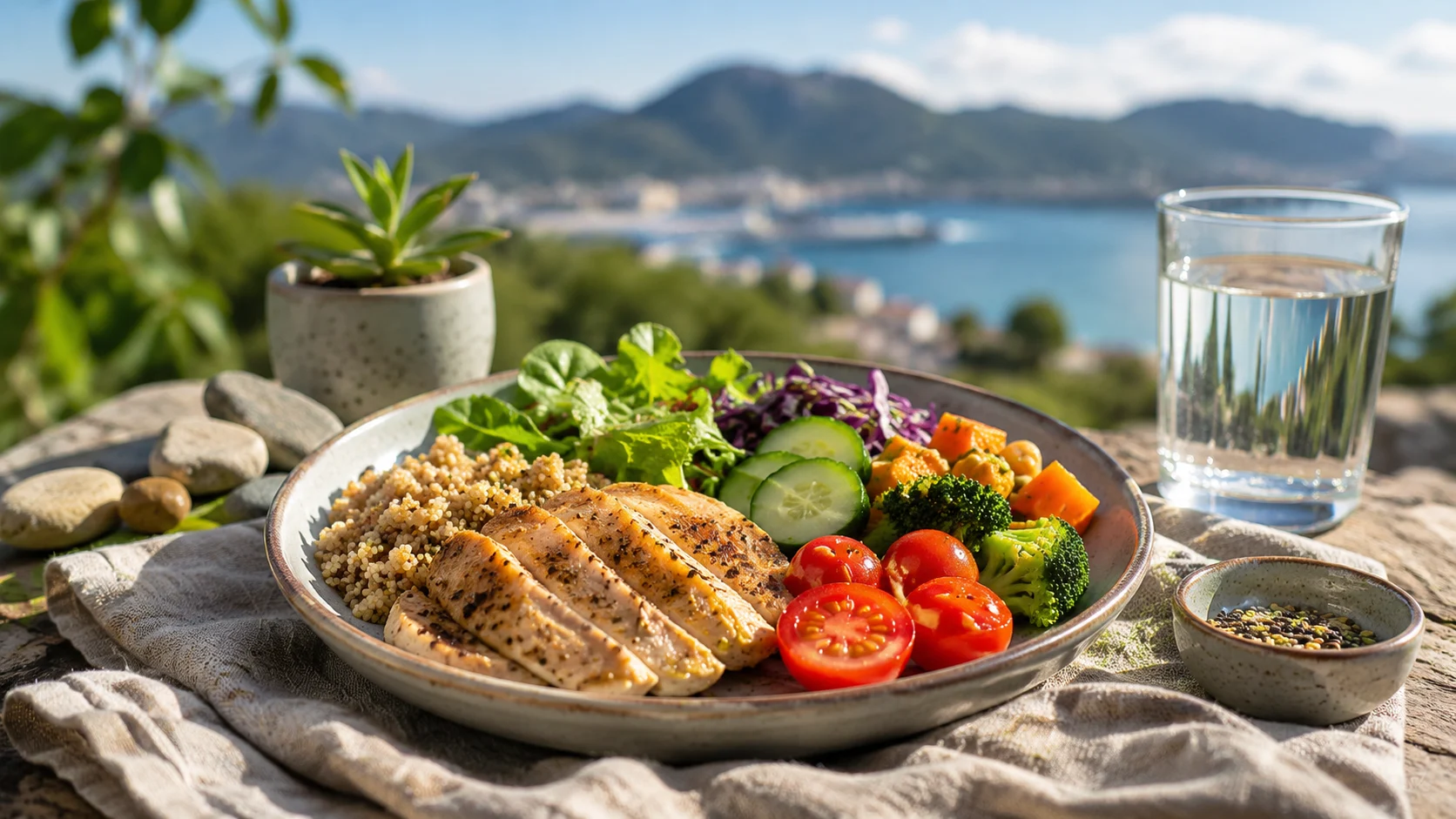
Most people think tired eating happens because someone “gave up” and reached for whatever was easiest. But often, the opposite is true: the body is asking for support, not discipline. Healthy meals for tired people do not need to be impressive, perfectly homemade, or beautifully planned. They need to be gentle, steadying, and realistic—the kind of food that meets a woman where she is at 7 p.m., shoes still on, mind buzzing, energy nearly gone.
For many busy women, the hardest part is not knowing what healthy food is. It is finding a way to eat that still feels possible on low-energy days. That is where a softer approach helps: think less about “cooking” and more about assembling comfort with balance.
Body care is not a performance. It is a quiet act of returning to yourself.
The Soft Plate Method for Low-Energy Nights
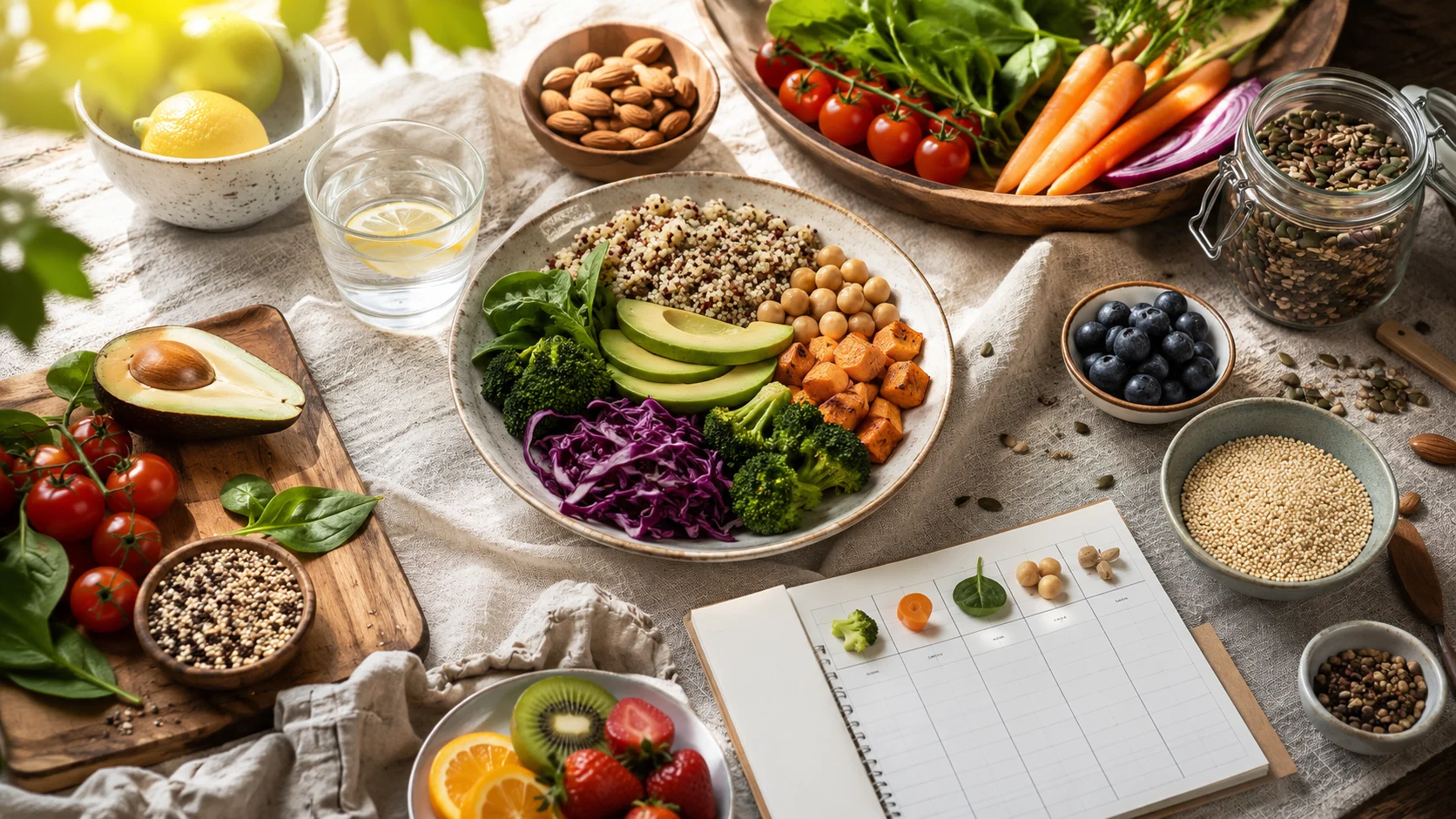
A simple framework can help when decision fatigue is louder than hunger cues. Joyini might call it the Soft Plate Method: anchor, soften, brighten.
- Anchor: Start with something grounding, like rotisserie chicken, Greek yogurt, eggs, beans, tofu, or cottage cheese. This brings staying power and helps support steadier energy.
- Soften: Add an easy carbohydrate that feels comforting, such as toast, microwave rice, pasta, tortillas, or roasted potatoes left from another night. Tired bodies often need ease, not food rules.
- Brighten: Finish with something that adds freshness or color—bagged salad, baby carrots, frozen peas, berries, sliced cucumber, or a spoonful of salsa.
Instead of chasing the “perfect dinner,” she can build a meal in five minutes: warm rice, canned salmon mixed with a little mayo and lemon, and a handful of cucumber slices. Or toast layered with mashed avocado and eggs, with berries on the side. These are healthy meals for tired people because they lower the barrier to nourishment.
What Gentle Nourishment Can Look Like at 6, 7, or 9 p.m.
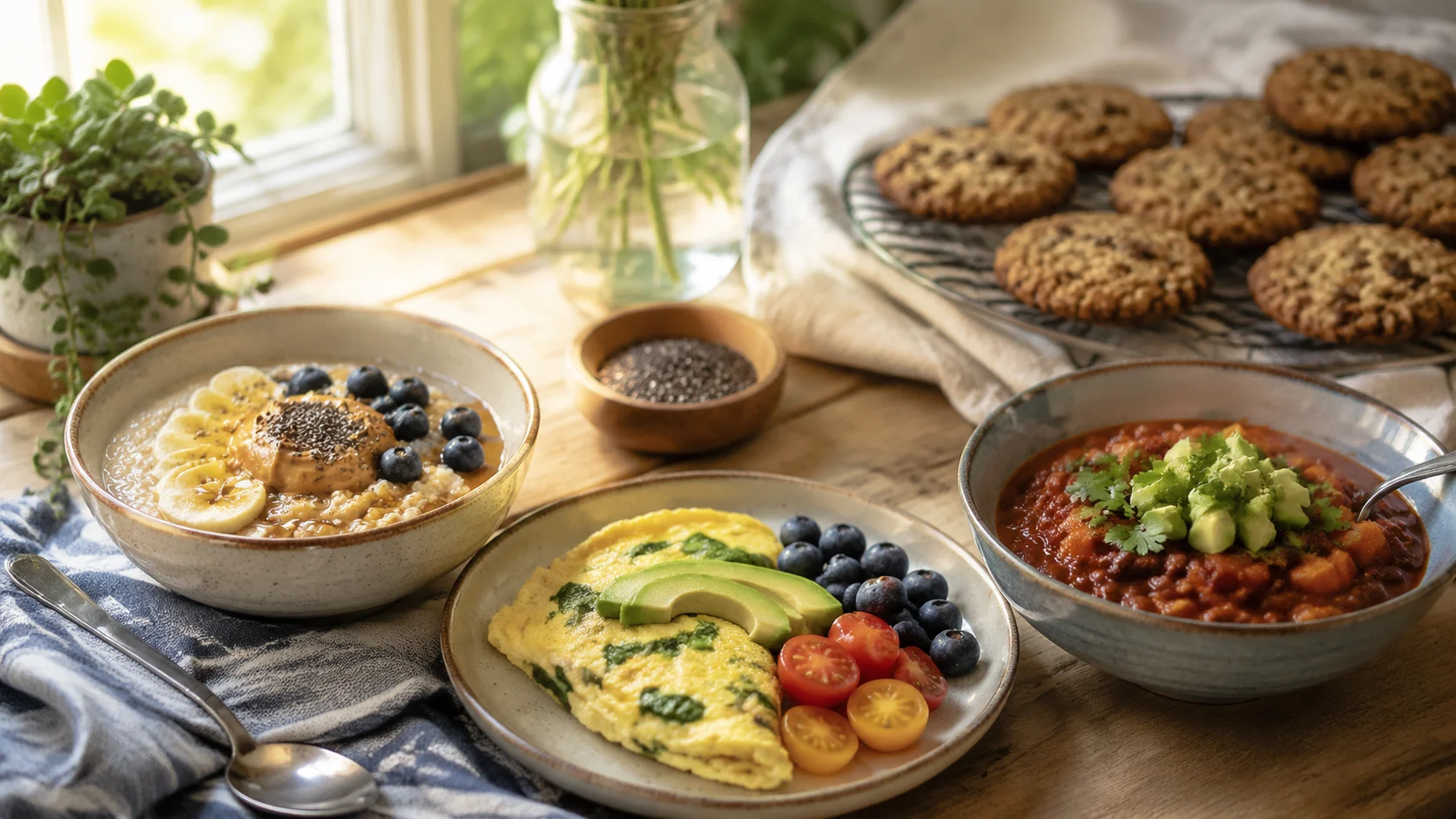
There is something deeply reassuring about food that does not ask too much. A bowl of oatmeal made with milk, finished with peanut butter and banana, can become dinner on a draining evening. So can a quesadilla with black beans and cheese, folded into a skillet until warm, then served with salsa and a few avocado slices. Even a snack plate can hold surprising balance: crackers, turkey or hummus, a handful of grapes, and something crunchy from the fridge.
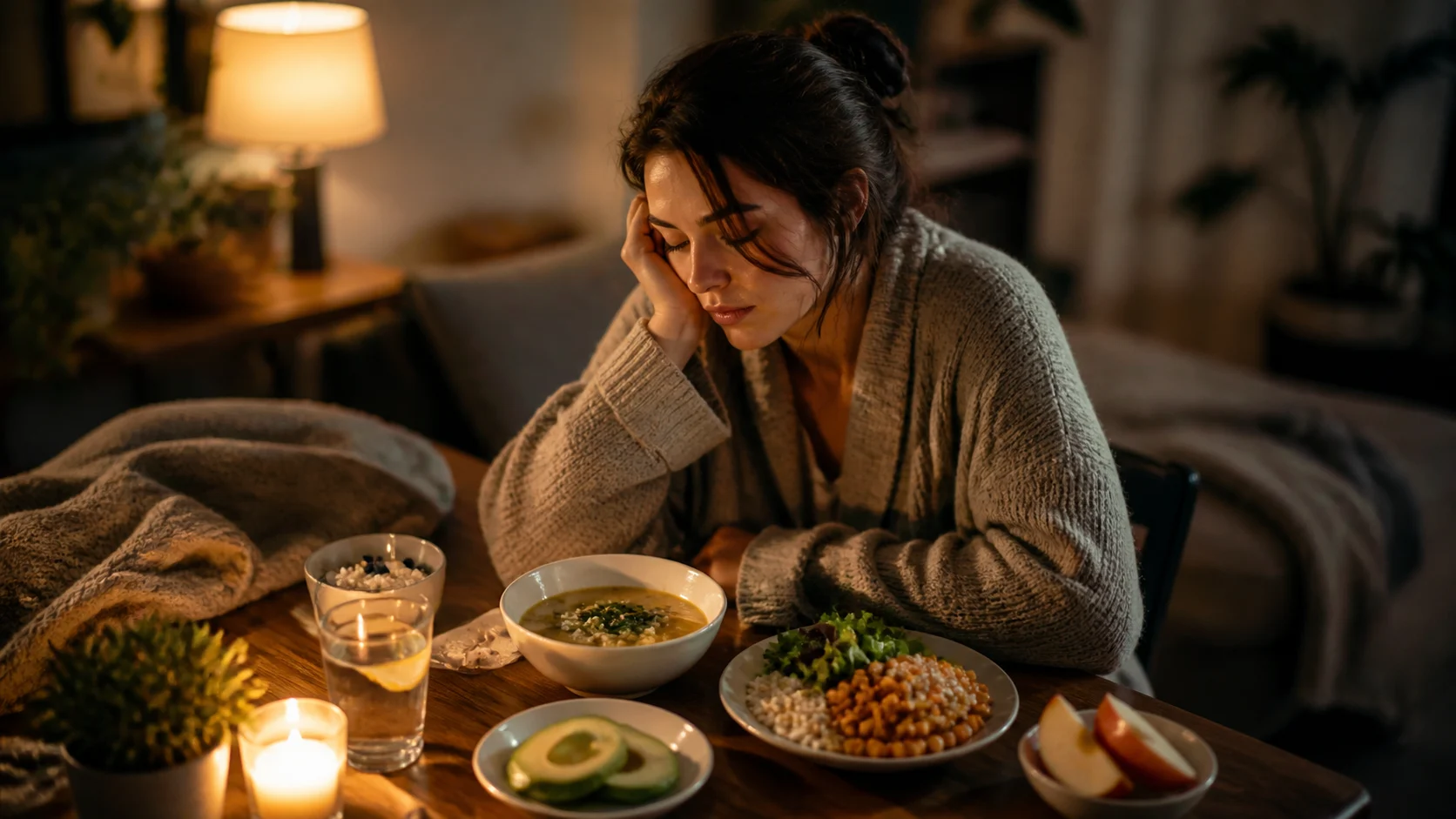
Healthy meals for tired people often look ordinary. That is part of their power. They are not built for social media. They are built for the woman who forgot lunch, answered too many emails, carried too much emotional weight, and still deserves to eat with care.
The most nourishing meal is often the one that asks the least from an already-overloaded mind.
A Quick Table for Choosing Without Overthinking
| Low-Energy Situation | Easy Meal Idea | Why It Helps |
|---|---|---|
| No energy to cook | Bagged salad with rotisserie chicken and bread | Protein, fiber, and comfort with almost no prep |
| Craving something warm | Microwave rice, frozen veggies, and scrambled eggs | Feels soothing and supports steadier fullness |
| Only snack foods sound good | Cheese, crackers, fruit, nuts, and deli turkey | Turns scattered bites into a more balanced plate |
| Need dinner fast after work | Bean quesadilla with salsa and avocado | Quick, satisfying, and easy on a tired brain |
Research has long suggested that meals with protein, fiber, and carbohydrate together can help with satiety and more stable energy compared with eating refined carbs alone. One study published in Appetite found that higher-protein meals were linked with greater fullness, which matters when exhaustion can make grazing feel endless.
Why “Good Enough” Meals Usually Work Better
On paper, many people imagine healthy eating as chopping, roasting, seasoning, and plating. In real life, tiredness changes the landscape. When the brain is depleted, complexity becomes a hidden cost. Healthy meals for tired people work best when they rely on fewer decisions, fewer dishes, and more permission.
This also helps soften the restrict-and-rebound pattern. If dinner feels too demanding, a woman may skip it, snack past fullness later, then blame herself. But often the issue is not lack of self-control. It is lack of an accessible plan. A balanced frozen meal with toast and fruit is still a meal. Peanut butter on toast with yogurt is still a meal. Cereal with milk and a side of nuts is still a meal. Real-life nutrition gets stronger when it becomes easier to repeat.
Please note: Every body has its own rhythm, appetite, and practical needs. This gentle guide is for educational purposes and does not replace personalized advice from a healthcare professional or registered dietitian, especially if fatigue feels persistent, intense, or connected to a medical concern.
You Might Also Wonder
What if I am too tired to eat anything “balanced”?
Start smaller. Pair one comforting food with one supportive addition. If all she wants is toast, adding eggs, yogurt, or nut butter can make it more sustaining without making it complicated.
Do healthy meals for tired people have to be homemade?
Not at all. A grocery store soup with bread and pre-cut vegetables, or takeout with a side added at home, can absolutely fit. Gentle nourishment is about support, not perfection.
What if I keep snacking at night after a long day?
That often points to unmet needs earlier in the day—too little food, too little rest, or too much emotional strain. A steadier dinner can help, but so can compassion around what the body has been carrying.
Is it okay if dinner is breakfast food?
Yes. Eggs, oatmeal, yogurt bowls, or toast can make wonderfully comforting evening meals. The body does not care whether a meal is culturally labeled “breakfast” or “dinner.” It notices whether it feels fed.