
When Structure Helps More Than Strictness
Healthy eating without food rules is possible—and for many women, it is exactly what helps food feel calmer, energy feel steadier, and meals feel less emotionally loaded. What often looks like “lack of discipline” is usually something softer and more human: a body asking for consistency, enough nourishment, and a little less pressure.
She may be standing in the kitchen at 8 p.m., too tired to cook, half-listening to the dishwasher hum, wondering why eating has become so complicated. She has tried plans, labels, and promises. She has tried being “good.” But the tighter the rules became, the louder food seemed to call.
Body trust rarely grows in the soil of fear. It grows where nourishment is repeated with patience.
This is where healthy eating without food rules begins: not with chaos, but with a more grounded kind of support. Instead of asking, “How can she control herself better?” a gentler question appears: “What would help her feel fed, steady, and at ease?”
The Hidden Cost of Being “Good” With Food
Many women were taught that healthy eating means following a long list of invisible commandments. No eating after a certain hour. No bread unless it is “earned.” No dessert unless the rest of the day was perfect. On paper, rules can look tidy. In real life, they often create noise.
Restriction does not always look extreme. Sometimes it wears a polished face: skipping lunch because work is busy, choosing the smallest meal to feel in control, or ignoring hunger until late evening. Then the body catches up. Cravings feel bigger. Fullness cues feel blurrier. Eating becomes urgent instead of peaceful.
Research has long observed a link between rigid dietary restraint and overeating episodes, especially under stress. In other words, the more food is tightly controlled, the more intense the rebound can feel. That is not failure. That is a nervous system and a body trying to protect themselves.
The body is not a project to conquer. It is a place to care for.

The Gentle Plate Compass
Rather than replacing old rules with new ones, it can help to use a softer micro-framework: the Gentle Plate Compass. It is not a diet formula. It is simply a way to orient a meal so it supports real life.
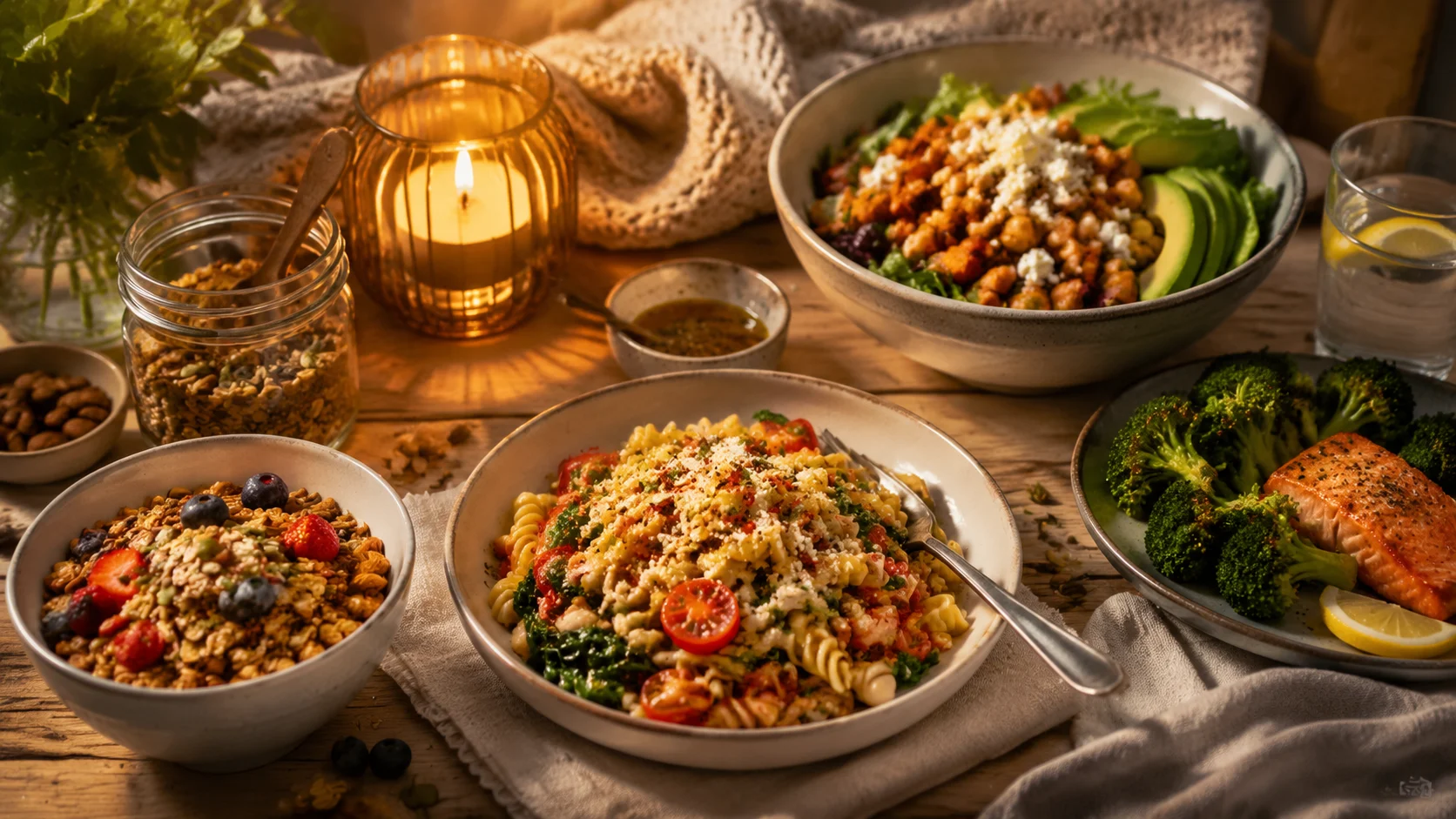
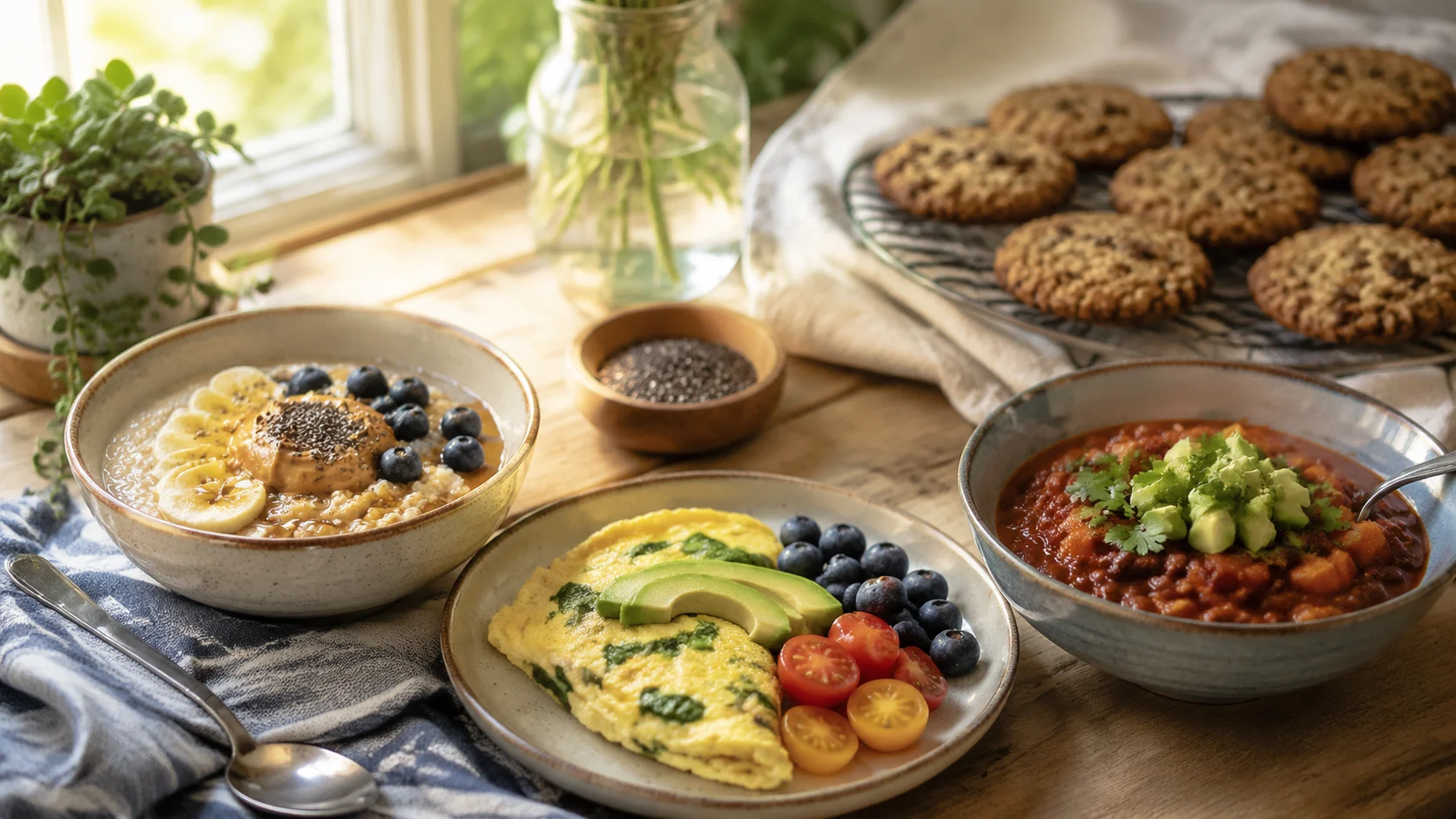
- Anchor — Include something satisfying that helps the meal last. This might look like Greek yogurt folded into a bowl with berries, or warm eggs tucked into toast on a rushed morning.
- Steady — Add a source of lasting energy. Think of roasted potatoes beside salmon, or rice under a quick stir-fry, so energy does not disappear an hour later.
- Soften — Bring in comfort and ease. A drizzle of olive oil, sliced avocado, melted butter on oatmeal, or chocolate after dinner can make eating feel human instead of clinical.
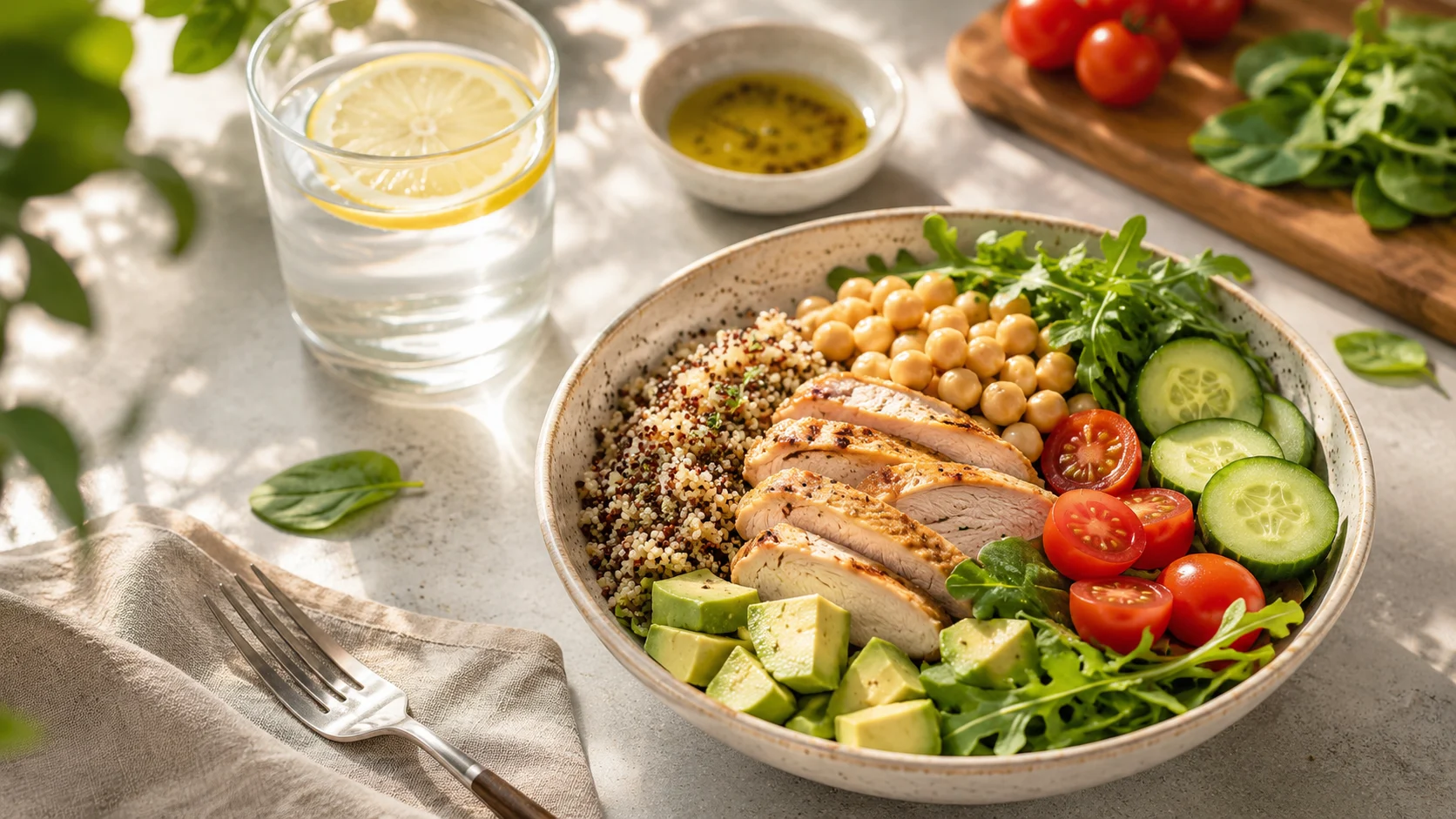
- Color — Not for perfection, just for support. A handful of greens, cherry tomatoes, frozen berries, or a spoonful of salsa can quietly add fiber and texture.
Healthy eating without food rules often looks less impressive on social media and more sustainable at a real table. The point is not to build a perfect plate every time. The point is to stop making meals so small, stressful, or rigid that the body has to fight back later.
What This Looks Like on an Ordinary Tuesday
On a busy afternoon, she might notice that the 3 p.m. desire for sweets is not random. It may be the echo of a skimpy lunch. A more supportive answer could be a snack with staying power: an apple with peanut butter, a warm latte with a cheese toast, or crackers with turkey and fruit. Not because sweets are wrong, but because adding enough often quiets the panic around food.
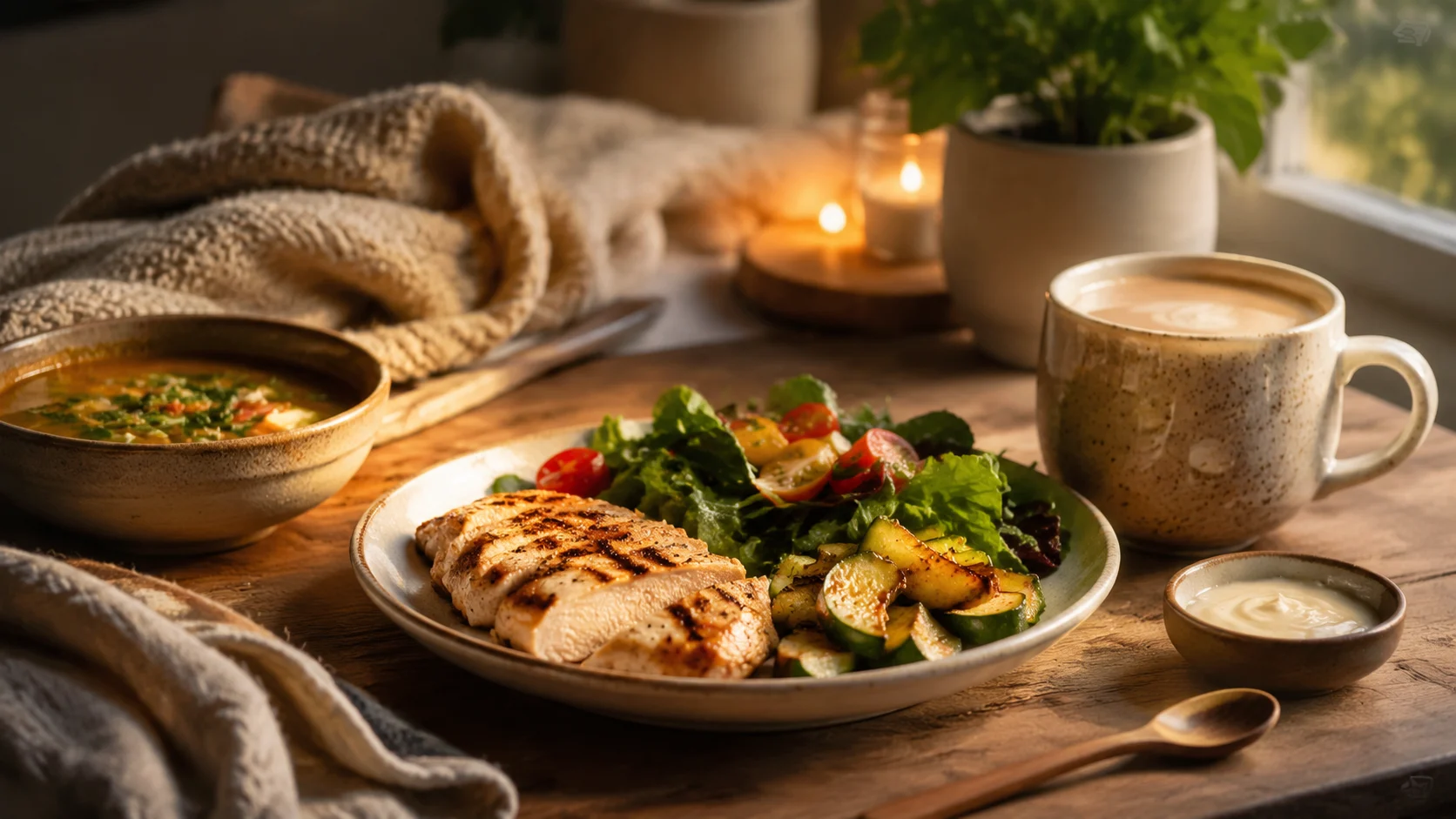
On a low-energy night, healthy eating without food rules may look like store-bought soup with buttered sourdough and a side salad from a bag. Or noodles tossed with edamame and sesame oil. Or takeout tacos enjoyed without the exhausting mental math. Gentle nutrition is not about performing wellness. It is about making sure she is fed.
And when dessert is wanted, it can simply be dessert. No moral storyline attached. Often, when permission grows, urgency softens.
Questions That Often Come Up
What if eating without rules makes me feel out of control at first?
That can happen, especially after years of restriction. The early stage may feel noisy because the body is learning that food is no longer scarce. With consistency, meals often begin to feel more settled.
How can someone eat healthy without tracking everything?
She can return to simple cues: regular meals, enough satisfaction, gentle variety, and noticing energy and fullness over time. Tracking is not the only path to awareness.
What if I still crave chips, chocolate, or takeout?
Cravings do not cancel health. They are part of being human. Sometimes they reflect pleasure, convenience, habit, emotion, or genuine hunger. Curiosity tends to help more than judgment.
Can healthy eating without food rules still support steady energy?
Yes. In fact, many people feel steadier when meals include enough carbohydrates, protein, fat, and satisfaction instead of swinging between restriction and rebound eating.
Please note: Every body has its own rhythm, history, and needs. This article is for educational purposes and offers gentle guidance, not medical care or personalized nutrition advice. If eating feels deeply distressing or physically complicated, a registered dietitian or healthcare professional can offer more tailored support.