
The Snack Isn’t the Problem
If you’ve been wondering why do i snack when stressed, the short answer is this: stress can blur body signals, raise the desire for quick comfort, and make food feel like the fastest form of relief. That does not mean she is weak, dramatic, or “bad with food.” It often means her nervous system is asking for support in the most available language it knows.
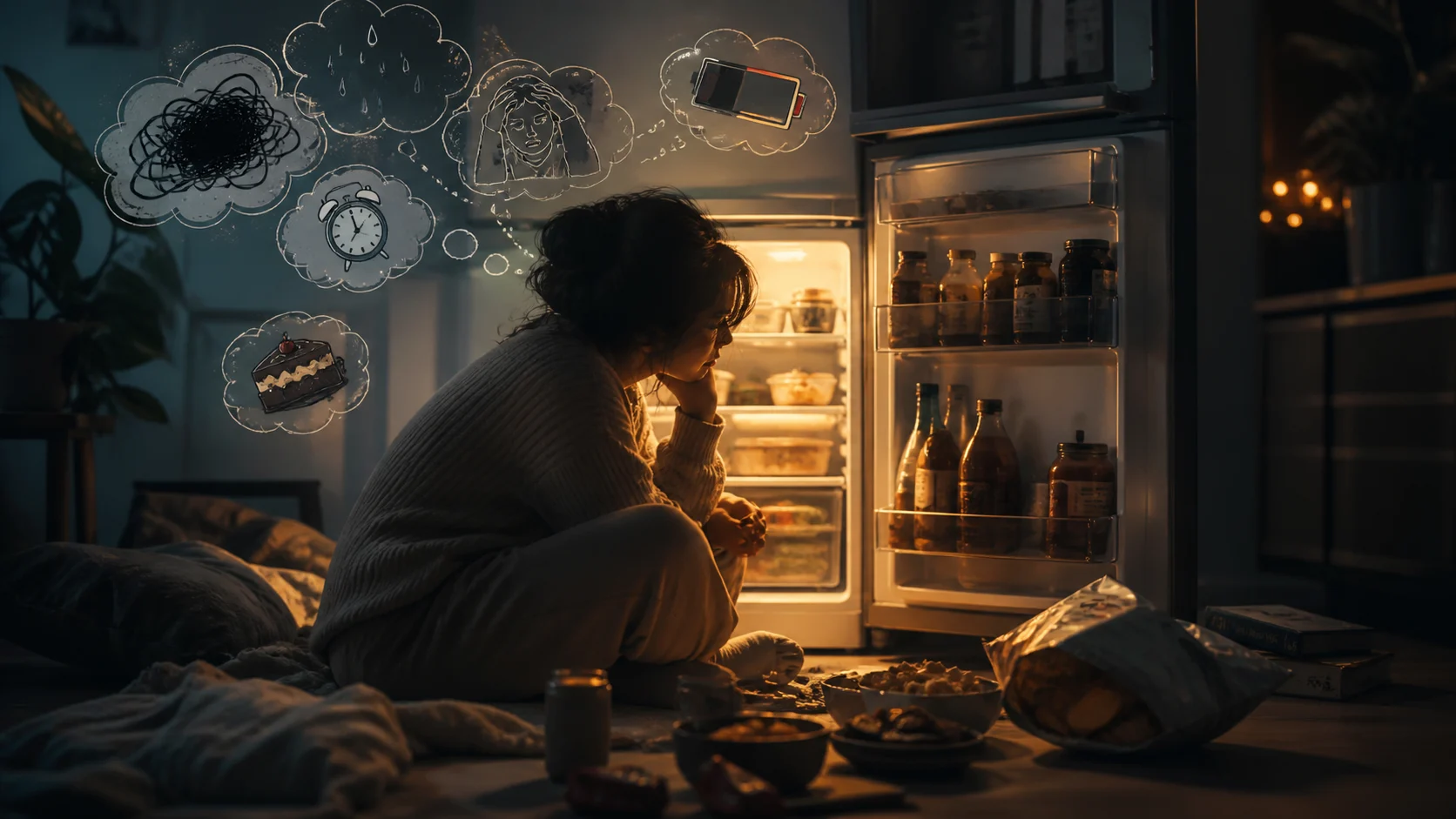
Many women know this scene well: the laptop is still open, the day has already taken too much, and suddenly the pantry begins to glow with possibility. She may not be deeply hungry in the usual stomach-growling sense. Still, something inside her is reaching. Not always for a meal. Often for a pause, a softness, a landing place.
Stress eating is rarely a character flaw. More often, it is a body signal wrapped in a craving.
This is why the question why do i snack when stressed deserves more kindness than correction.
When Stress Makes Quick Comfort Feel Urgent
Under stress, the body shifts into a more protective state. Cortisol, one of the main stress hormones, can influence appetite and increase the pull toward foods that feel easy, familiar, and comforting. Some research has found that chronic stress is linked with a higher preference for palatable, energy-dense foods, especially when sleep is low and daily demands stay high.
In real life, this can look less like “losing control” and more like a body trying to self-soothe at high speed. Crunchy, sweet, salty, warm, creamy—these textures can feel grounding because they offer a brief sense of reward and relief. For a woman who has been carrying too much for too long, a handful of crackers at the kitchen counter may be less about hunger and more about exhaling.
Stress can also make practical nourishment harder. When meals are skipped, lunch is tiny, or the afternoon passes on coffee alone, evening snacking becomes even more likely. The body does not forget what it needed earlier.
The “Signal, Soften, Support” Frame
Instead of treating stress snacking like a habit to fight, it can help to use a gentler micro-framework: Signal, Soften, Support.
- Signal: Before the snack is judged, she pauses and asks what the urge might be carrying. Is it mental fatigue? Loneliness? Under-eating? A need for comfort after a sharp day?
- Soften: This is the step most women skip. Rather than tightening into shame, she creates a little emotional room. A hand on the chest. A longer exhale. Sitting down instead of pacing between tasks.
- Support: Then she responds with actual care. Sometimes that care is food. Sometimes it is food plus rest, water, company, or a more substantial dinner than she first planned.
The body is not a project to overpower. It is a place to listen more closely.
For someone asking why do i snack when stressed, this frame changes the question from “How do I stop myself?” to “What kind of support has been missing?”
What Stress Snacking May Be Trying to Say
Not every craving means the same thing. Stress snacking can carry several quiet messages at once:
- “I need steady energy.” If breakfast was rushed and lunch was unsatisfying, the body may be asking for carbohydrates, protein, and ease—not punishment.
- “I need comfort.” A warm piece of toast with peanut butter, or a bowl of yogurt with berries and granola, may offer both emotional and physical settling.
- “I need a transition.” Many women snack most in the space between roles—employee to parent, caregiver to person, productive mode to evening. Food becomes the bridge.
- “I need relief from restriction.” If she has spent years labeling foods and trying to be “good,” stress can crack that tight control wide open. This is one reason anti-diet support matters.
So when she asks, why do i snack when stressed, the answer may be layered: biology, habit, fatigue, unmet hunger, and emotion often arrive together.
Small Shifts That Make Evenings Feel Kinder
Gentle change usually works better than rigid rules. A few simple supports can make stress snacking feel less chaotic:
- Build an earlier anchor meal. A lunch with enough substance—a turkey sandwich with avocado, a warm rice bowl with salmon, or pasta with chickpeas and olive oil—can soften late-day urgency.
- Create a “landing snack.” If evenings are hard, plan one satisfying snack on purpose. Think apple slices with almond butter, or a mug of tea beside buttery toast and fruit. Planned comfort is still real nourishment.
- Make the pause tiny, not perfect. She does not need a meditation retreat. Even 60 seconds of slowing down before reaching into a bag can help her notice what she needs.
- Add, don’t just remove. If the craving is for cookies, maybe the answer is cookies plus something grounding, like milk or yogurt, so the body receives more steadiness instead of another swing.
These shifts do not ask her to become someone new. They simply help her feel more met inside her real life.
Please note: Every body has its own rhythm. This article is for educational purposes and offers gentle guidance, not personal medical care. If stress eating feels intense, distressing, or tied to anxiety, depression, or binge eating concerns, a registered dietitian or mental health professional can offer personalized support.
You Might Also Wonder
Why do I snack when stressed even after dinner?
Dinner may have filled the stomach but not the deeper need of the moment. Sometimes the body wants more carbohydrates, more satisfaction, or simply a softer transition out of a stressful day.
Is stress snacking always emotional eating?
Not always. Sometimes it is physical hunger delayed until evening. Sometimes it is comfort seeking. Often it is a blend of both, which is why a gentle response tends to help more than strict rules.
What if I only crave sugar when I’m overwhelmed?
That makes sense. Sweet foods offer quick energy and quick comfort. Instead of judging the craving, it can help to ask whether she has eaten enough earlier and whether she needs rest, reassurance, or both.
How can I respond without making food feel forbidden?
Start by allowing the food, then add support around it. Sit down, breathe, and pair the snack with something more sustaining if needed. Permission often lowers the intensity that restriction creates.