
When Control Starts to Feel Like Chaos
Many women think they need more rules to feel calm around food. Often, the opposite is true. To ditch diet mentality, she does not need to care less about nourishment; she needs to stop treating food like a morality test. That shift can feel surprisingly steadying, especially after years of tracking, fixing, and starting over every Monday.
When she stands in the kitchen at 8 p.m., tired and slightly disappointed in herself for wanting something comforting, diet mentality tends to speak first. It whispers that eating was “too much,” that hunger should be quieter, that craving means something has gone wrong. But those thoughts are usually not wisdom. They are often the after-echo of restriction, stress, and a body that has learned to brace.
Body trust is not built by tighter control. It is built by repeated moments of being fed, heard, and not shamed.
To ditch diet mentality, it helps to notice that it is less like a nutrition plan and more like a background soundtrack—always judging, always scoring. A woman may be eating enough on paper and still feel deeply unsettled if every bite comes with fear. This is why food freedom begins in the mind, but it does not stay there. It reaches the plate, the nervous system, the afternoon energy dip, and the late-night search for comfort.
The “Rule, Rebound, Repair” Pattern
One gentle way to understand dieting thoughts is through a small framework: Rule, Rebound, Repair.
- Rule: She makes food feel narrow. Maybe breakfast must be tiny, dessert must be earned, or bread suddenly feels suspicious. The rule may sound disciplined, but it usually creates tension.
- Rebound: Her body and mind push back. Cravings grow louder, thoughts about food become sticky, and eating can start to feel urgent instead of peaceful.
- Repair: Shame rushes in. She promises to be “better” tomorrow, which quietly sets up the next rule and keeps the cycle alive.
Research has long observed that restriction can increase preoccupation with food and make eating feel more chaotic. One often-cited body of research on restrained eating found that when people feel deprived, they may become more vulnerable to overeating later. That does not mean anything is broken. It means the body is trying to protect access to energy.
To ditch diet mentality, she often has to interrupt this loop not with perfection, but with permission and steadiness.
What Gentle Structure Actually Looks Like
Many people fear that if they let go of diet rules, everything will become messy. In reality, structure can still exist without punishment. Gentle structure is less like a cage and more like a handrail.

It might look like:
- Eating regularly enough that the body does not spend half the day in quiet panic. A simple lunch with a turkey sandwich, fruit, and something crunchy can do more for steady energy than a “perfect” low-calorie meal that leaves her prowling the pantry an hour later.
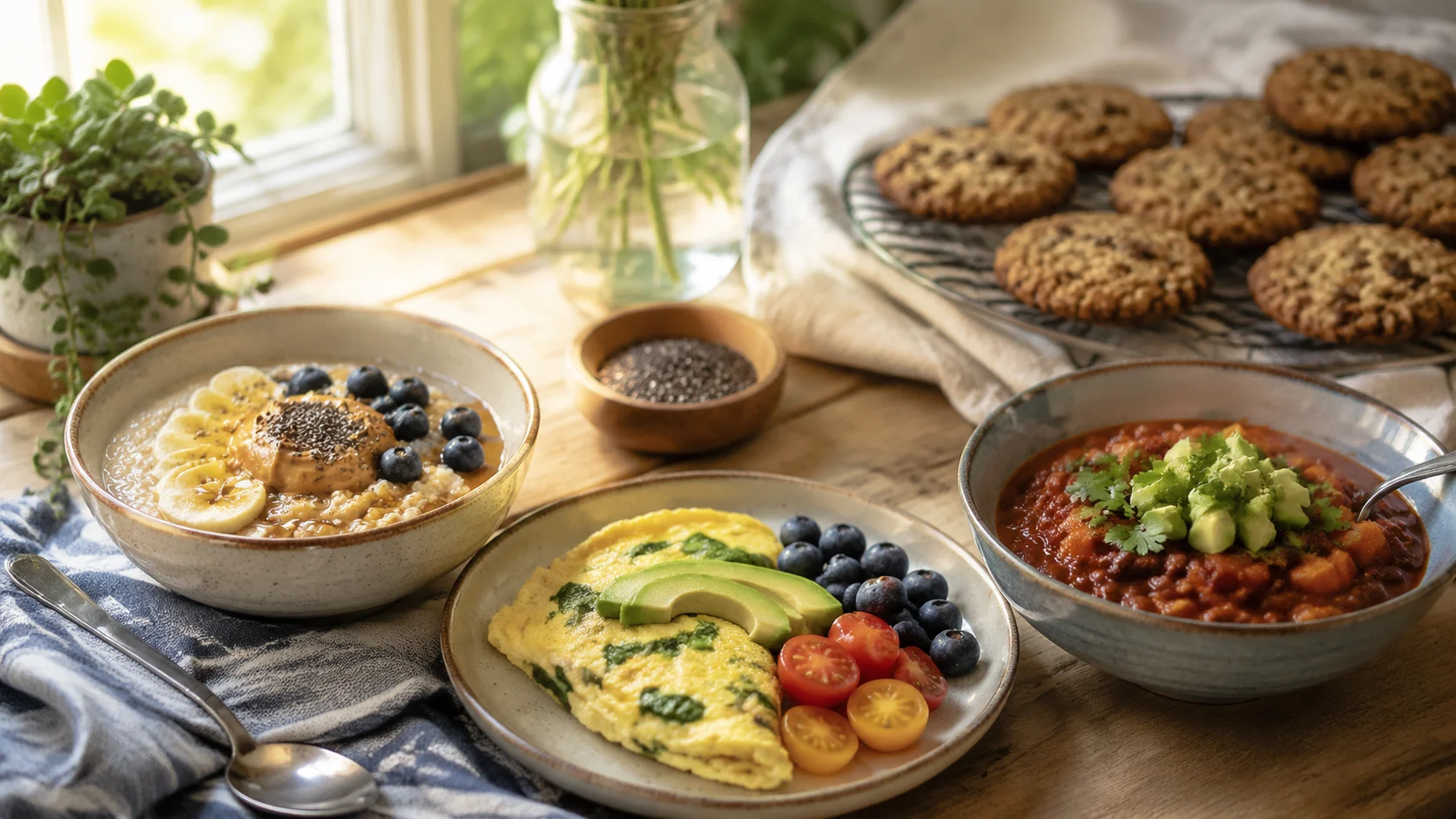
- Building meals with comfort and support. In a warm bowl of oatmeal, adding peanut butter and berries is not indulgence versus health; it is satisfaction meeting nourishment.
- Letting cravings carry information. A strong pull toward sweets after a stressful meeting may be about quick energy, emotional decompression, or simply mental exhaustion. Curiosity often helps more than criticism.
The body is not a project to be managed into submission. It is a place to live, and it responds best to care.
When she begins to ditch diet mentality, she may also notice how much easier balanced choices become when they are not wrapped in fear. A meal chosen from self-support tends to feel very different from one chosen to “make up for” yesterday.
Small Signs She Is Learning a New Language With Food
This shift rarely arrives all at once. More often, it appears in quiet moments. She eats the cookie and moves on. She notices hunger before it becomes desperation. She chooses a more filling breakfast because she wants steadier energy, not because someone online told her to be “good.”
Some signs she may be starting to ditch diet mentality include:
- Less food noise — not because she is controlling harder, but because her body trusts that food is available.
- More honest hunger awareness — she can sense when she needs something substantial, not just when she has “earned” it.
- Fewer dramatic swings between being hyper-controlled and feeling out of control.
- More ease after eating — meals stop feeling like personal report cards.
This is not about becoming perfectly intuitive overnight. It is about becoming more fluent in body signals, more flexible in real life, and less willing to outsource self-trust to diet rules.
Please note: Every body has its own rhythm, history, and needs. This article is for educational purposes and offers gentle guidance, not personalized medical or mental health care. If food thoughts feel overwhelming or eating feels consistently distressing, support from a registered dietitian, therapist, or healthcare professional can be deeply helpful.
You Might Also Wonder
What if I ditch diet mentality and start eating everything in sight?
That fear is very common, especially after years of restriction. Sometimes there is an initial rebound when the body realizes food is no longer under threat. For many people, that intensity softens as consistency and permission become more believable.
Can I still care about nutrition if I want to stop dieting?
Absolutely. Gentle nutrition still cares about how food helps a woman feel supported, satisfied, and steady. The difference is that nutrition is no longer used as a weapon against her appetite.
Why do I feel guilty after eating something comforting?
Guilt often comes from learned rules, not from the food itself. If she has been taught that comfort and nourishment cannot belong in the same meal, even a normal eating experience can feel emotionally loaded.
How long does it take to ditch diet mentality?
Usually longer than one inspiring weekend and shorter than a lifetime of self-blame. It tends to unfold in layers. Each meal without punishment, each craving met with curiosity, becomes part of the relearning.