

The Strange Tenderness of Wanting Food at Night
Late night snacking when not hungry often is not a discipline problem. More often, it is a body signal shaped by stress, under-eating earlier in the day, habit loops, low evening comfort, or the simple need to unwind. For many women, the kitchen light at 10 p.m. is not calling out a lack of character. It is reflecting a need that has gone unnamed.
She may move through the day on coffee, meetings, errands, and half-finished thoughts. By evening, the house softens, the notifications slow, and suddenly the urge arrives: crackers, chocolate, cereal straight from the box. This is why late night snacking when not hungry can feel so powerful—because the body is not always asking for calories alone. Sometimes it is asking for relief, steadiness, or comfort.
“The body is not a project to overpower. It is a home asking to be listened to.”
There is a helpful way to understand this pattern: the Night Signal Triangle. It has three corners—energy, emotion, and environment. When one or more corners are strained, eating at night can become the fastest available form of soothing.
When the Night Snack Is Really About the Day Before It
A woman may think the problem begins after dinner, but often it begins at 8 a.m. with a rushed breakfast, continues through a light lunch, and deepens with an afternoon powered by stress rather than nourishment. By nighttime, the body has been negotiating all day.
Under-eating earlier can quietly amplify late-night cravings. Research has long observed that restriction—whether intentional or accidental—can increase preoccupation with food and lead to stronger eating urges later. In one often-cited body of eating behavior research, people exposed to food restriction patterns were more likely to over-respond to food cues afterward. In real life, this can look less like “loss of control” and more like a body trying to catch up.
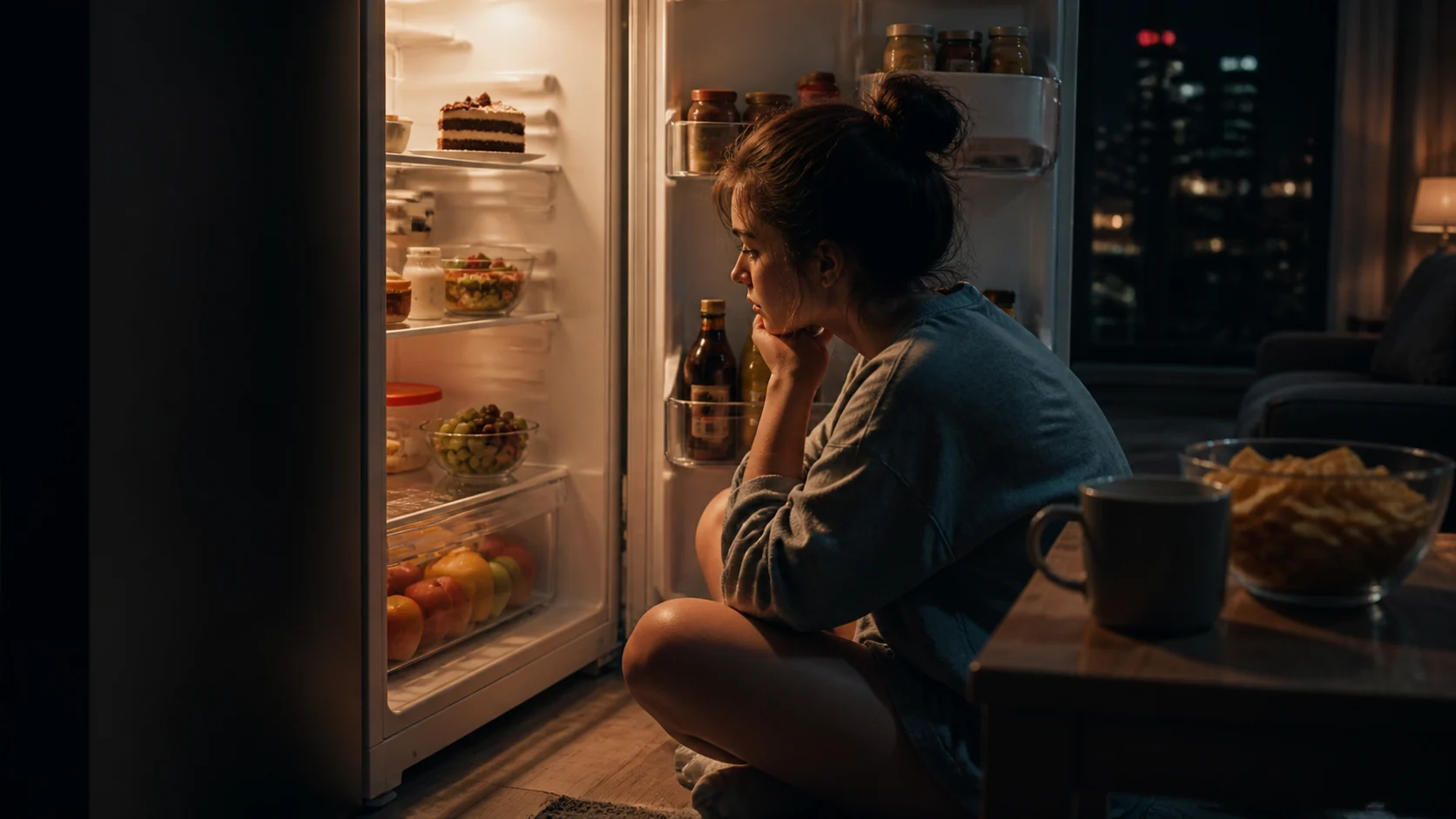
Then there is stress. When the nervous system has been stretched thin, crunchy or sweet foods can feel grounding because they offer a fast sensory shift. This does not mean the habit is meaningless. It means it makes sense.
- Energy gap: Dinner may have looked adequate, yet the whole day may have been too light. A bowl of yogurt with fruit in the afternoon or a more balanced lunch could have changed the evening entirely.
- Emotional exhale: For some women, eating begins exactly when the day finally becomes quiet. Food becomes the transition out of responsibility.
- Environmental cue: The couch, the television glow, and the pantry route can become a ritual the brain expects, even when the stomach is neutral.
A Gentler Way to Interrupt the Pattern
The goal is not to scold the habit into disappearing. The goal is to make the evening feel more supported. That is where the Night Signal Triangle becomes practical.
- Ask the body about energy first. Before assuming the craving is “just emotional,” it can help to look backward. Was there enough food today? Was dinner balanced enough to offer staying power—something warm, something satisfying, something that lingers a little?
- Name the real feeling. Sometimes the urge is less about hunger and more about a sentence that has not been spoken yet: “She is lonely.” “She is overstimulated.” “She wants the day to feel softer.” Naming the feeling can lower the volume of the craving.
- Change the scene, not just the food. If late night snacking when not hungry happens in one predictable setting, a small environmental shift can help. Tea in a favorite mug, a shower, a short stretch in dim light, or even moving to a different chair can create a new ending to the day.
“What looks like a lack of control is often a lack of support.”
If she still wants a snack after pausing, that is not failure. It may simply be the most caring choice in that moment. A slice of toast with peanut butter, a warm bowl of oats with cinnamon, or a handful of trail mix eaten slowly can feel very different from frantic grazing done in self-judgment.
What a More Supported Evening Can Look Like
Evening eating tends to soften when the day holds more steadiness. This does not require perfect meal planning or strict rules. It often begins with a few ordinary adjustments that make the body feel less abandoned by bedtime.
- Build a steadier lunch. A lunch that combines protein, fiber, and comfort—like rice, roasted vegetables, and salmon with a creamy sauce—can carry more calm into the evening than a rushed salad eaten while answering emails.
- Make room for an afternoon bridge. At 4 p.m., a banana with almond butter or cottage cheese with berries can prevent the sharp drop that later shows up as nighttime urgency.
- Let dinner be satisfying, not performative. A real dinner is not supposed to look tiny and virtuous. A warm bowl of pasta with chicken and greens, finished with olive oil and parmesan, may support more peace than a dinner chosen only for restraint.
- Create a closing ritual. Many women need a boundary between “I am still carrying the day” and “I am allowed to rest now.” Food often steps in when no ritual exists.
Late night snacking when not hungry becomes less intense when the body trusts that nourishment and comfort are available before desperation sets in.
You Might Also Wonder
What if I only crave snacks late at night, never during the day?
That is common. Daytime structure and distraction can mute body signals. At night, when the noise drops, unmet needs become easier to hear.
Should she avoid keeping snack foods in the house?
Not always. For many people, making foods forbidden increases their emotional charge. A steadier approach is to keep satisfying foods available and work on the pattern with curiosity rather than fear.
How can she tell if it is real hunger or emotional eating?
Sometimes it is both. Hunger does not always arrive as a growling stomach. It can feel like restlessness, fixation on food, or an urgent need for something comforting after a long day.
What if the habit happens almost every night?
That usually points to a repeatable need, not a personal flaw. Looking at meals, stress load, sleep, and evening routines often reveals the deeper rhythm underneath.
Please note: Every body has its own rhythm. This article is for educational purposes and offers gentle support, not personalized medical care. If night eating feels distressing, compulsive, or linked to ongoing health concerns, a registered dietitian or healthcare professional can offer more individual guidance.