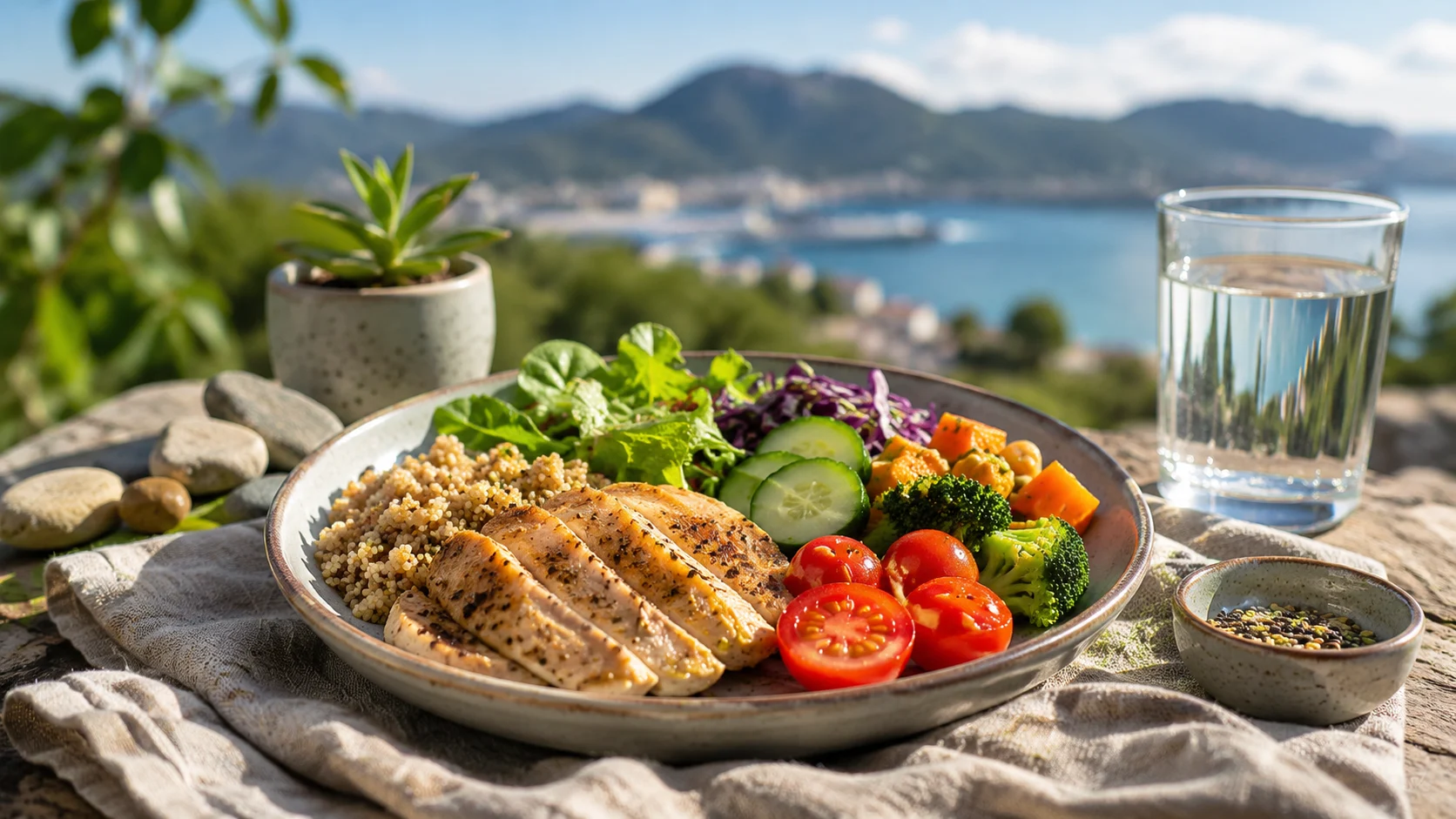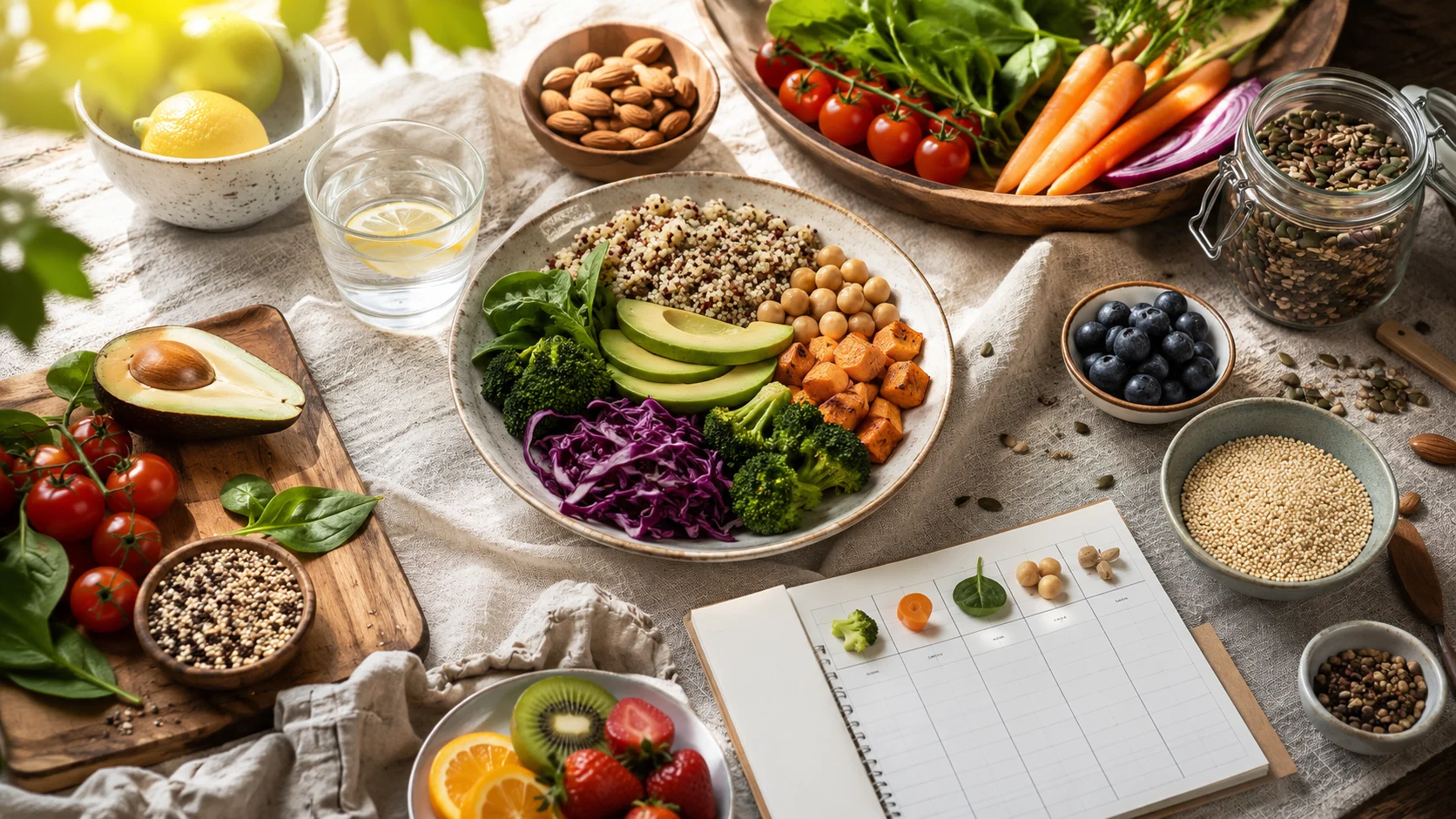

The Meal That Leaves Her Hungry an Hour Later
How to create filling meals often has less to do with eating “less” or “more” and more to do with eating more completely. Many women assume a meal is not satisfying because they lacked discipline. More often, the plate simply did not give the body what it needed to feel steady, grounded, and truly fed.
When she eats a plain salad at her desk or grabs toast between meetings, the hunger that returns later is not a personal failure. It is usually a sign that the meal was too light in protein, fiber, fat, or comforting carbs. A filling meal is not heavy for the sake of heaviness. It is supportive. It helps the body exhale.
Body hunger is not a character flaw. It is often just a message that the meal was missing a few quiet anchors.
One helpful way to understand how to create filling meals is to think in terms of the Four-Anchor Plate: protein, fiber, fat, and satisfaction. When these anchors appear together, meals tend to last longer and feel calmer in the body.
The Four-Anchor Plate
- Protein brings staying power. Think of Greek yogurt beside fruit, eggs folded into warm toast, or shredded chicken tucked into a rice bowl. Protein helps meals feel more substantial and supports steadier energy.
- Fiber adds gentle fullness. A bowl of oats, roasted vegetables, berries, lentils, or grainy bread can help a meal linger in a comfortable way instead of disappearing quickly.
- Fat makes the meal feel finished. Avocado, olive oil, peanut butter, tahini, nuts, or cheese often add the ease many “healthy” meals are missing.
- Satisfaction matters too. If the meal looks technically balanced but leaves her emotionally unconvinced, she may keep searching the kitchen. A filling meal should also feel warm, flavorful, and real.
Research has observed that protein and fiber are both associated with greater satiety, which helps explain why meals built from only one food group can feel thin and fleeting. That does not mean every plate must be perfect. It simply means the body often feels better supported when meals are more balanced.
What Filling Can Look Like on a Busy Tuesday
For anyone learning how to create filling meals, it helps to move away from nutrition math and into ordinary life. Filling meals are often simple meals with a little more structure.
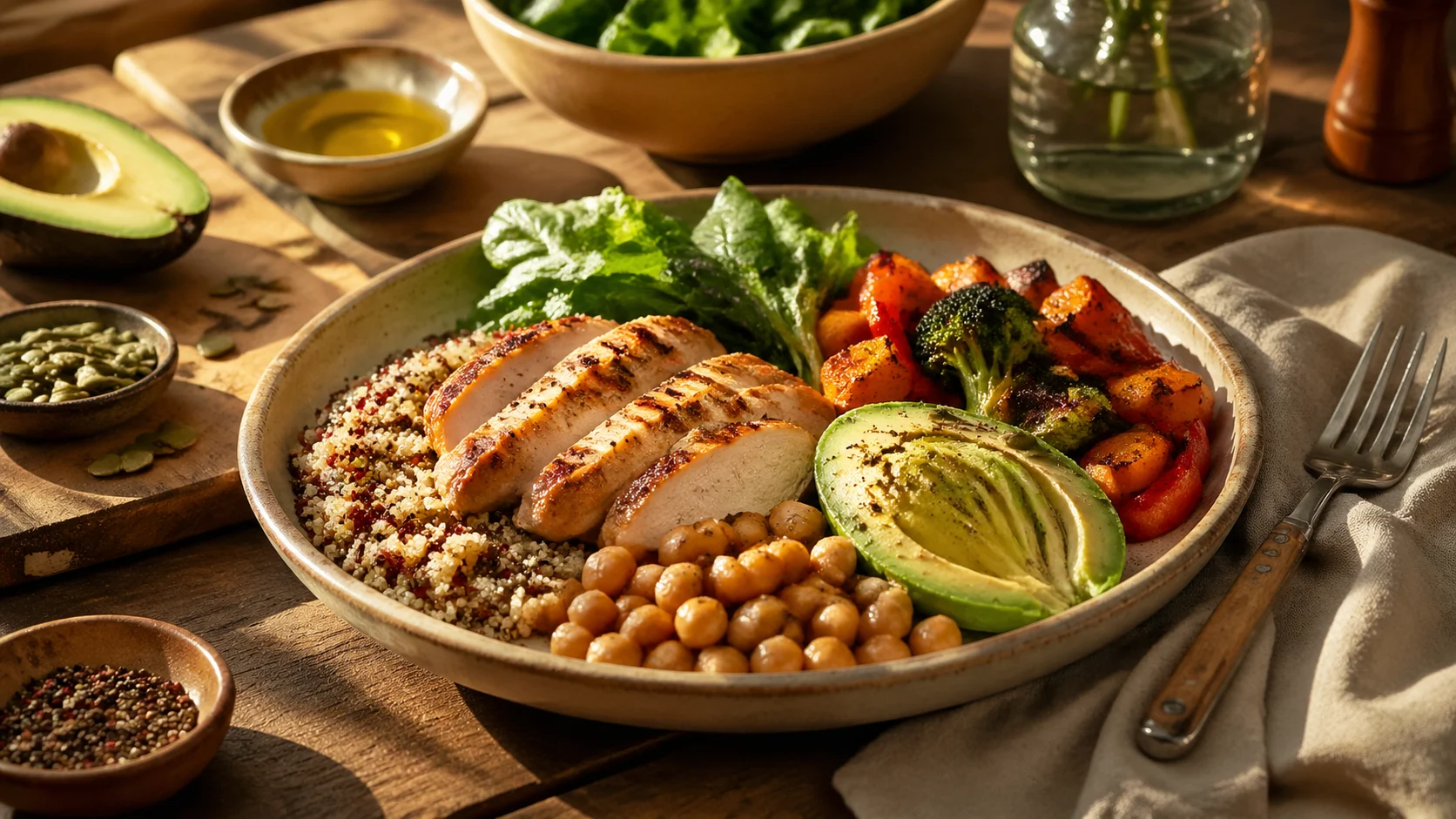
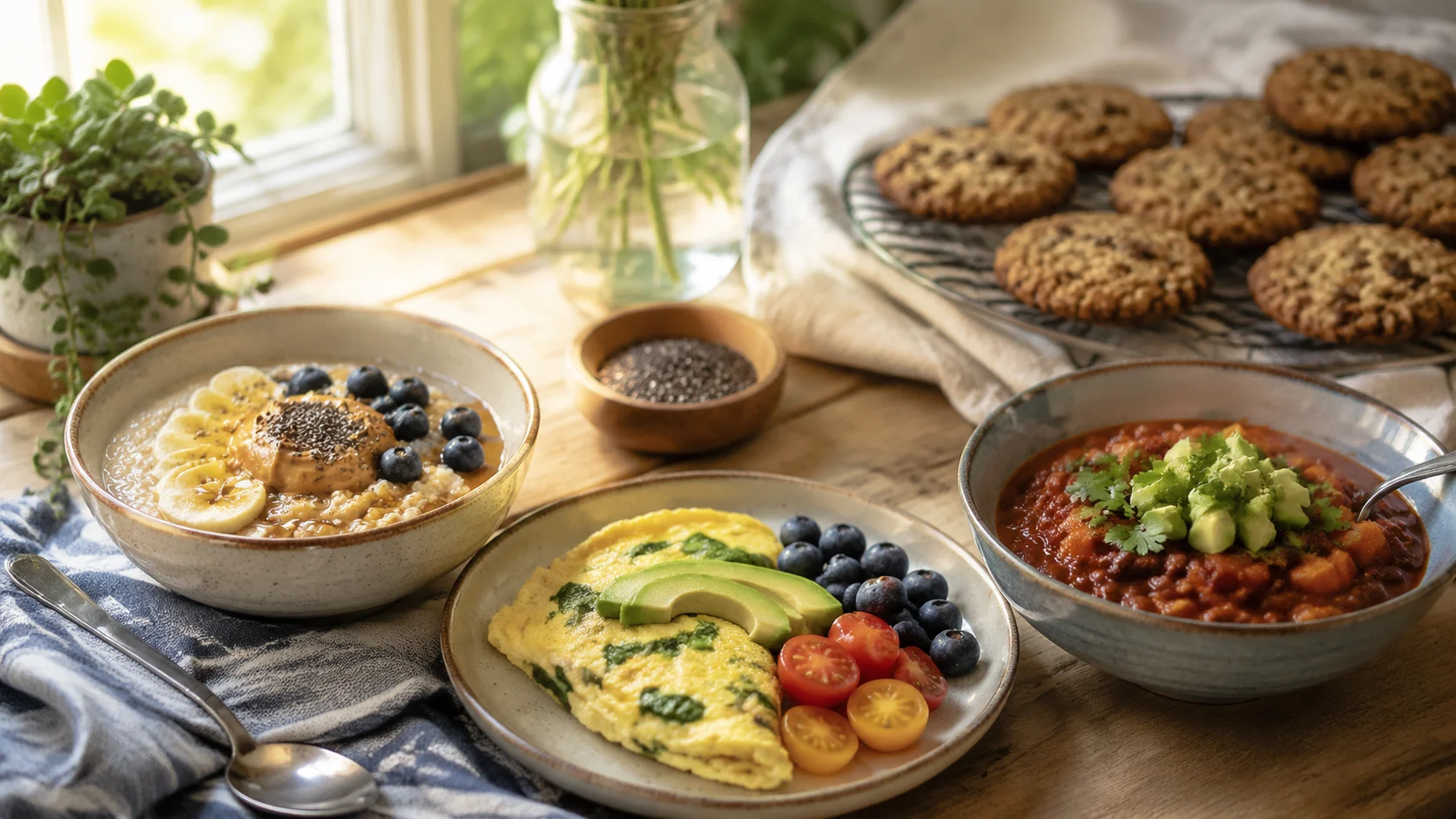
- Breakfast: A warm bowl of oatmeal cooked until soft, topped with crushed walnuts, chia seeds, and a spoonful of yogurt, with berries scattered over the top. It feels comforting, but it also lasts.
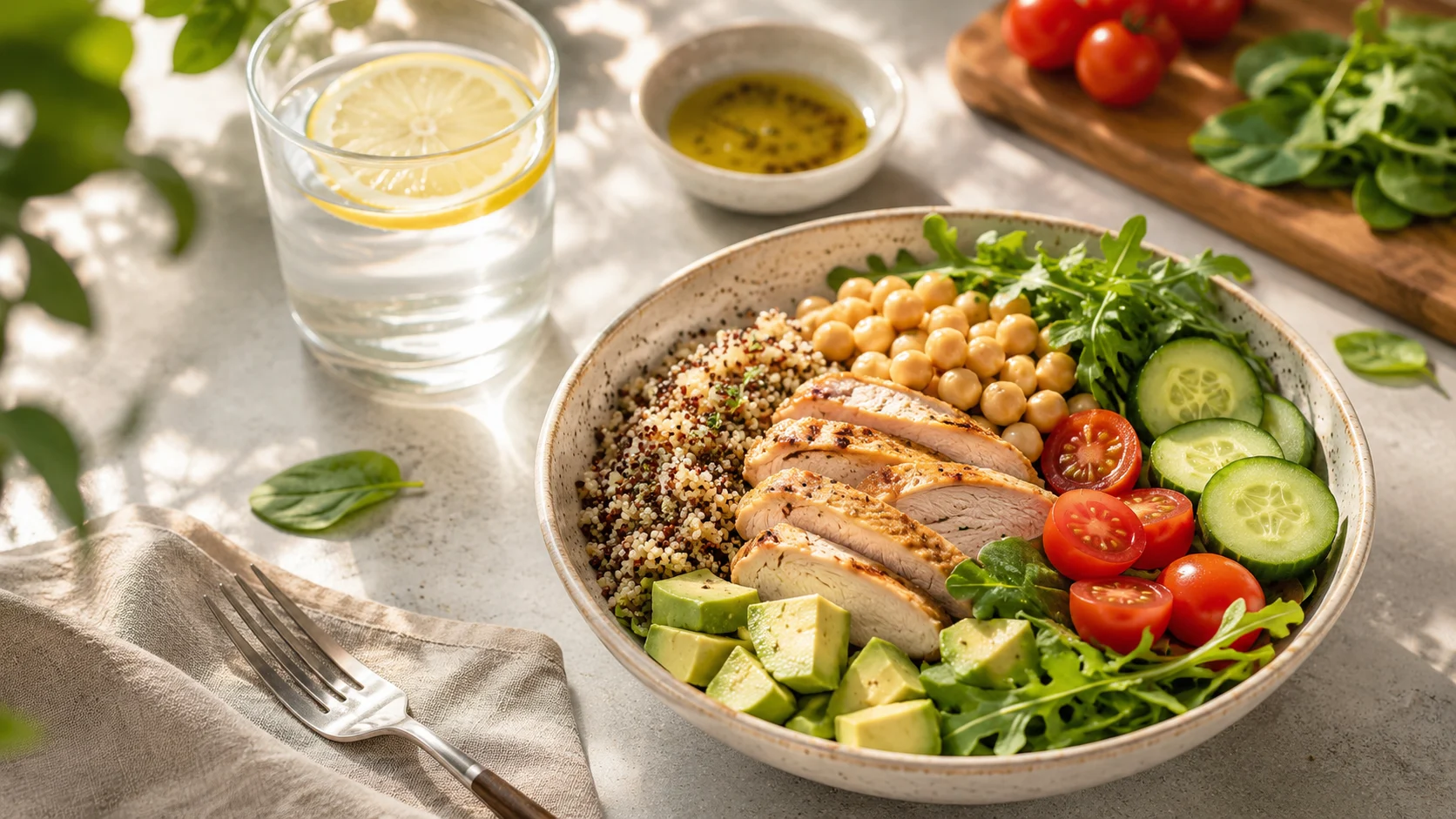
- Lunch: A rice bowl with salmon or tofu, crunchy cucumbers, edamame, and a drizzle of sesame dressing. It offers softness, texture, and enough substance to carry her through the afternoon.
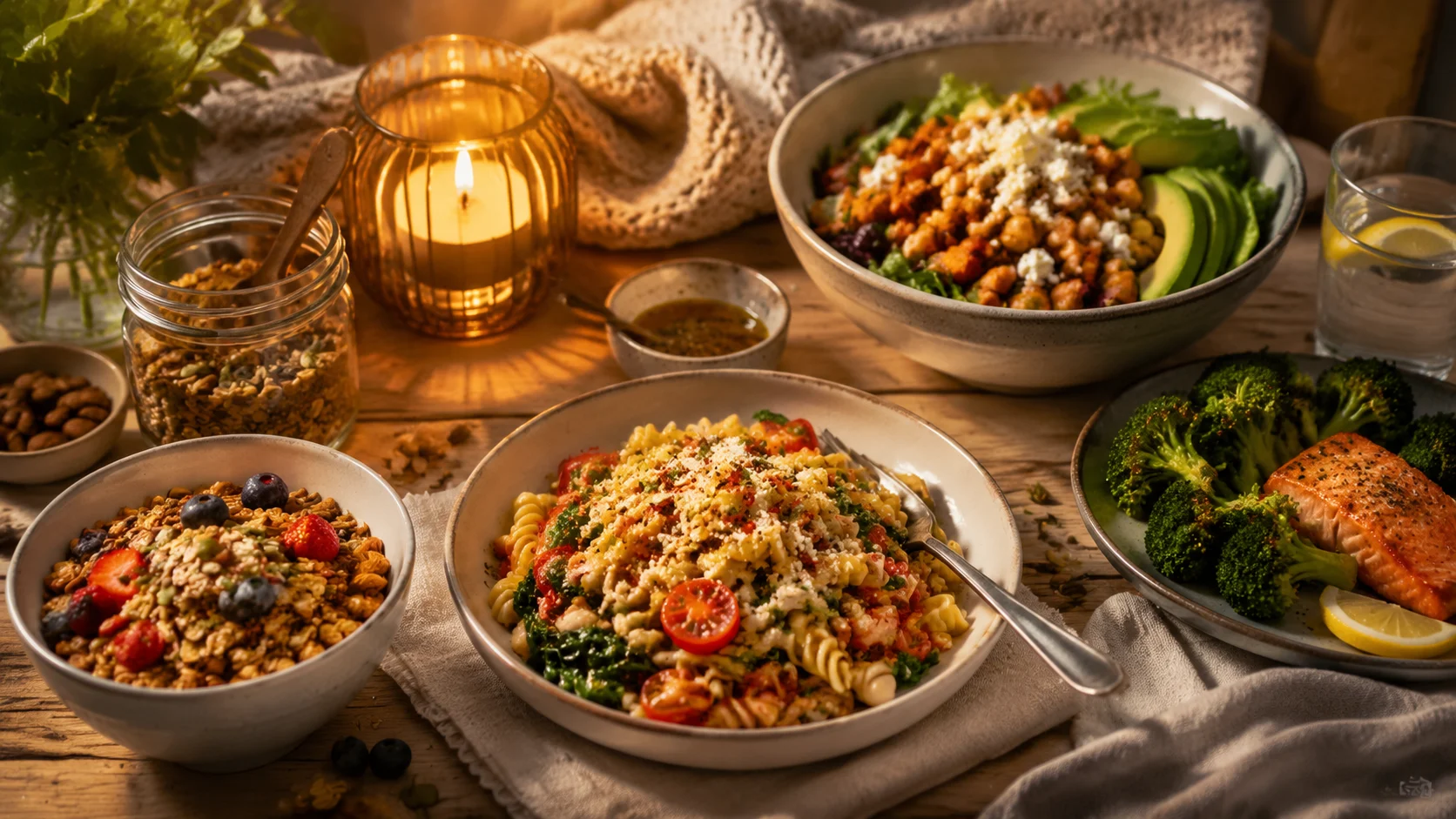
- Dinner: Pasta tossed with white beans, olive oil, spinach, and parmesan, served hot in a deep bowl. Not “light,” not excessive, just grounded and nourishing.
- Snack-style meal: Toast with mashed avocado and eggs, plus a side of fruit and a handful of nuts. Quick, practical, and much more satisfying than toast alone.
A meal does not need to be tiny to be healthy. Sometimes health looks like finally feeling full enough to stop thinking about food.
Why “Healthy” Meals Sometimes Do Not Feel Filling
Many meals praised as healthy are built around volume but not enough support. A large salad with only greens and a little dressing may look abundant, yet still leave the body asking for more. Smoothies can do the same when they contain fruit but no protein or fat. Even a soup can feel incomplete if it lacks beans, chicken, lentils, noodles, or bread on the side.
That is why how to create filling meals is really about noticing what is missing rather than blaming appetite. If she gets hungry soon after eating, a gentle question can help: Did this meal include enough anchors to hold me?
Sometimes the missing piece is not nutrition alone. It may be that she ate too quickly, too distracted, or while already running on fumes. A filling meal lands differently when there is even a small moment to sit, taste, and register that food has arrived.
A Softer Way to Build Meals That Truly Stay With You
- Start with one anchor you already trust. Maybe that is eggs, rice, yogurt, beans, or bread. Begin there instead of trying to rebuild everything at once.
- Add a second and third layer. If lunch is soup, add bread and cheese. If breakfast is fruit, add yogurt and granola. Small additions often change everything.
- Include comfort on purpose. A meal becomes more filling when it feels emotionally satisfying too. Warmth, crunch, creaminess, and flavor all matter.
- Let fullness be a form of support. The goal is not to outsmart hunger. The goal is to nourish the body well enough that it does not have to keep calling out.
Learning how to create filling meals can be a quiet turning point. It helps a woman trust that steady energy is not built through restriction, but through enoughness repeated gently over time.
Please note: Every body has its own rhythm, appetite, and needs. This article is for educational purposes and does not replace personalized advice from a registered dietitian or healthcare professional, especially if someone is dealing with a medical condition, digestive concerns, or a history of disordered eating.
A Few Practical Questions
What if I get hungry again two hours after lunch?
That may simply mean lunch needed more support. Adding protein, fiber, or fat can help, and sometimes the meal may have just been too small for the day she was having.
Can carbs still be part of filling meals?
Absolutely. Carbs often bring comfort and accessible energy. They usually feel most satisfying when paired with protein or fat, like rice with salmon or toast with eggs and avocado.
Why do salads sometimes leave me unsatisfied?
Salads often need more substance. Beans, chicken, pasta, grains, cheese, seeds, or bread on the side can make them feel like a meal instead of a placeholder.
Do filling meals have to be high in calories?
Not necessarily. Filling meals are usually about balance, texture, and completeness rather than sheer size. A moderate meal can feel deeply satisfying when it includes the right anchors.
What is the easiest first step if I feel overwhelmed?
Pick one meal you eat often and add one missing piece. If breakfast is usually toast, add eggs or yogurt. If lunch is soup, add bread and protein. Gentle shifts are often the most sustainable.