
The Quiet Relief of Eating Enough
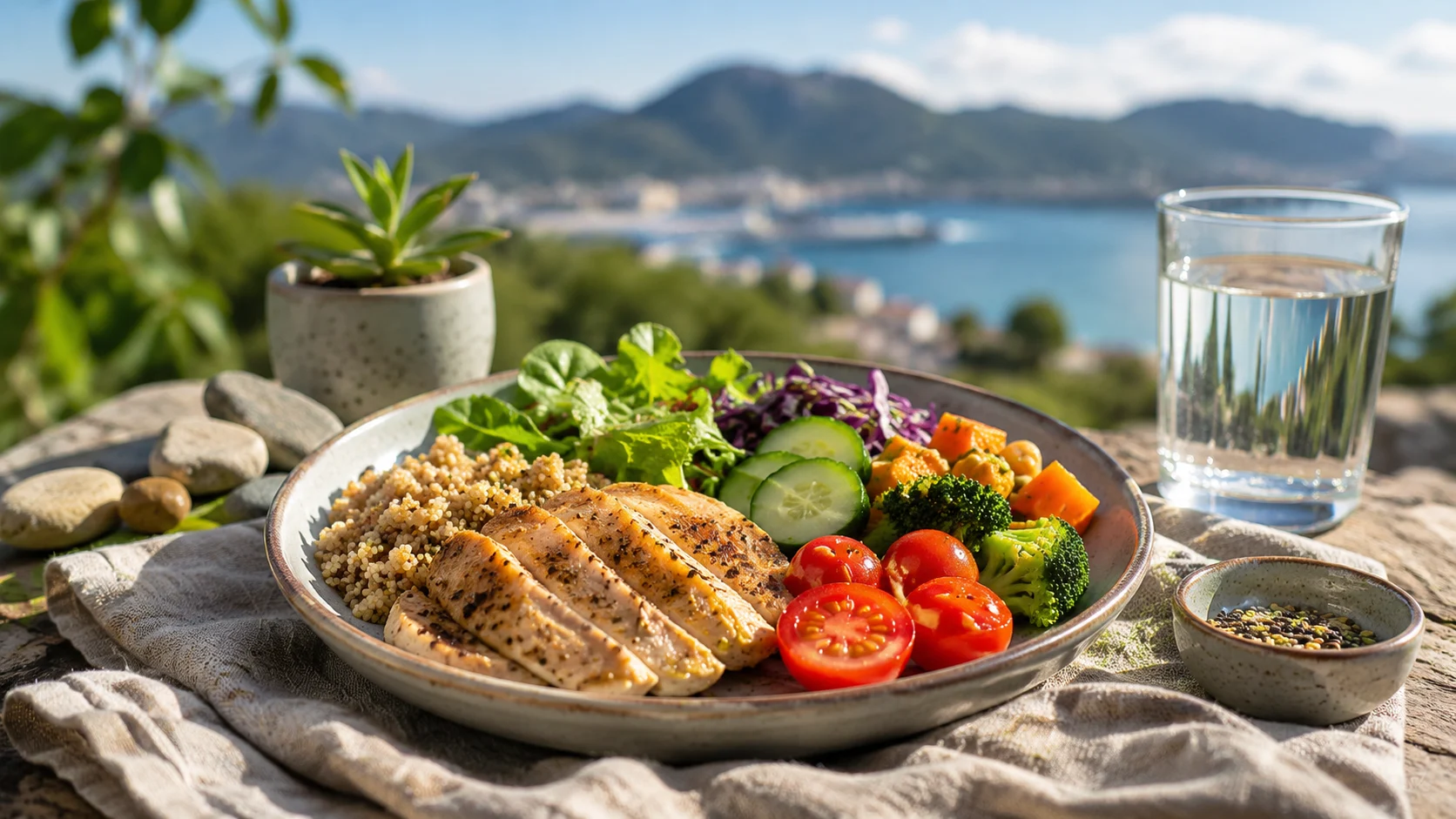
Many women think balanced meals without counting calories are vague or less effective. In real life, the opposite is often true. **A balanced plate can support steadier energy, calmer cravings, and a more peaceful relationship with food** because it asks a kinder question: not “How little can she eat?” but “What would help her feel nourished and steady?”
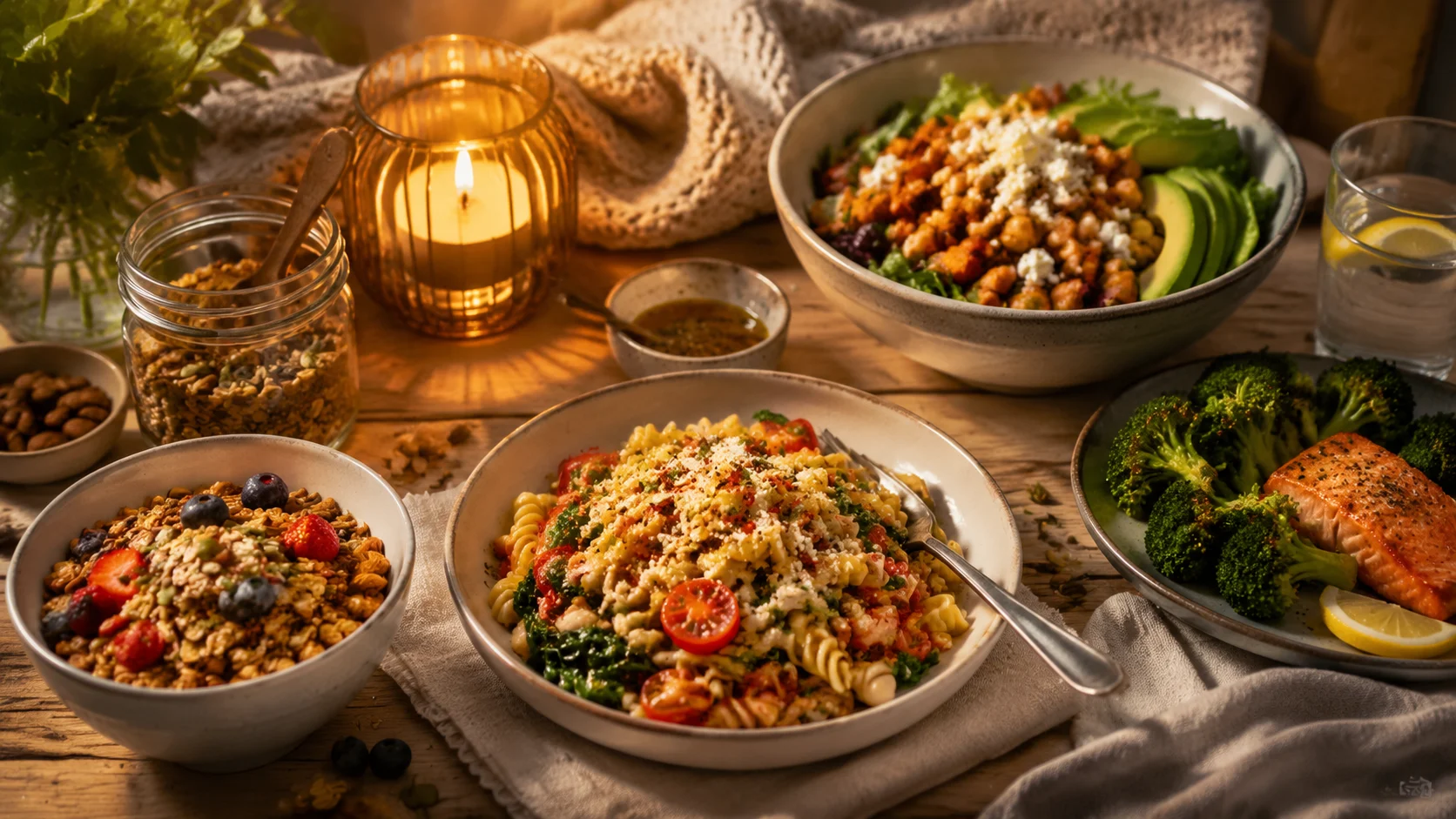
When she reaches for lunch between meetings, or stands in the kitchen at 7 p.m. already tired, calorie math rarely helps. What helps is a simple structure that brings together **carbohydrates for energy, protein for staying power, fat for satisfaction, and fiber for steadiness**. That is often the heart of balanced meals without counting calories.
The Soft Plate Method That Makes Meals Feel Easier
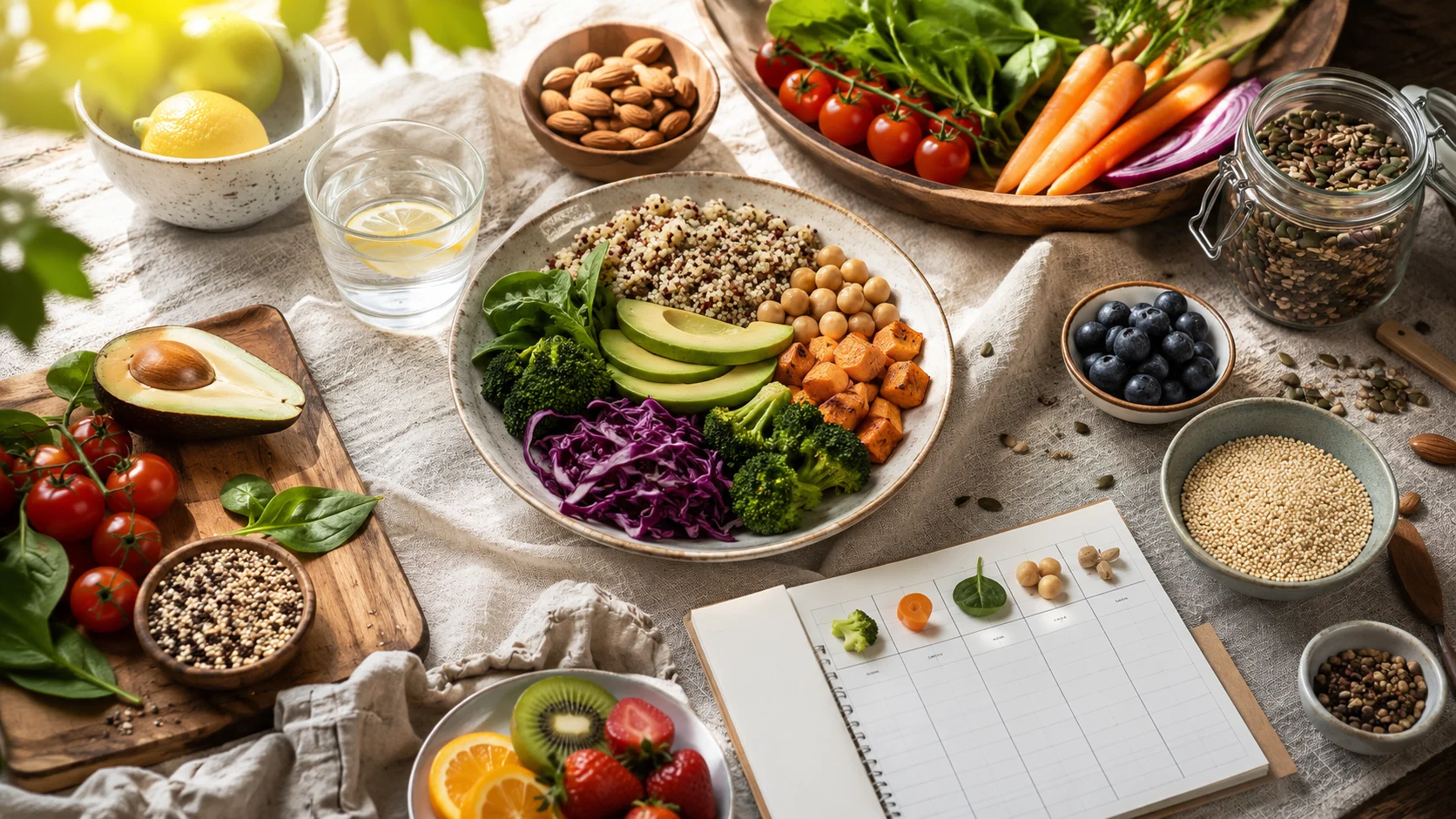
Instead of rules, it can help to picture what Joyini calls the Soft Plate Method: anchor, color, comfort, and stay-power. It is not a diet formula. It is a gentle way to build meals that feel supportive in actual life.
- Anchor: Start with one grounding food, like warm rice, roasted potatoes, sourdough toast, or a bowl of oats. This gives the meal emotional and physical comfort.
- Stay-power: Add something satisfying such as Greek yogurt, eggs, salmon, tofu, beans, or shredded chicken. This helps the meal last longer than a quick spike and crash.
- Color: Bring in fruit or vegetables where you can. Think spinach folded into eggs, berries over oatmeal, or cherry tomatoes tucked beside a sandwich.
- Comfort: Finish with a source of richness like avocado, olive oil, cheese, tahini, nuts, or a creamy dressing. This is often what makes a meal feel complete rather than restrictive.
Body trust rarely grows from tighter control. It grows when a woman learns that nourishment can be steady, satisfying, and kind.
This is why balanced meals without counting calories can feel more sustainable than chasing perfect numbers. The goal is not precision. The goal is support.
What Balanced Can Look Like on an Ordinary Tuesday
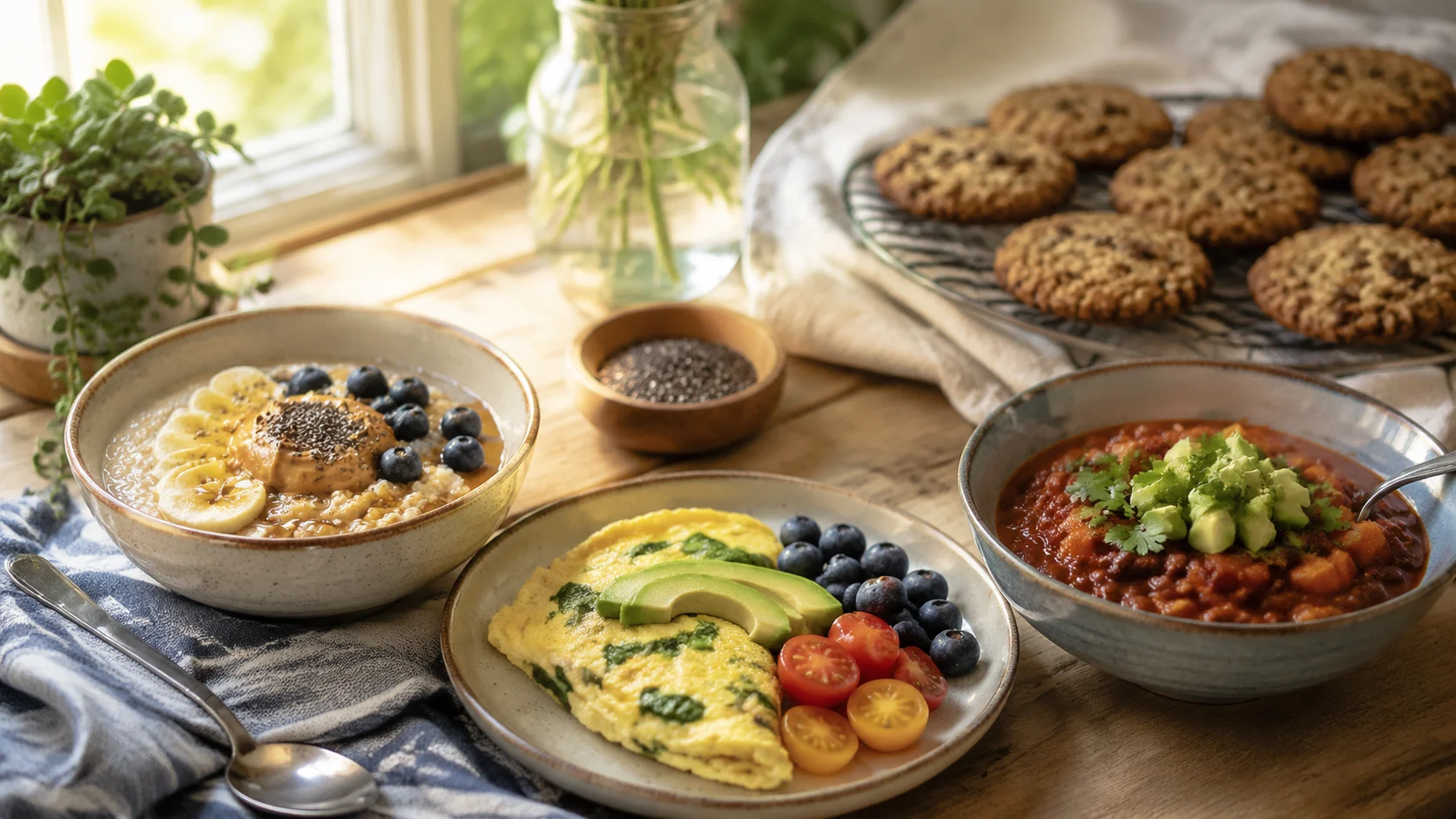
Balanced does not have to look polished. It can look like a bowl of oatmeal with crushed walnuts and sliced banana on a rushed morning. It can look like a turkey sandwich with soup and baby carrots eaten at a desk that is already too crowded. It can look like takeout rice, grilled chicken, sautéed vegetables, and a drizzle of sauce eaten in quiet relief after a long day.
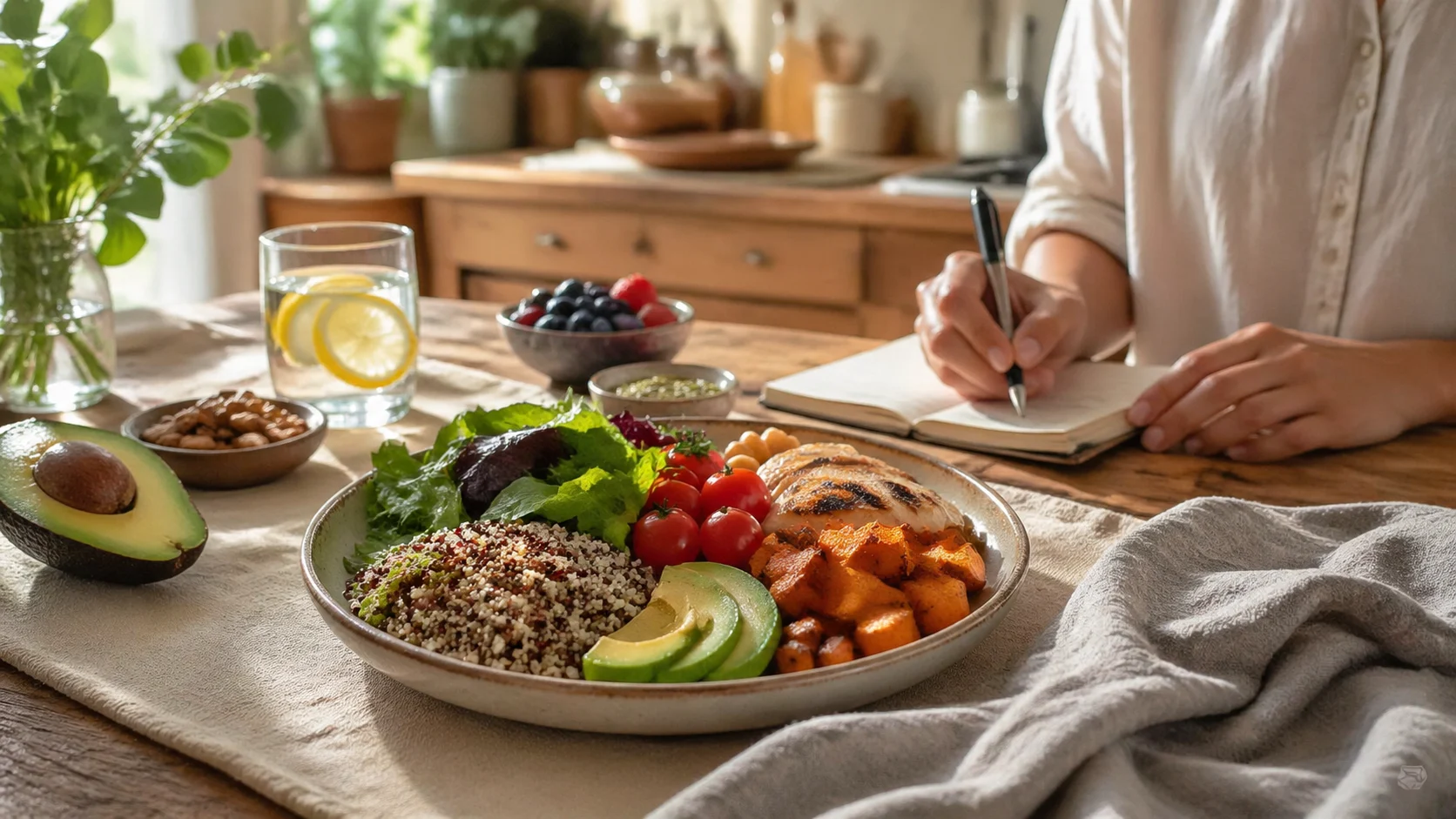
Balanced meals without counting calories are often built from what is already available, not from an idealized grocery haul. A few real-life examples:
- Breakfast: Toast with eggs and avocado, plus fruit on the side. Soft, quick, and grounding.
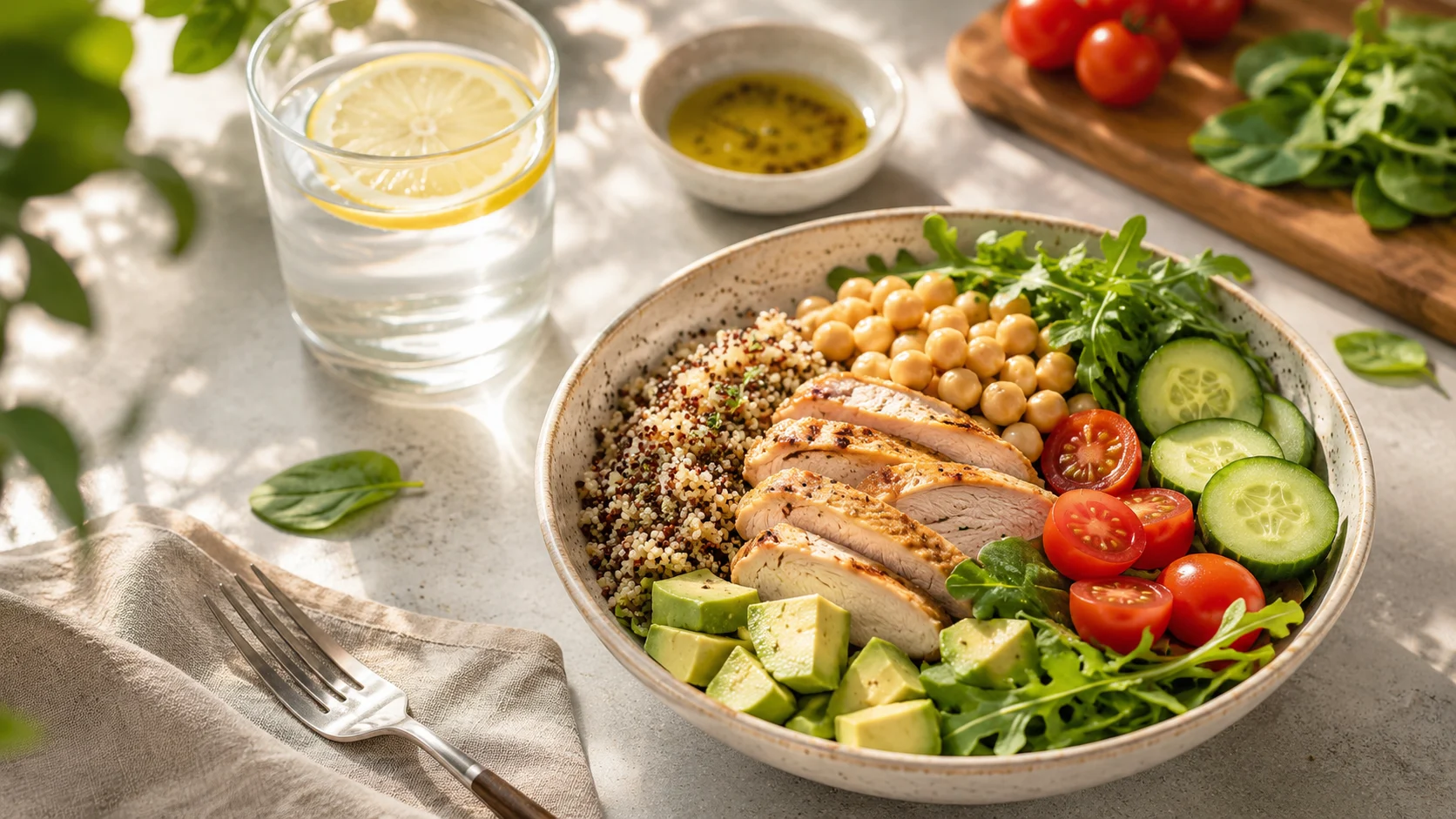
- Lunch: A grain bowl with rice, beans, roasted vegetables, and feta. Filling without feeling heavy.
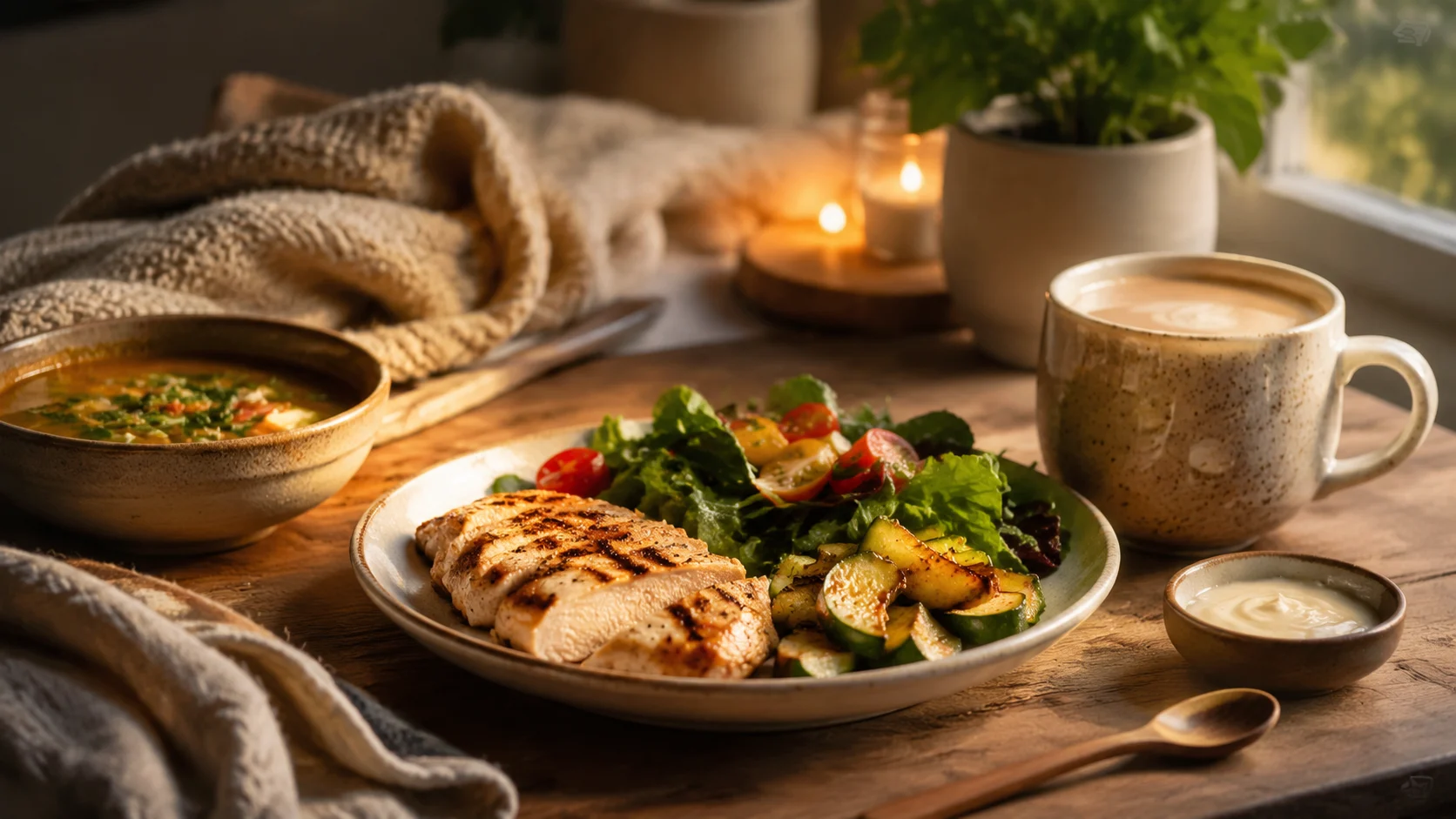
- Dinner: Pasta tossed with chicken or lentils, olive oil, spinach, and parmesan. Comfort and support in the same bowl.
- Snack: Apple slices with peanut butter, or yogurt with granola. Small, but often enough to soften the late-afternoon crash.
Research has long observed that **protein and fiber can help with fullness and blood sugar stability**, which may shape energy and appetite across the day. That does not mean every meal must be perfect. It simply means a little structure can go a long way.
Why Counting Can Backfire for Tired, Busy Women
For some women, counting creates the illusion of certainty. Yet it can also pull attention away from **body signals like hunger, fullness, satisfaction, and fatigue**. A meal may fit a number and still leave her distracted, unsatisfied, and searching the pantry an hour later.
Balanced meals without counting calories offer a different rhythm. They leave room for changing needs: a hungrier morning after poor sleep, an extra snack before a period, a more comforting dinner after a stressful day. This flexibility is not failure. It is responsiveness.
The body is not a problem to outsmart. It is a home asking, in quiet ways, to be supported.
That is why many women feel more at ease when they stop treating meals like tests to pass. A balanced meal can be simple, imperfect, and still deeply effective.
Questions That Often Come Up
What if she still feels hungry after a balanced meal?
That usually does not mean she did something wrong. She may need a larger portion, more protein, more fat, or simply more food overall. Hunger is information, not a moral issue.
What if she only has convenience food at home?
Balanced meals without counting calories can still happen with easy staples. Frozen waffles with peanut butter and yogurt, canned soup with toast and cheese, or a microwave rice bowl with edamame can all work beautifully.
Does every meal need vegetables to count as balanced?
No. Vegetables can be supportive, but balance is broader than produce. A meal can still offer steadiness through carbs, protein, and satisfying fat even if it is more beige than green that day.
What if counting calories makes her feel safe?
That feeling is understandable, especially after years of diet messaging. She does not have to let go all at once. Sometimes the gentlest step is simply learning to notice satisfaction and energy alongside numbers.
Please note: Every body has its own rhythm, appetite, and needs. This gentle guide is for educational purposes only and does not replace personalized advice from a healthcare professional or registered dietitian, especially if someone is dealing with a medical condition, disordered eating, or major changes in appetite.