
The quiet hour when cravings get louder
If she keeps wondering why do i want to eat at night even when i’m not hungry, the answer is usually not a lack of discipline. More often, night eating shows up when the body has been underfed, overstimulated, emotionally stretched, or simply asked to carry too much for too long. What feels like a random craving at 9 p.m. is often a body signal asking for comfort, steadier energy, or a softer landing at the end of the day.
Many women know this scene by heart: the kitchen is dim, the day is finally quiet, and suddenly the pull toward cereal, chocolate, chips, or toast feels almost magnetic. It can be confusing, especially when physical hunger is not obvious. But this pattern rarely appears out of nowhere. In many cases, the body is trying to make up for something earlier in the day—too little food, too much stress, too many rules, or too little rest.
Body signals are not character flaws. They are messages, often arriving long after a woman has ignored them to get through the day.
Research has found that sleep restriction can raise hunger-related signals and increase desire for highly rewarding foods. Stress can do something similar, nudging the brain toward quick comfort. So when someone asks, “why do i want to eat at night even when i’m not hungry,” the deeper question may be: what did the day ask from her body that never got repaid?
The “Daylight Debt” pattern
A helpful way to understand this is through what Joyini might call the Daylight Debt pattern. Like a quiet bill that arrives after sunset, it reflects what the body missed while the day was busy.

- Too little food earlier: She may have rushed through breakfast with only coffee, picked at lunch between meetings, and called it “fine.” By night, the body is not fooled. It often asks for fast energy and satisfaction.
- Stress without pause: When the nervous system stays switched on, eating can feel less about hunger and more about coming back down to earth. Crunchy, sweet, or comforting foods can become a form of relief.
- Food rules that backfire: If she spent the day trying to be “good,” avoiding bread or dessert, evening can become the hour when restriction loosens and cravings rush in.
- A need for transition: Sometimes night eating is not about food alone. It is the ritual of finally sitting down, finally exhaling, finally having something that belongs only to her.
The body is not a project to control more tightly at night. It is a place asking to feel safe enough to rest.
What helps more than fighting it
When she notices stress eating at night, the gentlest response is not to clamp down harder. It is to get curious. A small pause can change the whole tone of the evening.
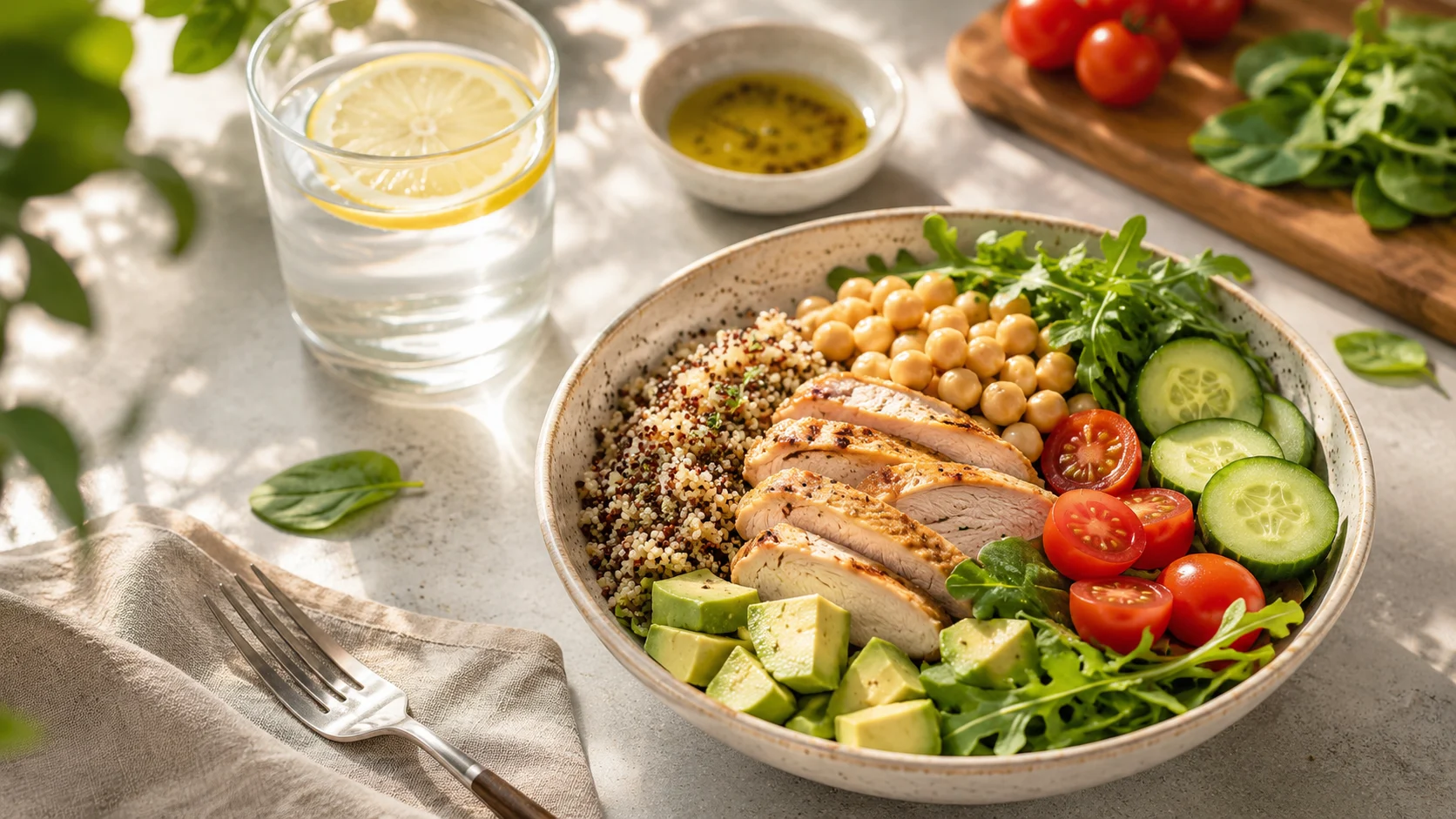
- Check for practical hunger first: Even if it does not feel dramatic, hunger can show up as irritability, thinking about food, low energy, or a restless need to keep snacking. A balanced dinner—say, a warm rice bowl with salmon, avocado, and roasted vegetables—often lands differently than a scattered dinner of almost nothing.
- Use the “Comfort + Anchor” method: Pair the food she wants with something that supports steadier satisfaction. If she wants chocolate, she might enjoy it after a bowl of yogurt with berries and crushed walnuts. If toast is calling, adding eggs or peanut butter can make it feel more grounding.
- Create a softer evening bridge: For some women, the craving starts the moment work ends. A short walk, hot shower, candle, or even ten quiet breaths can help the body shift from survival mode into rest mode.
- Loosen the moral language: Foods are not proof of success or failure. The less shame wrapped around eating, the easier it becomes to hear what the body is actually asking for.
This matters because restriction and guilt often intensify cravings rather than resolve them. A woman who feels she has “blown it” is more likely to keep eating past comfort, not because she is broken, but because shame is exhausting.
When night eating may be a sign to look closer
Sometimes the question “why do i want to eat at night even when i’m not hungry” points to a broader pattern worth tending to with care. If evening cravings feel relentless, if meals during the day are often skipped, if sleep is poor, or if eating regularly feels emotionally loaded, extra support may help. A registered dietitian or therapist familiar with emotional eating and anti-diet care can offer steadier guidance without turning food into another source of fear.
The goal is not to become perfectly controlled around food. The goal is to build evenings that feel more nourished, more peaceful, and less like a private battle in the kitchen.
Please note: Every body has its own rhythm. This article is for educational purposes and offers gentle support, not personalized medical or mental health care. If night eating feels distressing or persistent, reaching out to a qualified healthcare professional can be a kind next step.
You Might Also Wonder
Why do I only crave snacks after dinner?
After dinner is often the first unguarded moment of the day. If she has been distracted, underfed, or emotionally “on” for hours, cravings may show up once her body finally has enough quiet to speak.
Does wanting to eat at night mean I’m emotional eating?
Not always. Sometimes it is simple physical hunger in disguise. Sometimes it is comfort-seeking. Often it is a mix of both, which is why curiosity usually works better than labeling.
What if I’m not hungry but still want something sweet?
Sweetness can mean pleasure, energy, or emotional ease. Instead of arguing with the craving, it may help to enjoy something satisfying with a bit more staying power, like warm toast with almond butter and sliced banana.
Can skipping meals make nighttime cravings stronger?
Yes, very often. When the body does not get enough nourishment during the day, the drive to eat can grow louder at night. It is one of the most common reasons this pattern appears.