
The energy crash is often not a motivation problem
When she reaches for a second coffee at 3 p.m., it may look like a discipline issue from the outside. But more often, the body is simply asking for a steadier kind of support. Steady energy foods are usually foods that combine carbohydrates, protein, fat, and fiber in a way that helps energy arrive more slowly and stay a little longer. For many busy women, that means less of the sharp rise-and-drop feeling that can leave the afternoon foggy, shaky, or strangely snacky.
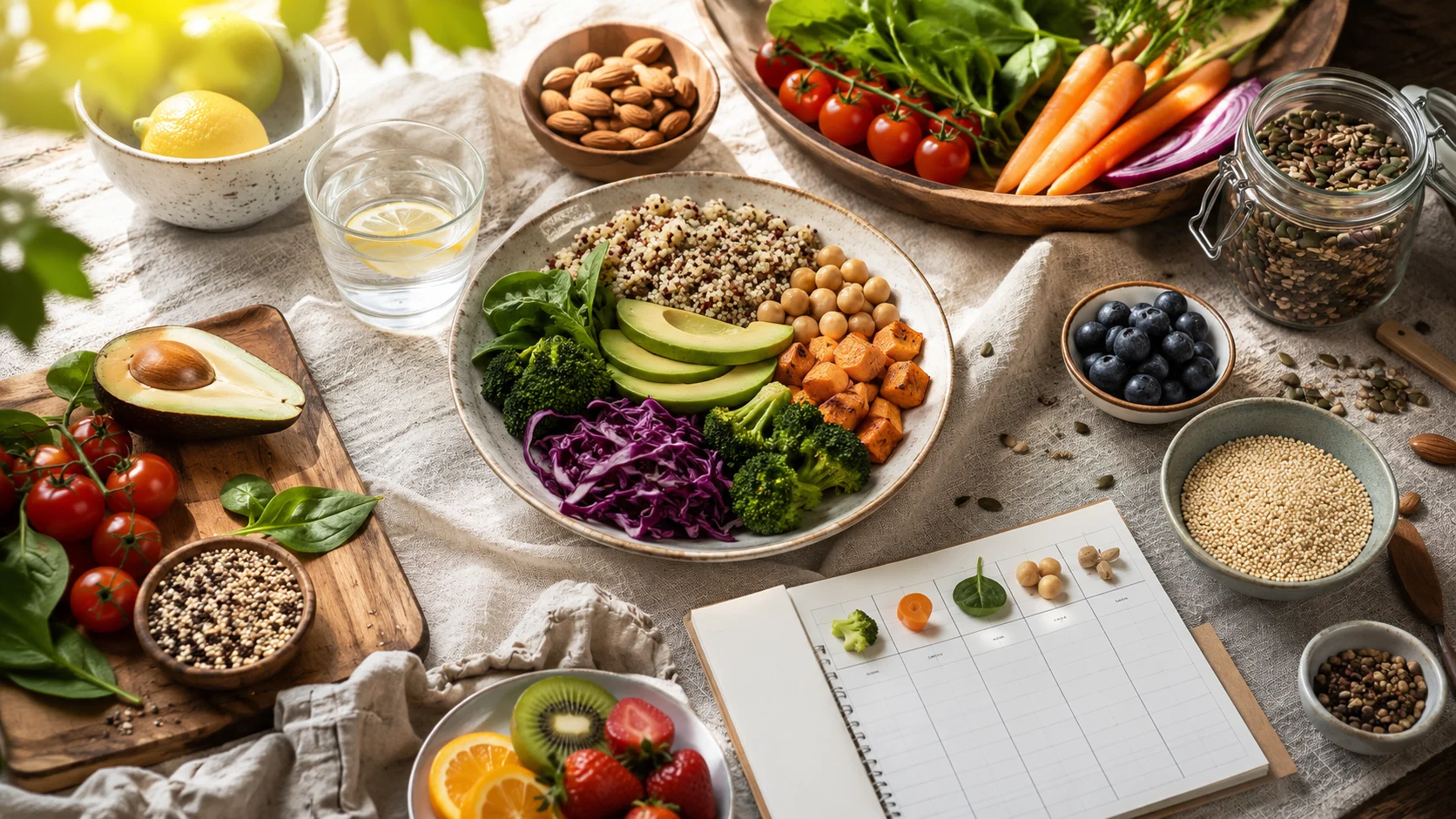
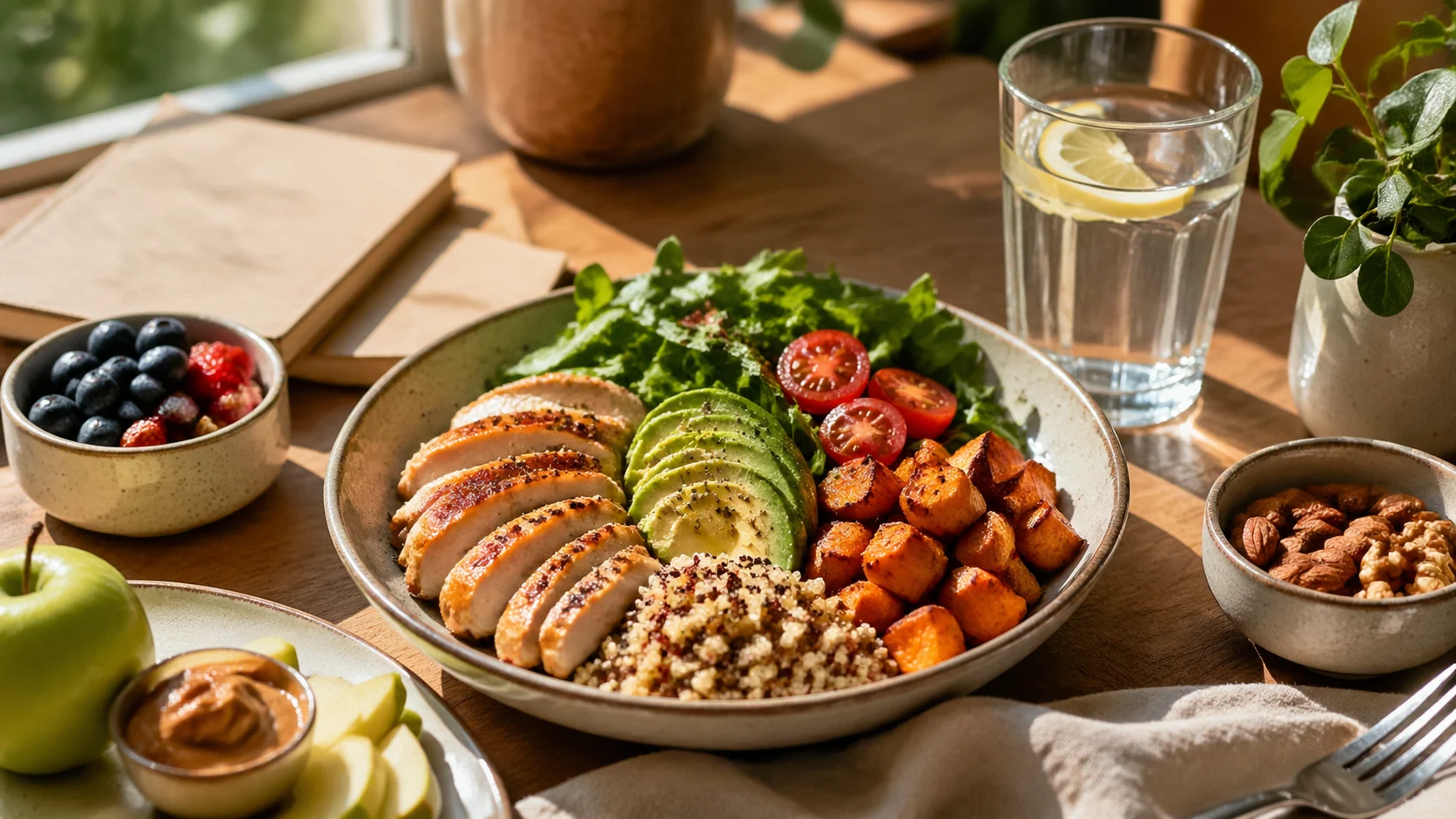
Instead of chasing energy with sugar alone or skipping meals until hunger turns loud, it can help to think in gentler terms: build meals that feel anchored. Joyini likes to call this the “Soft Anchor Plate”—a simple way of picturing a meal with one grounding carb, one satisfying protein, one comforting fat, and something with color or texture from plants.
Body signals are not character flaws. They are messages, often arriving a little late, asking to be heard.
Research has consistently linked meals with more fiber and protein to better satiety and steadier blood sugar patterns, which can influence how stable energy feels across the day. One review published in Advances in Nutrition noted that fiber-rich eating patterns support glycemic control, especially when paired with balanced meals rather than isolated quick sugars.
A gentler way to recognize steady energy foods
Not every energizing meal needs to be perfect, pretty, or homemade from scratch. Steady energy foods are often very ordinary foods, just paired with a little more intention. A bowl of warm oats becomes more supportive when it is topped with Greek yogurt, crushed walnuts, and berries. Toast feels different when it comes with eggs and avocado instead of being eaten alone on the run. Even takeout can work better when a rice bowl includes chicken, beans, or tofu and a handful of vegetables.
The goal is not rigid food rules. It is learning which meals tend to create ease, steadiness, and comfort instead of the fast spark that disappears an hour later.
Energy feels steadier when a meal behaves like a slow-burning candle, not a match struck in a hurry.
- Grounding carbohydrates: Think roasted sweet potato, brown rice, oatmeal, sourdough toast, or fruit. These are often the first layer of comfort and usable energy.
- Satisfying protein: Eggs folded into soft scrambled curds, cottage cheese beside fruit, turkey in a wrap, or lentils stirred into soup can help meals stay with her longer.
- Supportive fats: Peanut butter on apple slices, olive oil over grains, or a few pistachios tucked into a snack add staying power and satisfaction.
- Fiber and color: Berries, greens, carrots, beans, and seeds help slow the pace of digestion and create a more balanced rhythm.
What this can look like on a busy, very real day
In real life, the question is rarely, “What is the ideal meal?” More often, it is, “What can she actually manage between meetings, school pickup, and a tired brain?” That is where steady energy foods become practical rather than aspirational.
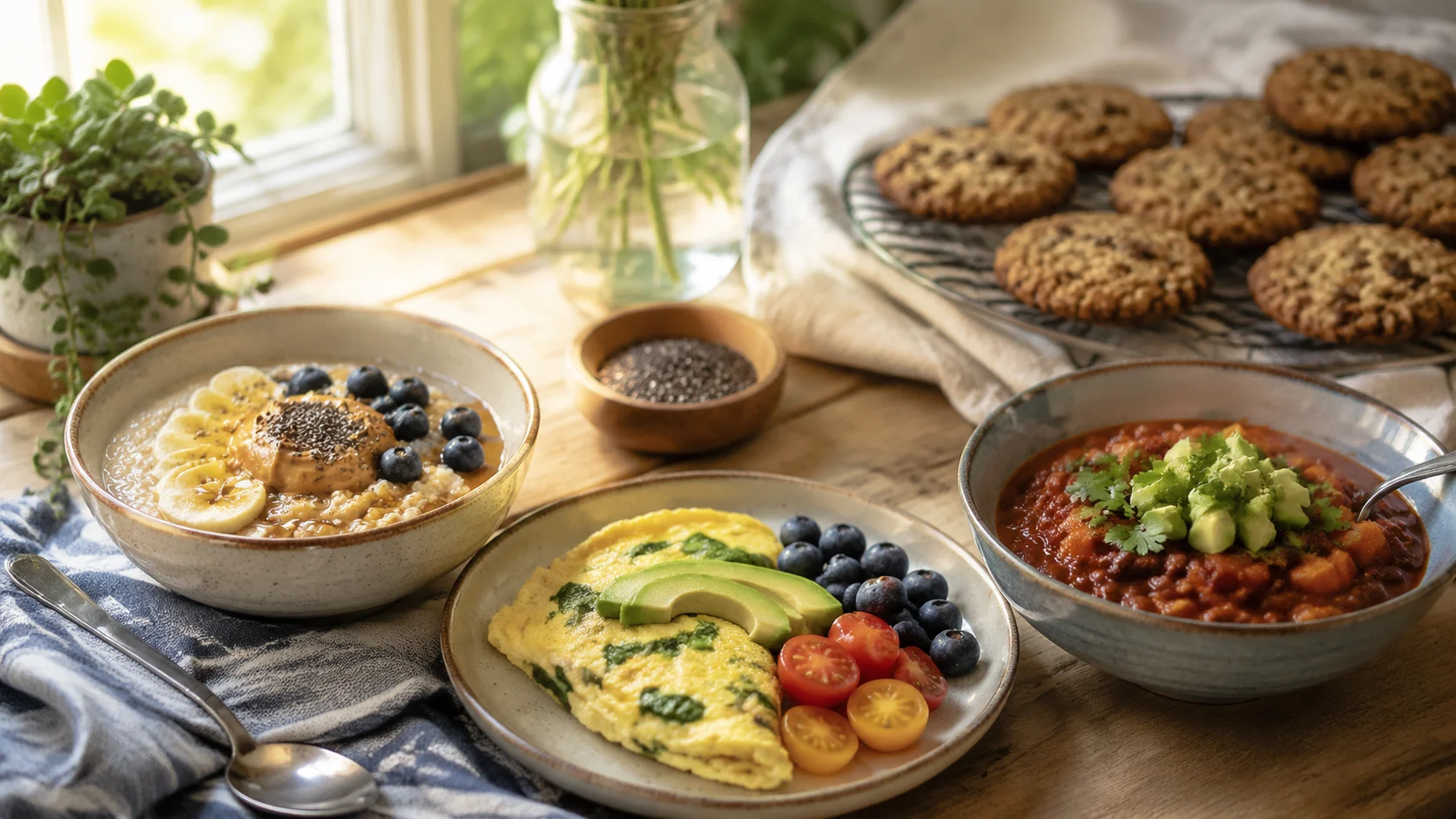
- Breakfast that lands softly: A bowl of oatmeal with chia seeds, almond butter, and sliced banana can feel warm, familiar, and much steadier than pastry alone.
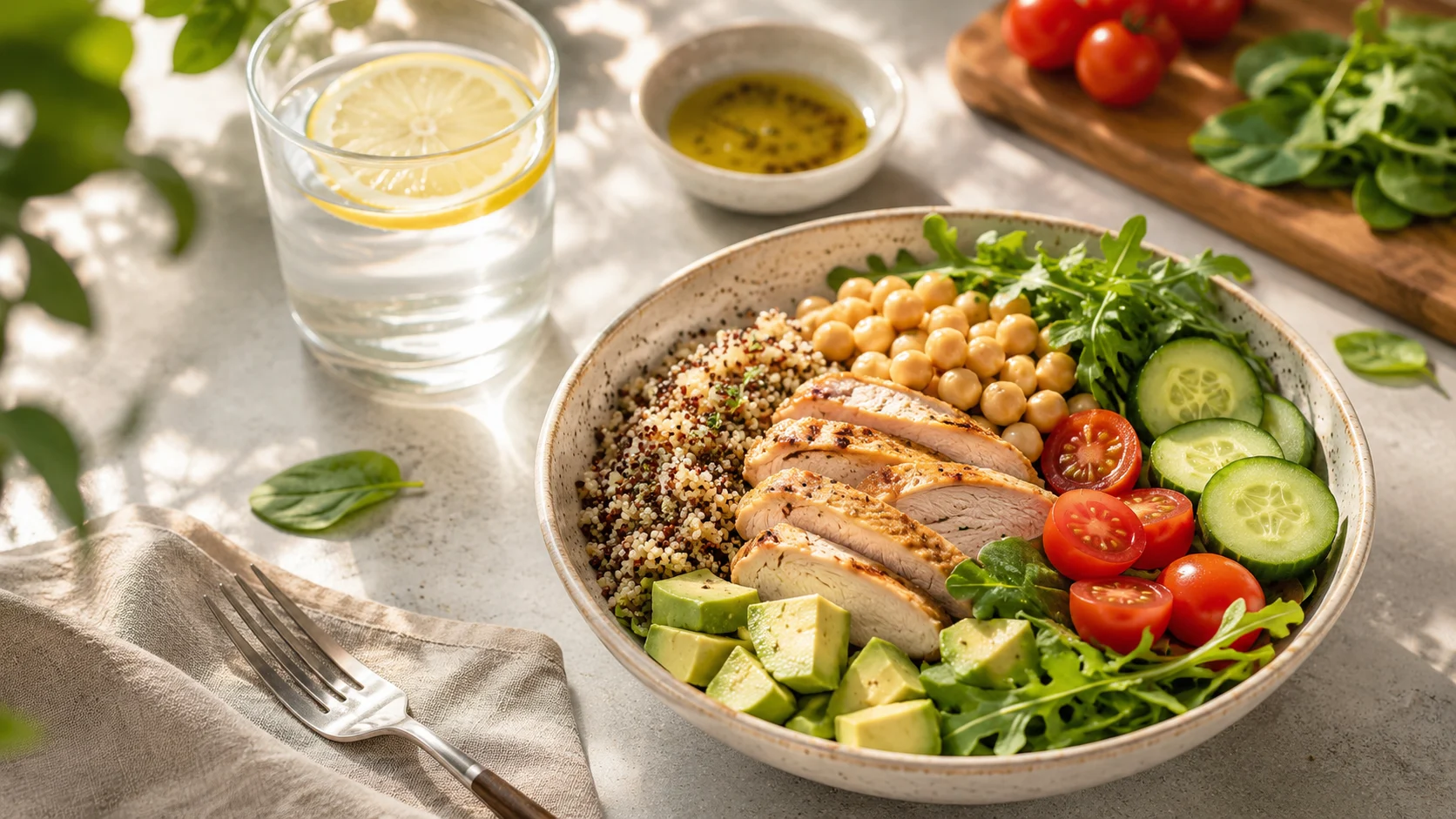
- Lunch that does not disappear in an hour: A grain bowl with rice, salmon or tofu, cucumber, shredded carrots, and a creamy dressing gives the body multiple forms of support at once.
- An afternoon bridge snack: Apple slices with peanut butter, or crackers with cheese and grapes, can prevent the late-day freefall that often turns into random pantry grazing.
- Dinner for low-energy evenings: Rotisserie chicken, microwaved frozen rice, and bagged salad can still be a balanced meal. Ease counts too.
The most helpful steady energy foods are often the ones she will reliably eat, not the ones that look impressive on paper.
Why quick energy can sometimes turn into stronger cravings
When meals are light on protein, fiber, or fat, energy may rise quickly and then fall just as fast. That drop can feel like irritability, brain fog, or an urgent need for sweets. It is not a lack of willpower. It is often a very understandable body response.
For women with long histories of dieting or meal skipping, these swings may feel even louder. The body learns to ask more intensely when nourishment has been inconsistent. Steady energy foods can help rebuild trust because they make eating feel less chaotic and less punishing.
This does not mean she can never enjoy a muffin, a cookie, or a sweet coffee. It simply means that pairing those foods with something more grounding—like yogurt, nuts, or a real meal nearby—can make the experience feel better physically and emotionally.
Small shifts that support more ease
- Add, do not just subtract: Instead of removing foods, try adding protein, fiber, or fat to meals that leave energy feeling shaky.
- Notice the three-hour mark: If she crashes a few hours after eating, that can be useful information, not a personal failure.
- Keep “bridge foods” visible: Nuts, fruit, yogurt, hummus cups, and toast ingredients can make the next supportive choice easier when life is loud.
- Let comfort stay in the picture: The most sustainable meals are often both balanced and emotionally satisfying.
Please note: Every body has its own rhythm, and energy patterns can be shaped by sleep, stress, hormones, medications, and health conditions. This gentle guide is for educational purposes and does not replace personalized advice from a healthcare professional or registered dietitian.
You Might Also Wonder
What if someone wants steady energy foods but does not have time to cook?
She can still build support from convenience foods: yogurt cups, fruit, nut butter, frozen grain bowls, hard-boiled eggs, soup, wraps, and simple takeout combinations all count.
Why does a sweet breakfast make some people hungry again so fast?
If breakfast is mostly quick carbohydrates, energy may rise quickly and fade early. Pairing it with protein and fat often helps it last longer.
Is coffee enough when the afternoon slump hits?
Coffee may help someone feel more alert, but if the body also needs food, caffeine alone often cannot create lasting steadiness. A small snack usually works better than willpower.
Can steady energy foods help with cravings?
Very often, yes. When the body is fed more consistently, cravings may feel less urgent and less chaotic, especially in the late afternoon or evening.
Do steady energy foods have to be “healthy” in a perfect way?
No. They only need to be balanced enough to support her real day. A practical meal that she can actually eat is often more nourishing than an ideal one that never happens.