
The idea that changes everything
All foods fit does not mean food stops mattering. It means a woman no longer has to sort every bite into “good” or “bad” before she is allowed to eat. In real life, this approach often creates more steadiness, less rebellion, and a calmer relationship with food. What looks like “lack of control” is often the echo of too many rules.
When she stands in the kitchen after a long day, opening cabinets with that tired, restless feeling, the problem is rarely that she needs more discipline. More often, her body has learned that restriction is coming. So it rushes toward what feels comforting, fast, and emotionally safe. This is where all foods fit becomes less of a slogan and more of a soft landing.
Food freedom does not begin when cravings disappear. It begins when fear loosens its grip around the plate.
Why restriction can make food feel louder
Many women have lived through years of subtle food rules: be good during the week, earn dessert, avoid carbs, make up for yesterday. The body hears these messages like a storm warning. Even when the restriction looks “healthy,” it can heighten urgency around food.
Some research has observed that rigid dietary restraint is linked with more overeating and stronger food preoccupation. That does not mean every structure is harmful. It means the nervous system often responds better to permission with support than to control with shame.
This is the hidden paradox: when a cookie is treated like a moral failure, it tends to grow in emotional power. When it is allowed, understood, and placed beside meals that also support steady energy, it often becomes just food again. That is one of the quiet strengths of all foods fit.
The “Open Table” method
A helpful way to picture this is the Open Table method: all foods are welcome, but not all foods play the same role every day. Some foods comfort. Some satisfy. Some bring staying power. Some do several things at once.
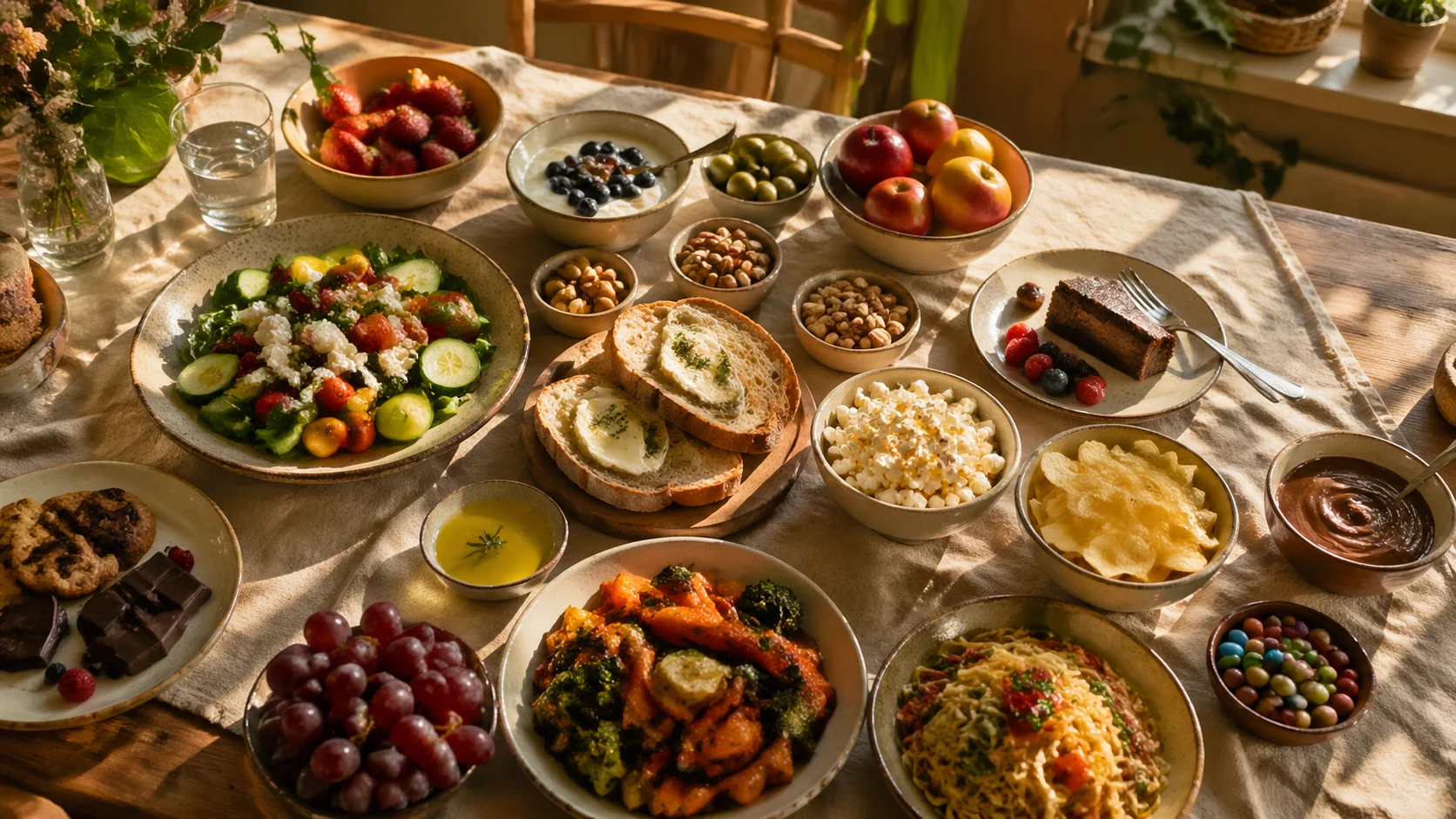
- Comfort foods have a seat. A warm brownie after dinner or buttery toast on a hard morning can belong. Pleasure is part of nourishment, not a distraction from it.
- Supportive foods have a seat too. A bowl of Greek yogurt with berries, or rice tucked next to salmon and cucumber, may help the afternoon feel more stable and less jagged.
- Context matters more than labels. A croissant eaten slowly with eggs and fruit lands differently than a rushed lunch skipped until 3 p.m. The issue is not virtue. It is support.
That is the spirit of all foods fit: not nutritional indifference, but nutritional flexibility. Gentle structure can still exist. It simply stops sounding like punishment.
What this can look like on an ordinary Tuesday
At 3 p.m., she finds herself staring at the office drawer, wanting chocolate with a kind of urgency that feels larger than hunger. Instead of launching into self-criticism, she pauses. Maybe lunch was too small. Maybe sleep was thin. Maybe stress has been humming in the background all day.
So she builds a softer response: chocolate, yes—and something that helps the moment last. A square or two with a handful of almonds. A sweet latte beside a turkey sandwich she never had time to eat. Permission, paired with support.
The body is not a project to outsmart. It is a place to listen more closely.
This is where many women discover that all foods fit is not chaotic at all. It creates room for body signals to become audible again. Hunger feels clearer. Satisfaction feels less confusing. Food loses some of its drama.
When “all foods fit” feels harder than expected
For someone coming out of chronic dieting, permission can feel surprisingly uncomfortable. If food rules once created a sense of safety, letting them go may stir fear at first. That does not mean the approach is failing. It may simply mean trust is still being rebuilt.
A gentler path often helps:
- Start with one previously feared food. Let it appear consistently, not as a last-supper event, but as an ordinary part of life.
- Anchor meals in steadiness. Think of meals that include satisfaction and staying power—like warm oatmeal with crushed walnuts and fruit, or a rice bowl with tofu, avocado, and roasted vegetables.
- Notice the after-feeling without judgment. Not “I was bad,” but “Was I still hungry, emotionally wrung out, or finally satisfied?”
Over time, all foods fit can become a doorway back to trust. Not perfect eating. Not performative wellness. Just a more peaceful way to live in a body that deserves care.
Please note: Every body has its own rhythm, history, and needs. This gentle guide is for educational purposes and does not replace personalized support from a registered dietitian, physician, or mental health professional—especially if eating feels distressing or overwhelming.
You Might Also Wonder
What if I feel like I would eat sweets all day if I stopped restricting?
That fear is very common. Often, intensity rises before it settles, especially after a long season of food rules. Consistent permission, regular meals, and enough nourishment usually help the urgency soften over time.
Does all foods fit mean nutrition no longer matters?
No. Nutrition still matters deeply. The difference is that it comes from support rather than shame. A balanced meal can coexist with dessert, convenience food, and comfort food.
What if I eat past fullness sometimes?
That happens in real life. Stress, celebration, distraction, and old restriction patterns can all shape eating. One moment does not define the relationship. Curiosity tends to teach more than self-blame.
Can this approach help with food guilt?
Very often, yes. When foods are no longer moralized, guilt has less room to grow. Many women find that naming needs—comfort, energy, satisfaction—brings more peace than judging the food itself.