
When Energy Is Low, Food Does Not Need to Become Another Battle
Sometimes the healthiest choice is not a perfectly cooked dinner. It is the meal that meets a tired woman where she is. Healthy meals when you don’t want to cook can still feel balanced, comforting, and deeply realistic—without turning the kitchen into one more demand at the end of a long day. What often looks like “being lazy” is usually a body asking for ease, steadiness, and enough nourishment to get through the evening.
The old wellness script says healthy eating must start with effort. But many women know another truth: after commuting home, closing a laptop at 6:47 p.m., or cleaning up after children, effort may be the one thing they no longer have. In those moments, real-life nutrition begins with removing friction, not adding more rules.
Body care is not a performance. It is a quiet decision to support yourself, even on the days when everything feels heavy.
One gentle way to think about healthy meals when you don’t want to cook is through Joyini’s simple micro-framework: the Soft Plate Formula. Instead of chasing a perfect recipe, she can look for three soft anchors: something filling, something fresh, and something soothing. That might be enough protein to help steady energy, a fruit or vegetable for color and fiber, and a comforting texture that makes the meal feel emotionally satisfying too.
The Soft Plate Formula for Nights That Feel Like Too Much
The Soft Plate Formula works because it lowers the bar while still supporting the body. A woman does not need to “make dinner” in the traditional sense. She only needs to gather a few pieces that help the evening feel more held.
- Something filling: rotisserie chicken, Greek yogurt, cottage cheese, canned beans, smoked salmon, or a carton of soup with some staying power. These are the foods that help a meal land instead of disappearing in 20 minutes.
- Something fresh: baby carrots, sliced cucumber, pre-washed greens, berries, apple slices, or a handful of cherry tomatoes. No chopping marathon required.
- Something soothing: toast with butter, microwaved rice, warm tortillas, crackers, noodles, or a baked potato. Comfort matters. A meal that feels emotionally flat often leads to more wandering in the pantry later.
Research has repeatedly observed that protein and fiber can support satiety and steadier blood sugar responses, which may help with late-evening energy crashes and the feeling of never quite being satisfied. That does not mean every plate has to be engineered. It simply means that even easy meals can offer a little more stability when they include these anchors.
What Healthy Can Look Like Without Turning on the Stove
Healthy meals when you don’t want to cook often look far less glamorous than social media suggests. They look like a plate of hummus, warm pita, turkey slices, olives, and cucumbers eaten at the counter while the house finally quiets down. They look like microwaved rice topped with edamame, avocado, and a spoonful of kimchi. They look like tomato soup poured into a favorite bowl, with toast and a few folded slices of cheese melting along the side.
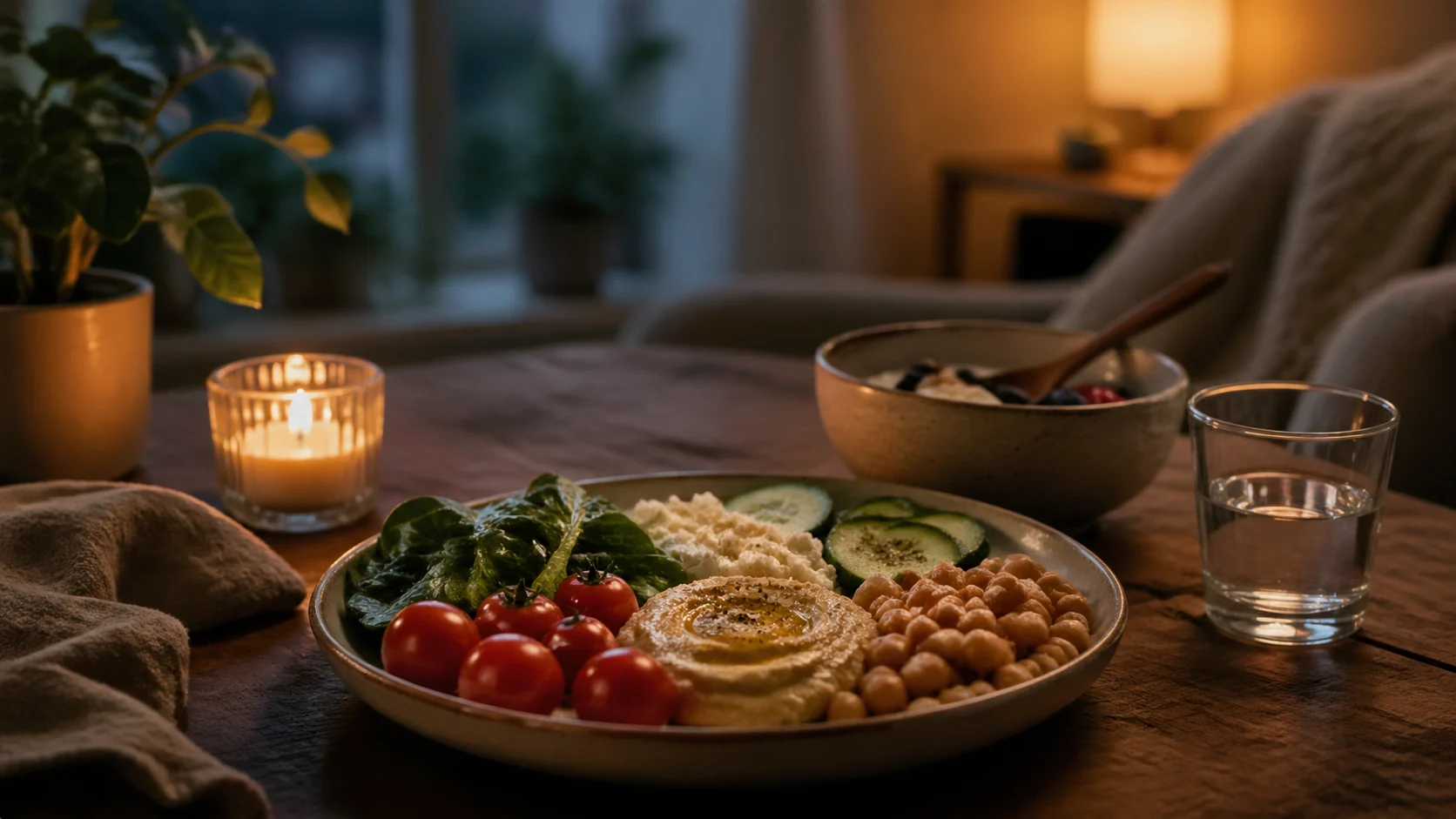
They can also look like:
- A comfort tray dinner: a boiled egg from the fridge, seeded crackers, apple slices, cheddar, and a small handful of nuts. More assembled than cooked, yet still grounding.
- A warm bowl from almost nothing: frozen quinoa or rice, canned lentil soup, and a swirl of olive oil with black pepper. Soft, warm, and enough.
- A breakfast-for-dinner moment: Greek yogurt with berries and granola, plus toast with peanut butter. Gentle, familiar, and surprisingly steadying.
- A no-recipe taco plate: rotisserie chicken tucked into tortillas with bagged slaw and salsa. Five minutes, maybe less.
When a meal is easy enough to happen, it becomes nourishing in a way perfection never could.
Why “Random Food” Sometimes Feels Better Than Forced Meal Prep
Many women carry a quiet shame around these pieced-together dinners, as if food only “counts” when it looks planned. But healthy meals when you don’t want to cook are often built from what is already available, and that can be a sign of wisdom rather than failure.
There is also a nervous-system side to this. When someone is overtired or overstimulated, a complicated recipe can feel like one more decision pile. A simpler meal may help the body settle faster. In that sense, ease is not the enemy of health. Ease can be part of health.
This is especially true for women with a history of dieting. If dinner becomes too restrictive, too light, or too joyless, the evening often ends with grazing, cravings, or the sense that something is still missing. A more balanced low-effort meal can reduce that cycle by offering both nourishment and comfort in the same breath.
A Gentle Grocery Rhythm for Future Tired Nights
She does not need a full meal-prep Sunday to support herself later in the week. A softer rhythm works better for many lives. Keeping just a few “bridge foods” in the kitchen can make healthy meals when you don’t want to cook much easier to reach for. Think of these as future kindness foods: the items that stand between exhaustion and takeout that leaves her feeling foggy.
- In the fridge: hard-boiled eggs, rotisserie chicken, dip, washed fruit, cheese, and bagged salad.
- In the freezer: microwaveable rice, frozen dumplings, vegetables, and soup.
- In the pantry: beans, tuna, crackers, nut butter, oats, and a comforting pasta.
With those basics, dinner does not have to begin from zero every night. It can begin from support.
Please note: Every body has its own rhythm, appetite, and nutritional needs. This gentle guide is for educational purposes only and does not replace personalized advice from a healthcare professional or registered dietitian, especially if someone is managing a medical condition, eating disorder, or ongoing digestive concerns.
You Might Also Wonder
Is takeout always less healthy than eating at home?
Not at all. Sometimes takeout is the most supportive option available. A balanced takeout meal with protein, carbohydrates, and some color can absolutely fit into real-life nourishment.
What if I only want snack foods for dinner?
That can still become a meal. Try pairing a few snack-like foods so they hold you longer—something creamy, something crunchy, and something filling often works beautifully together.
How can I eat better on tired nights without meal prepping everything?
Think smaller. Keeping a handful of easy staples around is often more sustainable than preparing full meals in advance. Support beats perfection here.
Why do I keep wanting sweets after dinner when I barely ate?
If dinner was too light or missing satisfaction, the body may still be asking for energy. Adding more substance and comfort earlier in the evening can help soften that pull.