
The surprising reason food guilt gets louder when she tries harder
Many women want to eat without guilt, and the gentlest truth is this: guilt usually does not come from eating too much. It often grows from too much pressure, too many food rules, and too little trust in the body. When she stands in the kitchen after a long day, reaching for something sweet is not proof that she has failed. Very often, it is a body asking for comfort, energy, or relief.
There is a common misunderstanding that guilt keeps eating “under control.” In real life, it often does the opposite. Shame tends to make food feel louder, more urgent, more emotionally charged. That is why learning to eat without guilt is not about becoming careless. It is about becoming more honest about hunger, stress, satisfaction, and what support actually looks like.
Food becomes less chaotic when it is no longer carrying the weight of self-punishment.
For many women, especially those who have spent years dieting, food can start to feel like a moral test. But a bowl of pasta on a tired Wednesday night is not a character flaw. A cookie after a hard conversation is not a broken personality. The body is not a machine that performs best under criticism. It responds better to steadiness, nourishment, and compassion.
The “Guilt-to-Gentleness Shift” that changes the whole table
One helpful way to eat without guilt is to practice what Joyini might call the Guilt-to-Gentleness Shift. It is a small mental pivot with a big emotional effect: instead of asking, “Why did I eat that?” she asks, “What was happening in me when I needed that?”
That question softens everything. It opens the door to body signals that are easy to miss in a rushed life:

- Physical hunger — maybe lunch was too light, and by 4 p.m. the body was simply trying to catch up.
- Emotional depletion — perhaps the craving arrived after a draining meeting, when comfort mattered as much as calories.
- Unfinished satisfaction — sometimes a meal was technically balanced, but it did not feel pleasurable, so the search continued.
- Restriction rebound — when certain foods have been labeled off-limits, they often gain more emotional power.
Research has repeatedly observed that restrictive eating patterns are linked with a higher risk of overeating episodes and stronger preoccupation with food. In other words, the tighter the grip, the louder the craving can become. That does not mean all structure is harmful. It means gentle structure works better than fear.
The body is not a project to control. It is a place to come home to.
What it looks like to eat without guilt in ordinary life
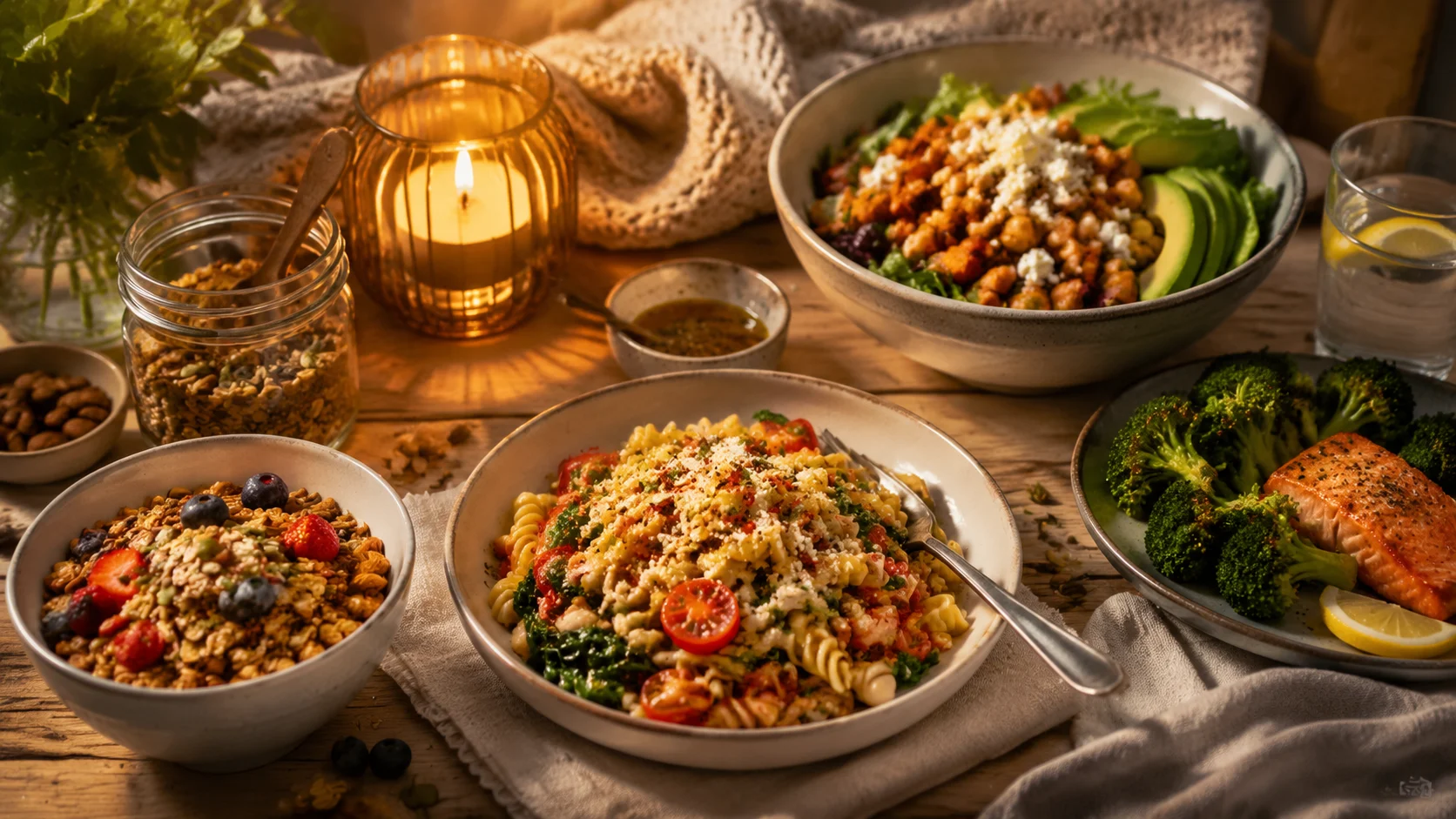
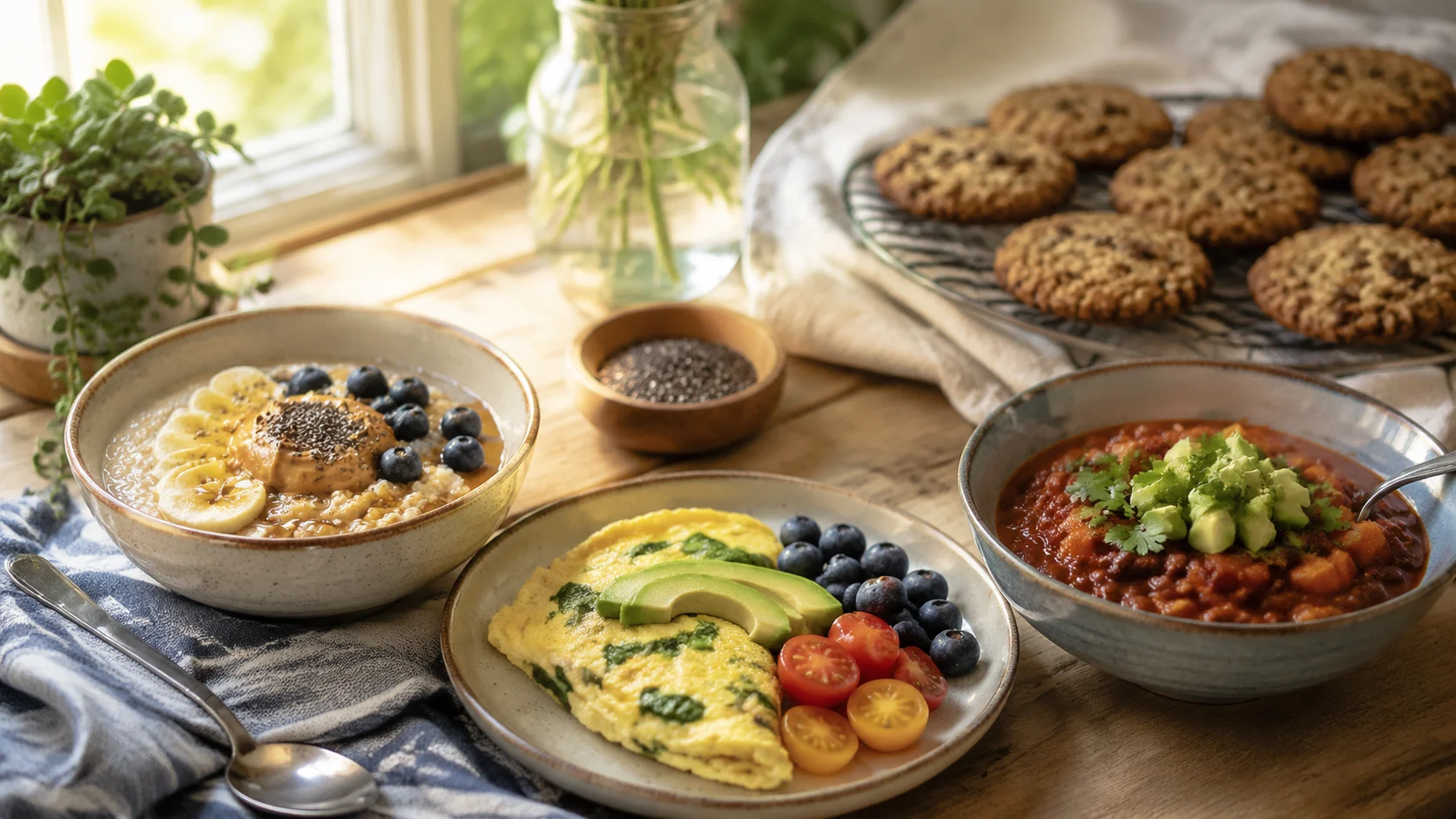
Sometimes this shift is not dramatic. It looks like a woman sitting at her desk at 3 p.m., noticing that the sweet craving might be asking for a real break, not just more discipline. It looks like adding substance before spiral: a warm yogurt bowl with berries and granola, toast with peanut butter, or a handful of nuts beside the chocolate she already wanted.
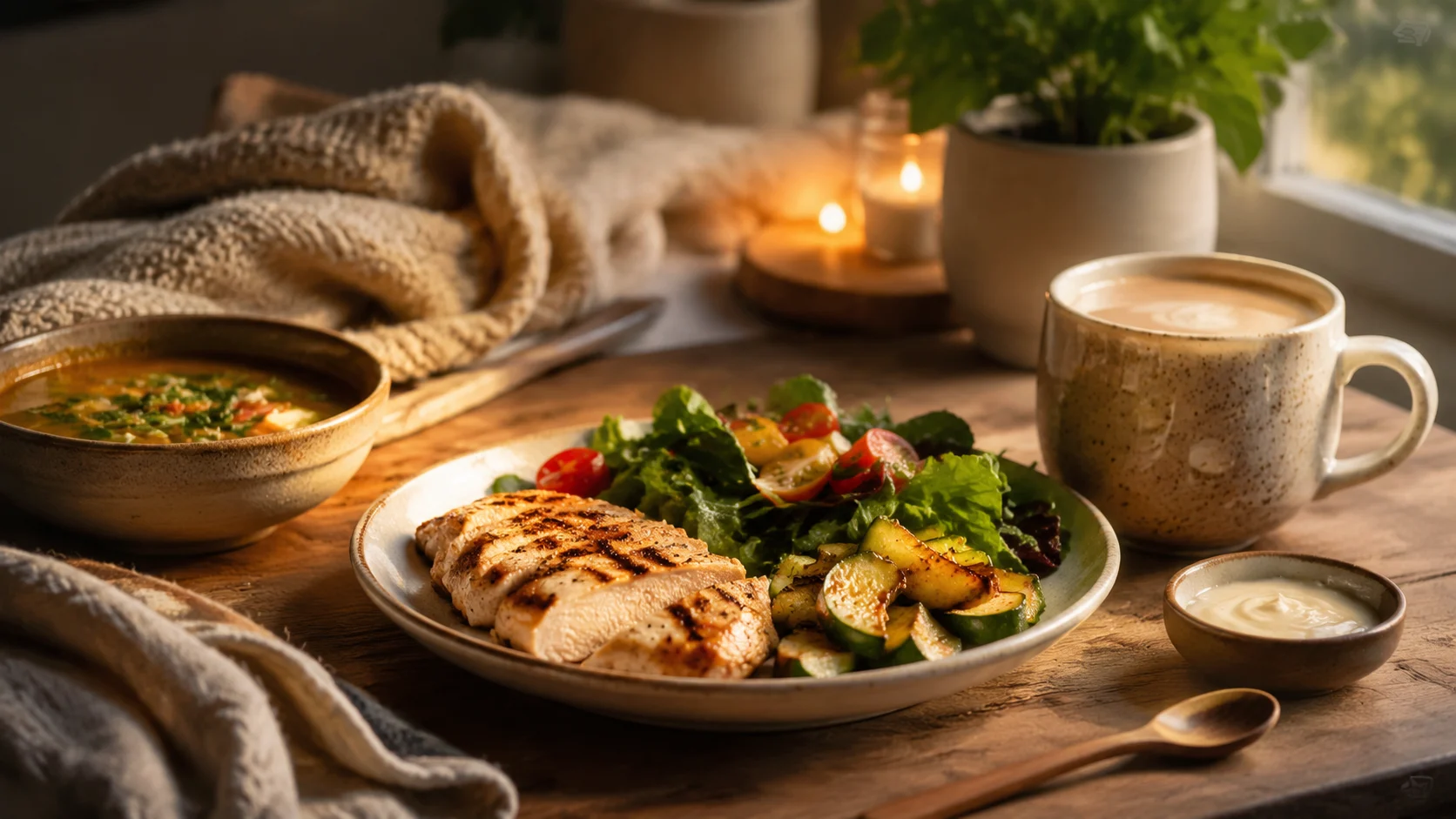
Sometimes it looks like dinner after a chaotic evening. Instead of trying to be “good,” she builds a plate with a little steadiness in it: something comforting, something filling, and something that helps energy last. Think of roasted potatoes beside salmon and greens, or takeout noodles made gentler with edamame and an extra side of vegetables. The point is not perfection. The point is support.
To eat without guilt also means allowing satisfaction to matter. When food is chosen only by rules, the meal can leave the body fed but the mind still searching. A satisfying meal often lands more peacefully than a “healthy” one that feels thin, cold, or joyless.
Small practices that make food feel calmer again
Calmer eating often begins with a few repeatable anchors:
- Pause before self-judgment — not to stop eating, but to notice what the moment is asking for.
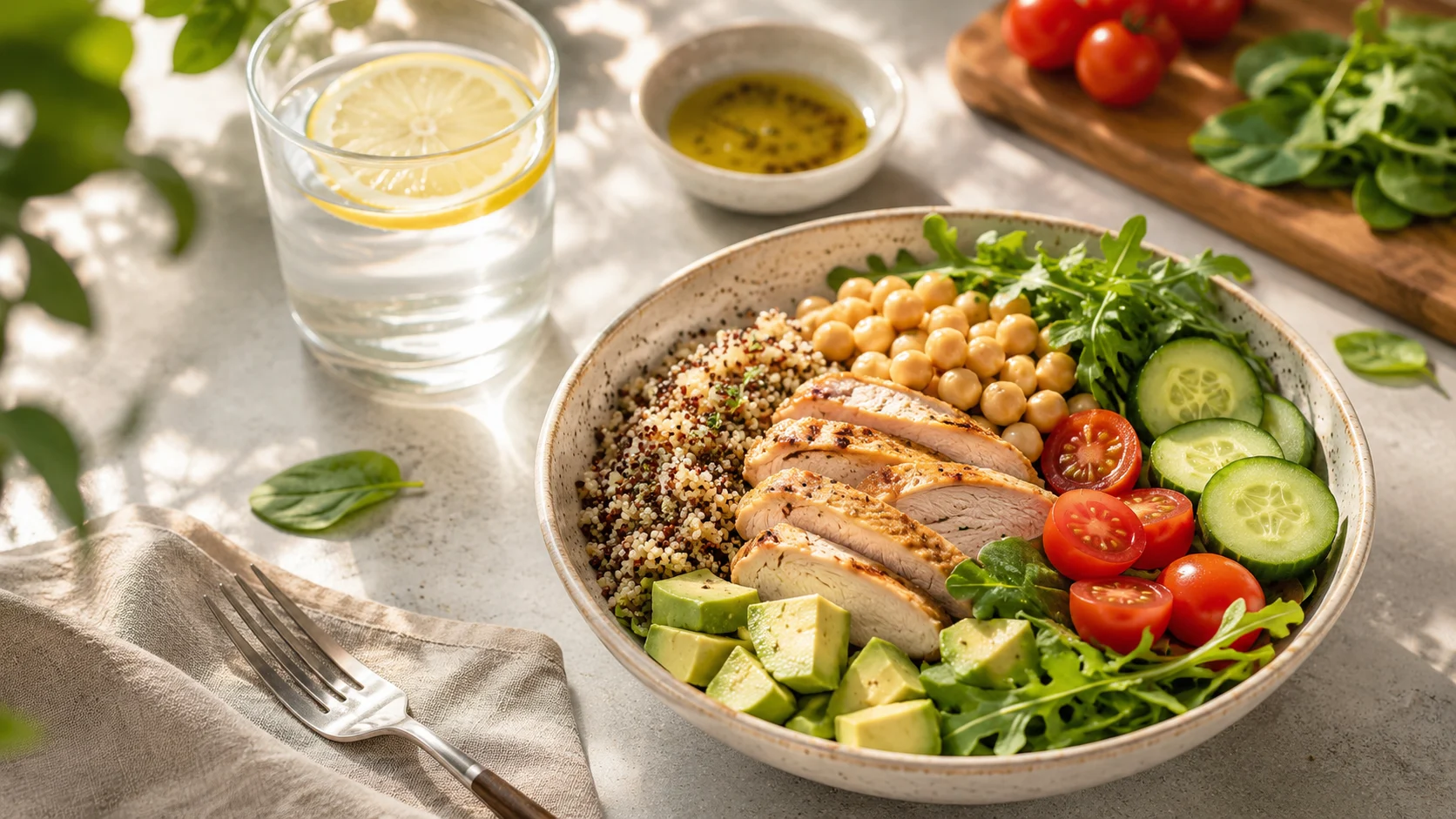
- Add before you subtract — before taking foods away, ask what would make the meal more grounding: protein, fiber, warmth, texture, comfort.
- Keep language soft — replacing “I was bad” with “I was overwhelmed” can change the nervous system response.
- Let one eating moment stay one eating moment — one snack, one dessert, one overeating episode does not need to become a story about the whole day.
For women healing their relationship with food, these small practices matter because they lower emotional noise. And when the noise gets quieter, it becomes easier to eat without guilt, notice fullness, and trust hunger again.
Please note: Every body has its own rhythm, history, and needs. This gentle guide is for educational purposes only and does not replace personalized advice from a registered dietitian, physician, or mental health professional, especially if eating feels distressing or out of control.
You Might Also Wonder
What if I still feel guilty after eating dessert, even when I know logically it is okay?
That happens more often than many women admit. Guilt can be an old reflex, especially after years of dieting. Instead of arguing with the feeling, it can help to sit beside it and ask what it learned to fear. Repetition matters here; safety with food is built slowly.
How can someone eat without guilt if stress makes her want snacks every night?
Night eating is often about more than hunger. Sometimes the evening is the first quiet moment when exhaustion catches up. A more supportive dinner, a planned evening snack, and a little non-food comfort can reduce the urgency without shame.
Does eating without guilt mean ignoring nutrition?
Not at all. It means nutrition is approached with care rather than punishment. Balanced meals, steady energy, and satisfaction can all belong at the same table.
What if she keeps eating past fullness?
That can be a body signal too. It may point to restriction earlier in the day, emotional fatigue, or meals that do not feel satisfying enough. Curiosity usually reveals more than criticism.