
When Fast Food Isn’t the Real Problem
She stands in the kitchen at 6:40 p.m., shoulders heavy, brain louder than her hunger. In moments like this, healthy convenience meals can be one of the most supportive ways to eat—not a shortcut, not a failure, but a form of care. The common belief is that eating well must begin with chopping, sautéing, and planning ahead. Often, the opposite is true. Sometimes the meal that steadies the body is the one that asks the least from an already tired person.
For many women, the hardest part of dinner is not knowing what nutrition means in real life when energy is low. A balanced option might look like a warm bagged soup poured into a bowl with a few slices of rotisserie chicken, or microwave rice softened under steam beside frozen vegetables with olive oil and salt. These healthy convenience meals work because they lower friction while still offering protein, carbohydrates, fat, and comfort—the quiet quartet that helps support satiety and steadier energy.
Body care does not begin when life becomes calm. It begins in the middle of the mess.
The Ease Plate Method
Instead of asking a tired woman to “cook properly,” it helps to give her something gentler: the Ease Plate Method. It is a simple way to build healthy convenience meals from what is already within reach.
- One anchor — something grounding, like microwave brown rice, whole grain toast, a warm tortilla, or instant oats. This gives the body quick reassurance that enough energy is coming.
- One steadying protein — think Greek yogurt, canned salmon, boiled eggs, tofu cubes, deli turkey, or edamame. Protein helps a meal linger a little longer in the body.
- One soft color — frozen broccoli, baby carrots, cherry tomatoes, soup vegetables, or a handful of greens folded into something warm. It does not need to be elaborate to count.
- One comfort note — avocado, shredded cheese, hummus, pesto, butter, nuts, or a drizzle of dressing. This is not extra. It is part of what makes food emotionally and physically satisfying.
Research often points in this same direction. For example, studies have observed that meals containing protein and fiber tend to support fullness more than meals built mostly around refined carbohydrates alone. That does not mean every meal must be perfect. It simply means a little structure can help the body feel safer and more settled.
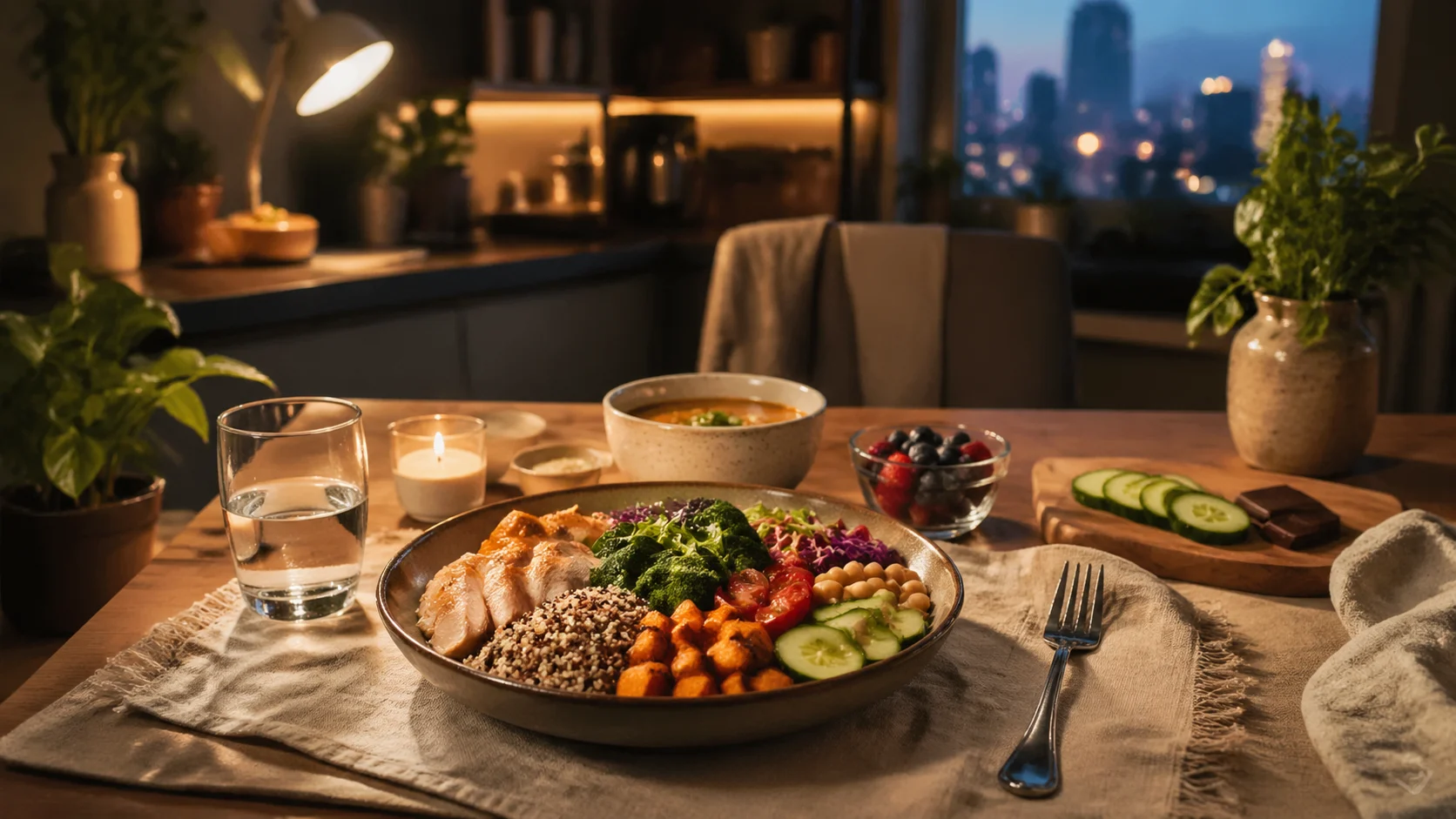
What Healthy Convenience Meals Can Look Like at 7 p.m.
There is no prize for making dinner harder than it needs to be. A few combinations can carry a surprising amount of nourishment:
- A supermarket comfort bowl — microwave rice, canned beans, salsa, shredded lettuce, and a spoonful of guacamole. It comes together in minutes and still feels like a real meal.
- A tired-night breakfast plate — scrambled eggs, toast, and berries or sliced cucumber. Familiar, quick, and far kinder than skipping dinner and grazing all night.
- A freezer-to-table pairing — frozen turkey meatballs over pasta with jarred marinara and spinach wilted into the sauce. Low effort, deeply grounding.
- A gentle snack plate turned dinner — crackers, cheese, apple slices, hummus, and a handful of nuts. Sometimes healthy convenience meals do not look like traditional dinner, and that is perfectly fine.
A meal does not need to be impressive to be deeply supportive.
The Quiet Difference Between Restriction and Support
Many women have been taught to distrust easy food. If it comes from a freezer, a can, or a package, they worry it does not “count” as healthy. But this kind of all-or-nothing thinking often leaves them underfed early in the day and overly vulnerable to intense cravings later at night.
Healthy convenience meals are not about performing wellness. They are about reducing the gap between intention and reality. When the body receives regular nourishment, eating can begin to feel less chaotic. The late-night search for something sweet or crunchy is not always emotional weakness; sometimes it is the echo of a dinner that never really happened.
In that way, convenience can become a form of nervous system support. It helps a busy woman eat before she reaches the edge of exhaustion, where every decision feels sharp and every craving feels louder.
You Might Also Wonder
What if convenience meals feel too processed to be healthy?
Processing exists on a spectrum. A bag of frozen vegetables, canned beans, or plain yogurt is still food that can nourish. The gentler question is not whether a food is perfect, but whether it helps her feel fed, steady, and supported.
What should she buy first if she wants easy meals without overthinking?
A helpful starter list might include microwave grains, canned beans, soup, eggs, rotisserie chicken, frozen vegetables, yogurt, crackers, fruit, and one or two sauces she genuinely enjoys. The goal is ease, not an aspirational pantry.
Can healthy convenience meals help with evening overeating?
Often, yes. When dinner includes enough protein, carbohydrates, and satisfaction, the body is less likely to keep asking for quick energy all evening. It is not about control. It is about meeting needs earlier.
Is it okay if dinner is just a snack plate sometimes?
Yes. If that plate includes something filling, something enjoyable, and enough overall food, it can absolutely function as dinner. Real-life nutrition is allowed to be simple.
Please note: Every body has its own rhythm, appetite, and practical reality. This gentle guide is for educational purposes only and does not replace personalized advice from a qualified healthcare professional or registered dietitian, especially if someone is managing a medical condition, digestive concern, or a complicated relationship with food.