
A softer answer than another set of food rules
Many women looking for how to eat healthier without dieting are not asking for more control. They are asking for relief. The surprising truth is that eating healthier often becomes easier when the body stops feeling restricted. What looks like “lack of discipline” is often a mix of low energy, stress, skipped meals, and the quiet exhaustion of trying to get food exactly right.
When she reaches for something sweet at 4 p.m. after answering messages all day and barely pausing for lunch, the issue is not character. It may simply be that her body has been underfed, overstimulated, or asked to run on fumes. Learning how to eat healthier without dieting begins there: not with punishment, but with understanding.
Body trust does not grow in the soil of fear. It grows where nourishment is repeated gently enough to feel safe.
One small framework can help: the Steady Plate Rhythm. Instead of chasing perfection, she returns to a simple question several times a day: “What would help me feel steadier for the next few hours?” That question changes everything. It shifts the focus from rules to support.
When “healthy eating” stops meaning restriction
For many women, “eating healthy” has been tangled up with smaller portions, cutting out comfort foods, or ignoring hunger until later. But real-life nutrition looks different. It usually looks like adding support before taking anything away.
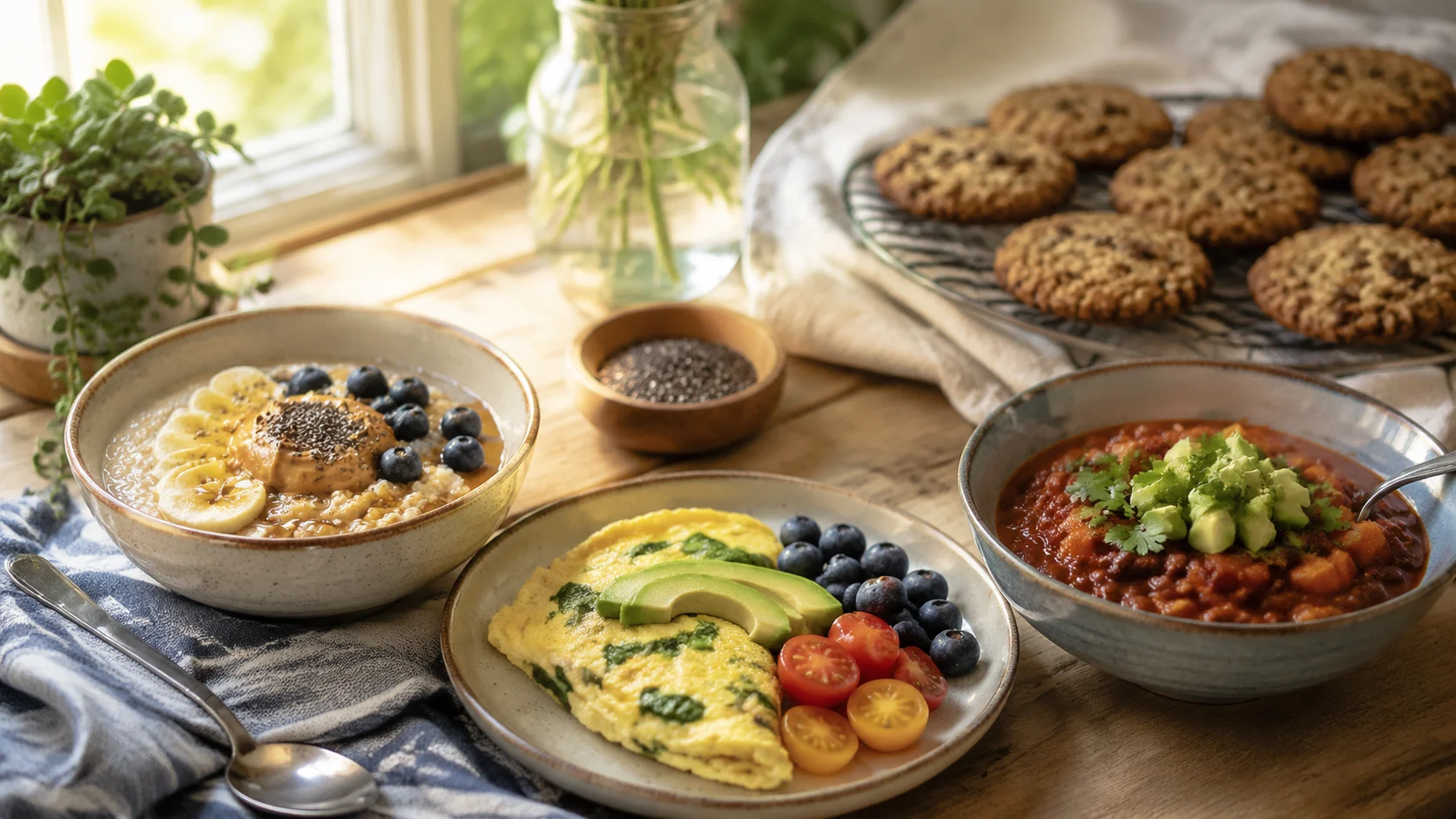
That might mean letting breakfast become more grounding with toast, eggs, and fruit instead of coffee alone. It might mean turning a quick lunch into something more balanced by pairing a warm bowl of soup with a sandwich instead of pretending crackers will carry the afternoon. It might mean ordering takeout and adding a side that brings more ease—rice, vegetables, or a protein—rather than spiraling into food guilt.
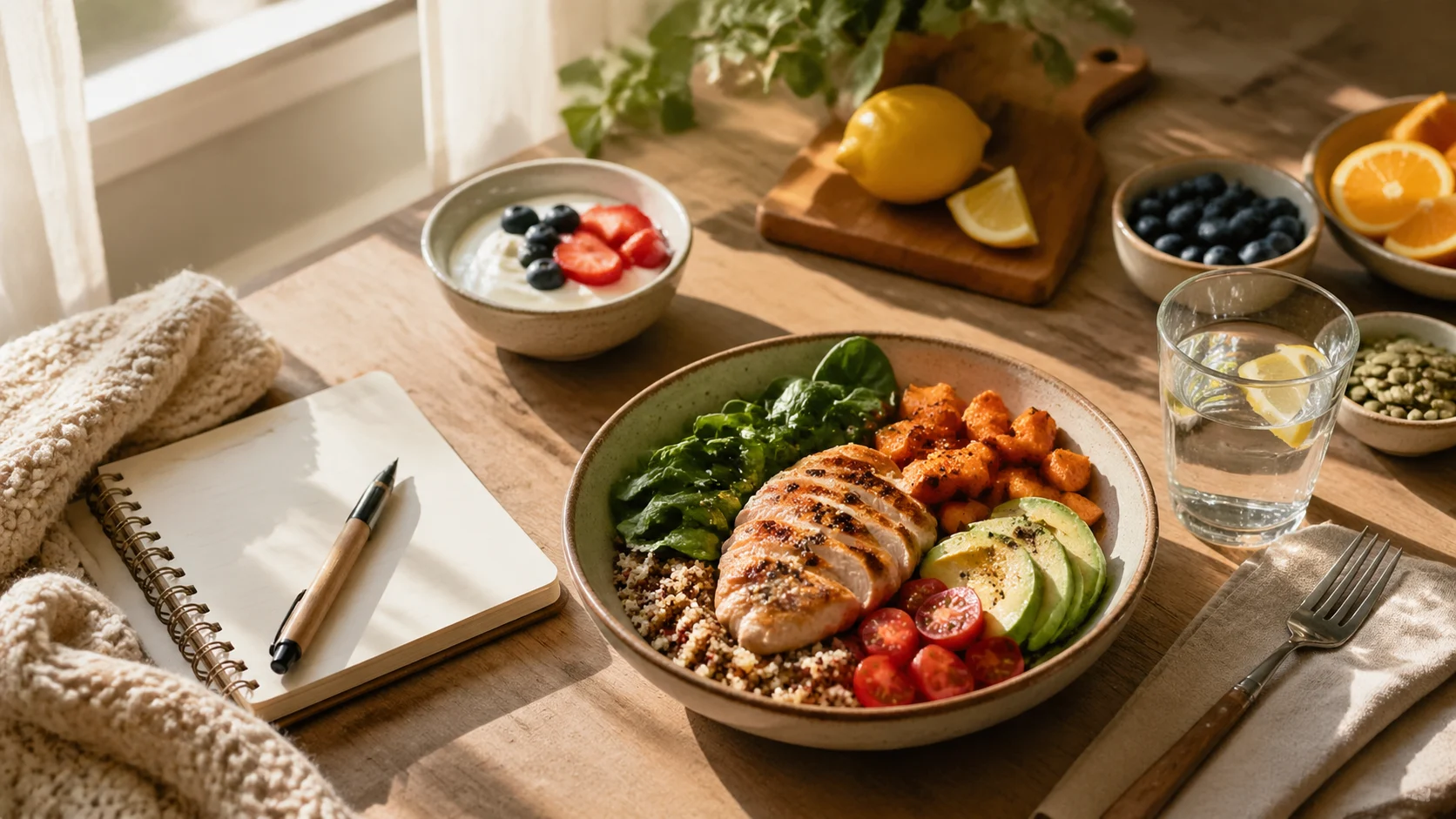
Research has repeatedly observed that protein, fiber, and regular eating patterns can help support satiety and steadier energy. For example, higher-protein meals have been linked with improved fullness, and fiber intake is associated with better appetite regulation and metabolic health. None of this has to be turned into a rigid formula. It is simply useful information a woman can carry into real life.
The Steady Plate Rhythm in everyday life
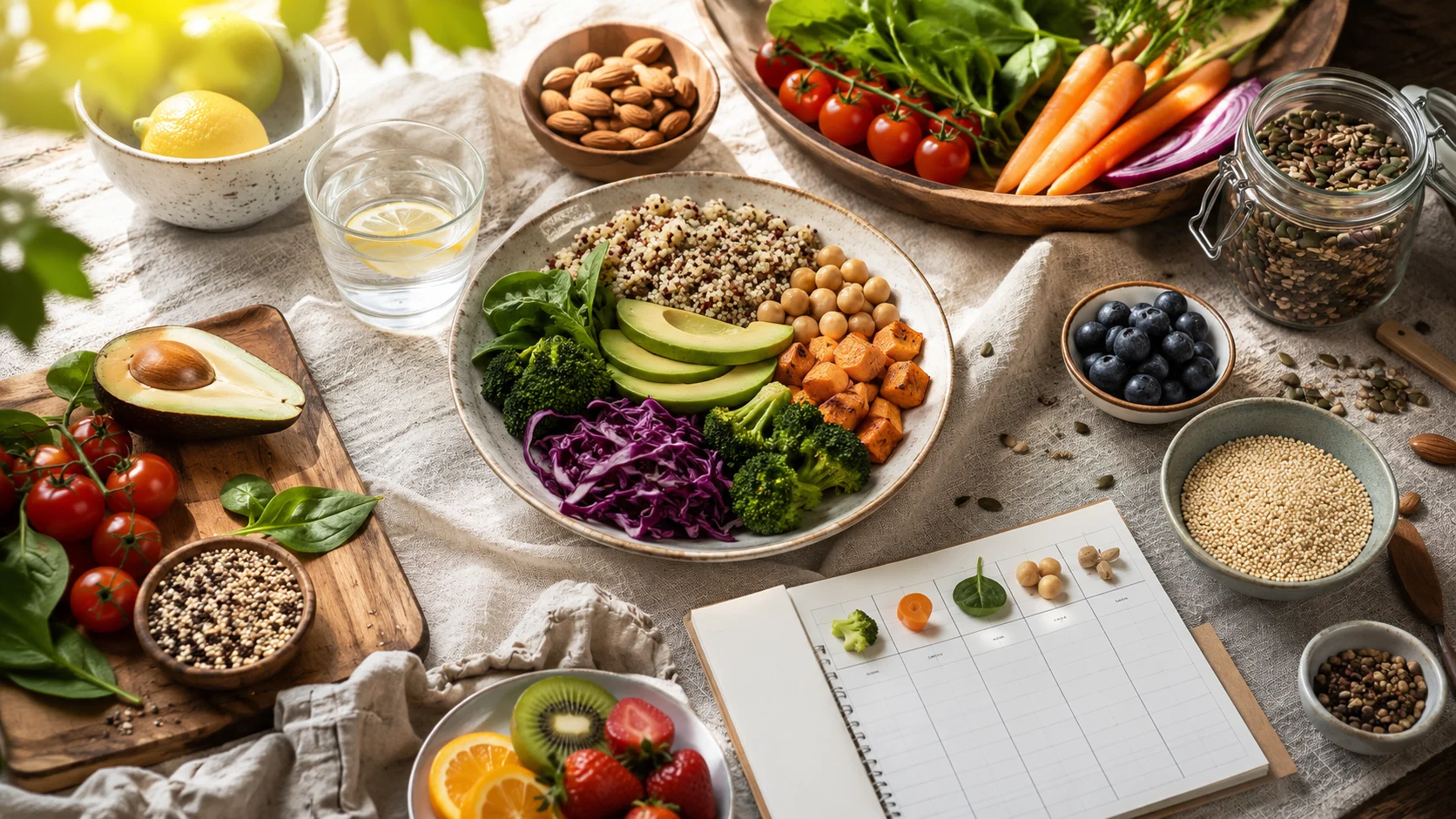
If she wants a practical way to explore how to eat healthier without dieting, the Steady Plate Rhythm can be pictured in a few gentle anchors:
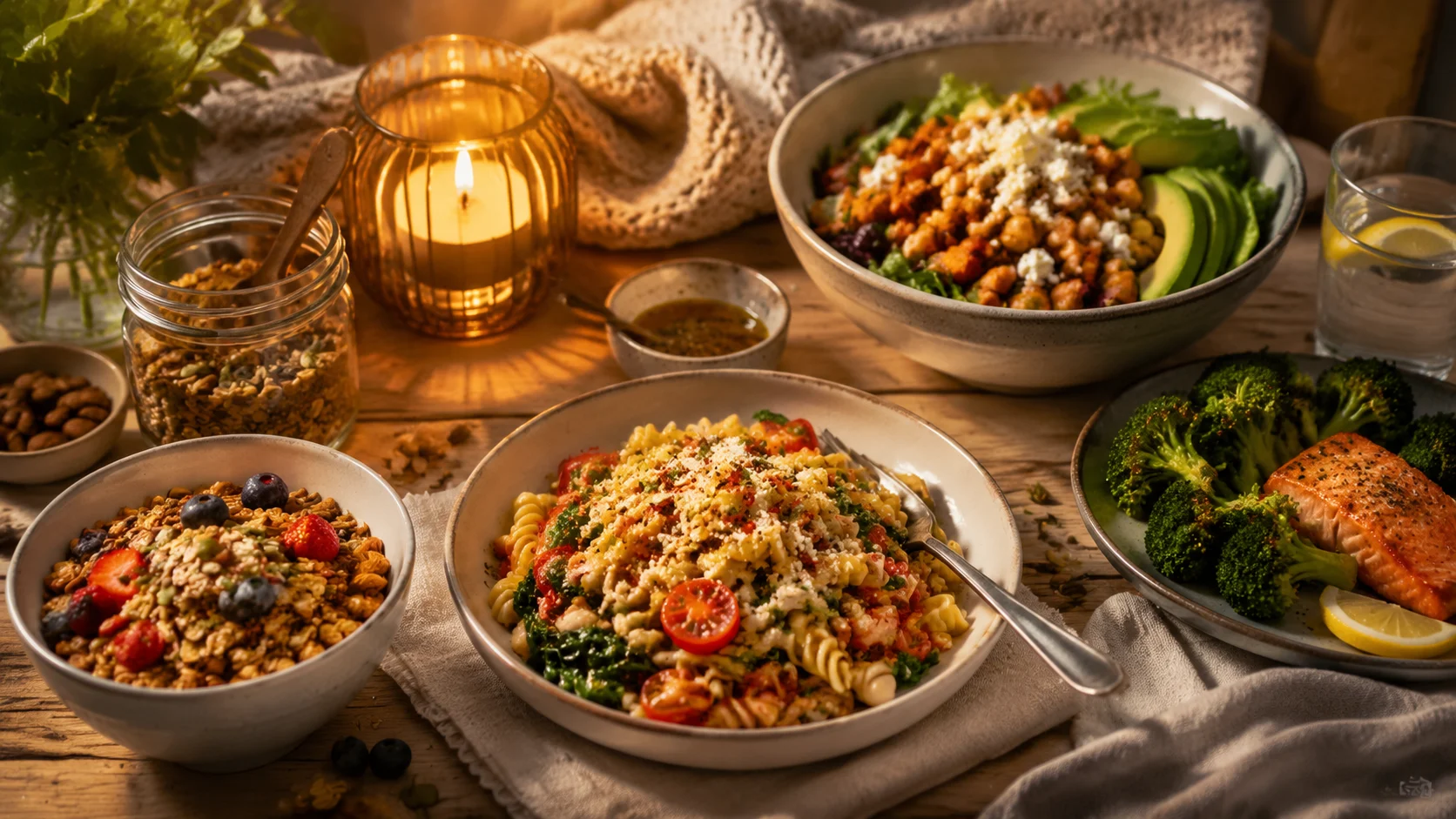
- Start with something grounding. In the morning, that could be a bowl of warm oatmeal with crushed walnuts and berries, or yogurt with granola and sliced banana. The goal is not “light.” The goal is supported.
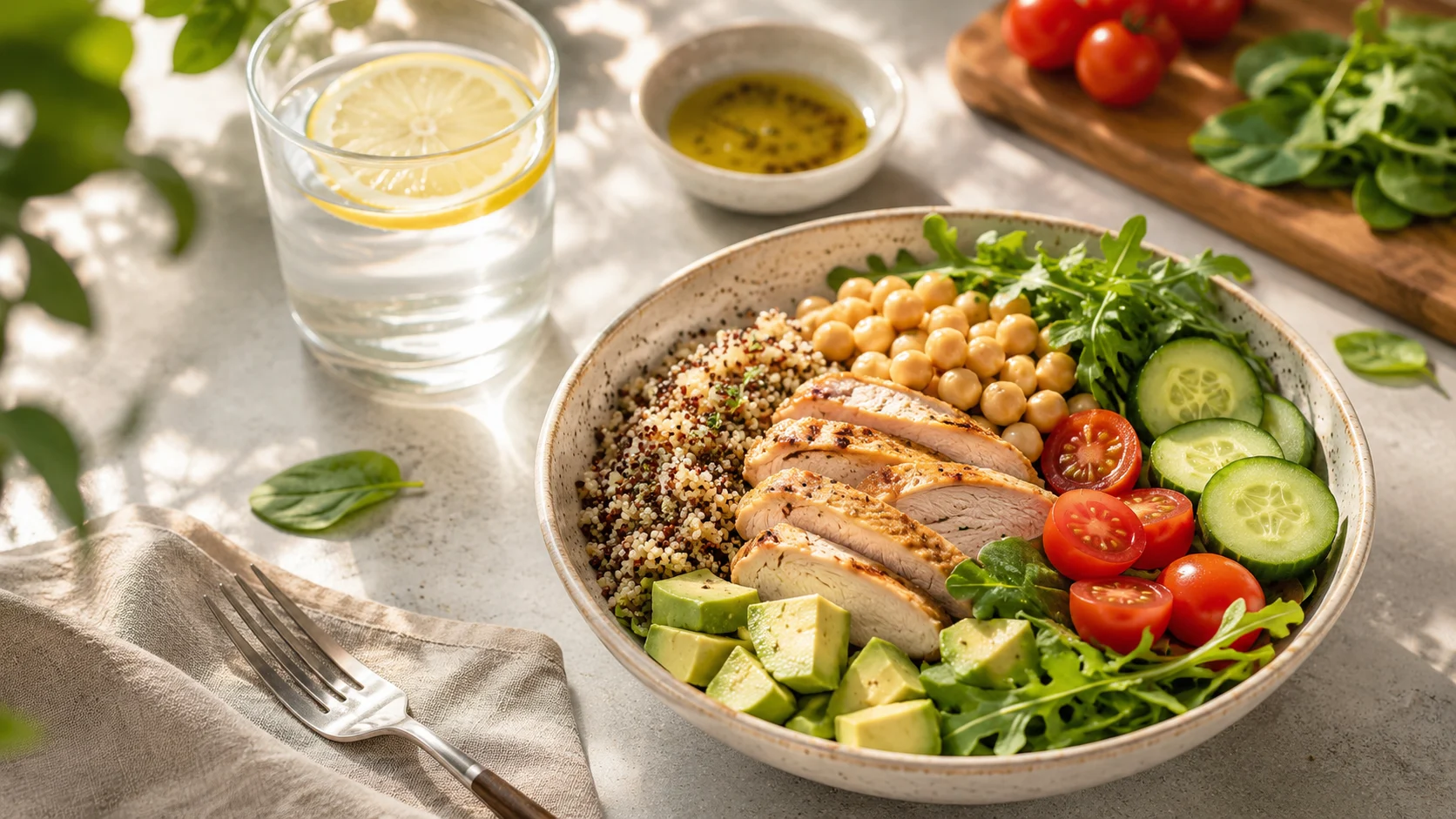
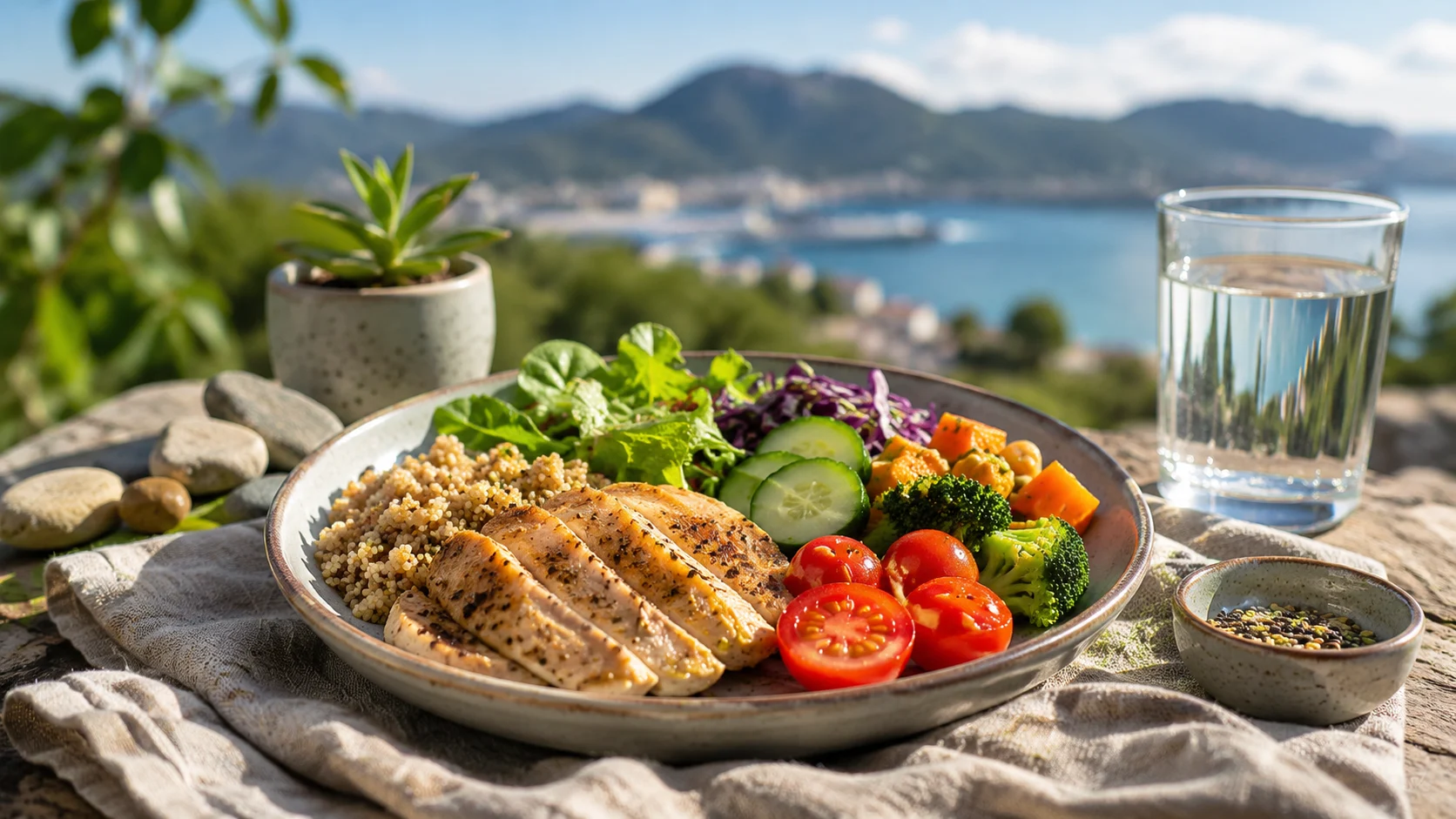
- Let meals carry more than one job. A meal can comfort and nourish at the same time. Think of pasta twirled with salmon and greens, or a burrito bowl with beans, rice, avocado, and roasted vegetables that actually keeps her going.
- Make snacks do real work. Instead of eating whatever appears in a moment of desperation, she can keep easy pairings nearby: an apple with peanut butter, cheese with crackers, or a soft-boiled egg beside a piece of fruit.
- Notice the gap before the craving. Many intense cravings are not random. They often arrive after long stretches of under-eating, emotional strain, or poor sleep.
A balanced way of eating is not a performance. It is a quiet conversation between hunger, energy, pleasure, and care.
What this looks like on tired, messy, ordinary days
The most compassionate version of how to eat healthier without dieting has to survive real life. It has to survive long meetings, school pickup, PMS, low motivation, and evenings when cooking feels impossible.
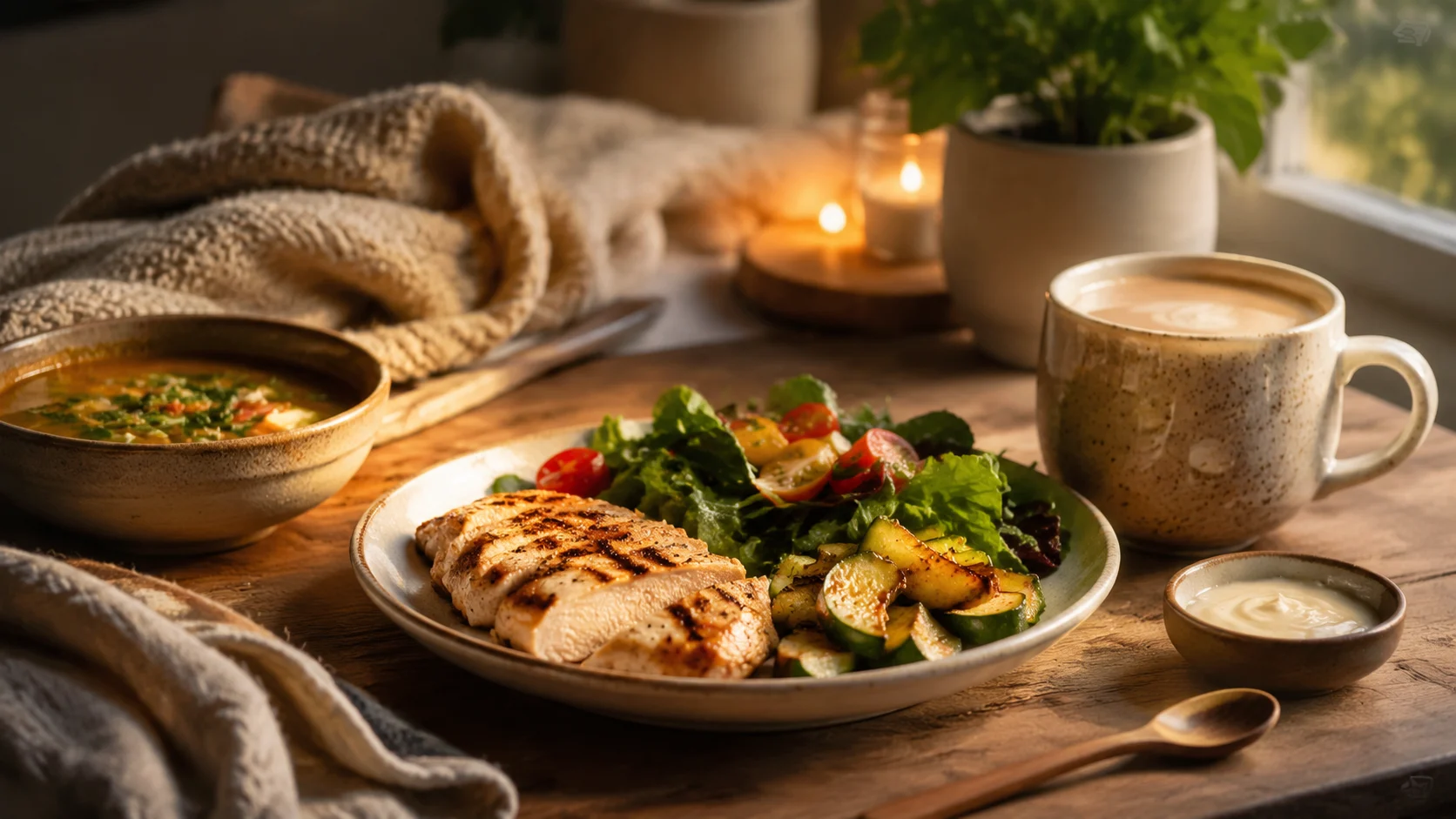
On those days, healthier eating may look wonderfully unglamorous: frozen dumplings beside edamame, toast with cottage cheese and jam, a rotisserie chicken folded into a bagged salad, or takeout noodles made more filling with tofu or an extra egg. These choices matter not because they are flawless, but because they help the body feel more steady and less chaotic.
There is also room for comfort. Food freedom does not mean ignoring nutrition, and gentle nutrition does not mean removing pleasure. Very often, the healthiest shift is learning that satisfaction is part of nourishment. When a woman allows enough food, enough flavor, and enough consistency, the urge to swing between “being good” and overeating often softens.
You Might Also Wonder
What if I want to eat healthier but I keep craving sugar in the afternoon?
That craving may be less about sugar itself and more about an energy dip. A more supportive lunch—something with protein, fiber, and enough carbohydrates—often helps. So does eating lunch before she is ravenous.
Can I learn how to eat healthier without dieting if I’ve dieted for years?
Yes, though it can feel unfamiliar at first. Long-term dieting often teaches a woman to mistrust hunger, fullness, and satisfaction. Rebuilding that trust usually starts with regular meals, gentler self-talk, and fewer food rules.
Do I need to stop eating comfort food?
No. Comfort food can absolutely belong in a balanced way of eating. Often the more helpful question is how to pair comfort with support, so the meal feels satisfying and steady rather than chaotic.
What if I’m too busy to make balanced meals every day?
Balanced does not have to mean elaborate. A grocery-store wrap with fruit, a microwaved grain bowl with beans, or toast with eggs can all count. Real-life nutrition works best when it is simple enough to repeat.
Please note: Every body has its own rhythm, history, and needs. This gentle guide is for educational purposes and is not a substitute for personalized advice from a registered dietitian, physician, or other qualified healthcare professional.