
The feeling after eating is not a moral verdict
How to stop feeling guilty after eating often begins with one surprising shift: the guilt is usually not about the food itself. It is often the echo of old rules, rushed days, stress, and years of being told that eating must always be earned. When a woman stands in her kitchen after dinner, or opens a snack in the quiet glow of a laptop at 9 p.m., the discomfort she feels may seem like proof that she did something wrong. More often, it is a sign that her relationship with food has been shaped by pressure, not failure.
At Joyini, this moment is worth meeting with softness. Food guilt tends to grow where hunger has been ignored, where comfort has been judged, and where the body has been treated like a problem to solve. Learning how to stop feeling guilty after eating is less about becoming more disciplined and more about becoming more understanding.
Body signals are not misbehavior. They are messages looking for a kinder translation.
There is also a practical layer here. Studies on restrictive eating patterns have repeatedly observed that food restriction is associated with more preoccupation with food, stronger cravings, and a higher likelihood of overeating later. In other words, the cycle is often biological and emotional, not a lack of character.
When guilt arrives, use the Pause–Name–Nourish method
To understand how to stop feeling guilty after eating, it helps to have a small framework ready before shame takes over. Joyini’s gentle micro-framework is the Pause–Name–Nourish method. It is simple enough to remember in real life, even on tired evenings.
- Pause — Before apologizing to herself in her own mind, she takes one breath. Not to fix the moment. Just to slow it down. Guilt loses some of its power when it is not allowed to sprint.
- Name — She quietly asks what is actually here: physical hunger, stress, loneliness, PMS, mental exhaustion, or the sting of breaking a food rule. Naming the feeling creates space between the meal and the meaning attached to it.
- Nourish — Instead of punishing herself, she asks what support would help next. That might be a balanced next meal, a glass of water, a walk to reset her mind, or simply permission to let the moment end.
This is how to stop feeling guilty after eating in a way that feels human. Not dramatic. Not perfect. Just steady.

The hidden roots of food guilt in ordinary life
Sometimes guilt appears after dessert. Sometimes it arrives after takeout on a chaotic Tuesday. Sometimes it follows the second handful of cereal eaten while standing at the counter, too tired to make a full dinner. In many cases, the guilt is fed by three quiet forces:
- Food rules that sound like facts — ideas such as “carbs at night are bad” or “comfort food means I lost control.” These rules often slip into the mind so deeply that they feel like truth.
- Restriction earlier in the day — when breakfast was only coffee, lunch was rushed, and the body reached evening underfed, eating more later is not failure. It is a predictable response.
- Stress and emotional depletion — when a woman has spent all day holding everything together, food can become one of the fastest forms of comfort available. That does not make her weak. It makes her human.
The body is not a project to control; it is a place to come home to.
For many readers, how to stop feeling guilty after eating becomes clearer when they realize the guilt was never proof of wrongdoing. It was often the residue of being disconnected from hunger, satisfaction, and ease.
What helps in the next meal matters more than replaying the last one
One of the gentlest ways to practice how to stop feeling guilty after eating is to refuse the old compensation ritual. No skipping the next meal. No promise to “be better tomorrow.” No dramatic reset. These reactions tend to keep the cycle alive.
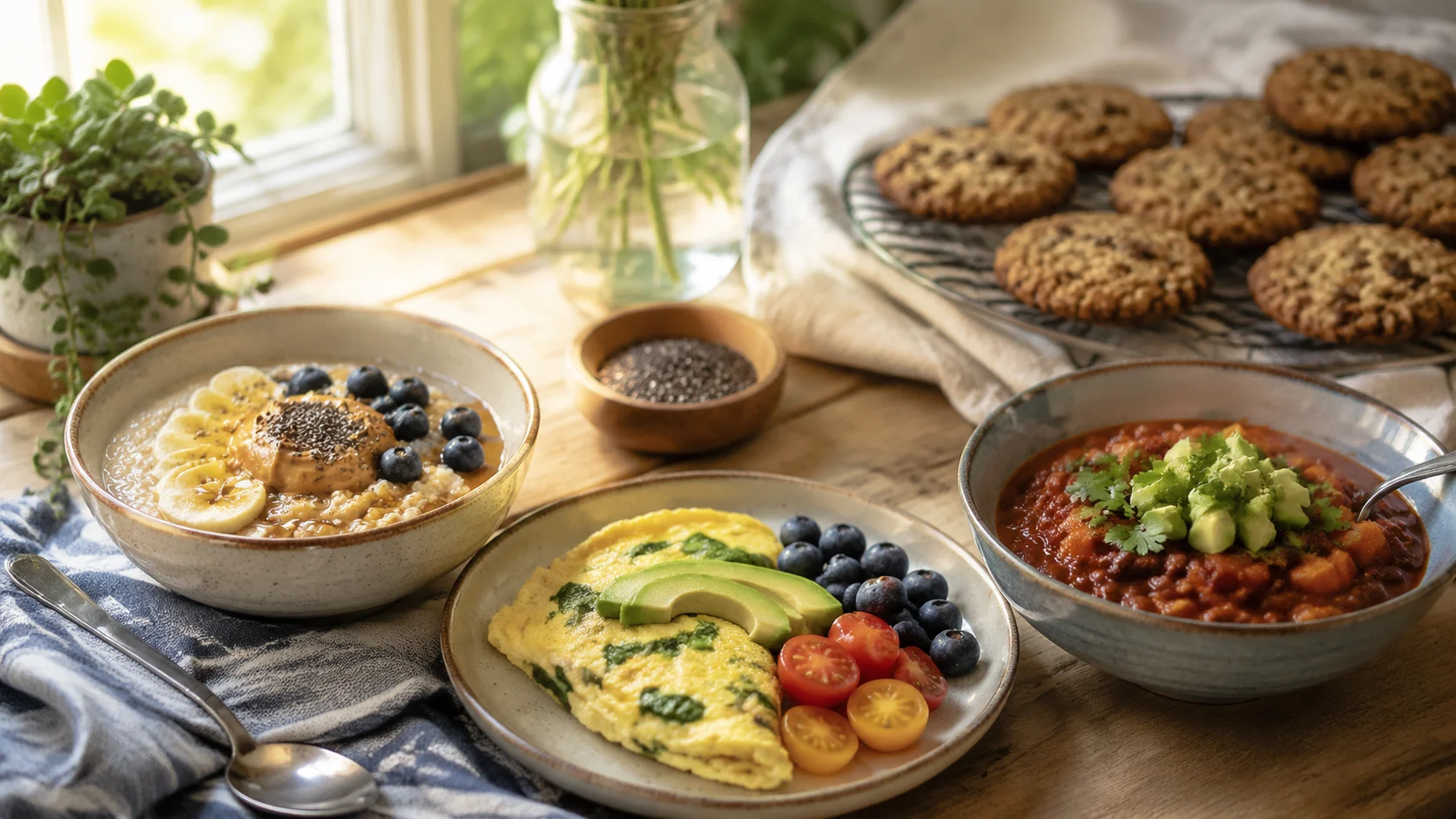
Instead, the next meal can be calm and grounding: perhaps a bowl of warm oatmeal with crushed walnuts and sliced banana on a gray morning, or a plate with toast, eggs, and berries that asks very little from a tired brain. A balanced meal is not a punishment for eating. It is a way of telling the body, you are still safe here.
It can also help to widen the lens. If guilt shows up often, a woman may want to notice patterns: Does it hit hardest before her period? After a stressful workday? On days when she waits too long to eat? Those clues are body signals, not accusations.
Questions that often come up
What if the guilt hits right after dessert, even when I enjoyed it?
That usually points to an old food rule, not a problem with the dessert. Pleasure and nourishment can exist together. The work is often in noticing the rule and choosing not to obey it automatically.
How do I stop feeling guilty after eating at night?
Night eating is often linked to under-eating earlier, stress, or simple fatigue. Rather than judging the timing, it helps to ask whether the body went through the day without enough support. A steadier daytime rhythm can soften nighttime urgency.
What if I keep promising to “make up for it” the next day?
That urge is common, but it often extends the guilt-restriction-craving loop. The kinder move is to eat normally the next day, with enough protein, fiber, and comfort to help the body trust that food is not about to disappear again.
Can emotional eating and real hunger happen at the same time?
Yes, very often. Human eating is rarely only physical or only emotional. A person can be hungry, tired, and in need of comfort all at once. That complexity deserves understanding, not shame.
Please note: Every body has its own rhythm, history, and needs. This article is for educational purposes only and does not replace personalized guidance from a qualified healthcare professional or registered dietitian, especially if food guilt, binge eating, or anxiety around food feels persistent or overwhelming.