
When exhaustion isn’t laziness—it’s a signal
For the woman standing in the kitchen with her bag still on her shoulder, wondering what to eat when too tired to cook, the answer does not need to be complicated. On low-energy nights, the kindest meals are often the simplest ones: something with protein, something comforting, and something easy to reach. Fatigue is not a character flaw. Very often, it is the body asking for steadier fuel, more support, and less pressure.
Many women have been taught to believe that if they were “doing better,” they would chop vegetables after work, simmer a balanced dinner, and feel grateful while doing it. Real life rarely looks like that. Sometimes dinner is assembled, not cooked. Sometimes nourishment begins with opening the fridge and choosing ease on purpose.
That is where Joyini’s gentle micro-framework can help: the Soft Plate Formula. Think of it as a soft landing for tired evenings—anchor, comfort, color. An anchor is the part that helps meals feel steady, like Greek yogurt, eggs, tuna, rotisserie chicken, tofu, or beans. Comfort is the food that makes the meal feel emotionally possible, like toast, rice, noodles, or a warm tortilla. Color is anything that adds freshness with almost no effort, such as baby carrots, frozen peas, sliced cucumber, salsa, or berries.
Body care does not have to look impressive to be real.
The quiet art of assembling dinner instead of performing it
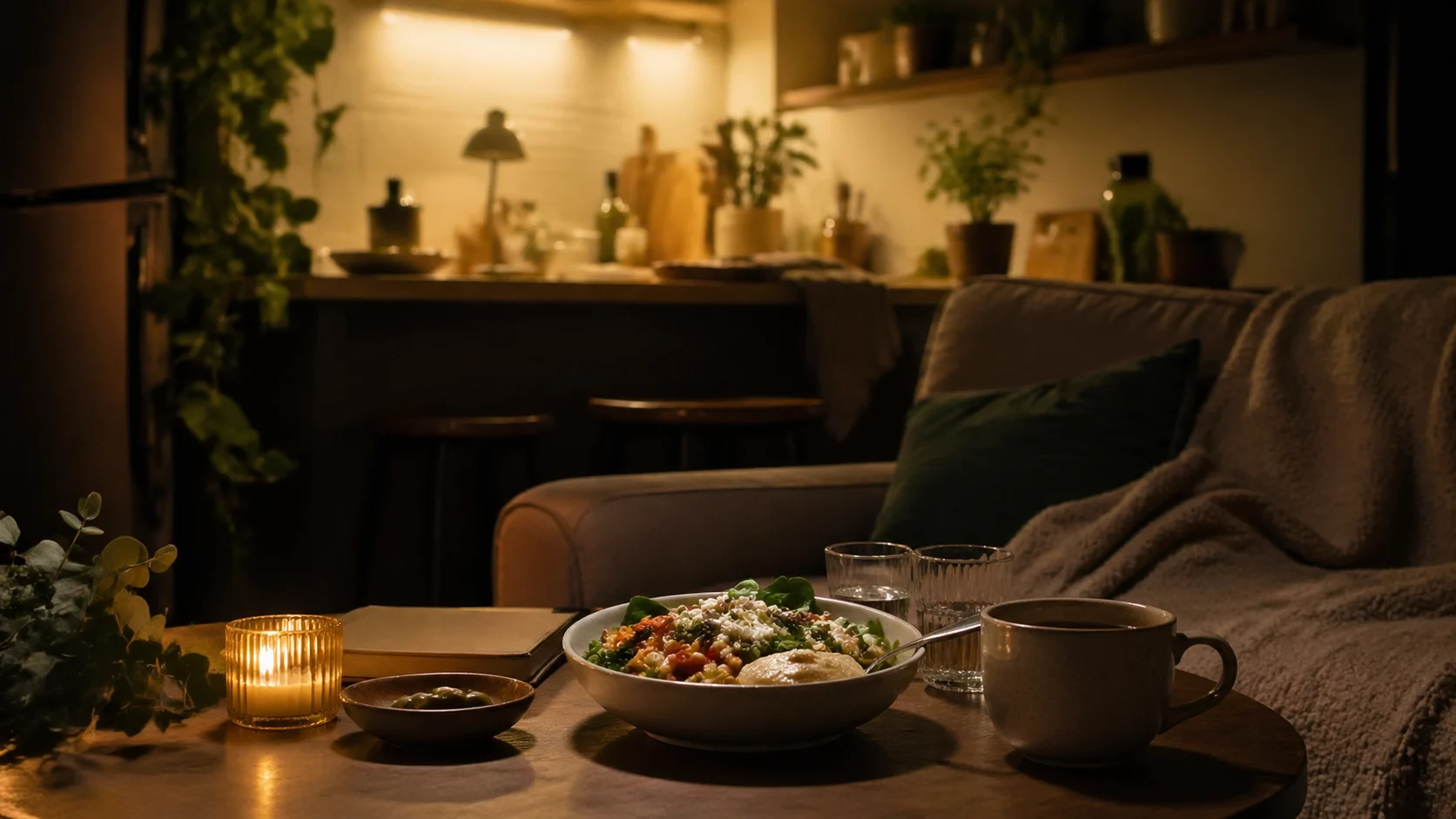
If she is asking what to eat when too tired to cook, she usually does not need another strict plan. She needs permission to lower the bar without abandoning nourishment. These meal ideas work because they ask very little while still offering steady energy:
- Toast with eggs and fruit — A pair of eggs on toast, with a handful of berries or a sliced apple, can feel warm, grounding, and complete in under ten minutes.
- Greek yogurt bowl with extras — A thick bowl of yogurt with granola, nut butter, and banana brings protein, comfort, and a little sweetness when chewing feels like work.
- Rotisserie chicken plate — A few slices of chicken, microwaved rice, and baby carrots with hummus can become dinner before the mind has time to overthink it.
- Bean quesadilla — Mash canned beans into a tortilla with shredded cheese, fold, heat, and serve with salsa. It is soft, salty, and deeply practical.
- Soup plus something — A carton of tomato or lentil soup becomes more filling beside toast, crackers with cheese, or half a sandwich.
- Snack plate dinner — Crackers, turkey slices, cucumber, olives, cheese, and grapes may not look like a traditional meal, but they can still nourish beautifully.
Research has long observed that meals containing protein and fiber tend to support fullness and more stable energy than meals built around refined carbs alone. That does not mean every tired dinner must be perfectly balanced. It simply explains why adding one small anchor—eggs, yogurt, beans, tuna, cottage cheese—can help the evening feel gentler afterward.
A small table for the nights when the brain goes blank
| If the craving feels like… | A gentle meal idea | Why it often helps |
|---|---|---|
| Warm and comforting | Microwaved rice with scrambled eggs and frozen peas | Soft texture, quick warmth, and steadying protein |
| Cold and easy | Greek yogurt with nut butter and banana | Little effort, satisfying, lightly sweet |
| Salty and filling | Turkey sandwich with baby carrots | Familiar, sturdy, easy to assemble |
| Cheesy and soothing | Bean quesadilla with salsa | Comfort food energy with fiber and protein |
| Too tired for “real cooking” | Soup with toast and pre-washed greens | Minimal decisions, still feels like dinner |
What makes a low-effort meal feel better later
One reason women keep searching for what to eat when too tired to cook is that many quick options spike energy fast and then leave them rummaging through the pantry an hour later. The goal is not perfection. It is simply to make tired eating a little more supportive.
- Start with the anchor. Before choosing the comfort food, pick the part that helps the meal hold you a little longer.
- Let comfort stay. Rice, bread, pasta, and tortillas are not the problem. They often make meals feel emotionally reachable.
- Use convenience on purpose. Frozen vegetables, bagged salad, canned soup, and pre-cooked grains are not shortcuts to feel guilty about. They are tools for real-life nutrition.
- Make one decision in advance. Keeping two or three “default dinners” can soften the 6 p.m. mental crash.
The most caring meal is not always the most beautiful one. Often, it is simply the one that meets her where she is.
Questions that often come up
What if takeout is the only thing that sounds possible?
That is still a valid answer. A rice bowl with chicken, a burrito bowl, soup and sandwich, or sushi can all work well. When possible, adding protein or a side with fiber may help energy feel steadier, but it does not need to become a rule.
What if I’m too tired to eat anything “healthy”?
Then healthy may be too narrow a word for the moment. The better question is: what feels doable and supportive right now? A frozen waffle with peanut butter is more nourishing than skipping dinner and ending the night feeling shaky.
Why do I want sweets so badly when I’m exhausted?
Often because the body wants quick energy. That craving is not random. Pairing something sweet with staying power—like chocolate with yogurt, or toast with jam and cottage cheese—can feel more satisfying than trying to resist it.
How can I stop overthinking what to eat when too tired to cook?
Choose three default meals and keep their ingredients visible. Repetition can feel surprisingly kind when decision fatigue is loud.
Please note: Every body has its own rhythm, appetite, and needs. This gentle guide is for educational purposes and does not replace personalized advice from a doctor or registered dietitian, especially if fatigue feels intense, persistent, or tied to an underlying health concern.