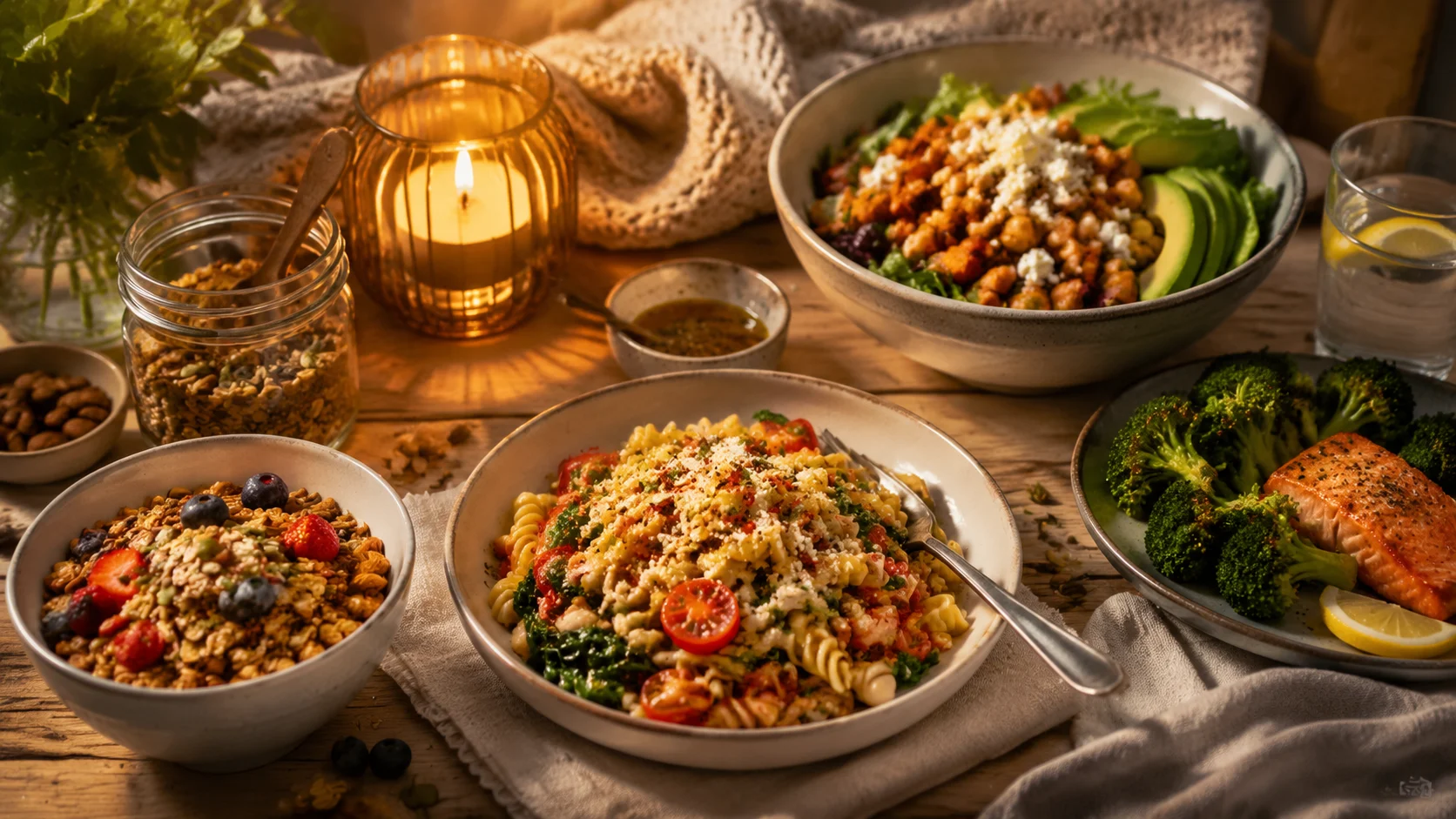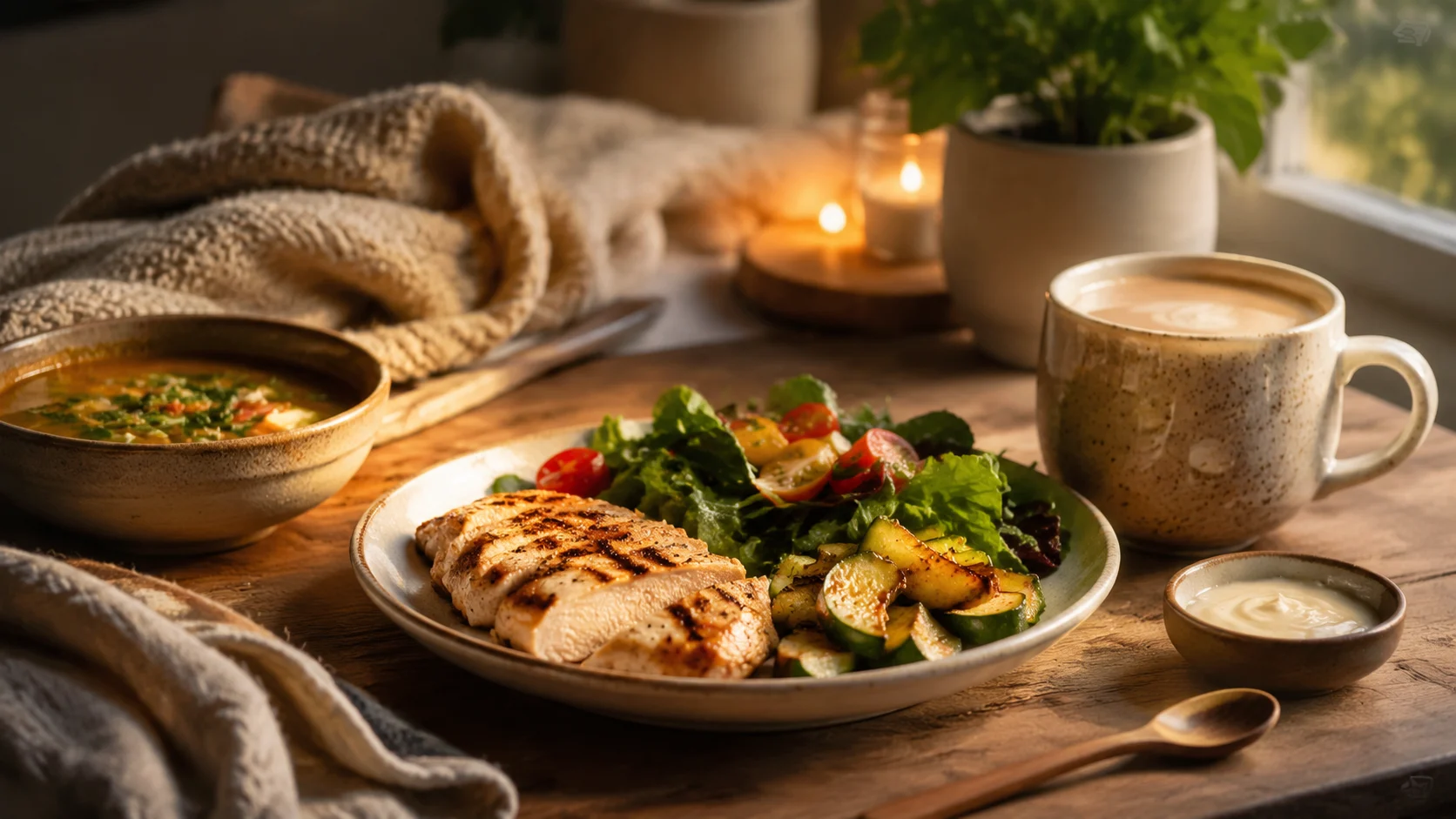

When Night Eating Isn’t About “Lack of Control”
Many women searching for how to stop overeating at night are not dealing with a discipline problem at all. More often, the body is responding to a long day of under-eating, decision fatigue, stress, or loneliness. In gentle, practical terms, the path forward usually starts with eating enough earlier, softening restriction, and creating a calmer evening rhythm—not with stricter rules.
She gets through the day on coffee, a rushed lunch, and the kind of determination that looks impressive from the outside. Then evening arrives. The kitchen light feels warmer than the rest of the house. Crackers, cereal, leftover takeout, something sweet—suddenly the hunger feels louder than it did all day.
That moment is often misunderstood. Night eating can look emotional, but sometimes it is simply delayed biology. The body keeps score when meals are skipped, when stress runs high, and when food has been morally sorted into “good” and “off-limits.”
Body signals are not character flaws. They are messages asking to be understood.
Research has observed that sleep loss can raise hunger-related signals and increase cravings for higher-energy foods, which helps explain why a tired evening can feel especially food-focused. In other words, what happens at 9 p.m. may have begun at 9 a.m.
The Evening Rebound Pattern
A helpful way to think about how to stop overeating at night is through what Joyini might call the Evening Rebound Pattern. Picture a stretched elastic band: the tighter the day becomes—through restriction, stress, and unmet needs—the stronger the snap at night.
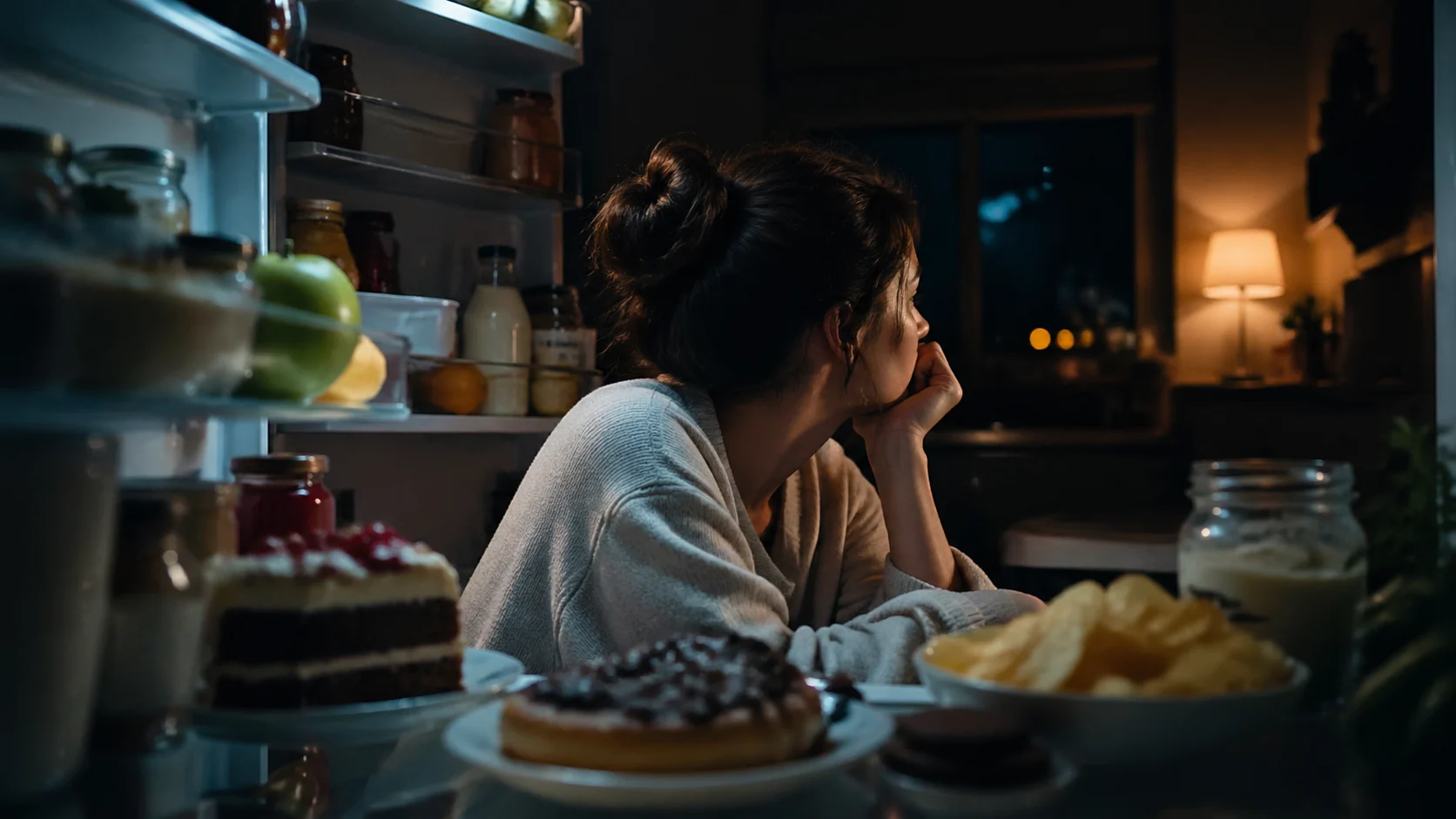
This pattern often has three layers:
- Not enough nourishment earlier. Breakfast is tiny, lunch is delayed, and dinner begins with the body already playing catch-up.
- Mental restriction. Even when enough food was eaten, thoughts like “I shouldn’t have carbs” or “I already ate too much” can magnify cravings.
- Emotional depletion. Evening is when the noise finally quiets down, and food can become comfort, transition, or relief.
The late-night urge to keep eating is often less about hunger for food and more about hunger for ease.
Once she sees the pattern, shame starts to loosen. That matters, because self-criticism rarely creates steadier eating. Understanding does.
A Softer Way to Interrupt the Urge
If she wants to learn how to stop overeating at night, it helps to avoid jumping straight into control mode. A gentler method is the Pause–Plate–Permission approach.
- Pause. Not to suppress the craving, but to notice it. Is this physical hunger, emotional exhaustion, sensory craving, or a mix? Even 30 seconds of noticing can lower the intensity.
- Plate. Instead of grazing from bags and boxes, place the food on a plate or in a bowl. A bowl of Greek yogurt with berries and crushed walnuts, or toast with peanut butter and sliced banana, feels more grounding than standing in front of the pantry.
- Permission. This is the part many women skip. When food feels forbidden, the mind clings to it harder. Giving full permission to eat often reduces the frantic quality of the experience.
This approach does not promise perfection. It simply makes the moment more conscious, more balanced, and less lonely.
What the Body Often Needs Before the Cravings Hit
Sometimes the most effective answer to how to stop overeating at night is surprisingly unglamorous: a more supportive daytime structure. Not rigid. Just reliable.
- A steadier breakfast. Something with protein, fiber, and comfort can change the tone of the day. Think warm oatmeal with chia and almond butter, not just a granola bar eaten while answering emails.
- A real lunch. A balanced midday meal helps prevent the hollow, wired feeling that often leads to evening intensity.
- An afternoon bridge. If dinner is far away, a snack can help. An apple with cheese, hummus with pita, or a soft-boiled egg with toast can keep energy from crashing.
- Enough dinner satisfaction. If dinner is too light or missing carbs, the body often keeps searching. Satisfaction is part of nourishment.
For some women, nighttime eating also becomes a ritual of decompression. In that case, it may help to pair food support with non-food comfort: a shower, softer lighting, a mug of tea, ten quiet minutes without a screen. The goal is not to replace food every time. It is to give comfort more than one doorway.
Questions That Often Come Up
What if she is only hungry at night?
That often points to under-eating earlier in the day. The body may be postponing hunger until there is finally enough space to feel it.
Does eating after dinner automatically mean something is wrong?
No. An evening snack can be completely normal. The concern is not the time on the clock, but whether eating feels chaotic, distressing, or disconnected from her needs.
What if stress is the main reason she keeps eating?
Then food may be doing real emotional work. It can help to keep eating regular meals while also building tiny rituals of decompression, so comfort is supported from more than one direction.
Should she avoid keeping snack foods in the house?
Not always. For many people, scarcity increases preoccupation. Regular exposure with permission and balanced meals can make those foods feel less charged over time.
*Please note: Every body has its own rhythm. This article is for educational purposes and offers gentle nutrition support, not personalized medical care. If night eating feels distressing, persistent, or connected to a history of disordered eating, a registered dietitian or healthcare professional can offer more tailored support.*