
A softer answer for the nights when energy is gone
She may look like she just needs to “be more disciplined.” But often, that drained end-of-day feeling is not a character flaw at all. It is a body asking for steady energy, enough nourishment, and less pressure. Lazy healthy meals can absolutely support health; in fact, the meals that work on tired nights are often the ones that keep a woman fed most consistently.
When the sink is full, the laptop is still open, and dinner feels like one task too many, a gentle meal does not need to be impressive. It only needs a little staying power: something comforting, something filling, and something easy enough to happen in real life.
Joyini likes to think of this as the Soft Plate Formula: a simple way to build meals that feel supportive without counting, measuring, or performing wellness.
Body care is rarely built by perfect meals. More often, it is built by the meal a tired woman can actually make.
The quiet power of the Soft Plate Formula
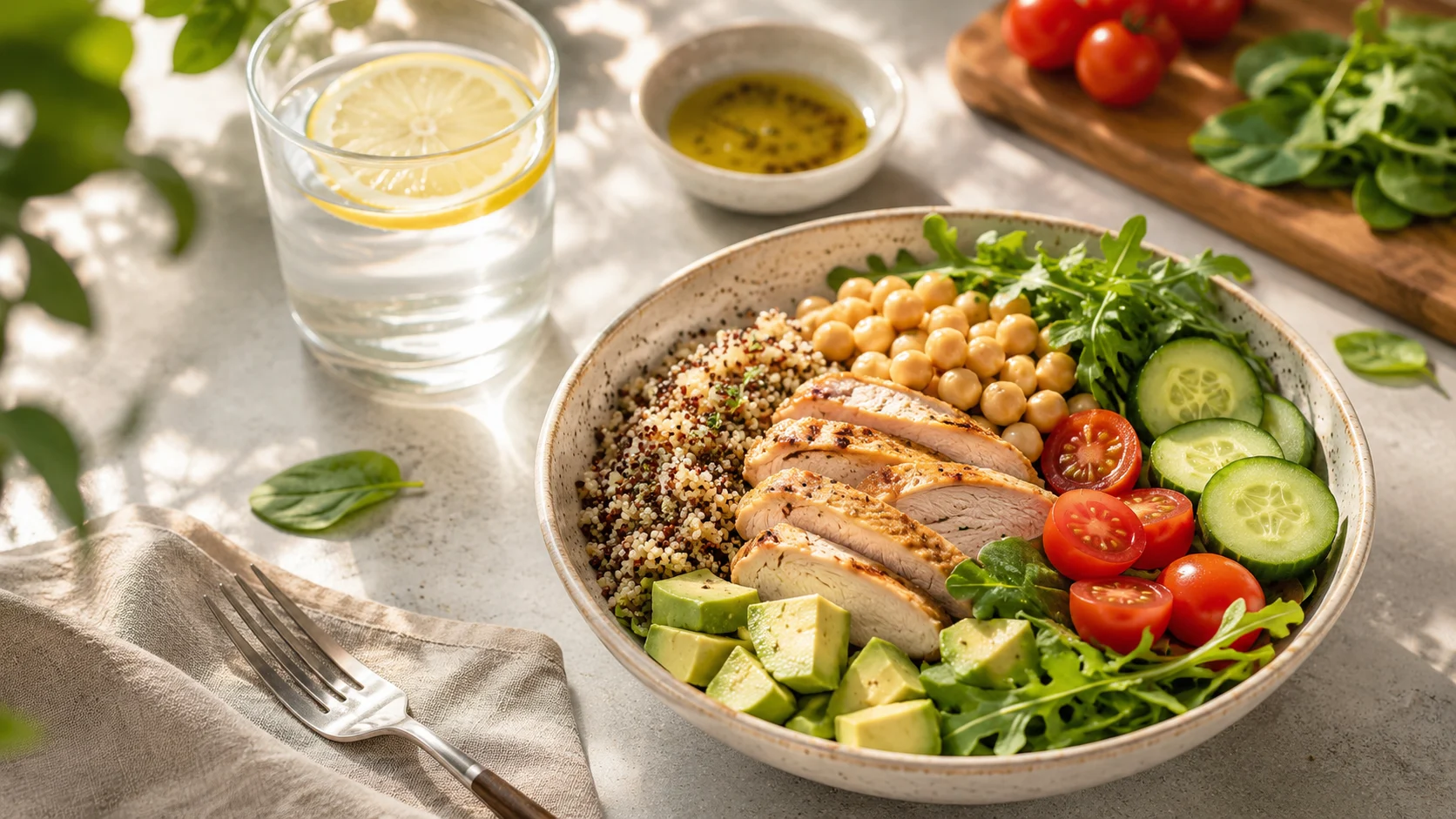
The Soft Plate Formula has three gentle anchors: a grounding carb, a satisfying protein, and a little color or fiber. That is all. Not because food must be reduced to parts, but because this trio often helps meals feel more stable and comforting.
- A grounding carb — Think of warm rice from last night, toast with some chew, or a microwave potato split open with butter. This is the part that tells an exhausted body it does not need to panic.
- A satisfying protein — Rotisserie chicken pulled apart with fingers, cottage cheese in a bowl, a fried egg with crisp edges, or beans warmed with olive oil and salt. This helps the meal linger a little longer.
- A little color or fiber — Frozen peas folded into noodles, baby carrots on the side, salsa spooned over eggs, or a handful of spinach wilting into soup. Small is enough.
Research often points in the same direction: meals that include protein and fiber can support fullness and steadier energy compared with meals built mostly around refined carbs alone. One review published in Nutrients noted that protein tends to be especially helpful for satiety, which matters on nights when random snacking can snowball after dinner.
What lazy healthy meals can look like in an actual kitchen
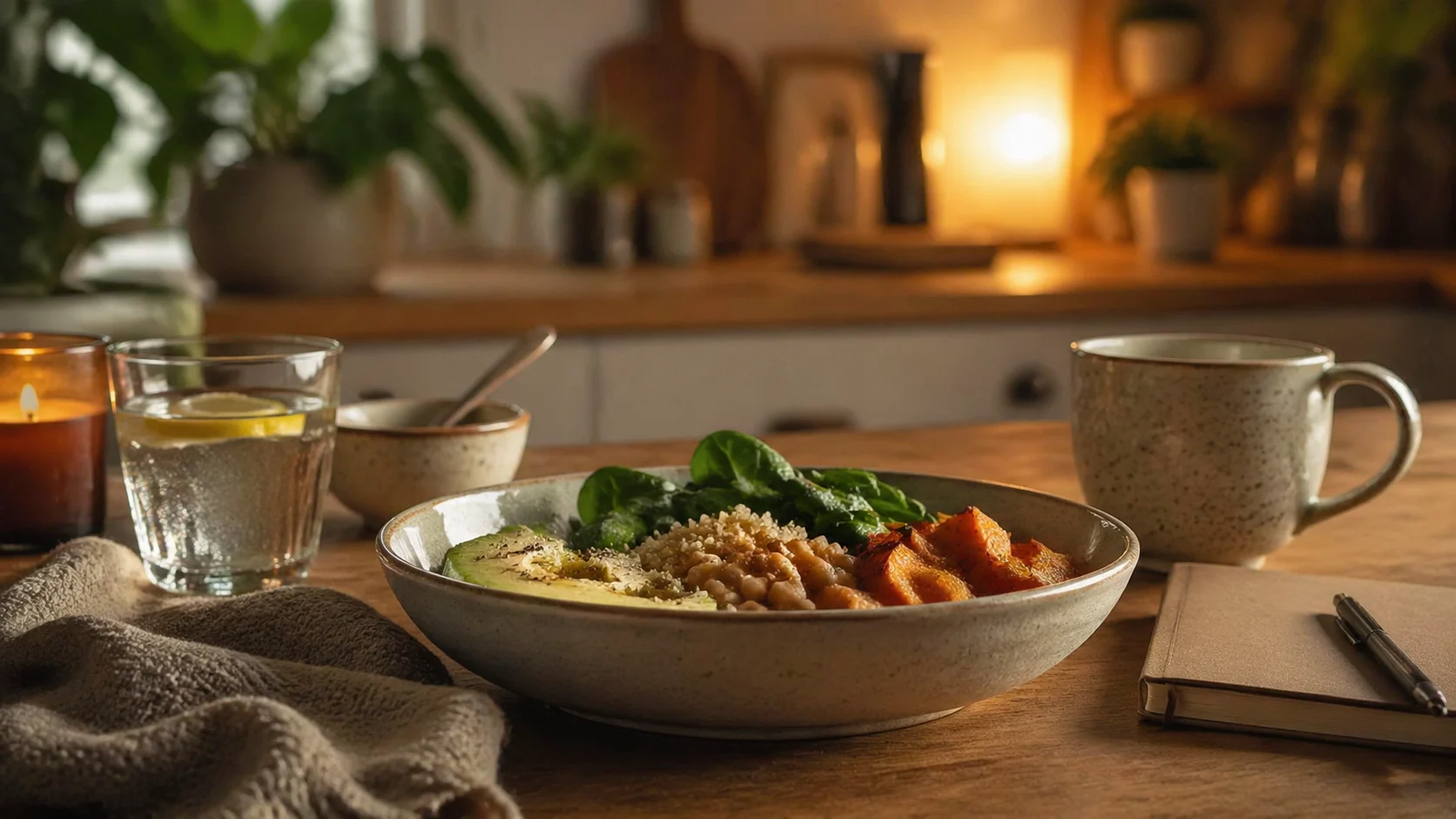
Not in a fantasy kitchen. In the real one, where the light is a little harsh and the energy is low.
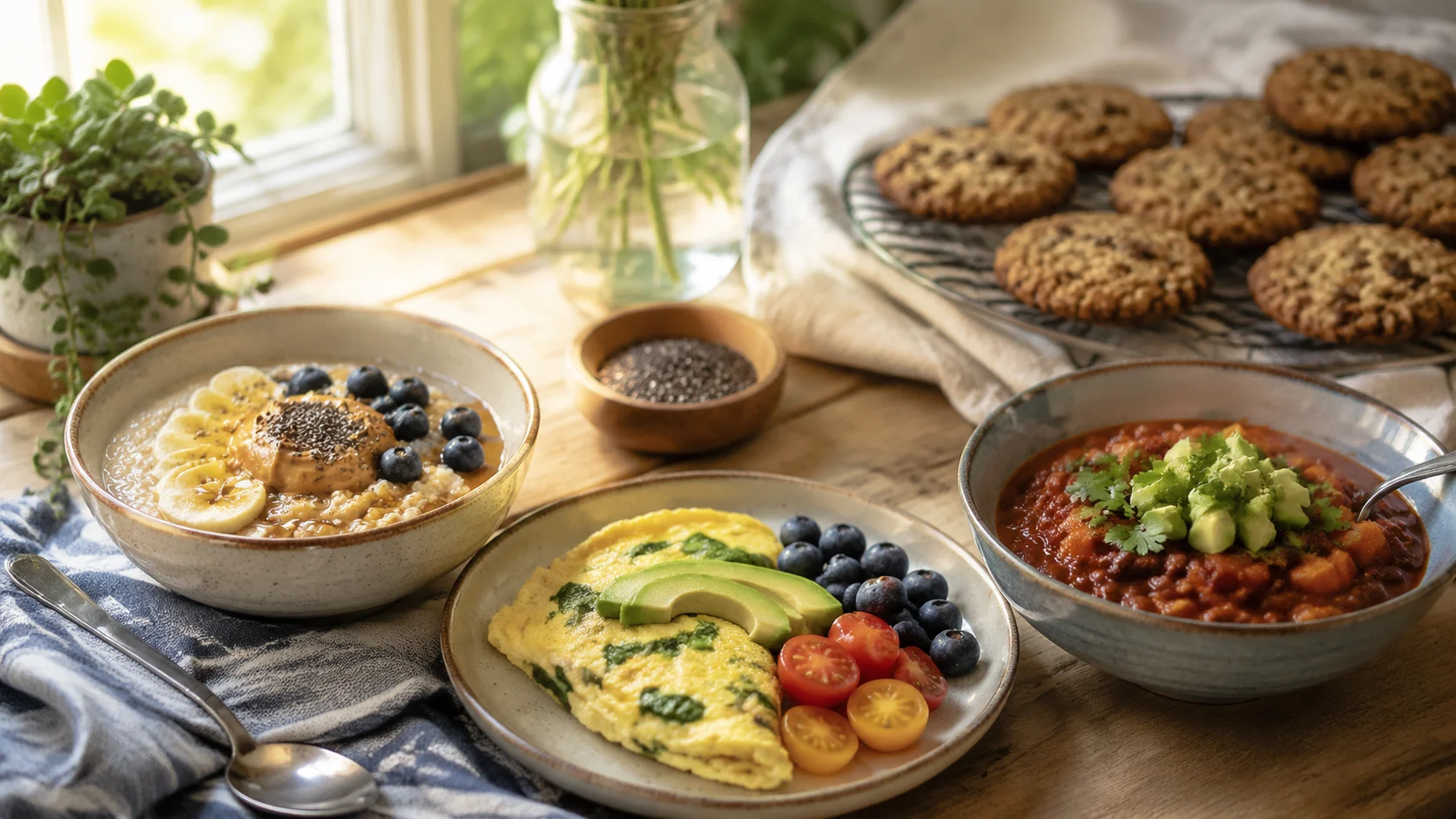
- Toast, eggs, and something bright — A slice of seeded toast, two scrambled eggs, and cherry tomatoes with a pinch of salt. It feels almost too simple to count, which is often why it works.
- Yogurt bowl with enough substance — Thick Greek yogurt, berries from the freezer, a spoonful of peanut butter, and granola scattered over the top. More like supper than a snack when the day has gone sideways.
- Rice bowl from leftovers — Warm rice, edamame, leftover salmon or tofu, and a splash of soy sauce or sesame dressing. No reinvention required.
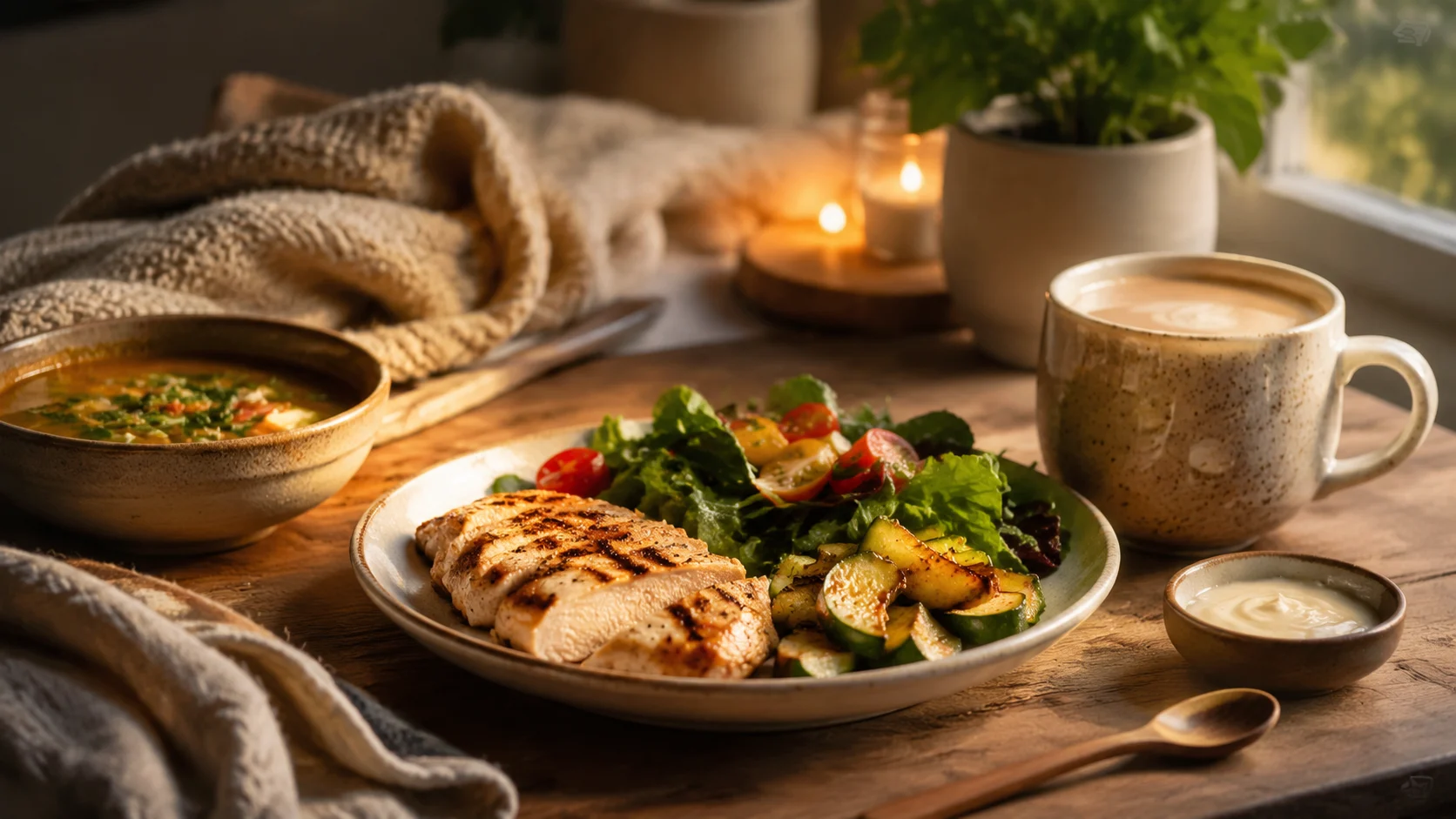
- Soup made gentler — A boxed tomato or lentil soup with toast and a handful of shredded cheese, or white beans stirred in while it heats. A small upgrade can turn a light meal into one that actually satisfies.
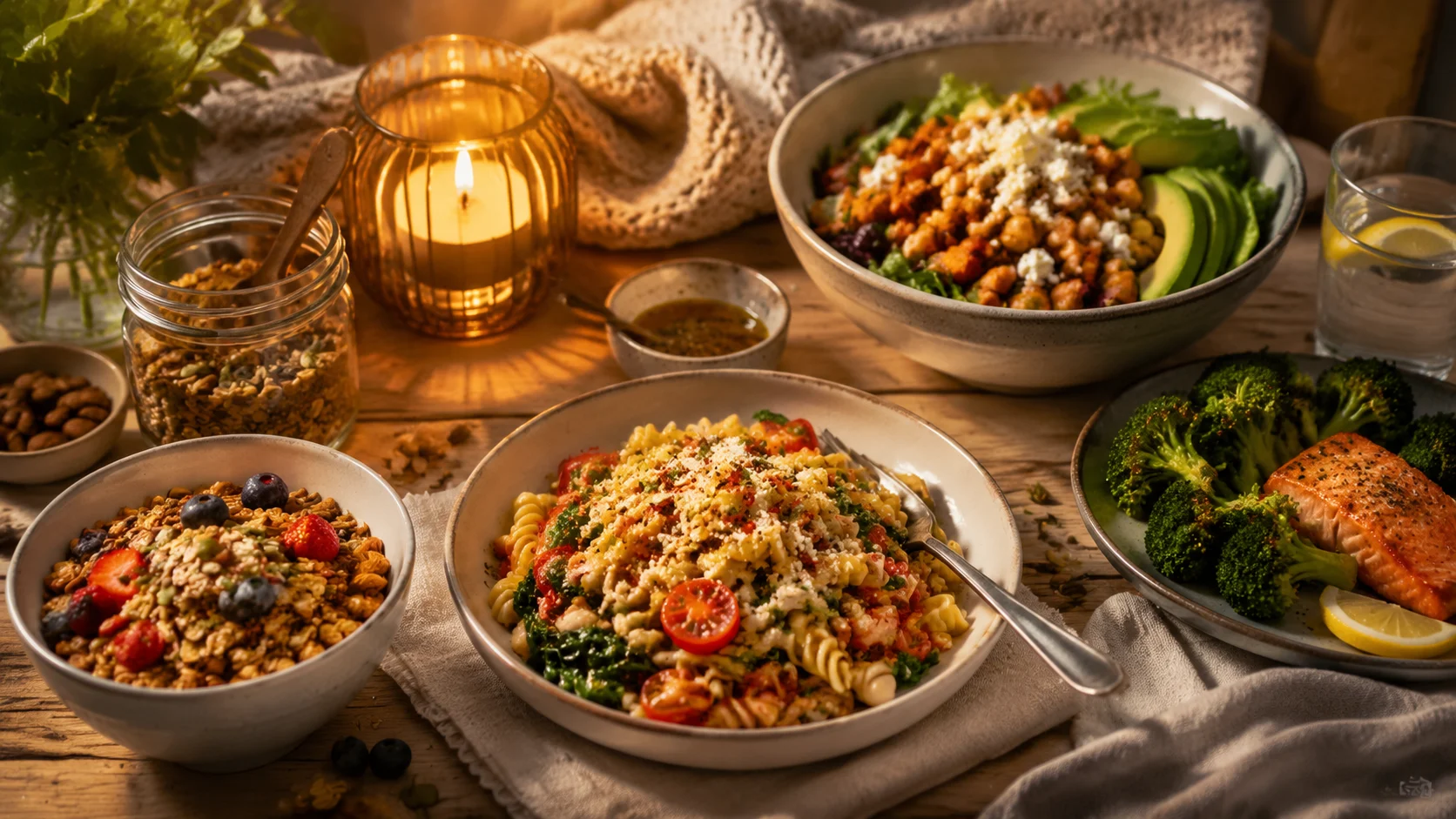
- Pasta that supports, not scolds — Pasta tossed with olive oil, tuna or chickpeas, spinach, and parmesan. Comfort and nourishment do not have to compete.
The goal is not to eat like a wellness robot. The goal is to make food feel like support again.
Why “lazy” can sometimes be the most sustainable kind of healthy
Many women have spent years absorbing the idea that healthy eating should be elaborate, expensive, or highly controlled. That belief breaks down quickly on a Wednesday night.
Lazy healthy meals work because they respect real limits. They leave room for fatigue, caregiving, deadlines, and hormone shifts. They reduce the gap between knowing and doing. And that gap matters. A beautiful plan that cannot survive a hard day is not always a helpful plan.
There is also a quieter emotional layer here. When meals become too complicated, food can start to feel like one more place to fail. Easier meals interrupt that pattern. They offer a small experience of trust: I can feed myself kindly, even when I am tired.
A small rhythm for the days when cooking feels heavy
Some women find it helpful to keep a tiny “low-energy food rhythm” in the house:
- One easy protein — eggs, yogurt, canned beans, tofu, or pre-cooked chicken.
- One no-effort carb — bread, tortillas, microwave rice, oats, or pasta.
- One almost-invisible produce option — frozen vegetables, bagged salad, baby cucumbers, berries, or apples.
- One comfort booster — shredded cheese, pesto, hummus, broth, or a dressing she genuinely likes.
That is enough to create many lazy healthy meals without turning dinner into a project. The point is not optimization. The point is access.
Please note: Every body has its own rhythm, appetite, and needs. This gentle guide is for educational purposes only and does not replace personalized advice from a registered dietitian or healthcare professional, especially if fatigue, appetite changes, or digestive symptoms feel persistent or concerning.
You Might Also Wonder
What if I am too tired to cook and takeout is all I can manage?
That still counts as feeding yourself. A gentle approach is to add balance where it feels easy — perhaps choosing a rice bowl with protein, adding a side of vegetables, or pairing pizza with a bagged salad at home. Support matters more than perfection.
Can lazy healthy meals really be filling enough?
Yes, especially when they include protein, carbs, and a little fiber or fat. A plain snack may fade quickly, but a simple balanced meal usually stays with the body longer.
Why do I want snacky foods at night instead of a proper meal?
Often, the body is not asking for “junk.” It may be asking for ease, comfort, and quick energy after a long day. Sometimes a soft meal — like toast with eggs or yogurt with granola — meets that need better than trying to force a big dinner.
Do frozen and canned foods still fit into healthy eating?
Absolutely. Frozen vegetables, canned beans, soup, tuna, and fruit are some of the most useful building blocks for lazy healthy meals. Convenience can be a form of care.