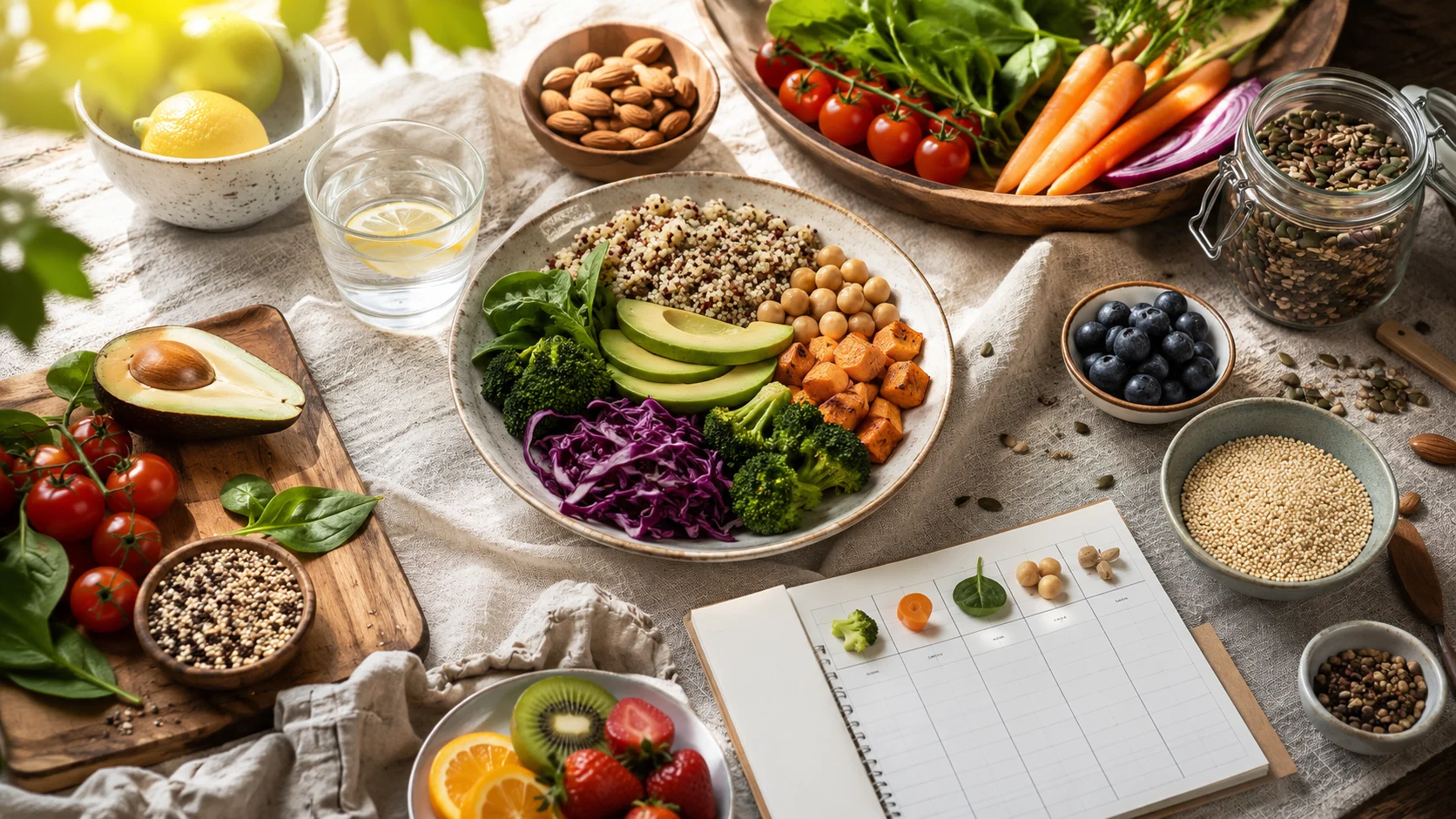

The meal most women call “healthy” is often the one that leaves them hungry an hour later.
What is a balanced meal? In real life, it is not a perfect plate or a strict formula. It is a meal that brings together carbohydrates, protein, fat, and fiber in a way that helps the body feel nourished, satisfied, and supported with steadier energy. For the woman eating lunch between meetings or reheating dinner after a long day, balance often looks less like control and more like relief.
Many women have been taught to make meals smaller, lighter, or more “disciplined.” But the body usually speaks back. She notices it at 3 p.m., when her focus blurs and something sweet starts calling from the kitchen drawer. What seemed like “eating healthy” may have simply been eating too little of what helps a meal hold her.
Body signals are not a character flaw. They are often a conversation about unmet needs.
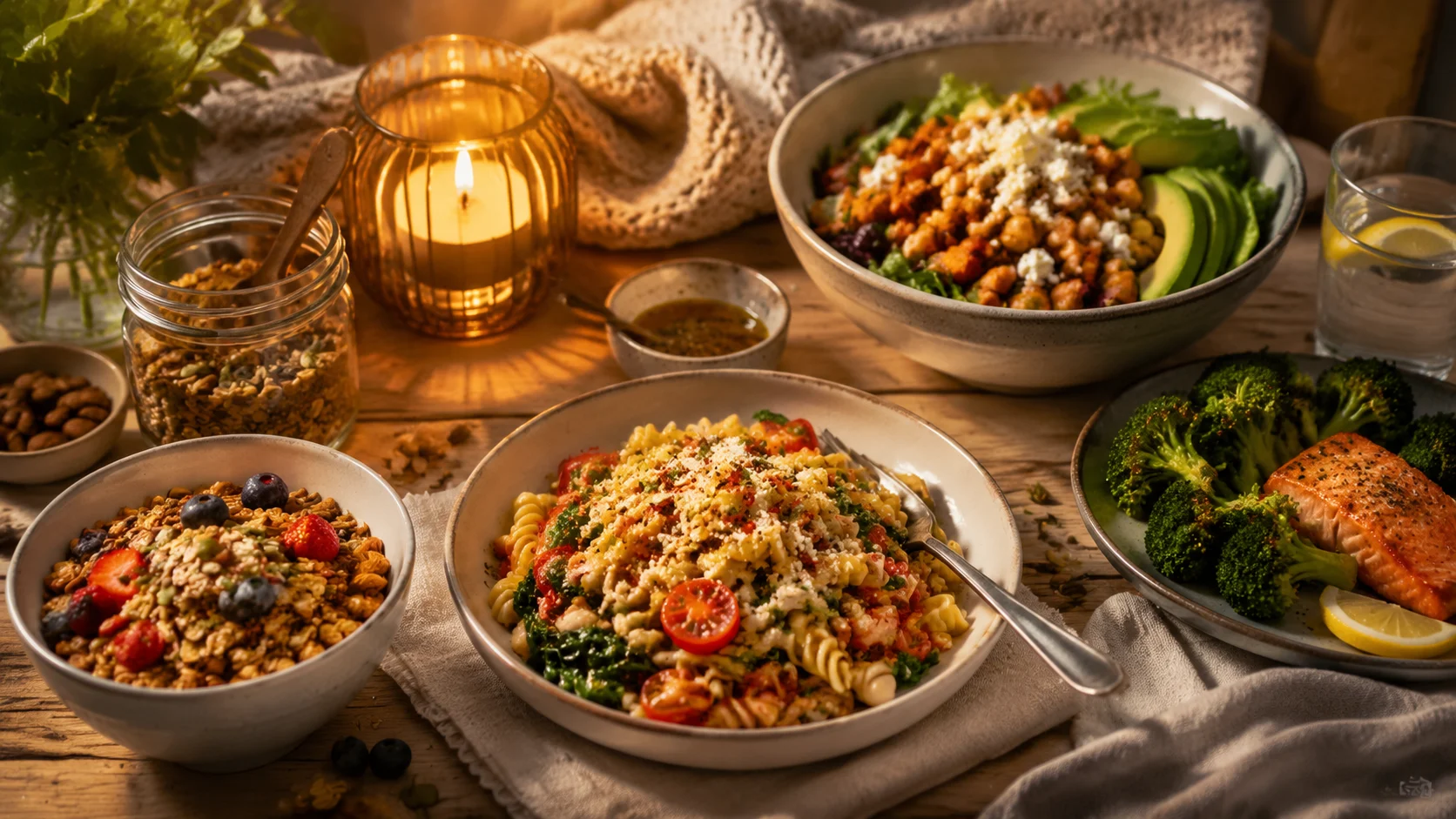
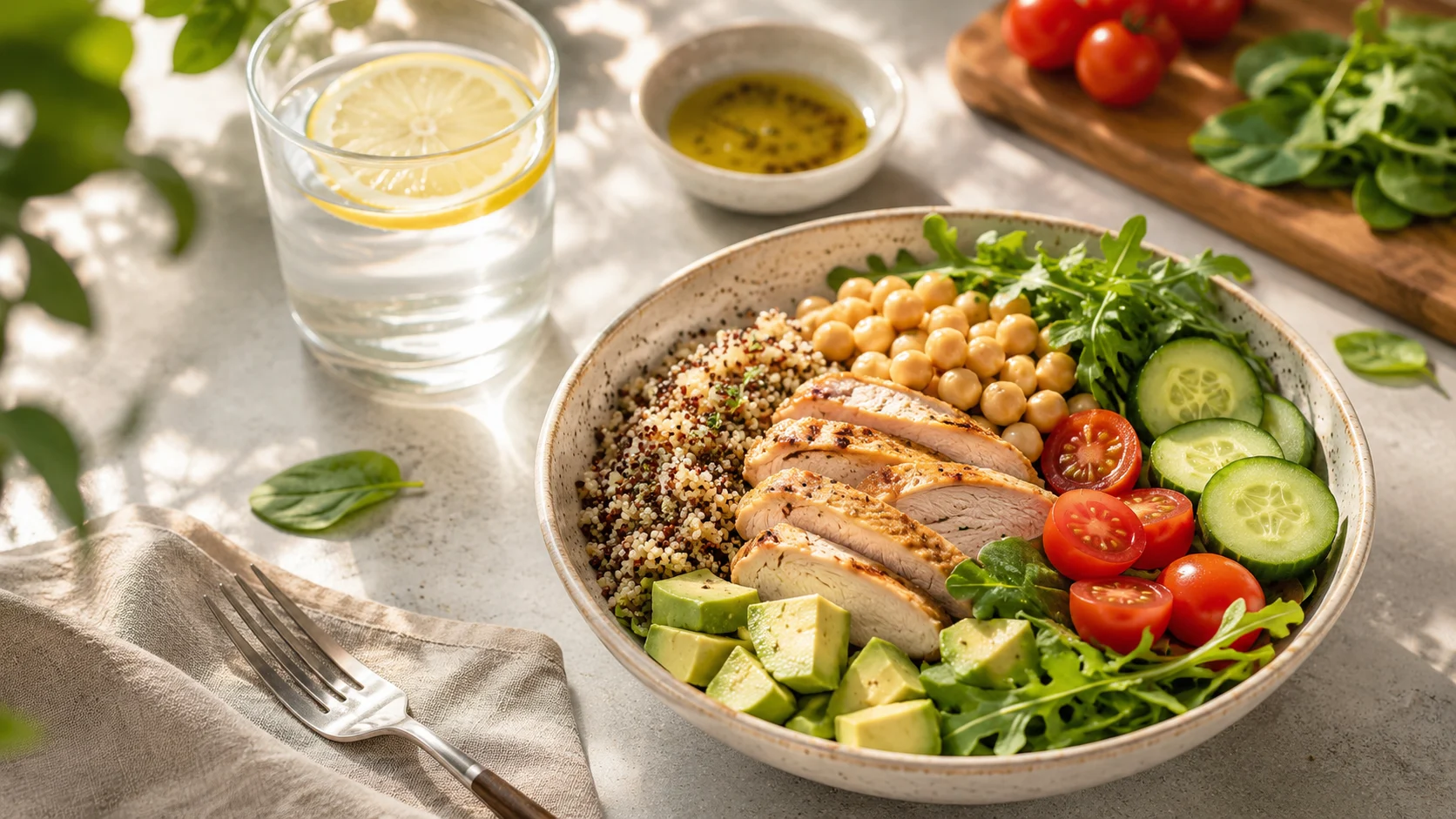
A helpful way to picture what is a balanced meal is to imagine a table with four legs. If one leg is missing, the whole thing wobbles. Joyini calls this the Four-Part Steady Plate: something comforting for energy, something grounding for fullness, something rich for satisfaction, and something fresh or textured for staying power.
- Carbohydrates for immediate energy — like warm rice beside salmon, roasted potatoes tucked under a fried egg, or a slice of toast holding mashed avocado. Carbs are not the problem; they are often the first language the body uses for fuel.
- Protein for staying power — Greek yogurt swirled into oats, shredded chicken folded into soup, tofu crisped in a skillet, or beans spooned over a grain bowl. Protein helps a meal linger a little longer.
- Fat for satisfaction — olive oil on roasted vegetables, peanut butter melting into oatmeal, feta scattered over lentils, or a handful of walnuts. Fat softens the sharp edge of hunger and often makes food feel emotionally complete.
- Fiber for steadiness — berries, beans, leafy greens, pears, oats, or vegetables with crunch and color. Fiber can help meals feel more gradual and grounding.
Balance is not perfection on a plate—it is enough support for the day you are actually having.
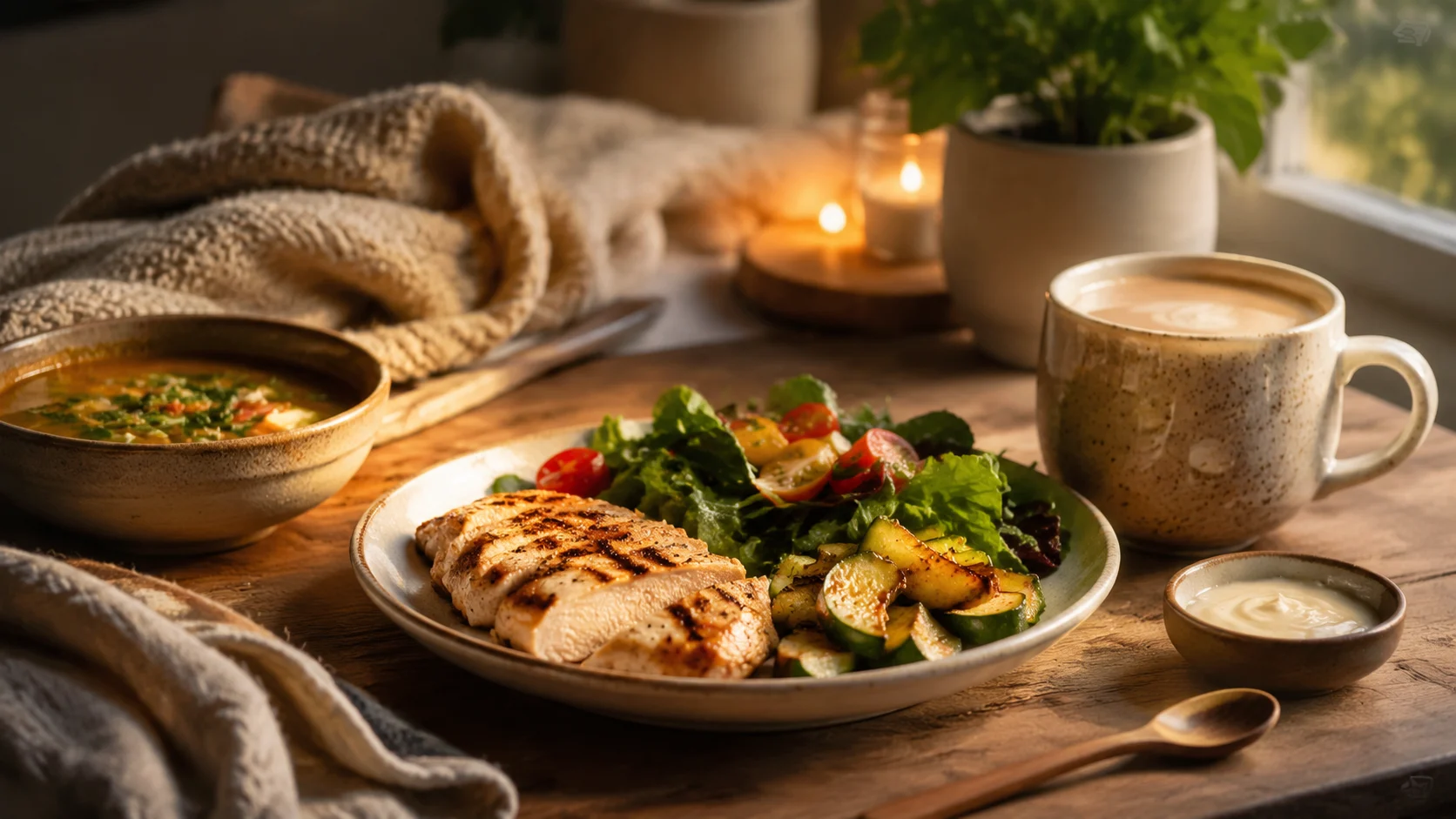
Some days, a balanced meal is a beautifully cooked dinner. Other days, it is a convenience meal made a little more supportive. A frozen bowl becomes more balanced with a side of edamame. Takeout pasta feels steadier with chicken and a salad. Peanut butter on toast becomes more complete with sliced banana and a glass of milk.
This matters because food balance can shape energy, fullness, and cravings later. One review published in Nutrients noted that meals containing protein, fiber, and healthy fats tend to support satiety more effectively than meals built mostly on refined carbohydrates alone. That does not mean a meal must be “perfect.” It simply means the body often responds well when it receives more than quick fuel.
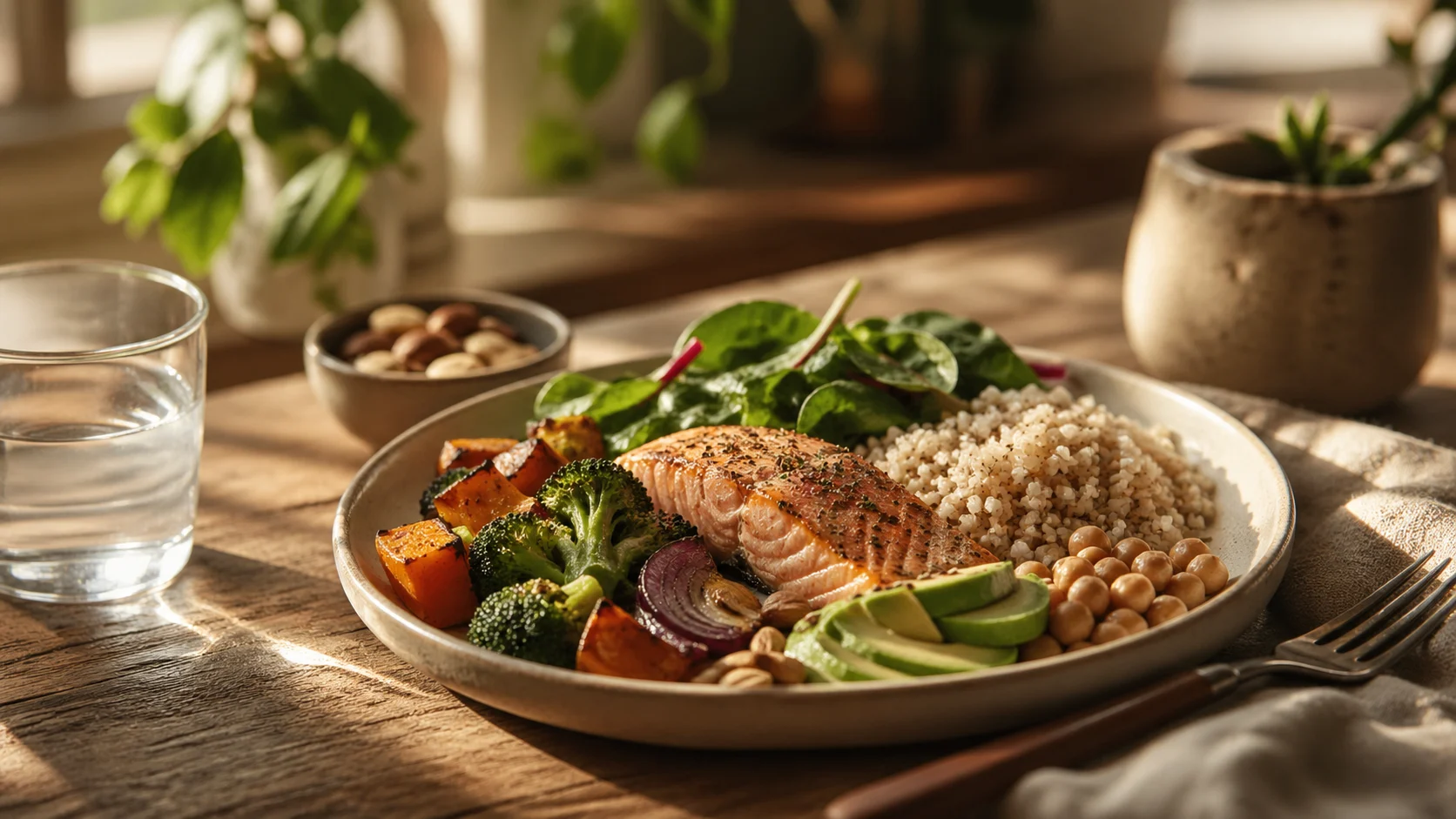
A balanced meal is not a reward for being good. It is a form of everyday support.
What a balanced meal can look like when life is busy, messy, or low-energy
For the woman standing in front of the fridge with little energy left, it helps to think in gentle pairings instead of rules.
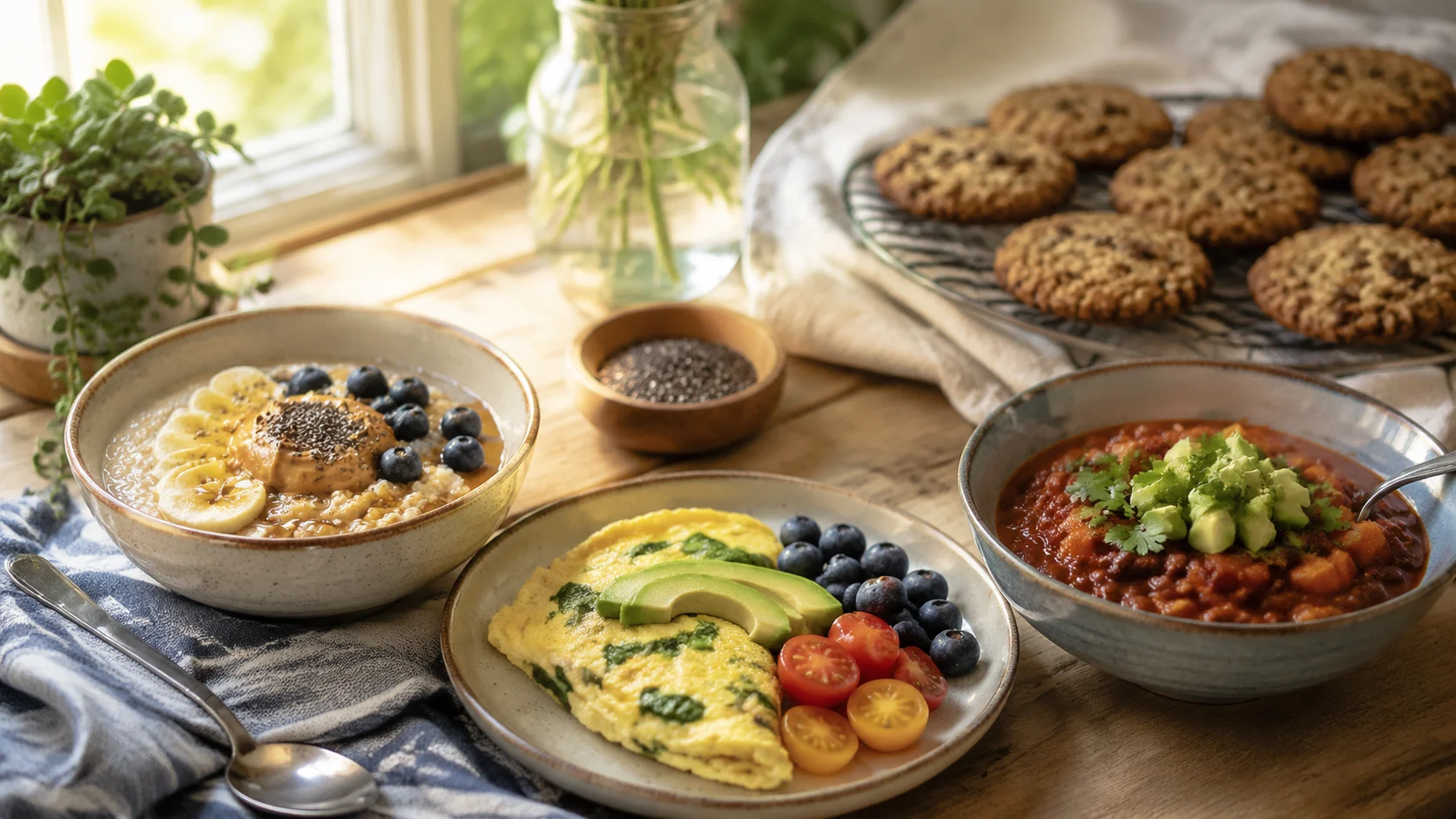
- Breakfast — a bowl of oatmeal with chia seeds, berries, and almond butter. Soft, warm, and built to last beyond the first email.
- Lunch — a turkey sandwich on whole grain bread with cheese, baby carrots, and fruit. Familiar food can still be deeply balanced.
- Dinner — rice, rotisserie chicken, and roasted broccoli with olive oil. Nothing dramatic, just a plate that knows how to support a tired body.
- Snack-like meal — crackers, hummus, sliced cucumber, hard-boiled eggs, and grapes on one board. Even a “random” meal can become steady when the parts work together.
If someone is still wondering what is a balanced meal, it may help to stop picturing a nutrition textbook and start picturing a meal that helps her feel calm, fed, and less preoccupied with food an hour later.
Why balanced meals can gently reduce the chaos around cravings
When meals are too skimpy, too delayed, or missing satisfying pieces, cravings often get louder by evening. That is not failure. It is the body becoming more urgent. Balanced meals can help lower that intensity, not by forcing appetite into silence, but by making it feel heard earlier in the day.
This is especially meaningful for women who have spent years bouncing between restriction and overeating. Learning what is a balanced meal can become less about nutrition performance and more about rebuilding trust. She begins to notice that when lunch includes enough substance, nighttime snacking may feel less frantic. When breakfast contains both comfort and structure, the afternoon can feel gentler.
A soft way to begin: build from what is already on the plate
There is no need to rebuild eating habits overnight. If a meal feels incomplete, one gentle question is enough: What would help this meal support me a little more? Sometimes the answer is protein. Sometimes it is a carb that was unfairly removed. Sometimes it is fat, crunch, warmth, or simply a larger portion.
That is the heart of what is a balanced meal. Not dietary purity. Not smaller portions in prettier bowls. Just a way of eating that respects hunger, steadies energy, and makes room for real life.
Please note: Every body has its own rhythm, preferences, and needs. This gentle guide is for educational purposes and does not replace personalized advice from a doctor or registered dietitian, especially if someone is managing a medical condition, digestive concerns, or a history of disordered eating.
You Might Also Wonder
What if I eat a meal and still feel hungry soon after?
That may simply mean the meal needed a little more volume, protein, fat, or fiber. Hunger after eating is not always a sign of “too much appetite.” Sometimes it is useful information.
Does every balanced meal need to include vegetables?
Vegetables can be helpful, but balance is broader than that. A meal can still be supportive if it includes carbs, protein, and fat, even when produce is minimal.
Can comfort food be part of a balanced meal?
Absolutely. Mac and cheese with peas and chicken, or pancakes with yogurt and fruit, can feel both comforting and supportive. Balance does not ask comfort to leave the table.
What if I do not have time to cook?
A balanced meal can come from simple building blocks: a store-bought soup with toast and eggs, a sandwich with fruit, or takeout with an added protein or vegetable side.