
When “Eating Better” Feels Harder Than It Should
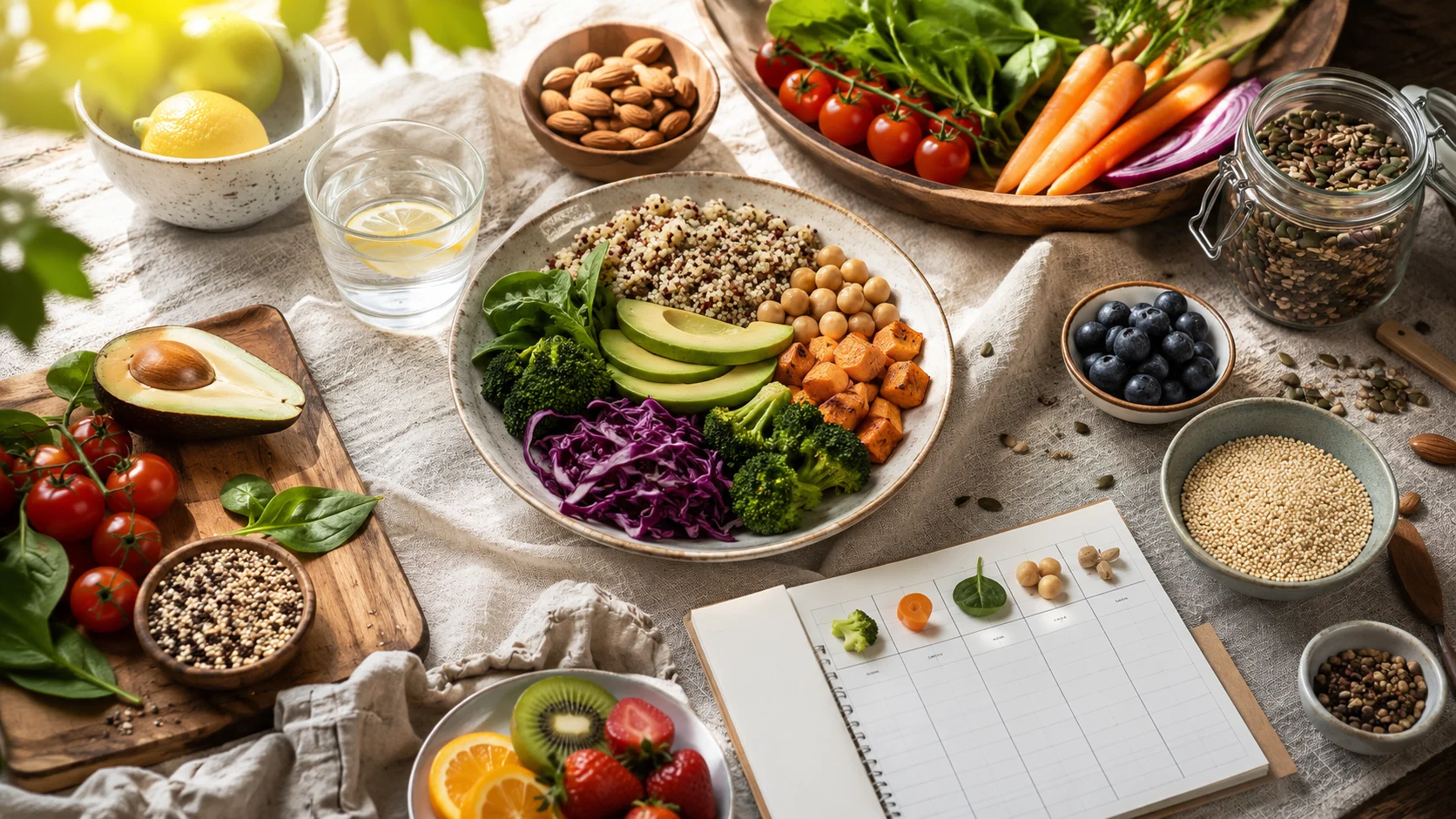
Many women are taught to think a balanced meal must be perfectly measured, color-coded, or calorie-controlled. But how to build a balanced meal is often much simpler than that. In real life, a balanced plate is less about precision and more about steady energy, satisfaction, and support for the body she lives in every day.
When she is standing in her kitchen at 6:40 p.m., already tired, already touched out, already thinking about tomorrow, her body is not asking for a nutrition performance. It is asking for care. A meal that includes carbohydrates, protein, fat, and fiber can help her feel fuller, calmer, and more stable afterward—without counting every bite.
“A meal does not need to be perfect to be balanced. It only needs to support the life being lived around it.”
That is the gentler truth behind how to build a balanced meal: not rules, but rhythm.
The Soft Plate Method: A Kinder Way to Think About Balance
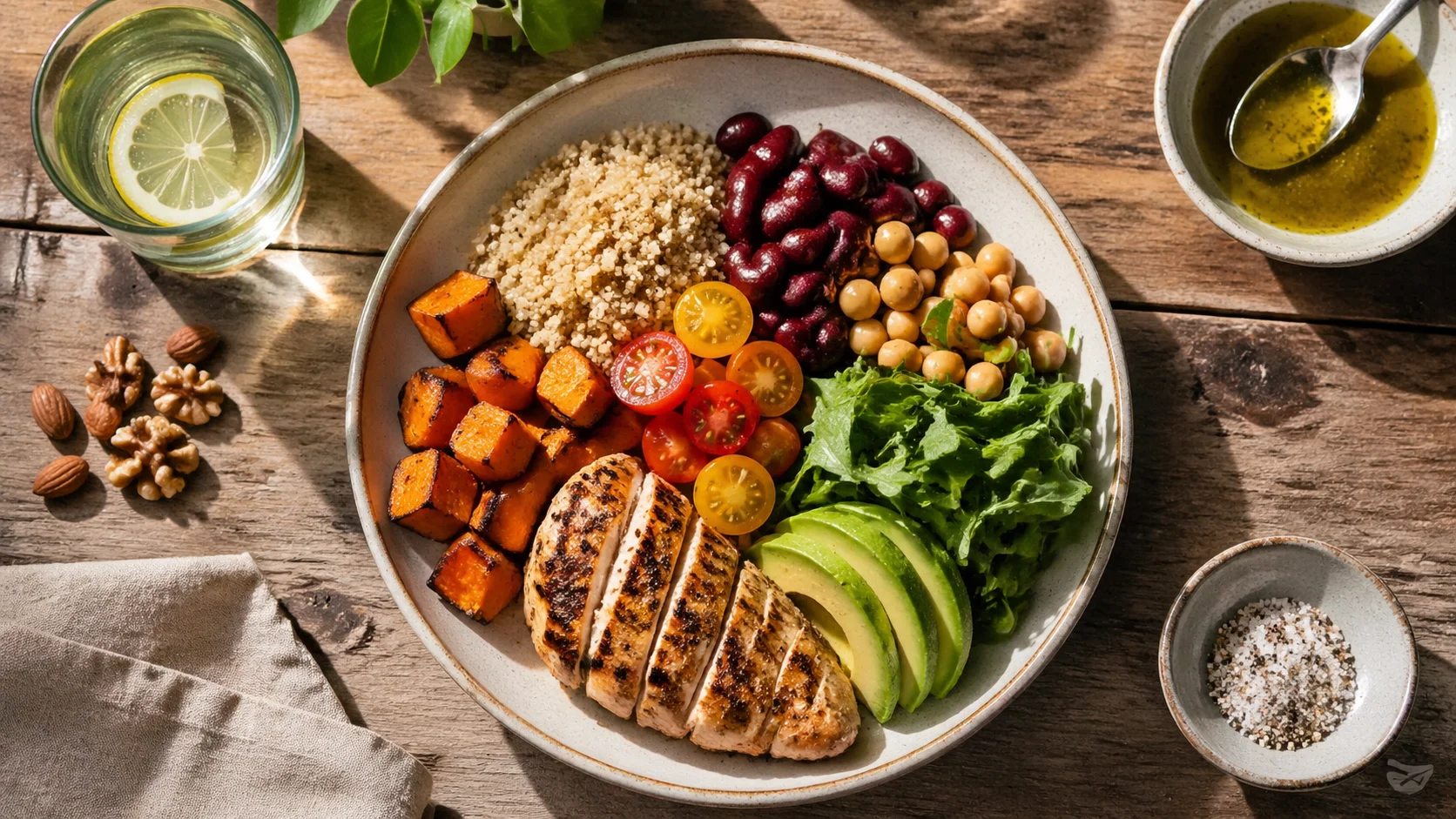
One helpful way to understand how to build a balanced meal is through what Joyini might call the Soft Plate Method. Instead of chasing ideal portions, she can simply ask whether her meal has a few steadying anchors.
- A grounding carbohydrate — something like warm rice, roasted potatoes, sourdough toast, or a bowl of oats. This is often the part that helps energy feel more steady instead of sharp and short-lived.
- A satisfying protein — Greek yogurt folded into berries, eggs on toast, salmon tucked beside rice, or beans spooned into a grain bowl. Protein helps meals feel more lasting.
- A calming fat — avocado, olive oil, peanut butter, tahini, cheese, or a handful of walnuts crushed over something warm. Fat adds staying power and comfort.
- A gentle source of fiber — fruit, vegetables, beans, oats, or whole grains. Fiber can help slow digestion and support a steadier release of energy.
She does not need every meal to look like a wellness magazine spread. Sometimes how to build a balanced meal looks like a turkey sandwich with fruit and chips, because balance also includes practicality, pleasure, and what is actually available.
Research often points in this same direction. For example, studies have found that pairing carbohydrates with protein, fat, and fiber can support better satiety and more stable post-meal energy than eating refined carbohydrates alone. The idea is not control. It is support.
What Balance Looks Like on a Busy Tuesday
Balance becomes easier to recognize when it is tied to ordinary moments.
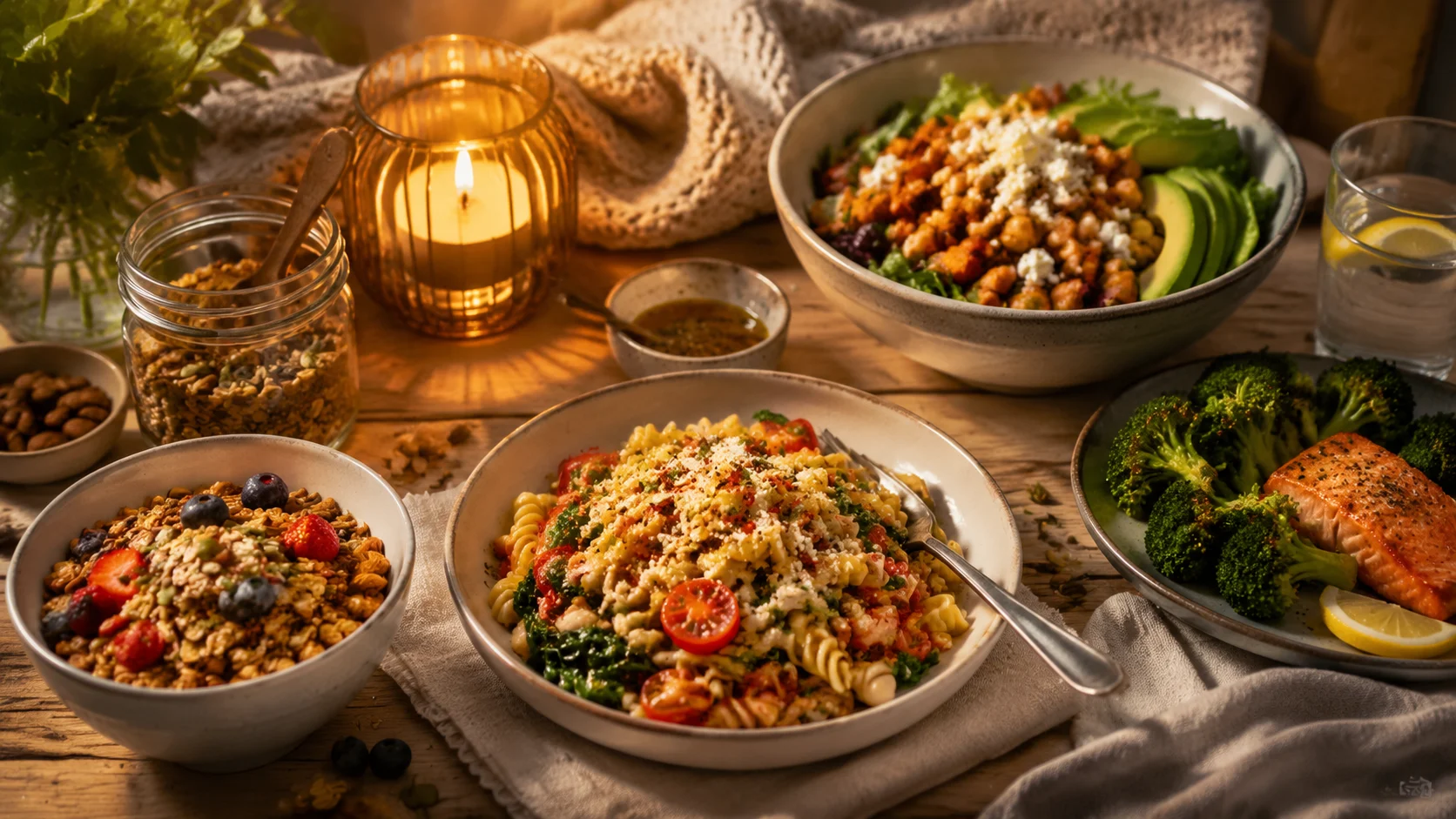
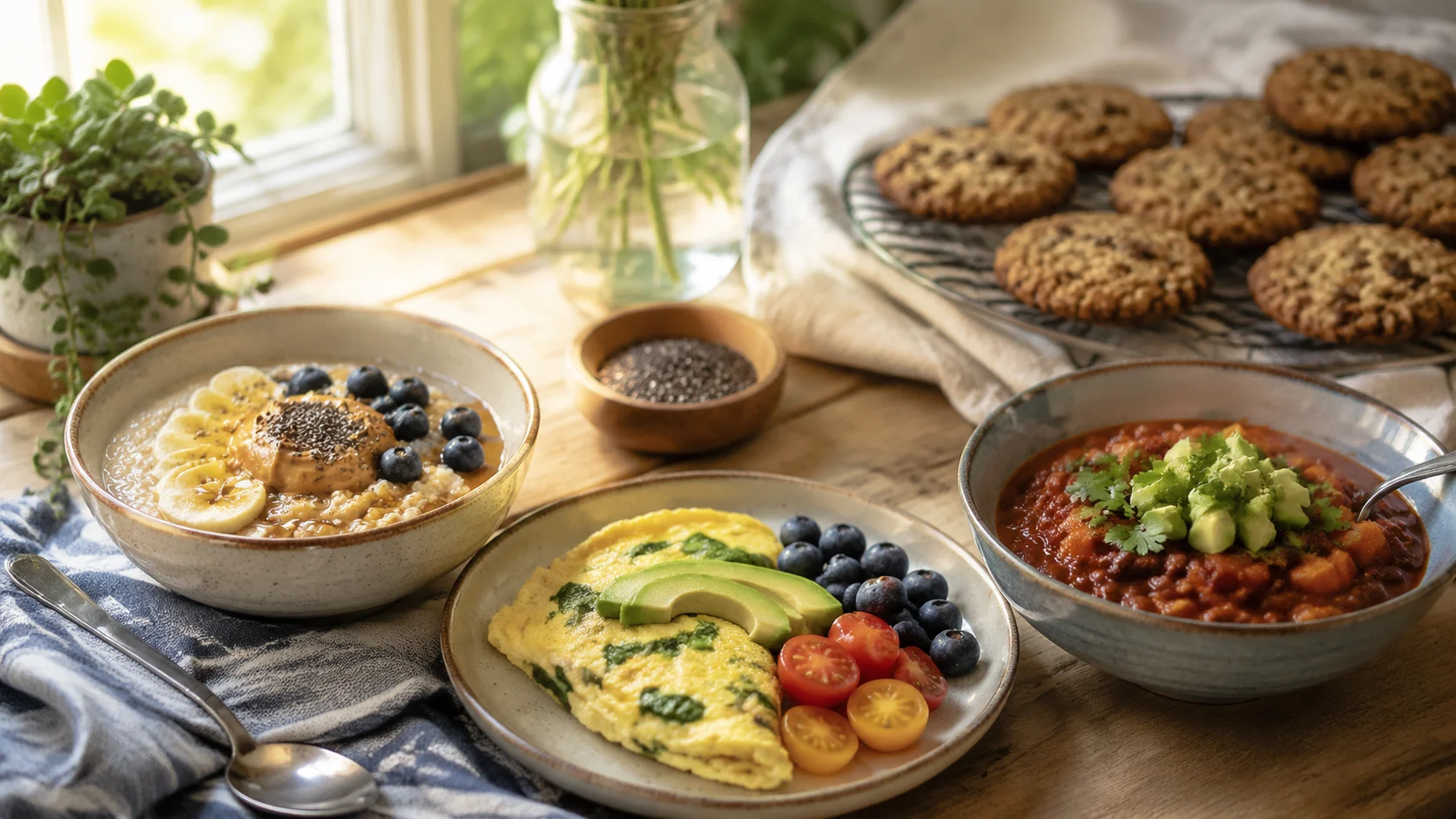
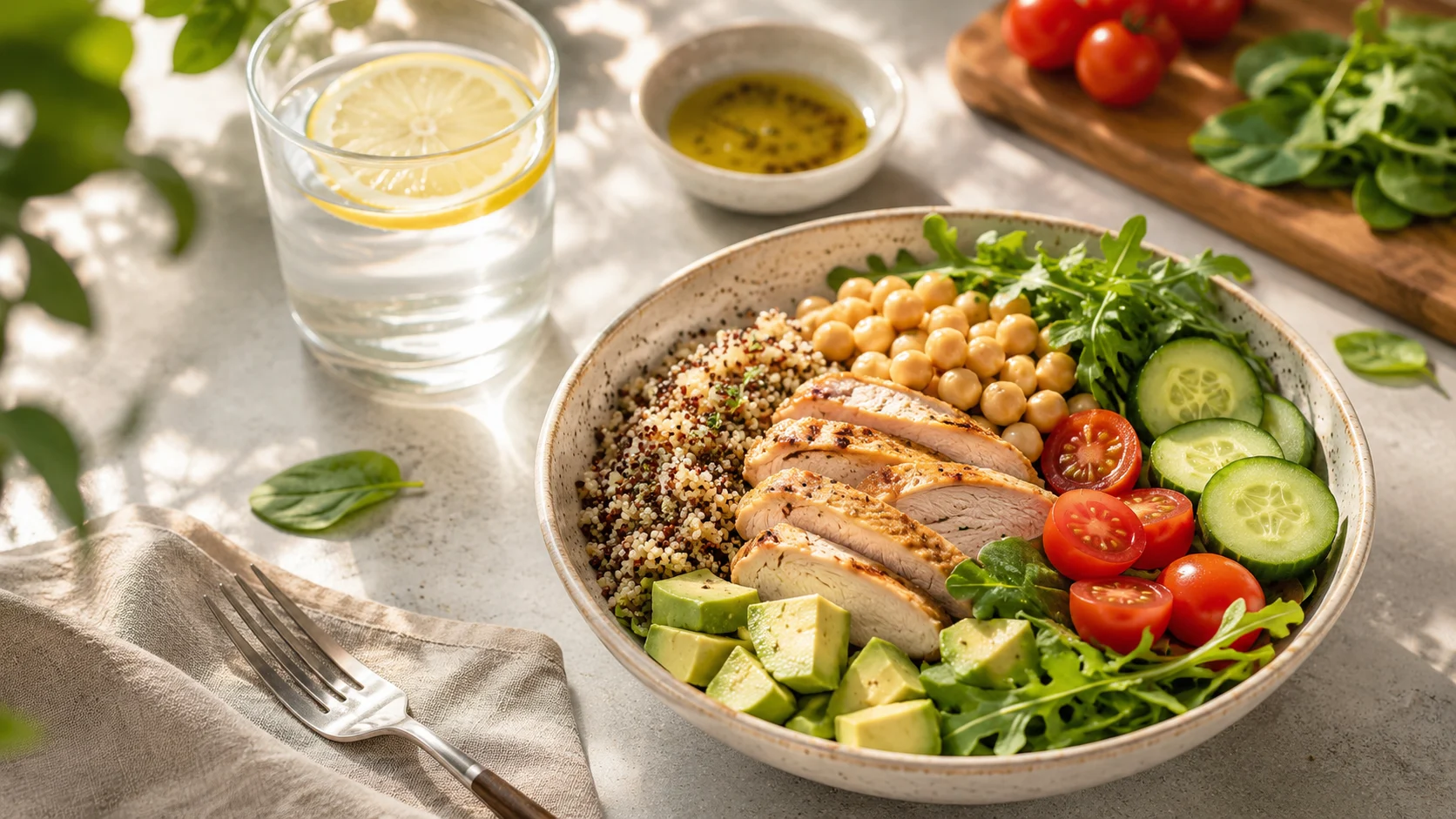
At breakfast, it may look like a bowl of warm oatmeal with chia seeds, a spoonful of almond butter, and sliced banana. At lunch, it may be leftover rice with rotisserie chicken, cucumber, and a drizzle of olive oil. At dinner, it may be pasta tossed with white beans, spinach, parmesan, and a side of something crunchy.
None of these meals are trying to win a prize. They simply answer the question of how to build a balanced meal in a way that fits real life.
“The body is not a project to manage. It is a place to come home to, one meal at a time.”
For women who have spent years swinging between restriction and overwhelm, this shift matters. A balanced meal is not a test of discipline. It is a small act of nourishment that can make the next hour feel easier.
When a Meal Feels “Off,” Start With What’s Missing
Sometimes a meal leaves her searching the pantry an hour later, wondering what went wrong. Often, it is not because she “ate too much.” It is because the meal did not contain enough of what helps it last.
If lunch was only a salad and she feels shaky by 3 p.m., she may not need more willpower—she may need more carbohydrate, more protein, or more overall substance. If breakfast was just coffee and a banana, it makes sense that her energy would dip early.
A gentle check-in can help:
- Was there enough protein? A little extra yogurt, eggs, tofu, tuna, or beans can change how long a meal carries her.
- Did the meal include a real carbohydrate? Skipping carbs often makes a meal look lighter than it feels later.
- Was there any fat or fiber? These are often the quiet supporters of satisfaction.
- Did she eat enough overall? Sometimes the simplest answer is the truest one.
This is another practical way to understand how to build a balanced meal: not by chasing perfection at the start, but by noticing what helps her feel nourished afterward.
A Gentle Rhythm She Can Return To
Learning how to build a balanced meal can become less confusing when she lets go of the idea that every plate must be flawless. Some days balance will come in a carefully made grain bowl. Other days it will come in takeout with an added side, or toast with eggs and fruit eaten over the sink before the next obligation begins.
What matters most is not eating in a way that looks impressive. It is eating in a way that offers steady energy, comfort, and ease. That is real-life nutrition. That is enough.
Please note: Every body has its own rhythm, needs, and preferences. This gentle guide is for educational purposes only and does not replace personalized advice from a registered dietitian, physician, or other qualified healthcare professional.
You Might Also Wonder
What if I do not have time to cook a full meal?
Balance can still happen quickly. A store-bought wrap with fruit, a yogurt bowl with nuts, or toast with eggs and avocado can all work. A balanced meal does not need to be elaborate.
Do I need to include vegetables at every meal?
No. Vegetables can be supportive, but they are not the only sign of balance. Sometimes fruit, beans, oats, or whole grains help cover the fiber piece just as naturally.
What if I still feel hungry after eating?
That may simply mean the meal was too small or missing staying power. Adding more protein, a more filling carbohydrate, or some fat can help the next meal feel more complete.
Can a comfort food meal still be balanced?
Yes. Comfort and nourishment are not opposites. Mac and cheese with chicken and peas, or takeout noodles with tofu and edamame, can still support satisfaction and steadier energy.