
When Takeout Is the Kind Choice, Not the “Bad” Choice
Many women think ordering in means they have failed some invisible food test. But on the nights when the sink is full, the laptop is still open, and the body feels wrung out, healthy takeout choices can be a form of support, not surrender. The gentlest answer is often this: pick a meal that brings steady energy, satisfaction, and ease instead of chasing perfection.
There is a common misunderstanding hiding here. People often blame themselves for “making poor choices” when they are exhausted, yet fatigue usually narrows the brain’s capacity for planning and self-regulation. In other words, the issue is rarely character. It is often low energy meeting limited bandwidth.
Body signals are not moral failures. They are messages asking to be heard with a little more tenderness.
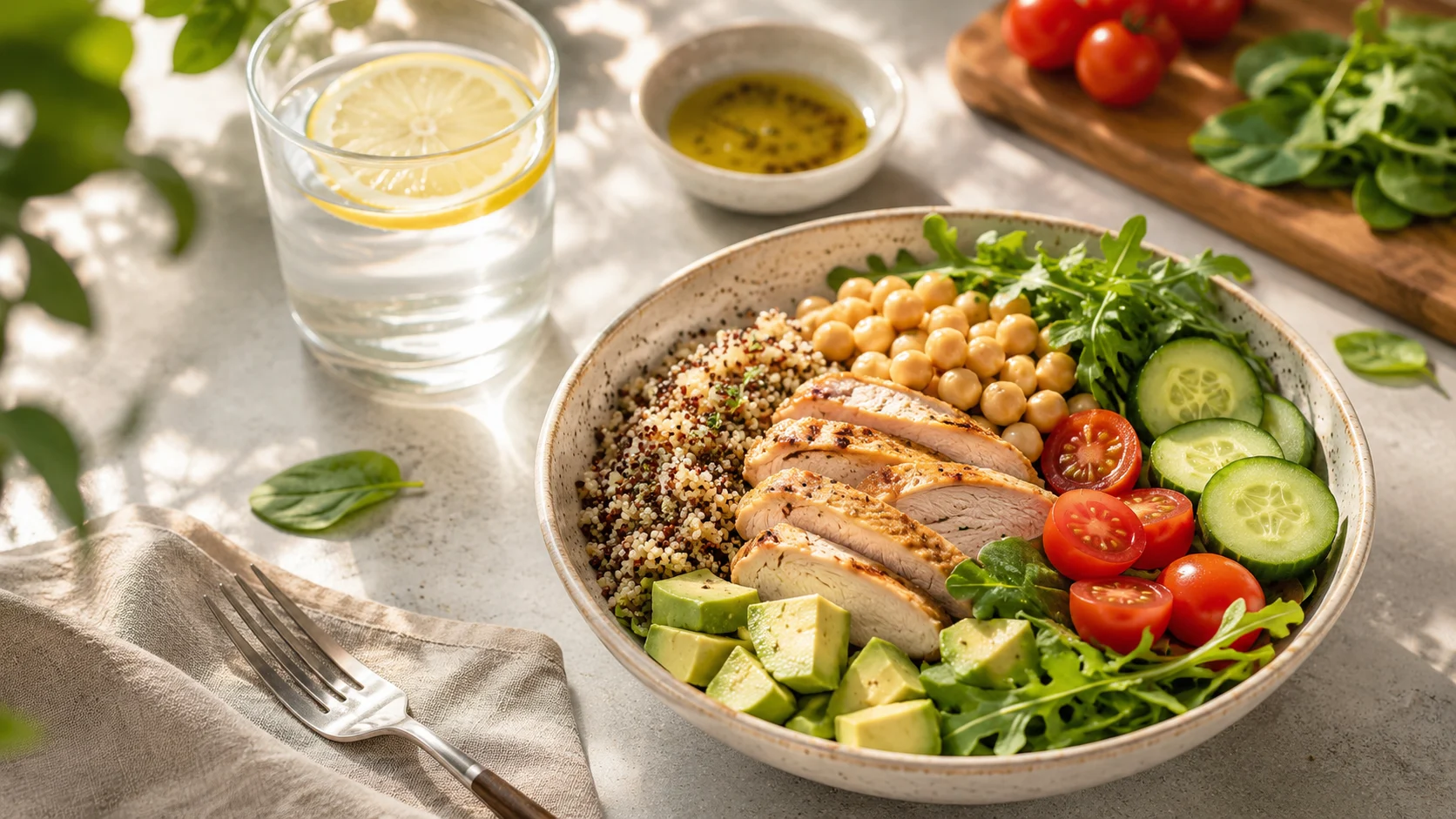
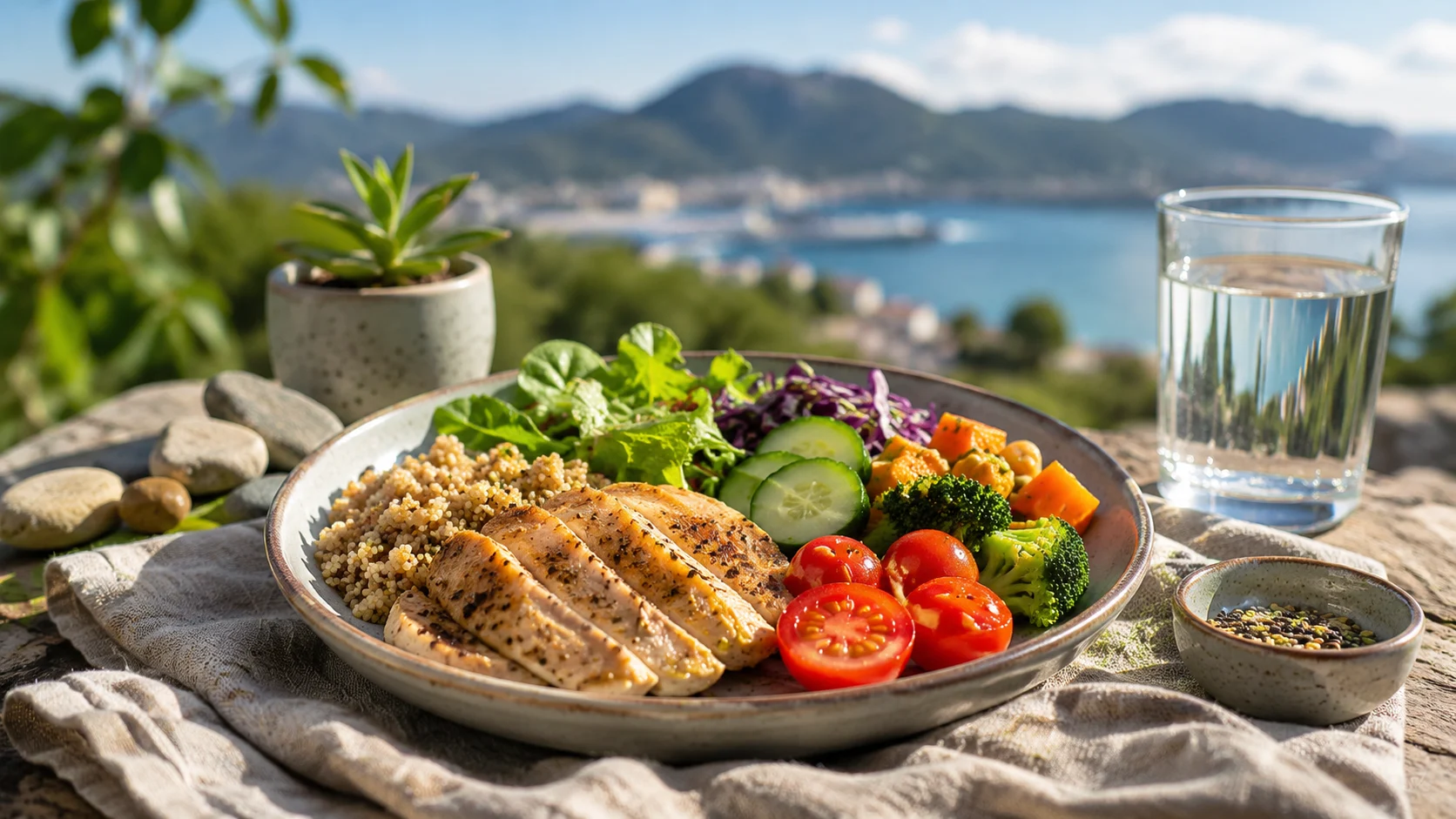
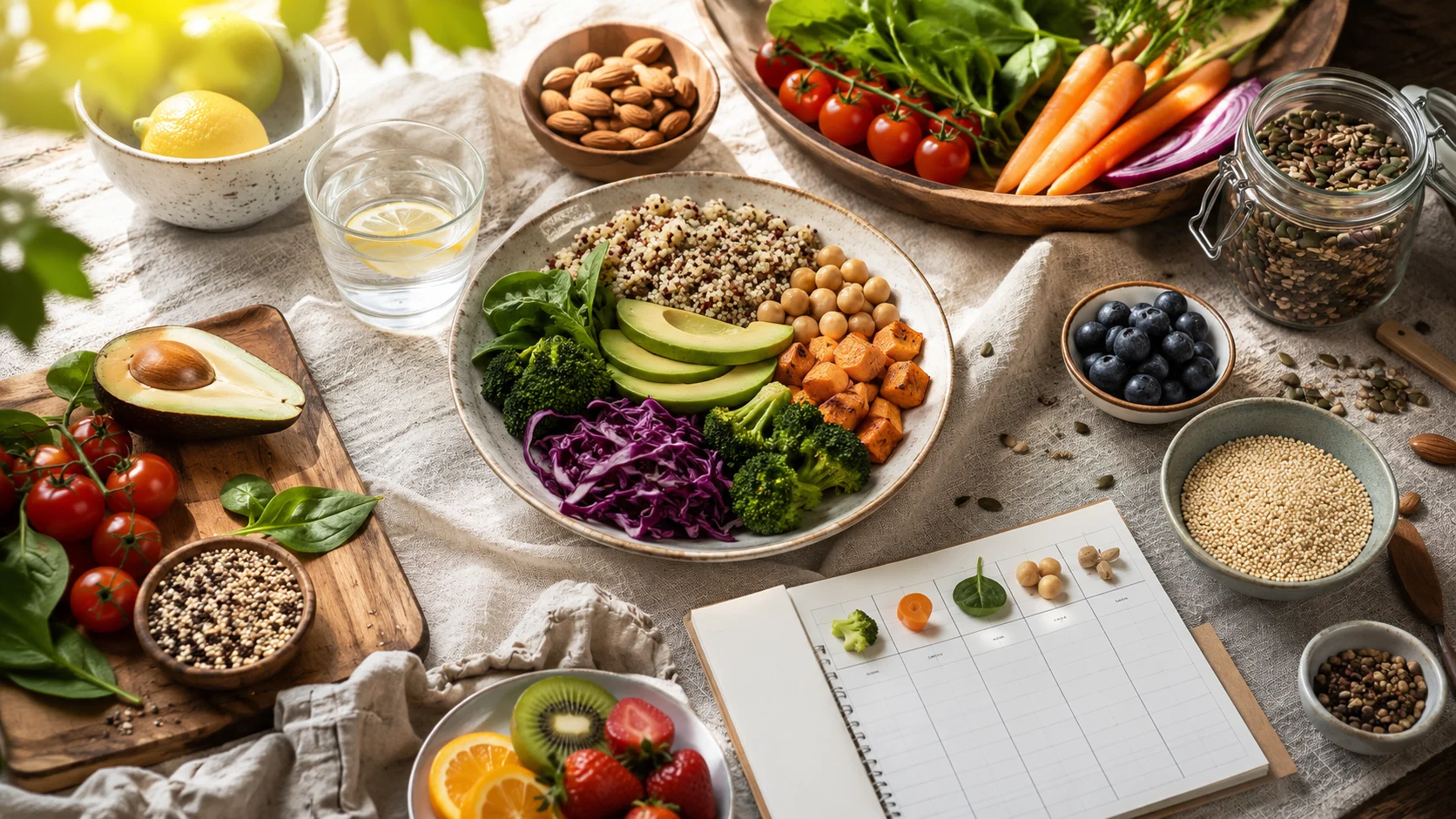
That is where a simple lens can help. Joyini calls it the Soft Balance Plate: when choosing takeout, look for something grounding, something sustaining, and something comforting. Grounding usually means fiber-rich carbs, sustaining often looks like protein and fat, and comforting is the part that makes the meal feel emotionally livable in real life.
The Soft Balance Plate in Real Takeout Life
Healthy takeout choices do not need to look like dry lettuce and disappointment. They can be warm, flavorful, and deeply ordinary in the best way. The goal is not to strip pleasure away. The goal is to build a meal that helps a woman feel fed an hour later, not foggy and searching the pantry.
- A rice bowl with grilled salmon, edamame, cucumbers, and avocado — This kind of bowl offers a soft landing after a long day. The rice brings quick comfort, while protein, fat, and fiber help the energy curve feel less sharp.
- A burrito bowl with beans, chicken, fajita vegetables, salsa, and cheese — It can feel hearty without becoming chaotic. Beans and vegetables add staying power, and the cheese often makes the meal feel complete rather than restrictive.
- A turkey or chicken sandwich with a side salad or soup — On a rushed afternoon, this can be one of the easiest healthy takeout choices because it is familiar, balanced, and not mentally exhausting to order.
- Sushi with rolls plus miso soup or seaweed salad — Think of it as light in texture, not necessarily light in nourishment. Pairing sushi with a side can make it feel more steady and less like a snack that disappeared too quickly.
- Stir-fry with tofu or chicken, vegetables, and rice — Especially on tired evenings, a warm container of rice and vegetables can feel like the nervous system finally exhaling.
Research has found that meals containing protein, fiber, and fats together tend to support fullness and steadier post-meal energy better than refined carbs alone. That does not mean every meal must be engineered. It simply means a little balance often helps the body feel more settled.
How to Order Without Falling Into Food Rules
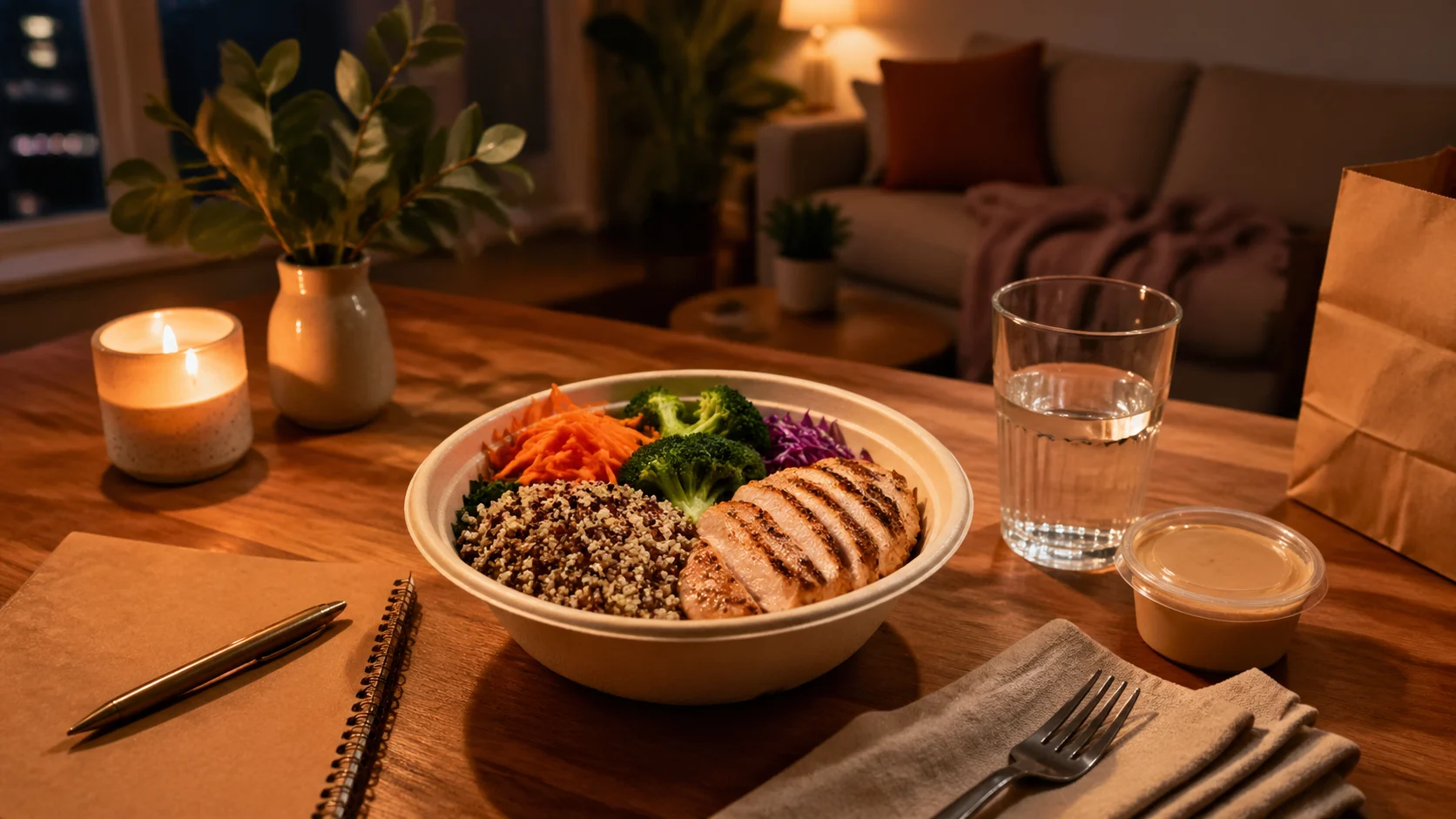
Some women open a delivery app and feel an old anxiety rise up: be “good,” order the smallest thing, make it perfect. Yet perfection often backfires. A too-light order can leave someone circling back for chips, sweets, or random bites later, not because she lacks discipline, but because the meal did not meet the body where it was.
A gentler way to choose healthy takeout choices is to ask three quiet questions:
- What would feel satisfying, not just acceptable? A meal has to emotionally land, not only look healthy on paper.
- Where is the staying power? Look for protein, fiber, or a source of fat that helps the meal hold you for more than a brief moment.
- What can make this easier? Adding a side of vegetables, choosing a grain bowl over a pastry-only lunch, or ordering the full sandwich instead of half can sometimes be the kindest move.
A meal does not have to be perfect to be supportive. It only has to meet a real human life with honesty and enough nourishment.
The Quiet Difference Between “Light” and Supportive
There is a difference between a meal that looks controlled and a meal that actually carries someone through the evening. A small salad with almost nothing on it may appear virtuous, but if it leads to intense hunger an hour later, it was never truly supportive. Healthy takeout choices often look more generous than diet culture would prefer.
For the woman eating between meetings, or in the parked car before daycare pickup, support may look like noodles with chicken and vegetables, a poke bowl with rice, or a warm soup and sandwich pairing. Balanced does not mean joyless. It means the meal leaves enough room for comfort and enough structure for steady energy.
Please note: Every body has its own rhythm, preferences, and health needs. This gentle guide is for educational purposes and does not replace personalized advice from a healthcare professional or registered dietitian, especially if someone is managing a medical condition or a complex relationship with food.
You Might Also Wonder
If she always wants fast food after work, does that mean her habits are “bad”?
Not at all. It often means she is tired, under-supported, or too drained to start from zero. The need is usually ease, not punishment.
What if healthy takeout choices feel more expensive?
Sometimes they do. It can help to think in anchors: choose one or two familiar orders that feel balanced and reliable, rather than chasing the “best” option every time.
Is it okay to order comfort food and still call it balanced?
Yes. Comfort matters. A meal can include fries, noodles, or a favorite sauce and still offer support when paired with enough substance to satisfy.
What if takeout is the only realistic dinner option most nights?
That is real life for many women. Repetition is not failure. Finding a few nourishing defaults can reduce stress and make dinner feel less loaded.