
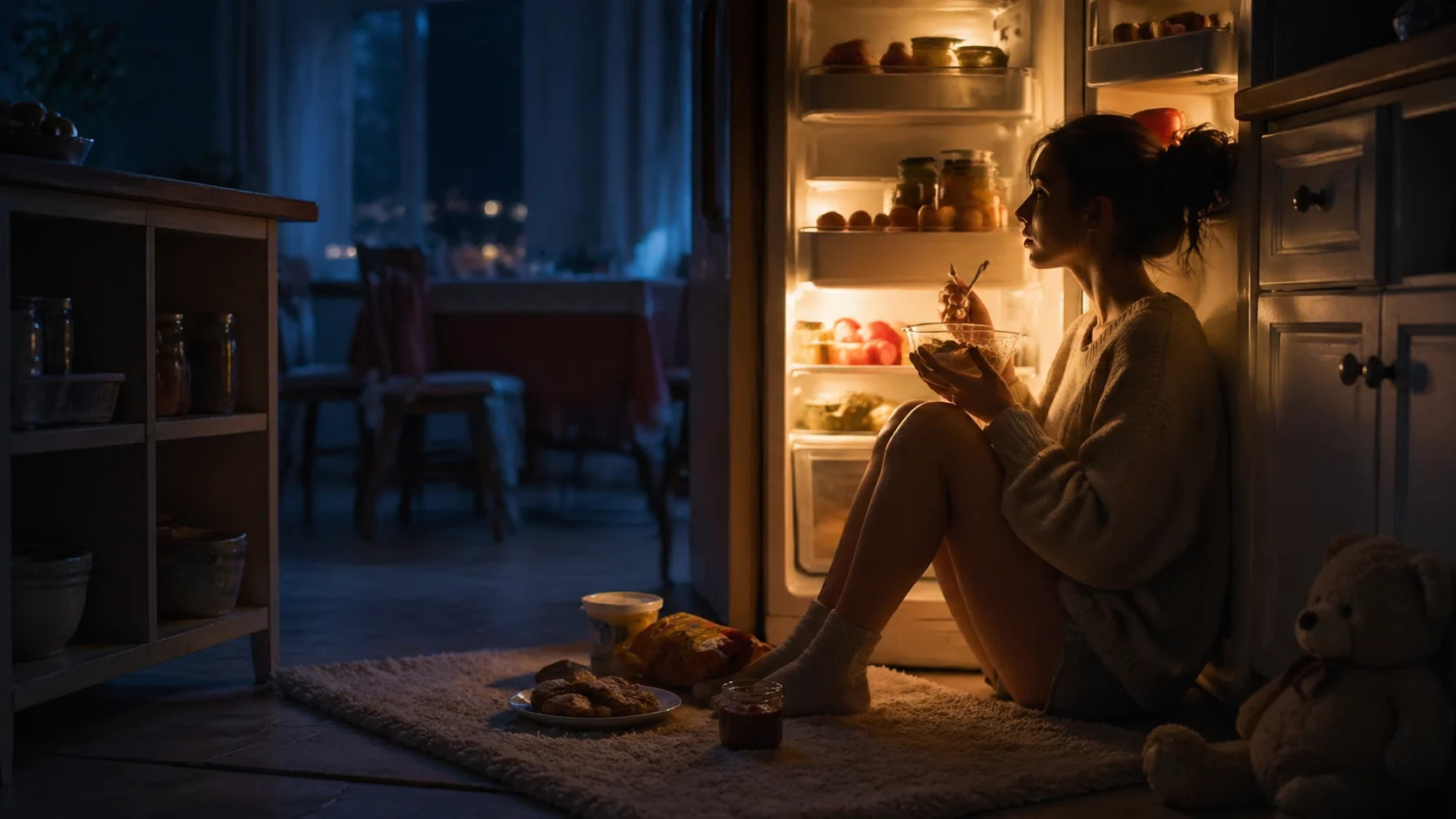
When the Kitchen Calls After Dark
Night eating is often less about lack of control and more about an unmet need. For many women, the pull toward the pantry at 9 or 10 p.m. begins long before evening arrives: a rushed lunch, a stressful afternoon, a body that has been underfed, or a mind that has been carrying too much for too long. What looks like “random snacking” can be the body asking for comfort, energy, or simply relief.
There is a common story she has been taught to believe: if she keeps eating at night, she must be doing something wrong. But the body is rarely that dramatic or that cruel. It sends signals. It repeats itself when those signals are ignored. Night eating can be a pattern of compensation, decompression, or emotional settling—not a character flaw.
Body signals are not accusations. They are messages looking for a softer listener.
Some research has observed that stress and sleep disruption can shift hunger and fullness cues, including hormones tied to appetite regulation. In real life, that can feel like this: she gets through the day on adrenaline, then suddenly feels intensely drawn to cereal, toast, or something sweet once the house is quiet.
The Evening Echo Pattern
One helpful way to understand night eating is through what Joyini might call the Evening Echo Pattern: the body often echoes at night what it did not fully receive during the day.
- Too little food earlier — She had coffee, answered emails, skipped lunch, and called it productivity. By evening, the body is not asking politely anymore. It wants fast, easy energy.
- Too much stress, too little pause — Sometimes the snack is not only about food. It is the first exhale of the day, wrapped in crackers, peanut butter, or leftover pasta.
- Food rules that backfire — When certain foods have been placed on a mental “don’t touch” shelf, night can become the hour when those rules crack. Restriction often grows louder in the dark.
- Habit linked to comfort — If ice cream has quietly become part of her nightly landing ritual, the craving may be tied to routine as much as hunger.
The body is not a project to control by nightfall; it is a place to come home to with care.
How to Respond Without Shame
The gentlest response to night eating is not punishment the next morning. It is curiosity. What was missing today? Not in a moral sense—simply in a practical, human one.
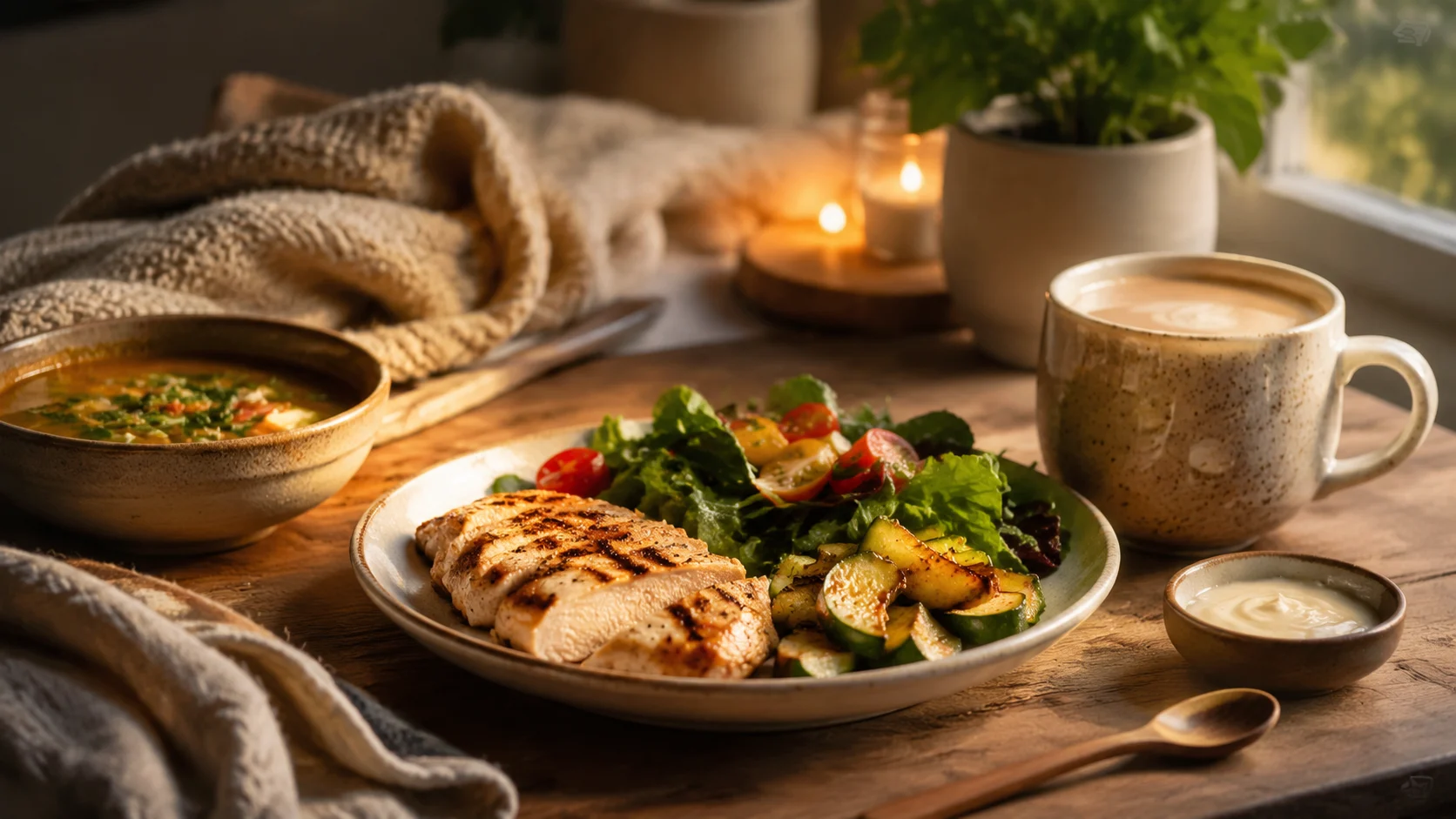
- Make the afternoon more steady — A late-day bridge can soften the nighttime swing. Think of a small plate with substance: a warm yogurt bowl with berries and seeds, or toast with almond butter and sliced banana while the laptop is still open.
- Build more ease into dinner — If dinner is too light or delayed too long, the evening appetite may keep rising. A balanced plate often feels grounding: rice still steaming, salmon or tofu, and something green glossed with olive oil.
- Let comfort be part of nourishment — Sometimes what she needs is not the absence of comfort food, but permission to include comfort inside a balanced eating pattern. A square of chocolate after dinner lands differently when it is not surrounded by fear.
- Create a softer transition into night — If eating has become the only form of unwinding, it helps to widen the menu of comfort. A shower, dim lights, a cup of cinnamon tea, music in the kitchen—small rituals can support the nervous system, not replace food, but accompany it.
When Night Hunger Is Real
Not all night eating is emotional. Sometimes she is simply hungry. And that deserves a straightforward response. Real hunger at night is still real hunger. If dinner was early, if the day was physically active, if PMS has made her appetite louder, or if sleep has been off, a bedtime snack can be supportive rather than “bad.”
A satisfying option usually works better than a fragile one. Picture a bowl of oatmeal still warm from the stove, folded with chopped walnuts and a little maple. Or a piece of sourdough with turkey and avocado, eaten slowly at the counter in a quiet apartment. The goal is not to “be good.” The goal is to feel settled.
A Different Kind of Relief
If night eating keeps happening, the answer is rarely to become stricter. More rules often create more rebound. A kinder approach is to look at the whole rhythm of the day: stress, skipped meals, loneliness, PMS, exhaustion, and the ordinary ache of needing comfort in a life that asks a lot.
That is where change often begins—not with force, but with understanding. When she starts eating enough in daylight, loosening food rules, and noticing what evenings are really asking for, night eating often becomes less urgent. Not because she finally “got disciplined,” but because her body no longer has to shout.
Please note: Every body has its own rhythm. This gentle guide is for educational purposes and does not replace personalized advice from a healthcare professional or registered dietitian, especially if night eating feels distressing, compulsive, or connected to a medical concern.
You Might Also Wonder
What if night eating only happens after very stressful days?
That pattern makes sense. Stress can mute hunger earlier and intensify cravings later. It may help to add nourishment before the evening crash and to build one non-food ritual that signals safety and rest.
Is it okay to eat before bed if she feels hungry?
Yes. Hunger does not become less valid because the clock is late. A balanced snack can support comfort and steadier energy into the next morning.
Why does night eating feel stronger during PMS?
Hormonal shifts can increase appetite and cravings, especially for quick energy and comfort foods. That does not mean anything is wrong. It may mean the body needs more support, not more restriction.
How can someone tell if it is hunger or comfort-seeking?
Sometimes it is one, and sometimes it is both. If food sounds satisfying in a grounded way, hunger may be present. If the craving feels urgent and emotionally loaded, comfort may be part of the need. Both deserve compassion.